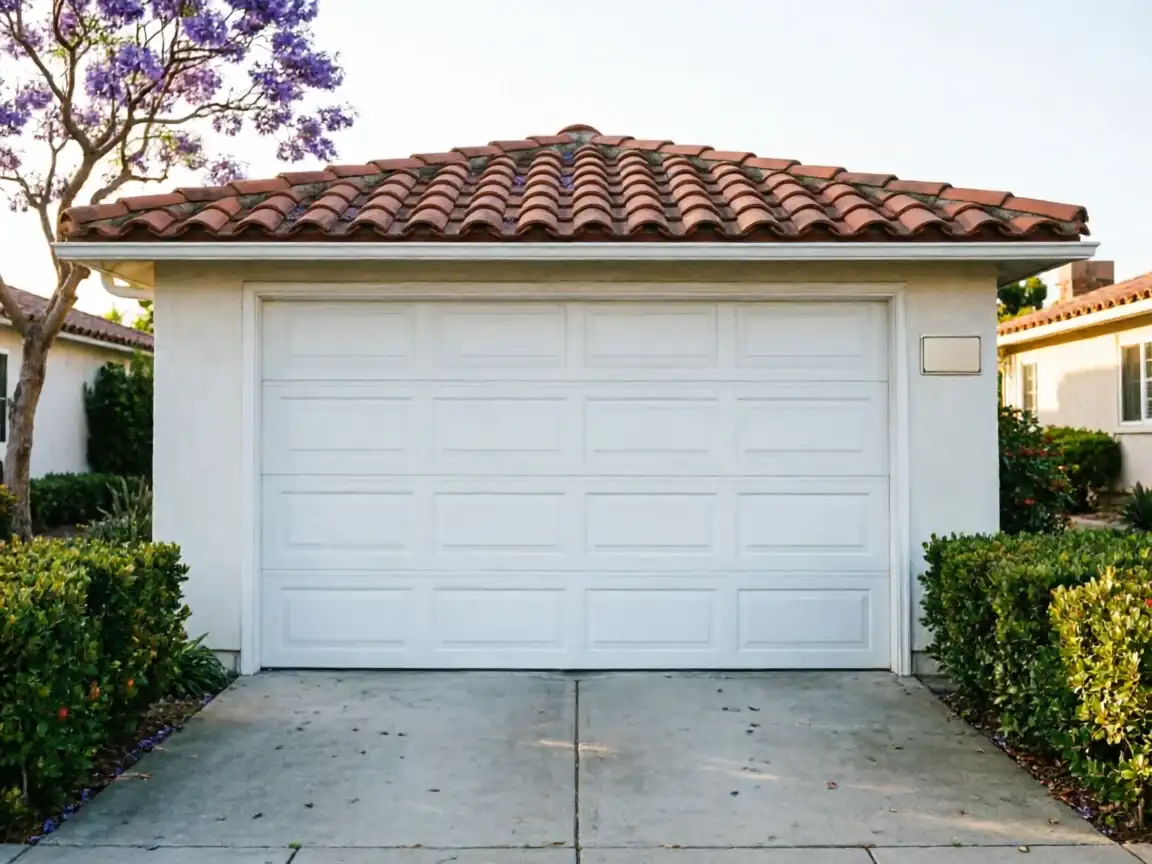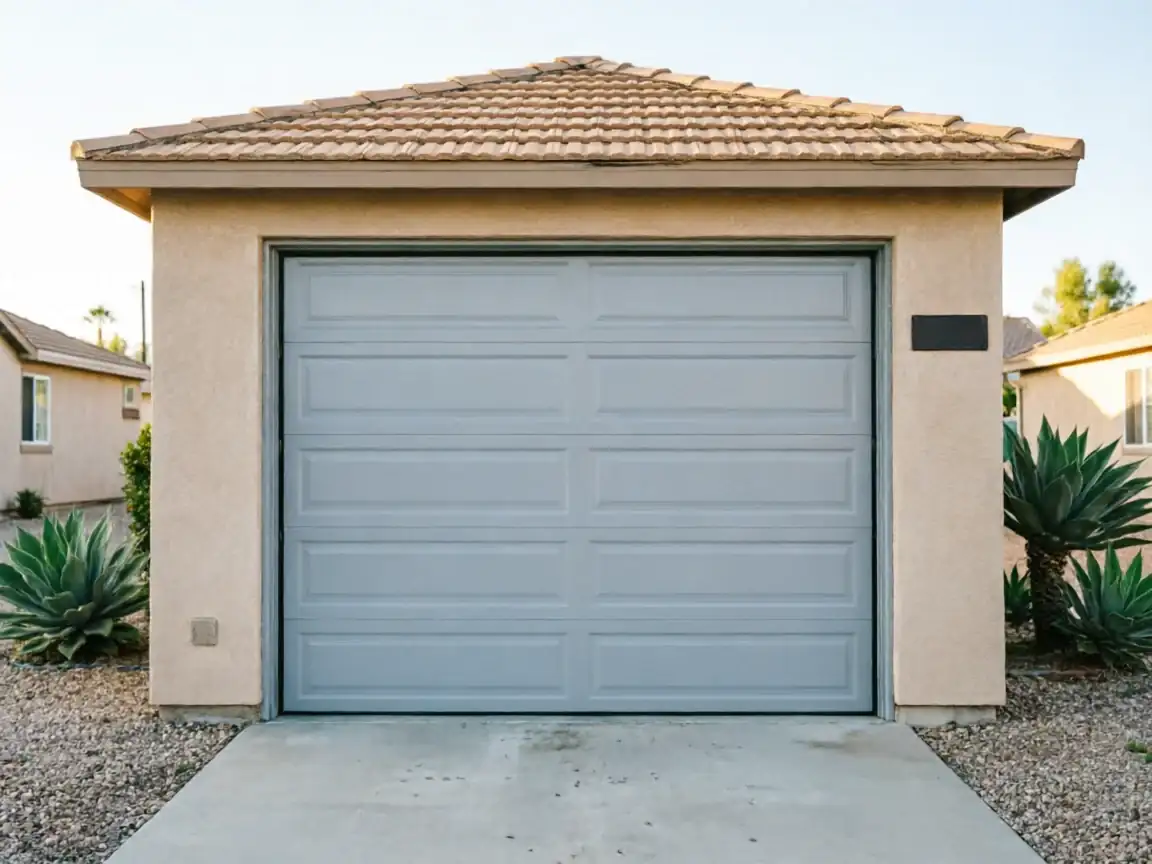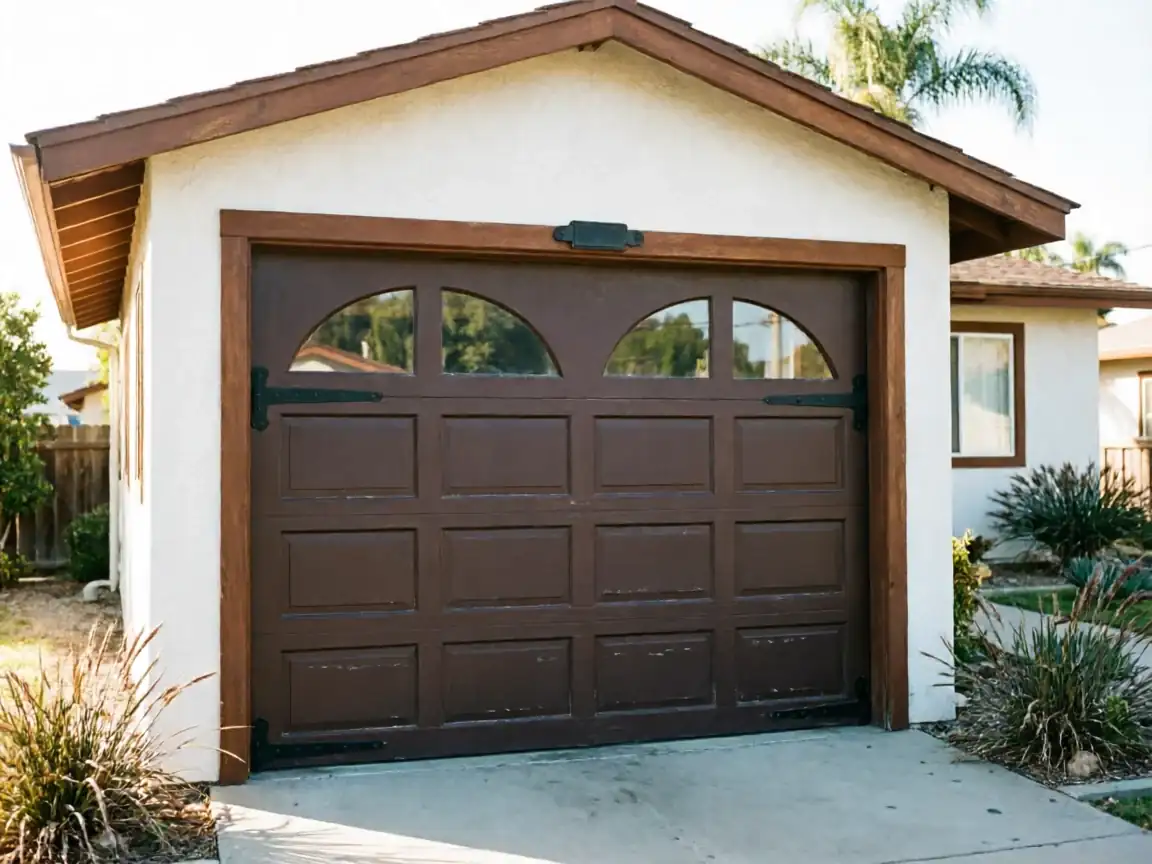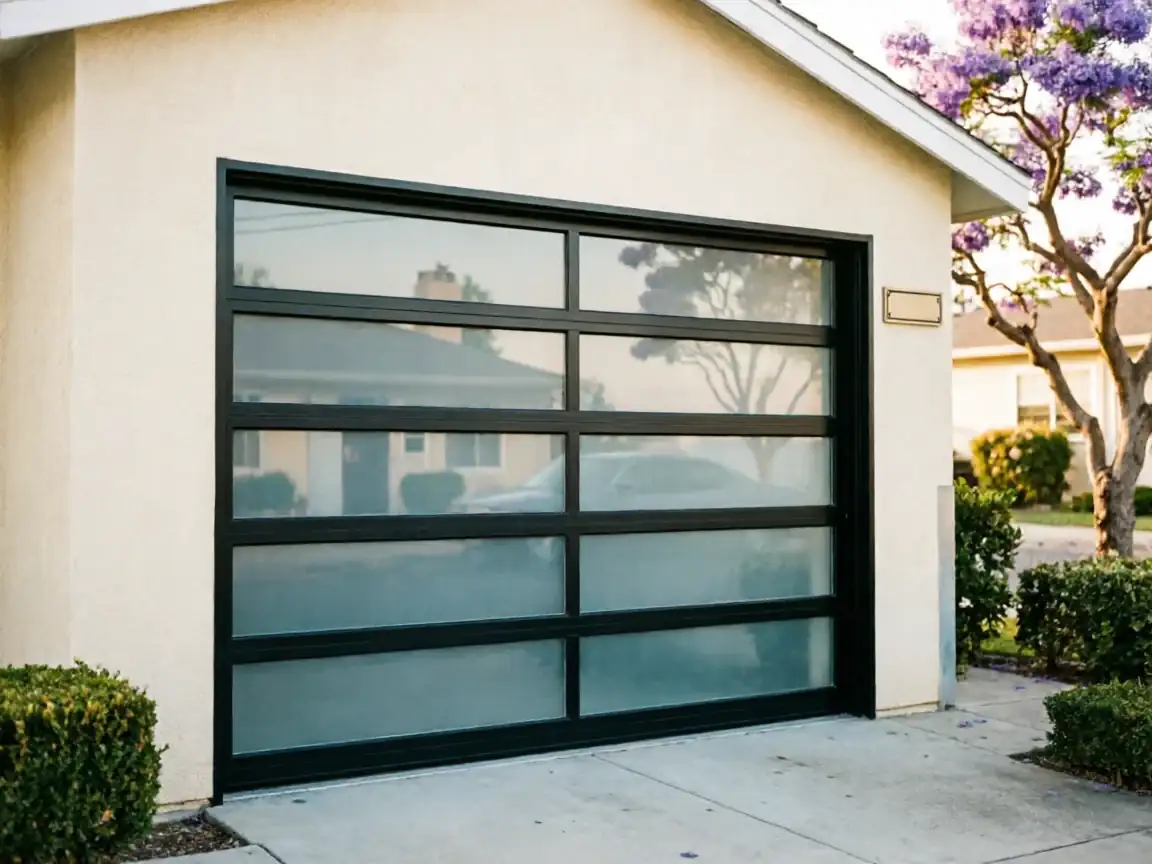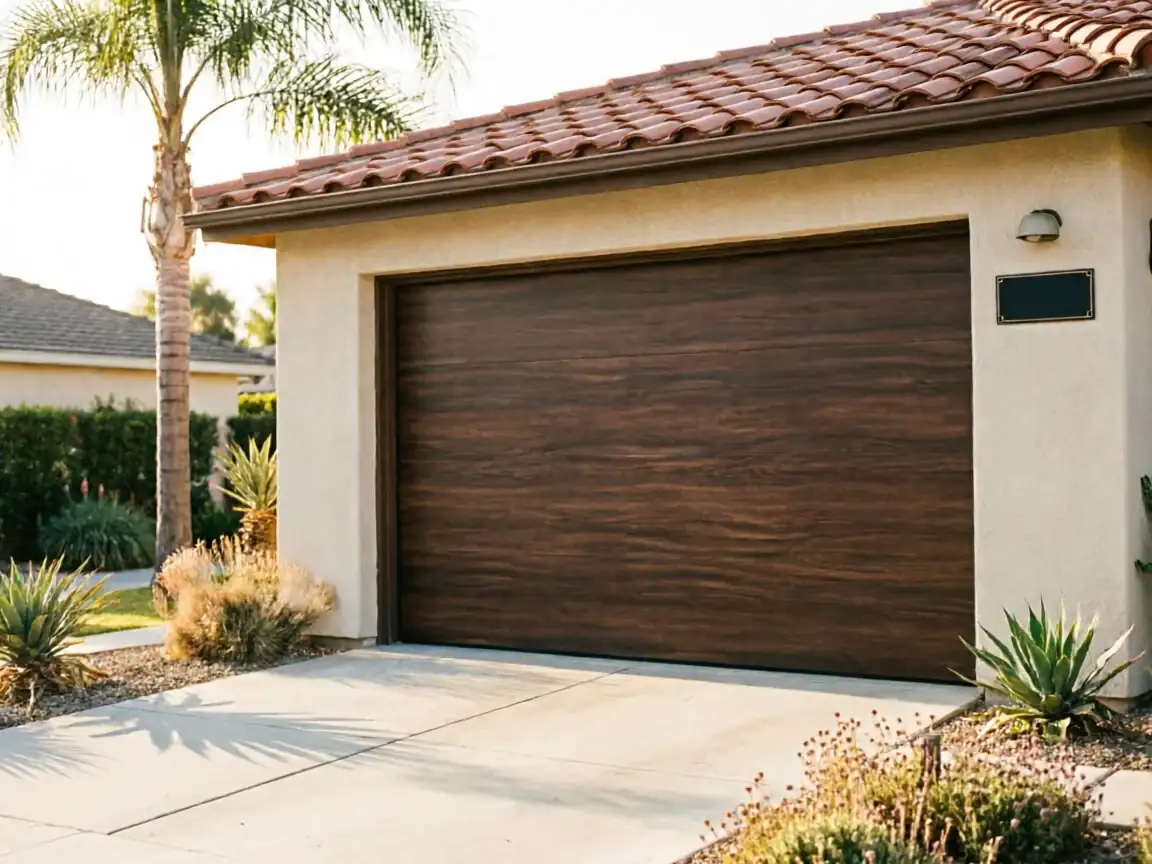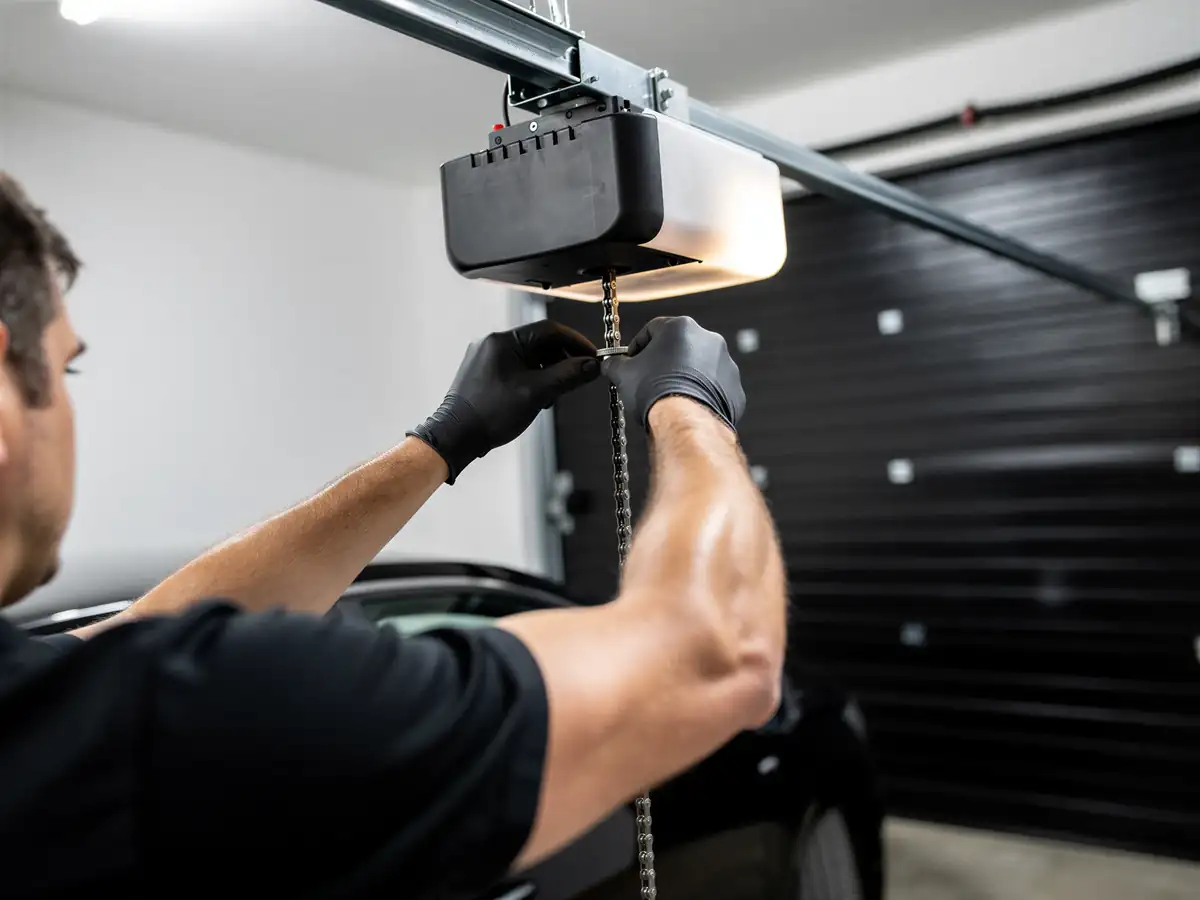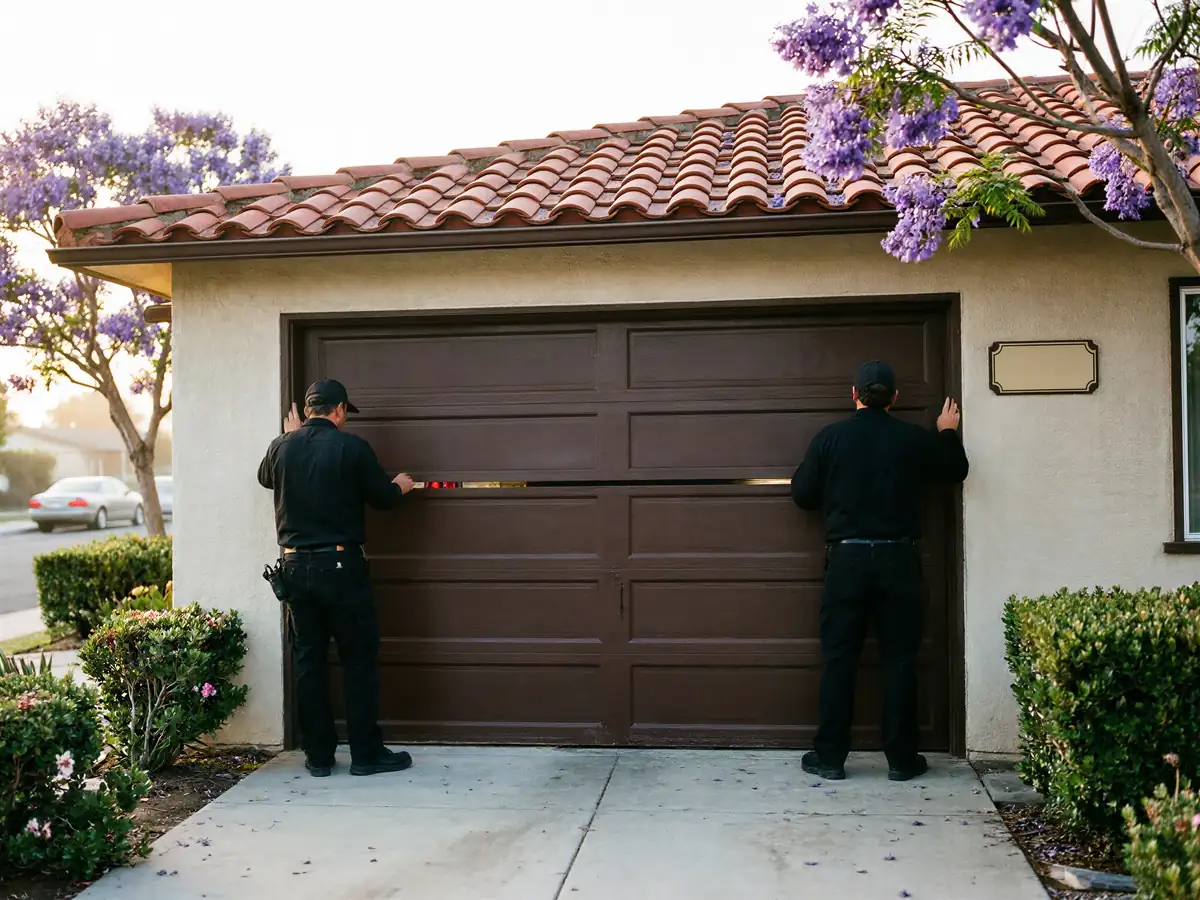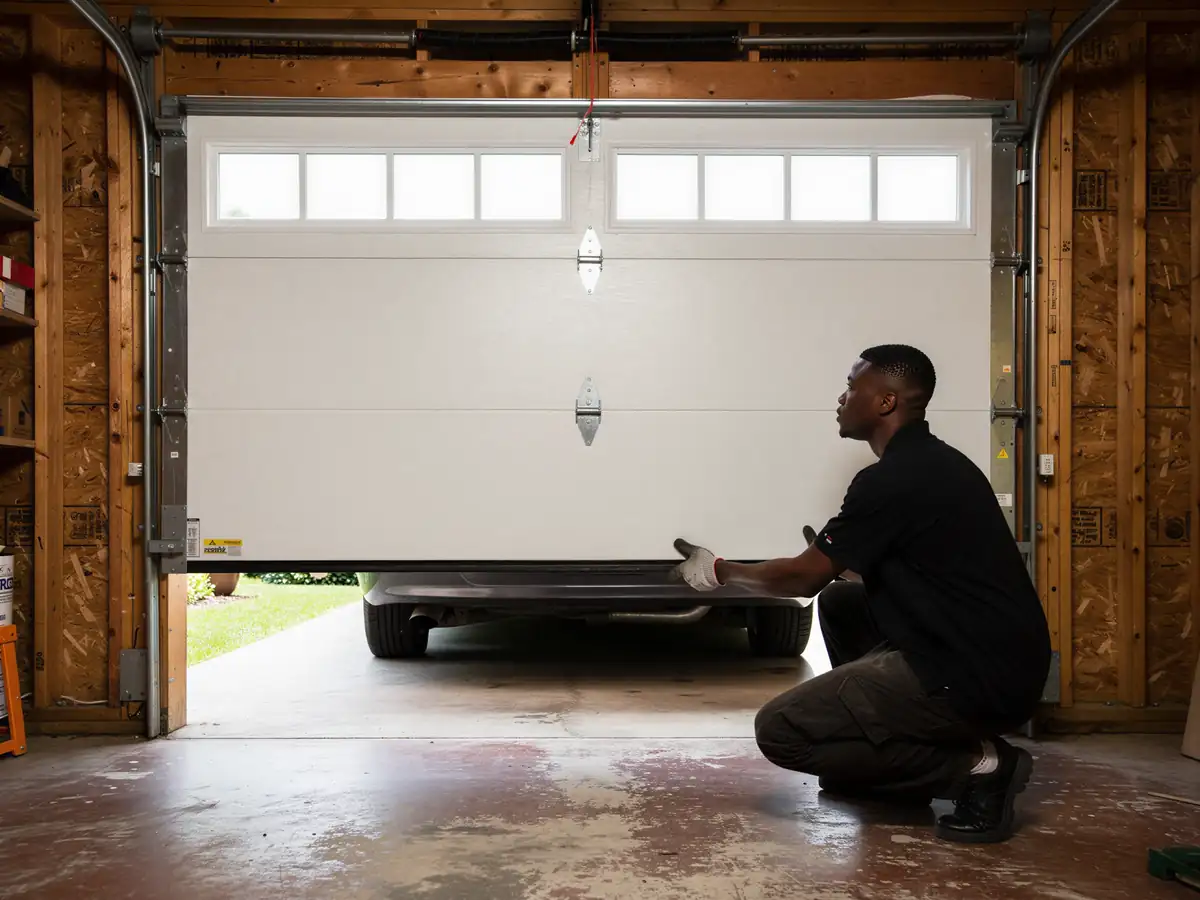
What You Are Seeing
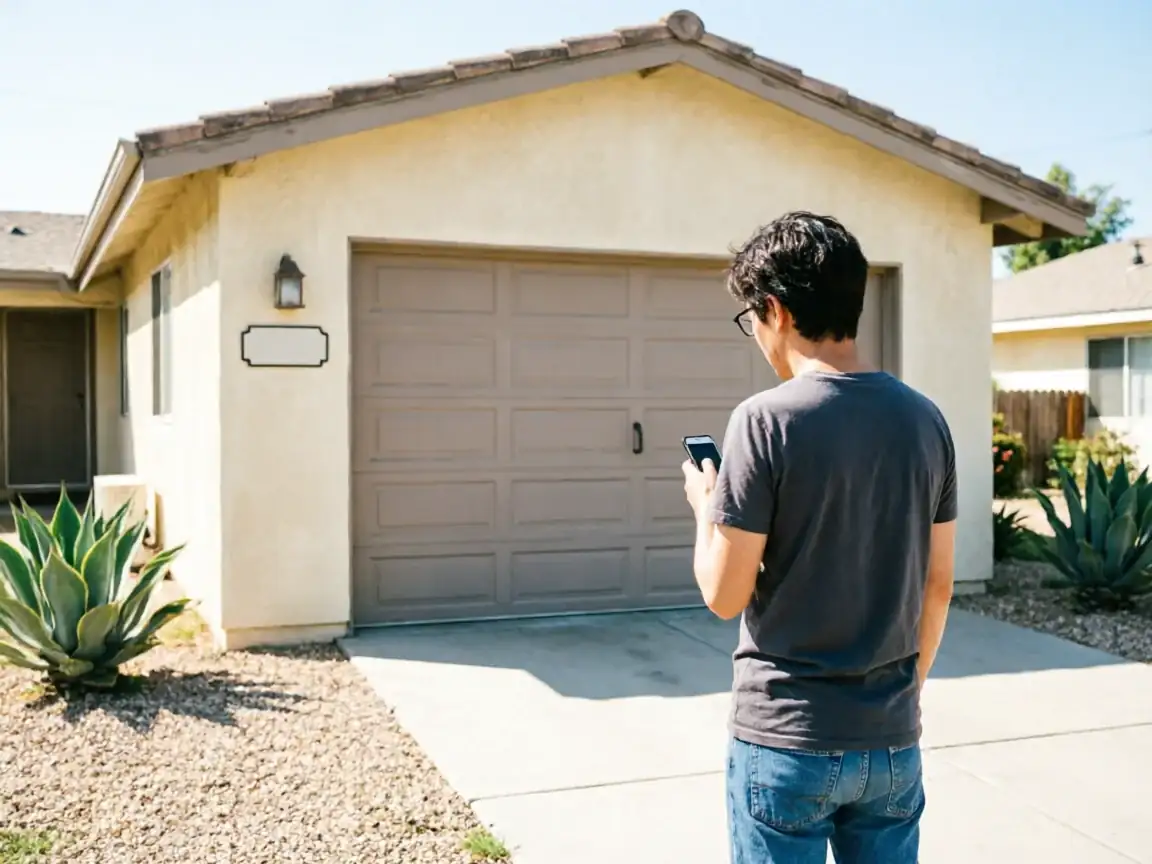
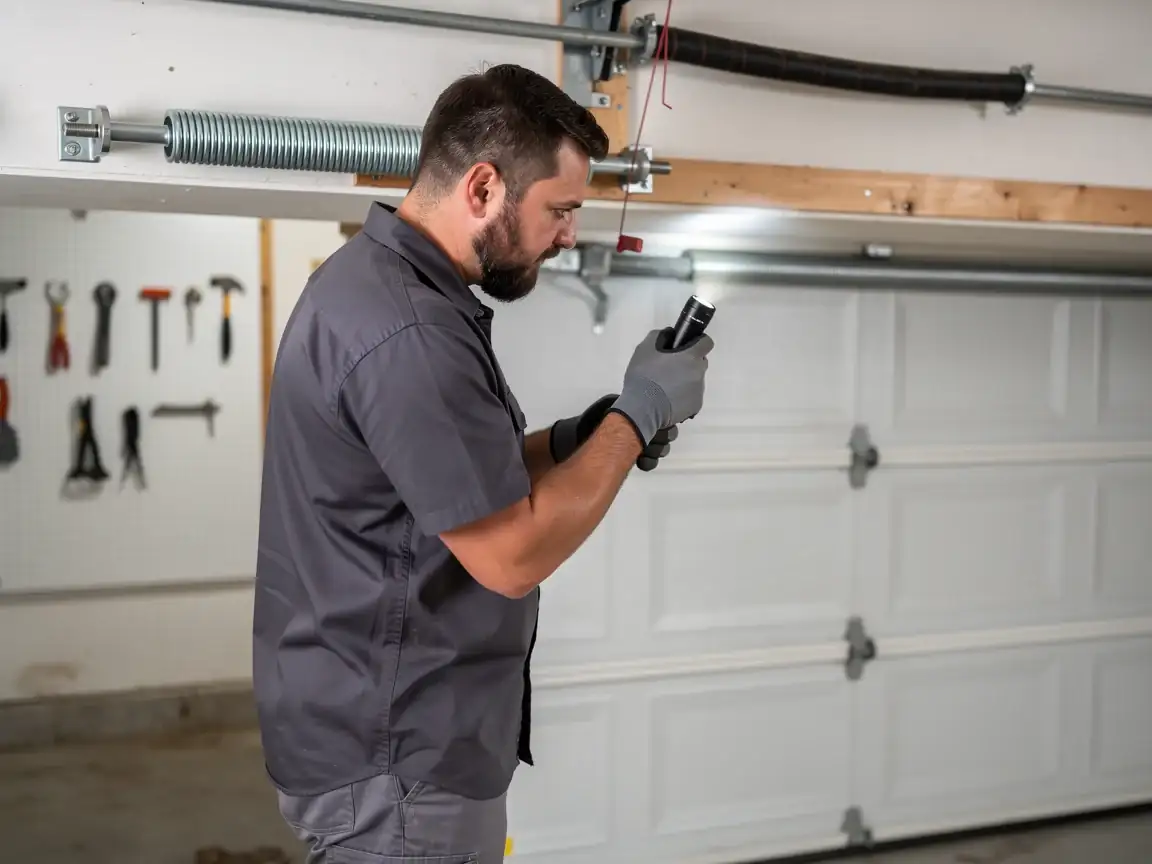
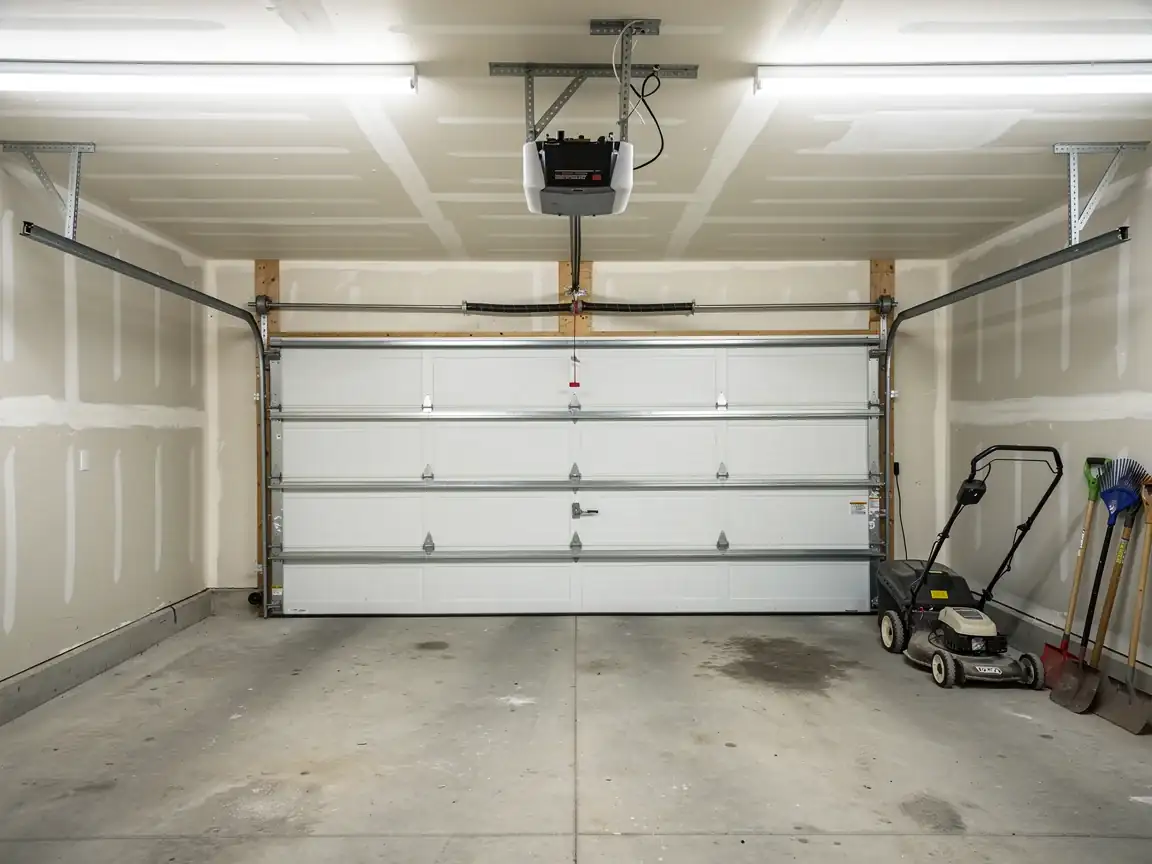
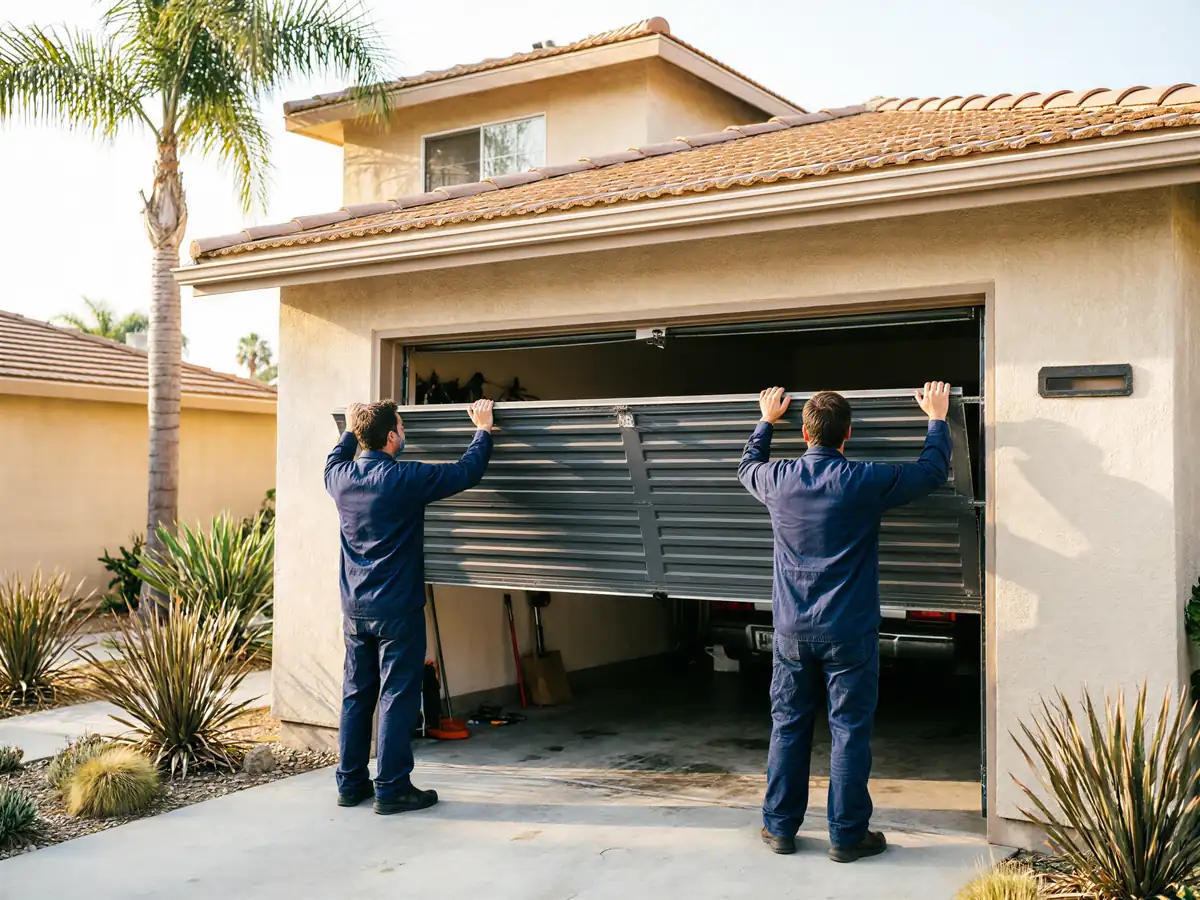
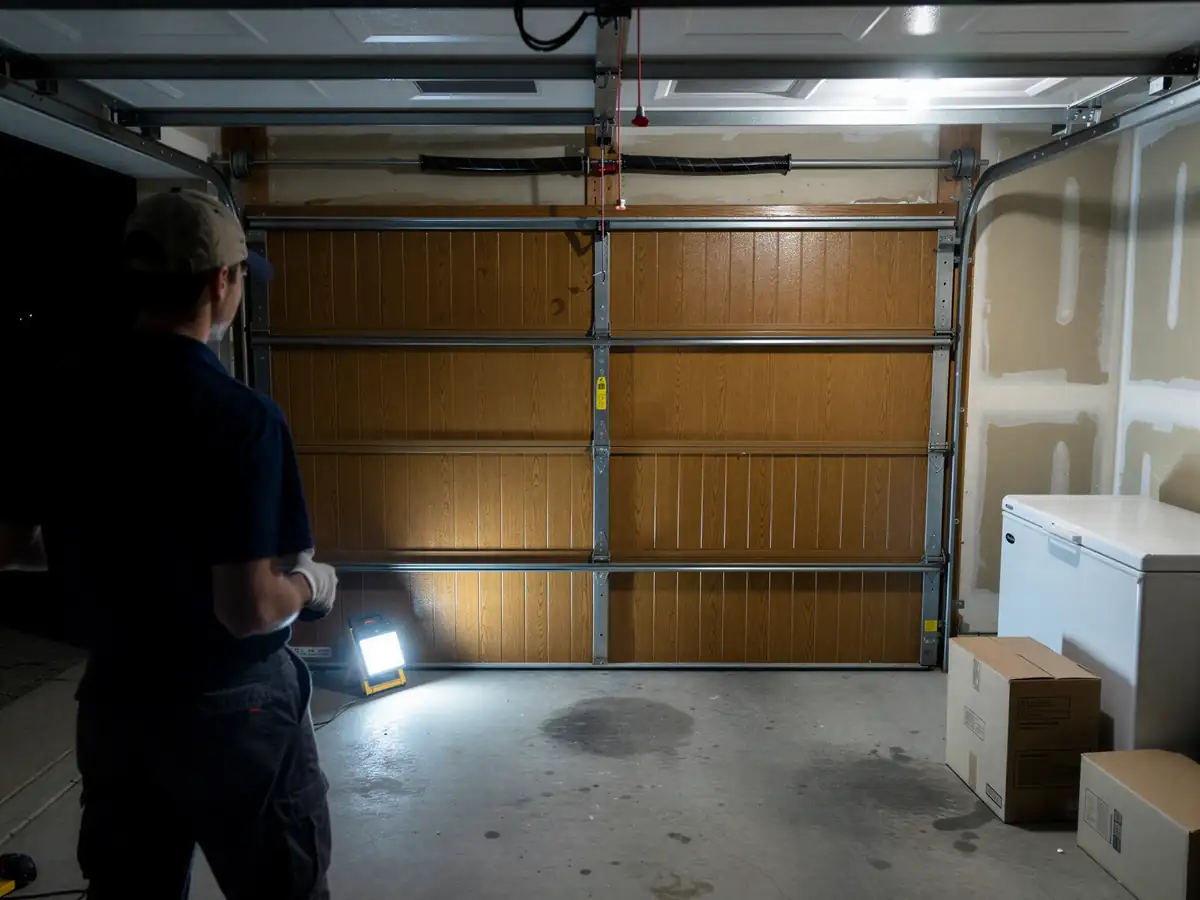
If the door won't lift, or it lifts a few inches and stops, or you hear a bang from the garage followed by the door going dead weight, that's almost always a broken torsion spring, not the opener. The opener motor isn't built to lift a door's full weight on its own; the spring does that work, and when it snaps, the motor just strains and gives up.
Claremont's median home was built around 1966, which puts most doors in town square in the middle of the broader 1951-2007 stock range we work across the service area. That era mostly means steel sectional doors on torsion hardware mounted above the opening, not the older side-mounted extension springs you'd find on a much older garage. The springs themselves wear out from cycle count, not age on the calendar, so a door that's been opened twice a day for decades is due whether the house is from 1966 or 1998.
The heat band here is moderate, not extreme, so we don't see the kind of rapid spring fatigue that comes with severe freeze-thaw cycling. That's one less variable working against the hardware, but cycle count still catches up with every spring eventually.
Time on the Job
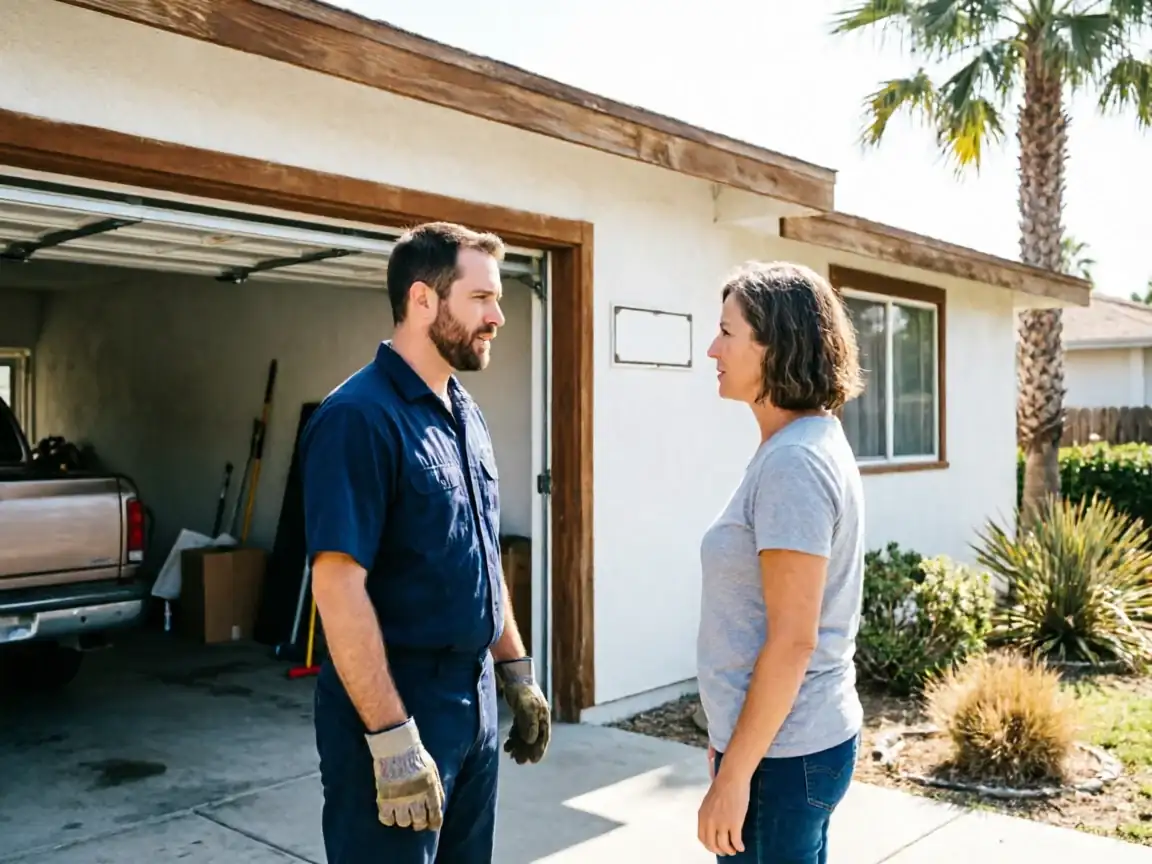
Claremont sits about five miles from our shop in Pomona, which is close enough that a spring call here doesn't turn into a half-day commitment before we've even touched the door. The drive itself isn't the bottleneck - it's whether we're carrying the right spring size on the truck already, which for Claremont's mostly 1960s-70s door stock is usually the case.
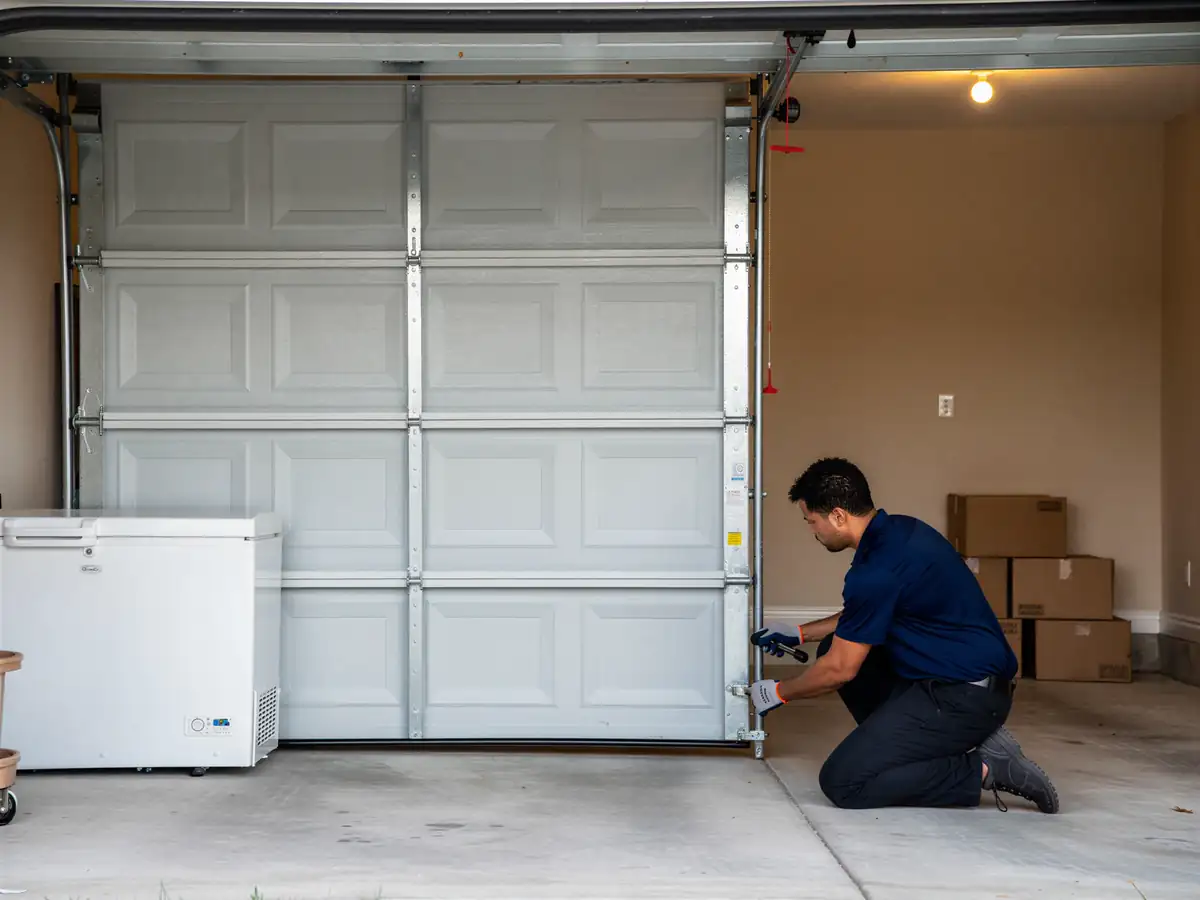
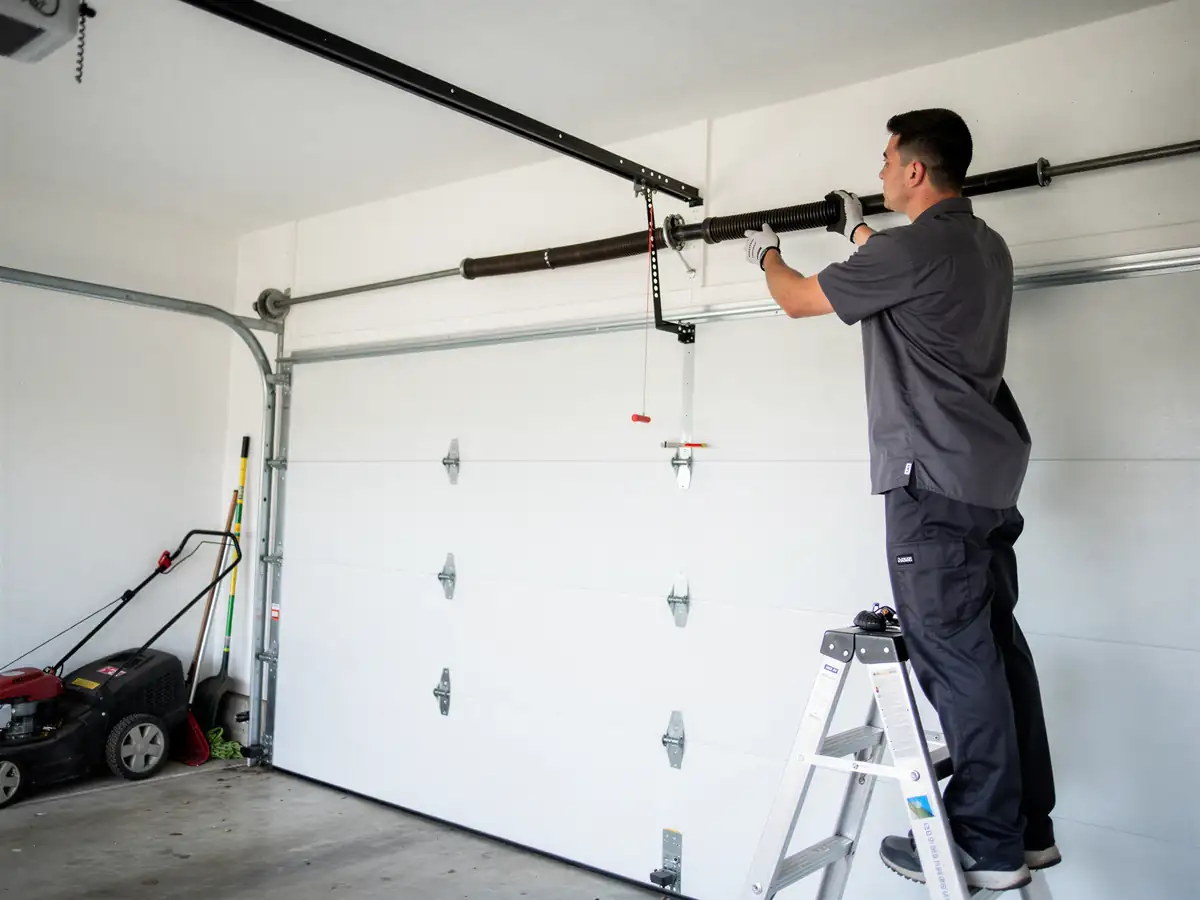
Once we're on site, a standard torsion spring replacement on a single door runs under two hours including setup, tear-down, and a balance check afterward. Double doors with two springs take a bit longer since both springs get replaced together - running one old and one new spring on the same door just means the new one fails again, soon.
We don't quote a fixed response time for Claremont specifically, since that depends on where the truck already is that day, not just the five miles of road between here and Pomona. What we can say is that the distance itself isn't the limiting factor.
What Is on the Truck
Torsion springs come in specific wire sizes and lengths matched to door weight and the drum they wind around
And guessing wrong means a door that's either too heavy to lift by hand or one that slams down on its own. For a town built mostly in the 1960s and 70s like Claremont, the sizing is fairly predictable - standard sectional doors in common widths, mounted on torsion bars above the opening, not the oddball dimensions you sometimes find on older or custom builds.
We carry the common torsion spring sizes that match that era's doors
Along with the end bearing plates, cables, and drums that tend to wear out alongside a spring once it's gone - a cable frayed from rubbing a worn drum, or a bearing plate that's seized and needs to come off anyway. Replacing just the spring and leaving a shot cable on the same door is a callback waiting to happen.
If a door turns out to need a less common spring size
Something outside what a 1960s or 70s sectional door typically takes - that's a part we order rather than carry on every truck, and it means a second trip.
The DIY Question
Don't do this one yourself. A wound torsion spring holds enough stored force to break fingers, fracture a wrist, or worse if the winding bars slip - this isn't a job where the worst case is a stripped screw. The tools for it (winding bars, a stable ladder setup, a firm grip while the spring is under tension) take practice most homeowners don't have reason to build.
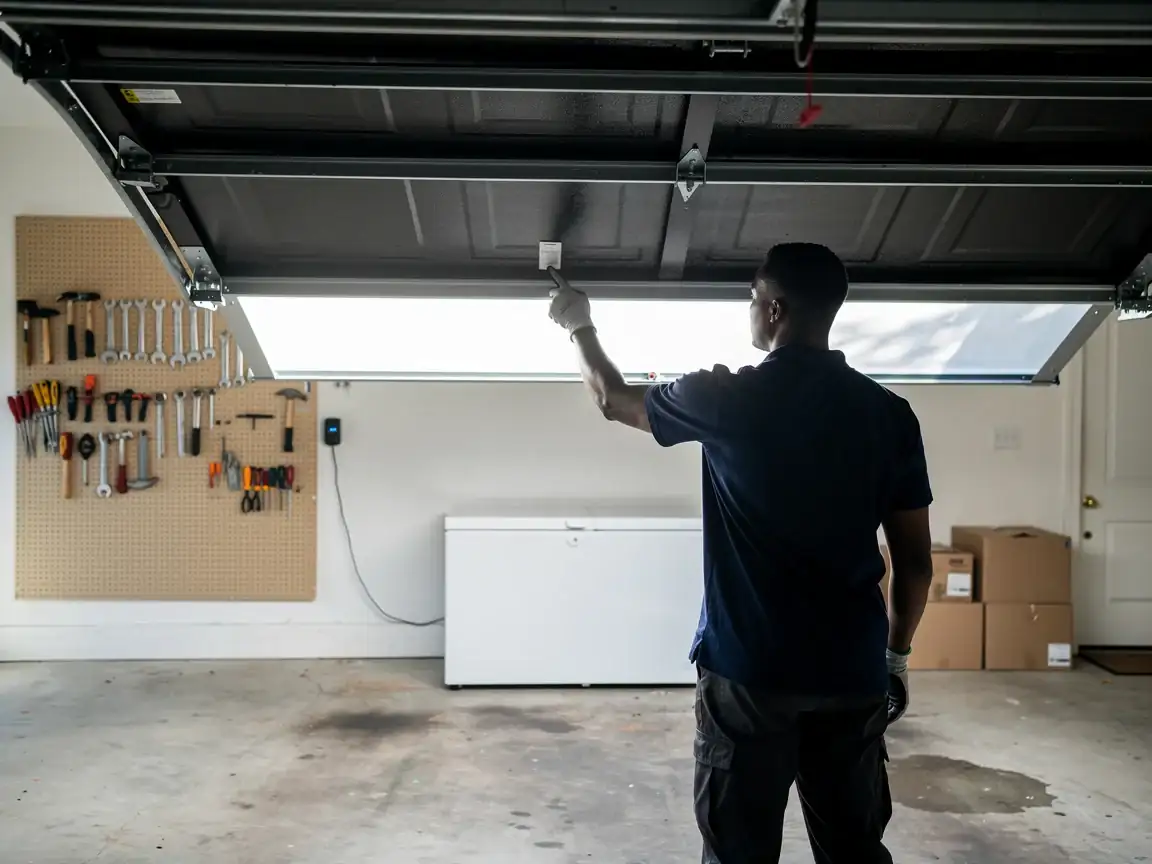
What you can safely check yourself: whether the door is actually off-balance (it should stay roughly level when lifted halfway by hand with the opener disconnected), whether the cables look frayed or kinked, and whether the bang you heard was a spring or something else like a broken roller or a cracked panel. None of that requires touching a wound spring.
If you've already tried to loosen or adjust the spring yourself and it's partially unwound, leave it alone and call before touching it again. A spring that's part-wound is less predictable than one fully wound or fully broken.
The Cost of This Job
We don't publish a flat price here because the real cost drivers - single spring versus a pair, standard wire size versus a less common one, whether a cable or bearing plate needs replacing alongside the spring - vary door to door, not town to town. Claremont's median household income runs well above the broader service area's $102,449, and in practice that shows up more in which door gets installed (insulated steel versus a lighter uninsulated panel) than in what a spring repair itself costs, since spring pricing follows the hardware the door already has, not the household budget.
A double door with two torsion springs costs more than a single door with one, simply because it's two springs and sometimes two sets of end bearings. A standard spring size costs less than one we have to special-order. We'll always quote the actual job once we've seen the door and the spring size it needs, rather than giving a number over the phone that doesn't hold up once a technician is standing in front of it.
How to Book
Call and describe what the door is doing
Whether it won't budge, lifts partway and stops, or came down with a bang - and we'll get a sense of whether it's a spring, a cable, or something else before anyone drives the five miles out from Pomona. Having the door's rough age or a photo of the broken spring helps us bring the right size the first trip instead of a second one.
See more on how we cover Claremont
Or for the full rundown on spring repair as a service rather than this town specifically, the Pomona spring repair page covers what we carry and how the job runs across the whole area we serve.