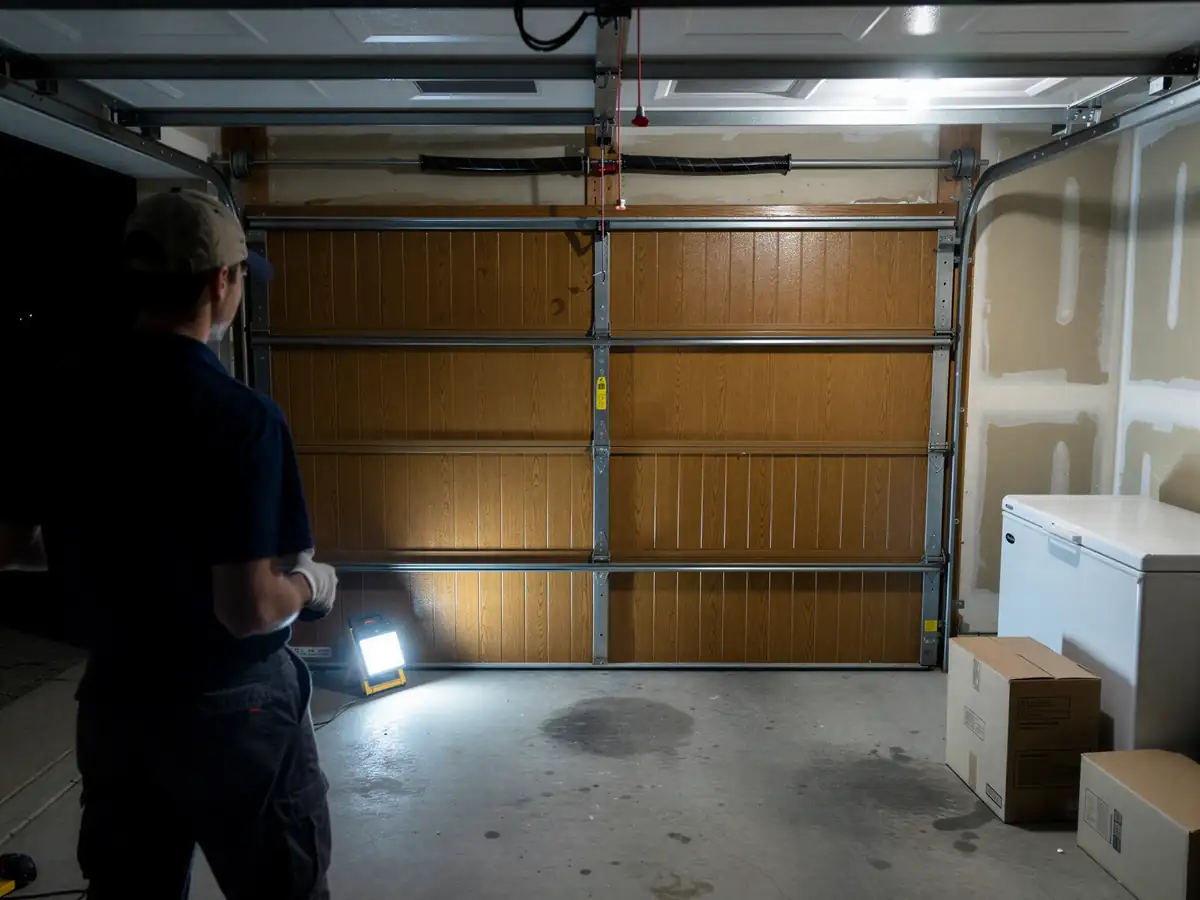
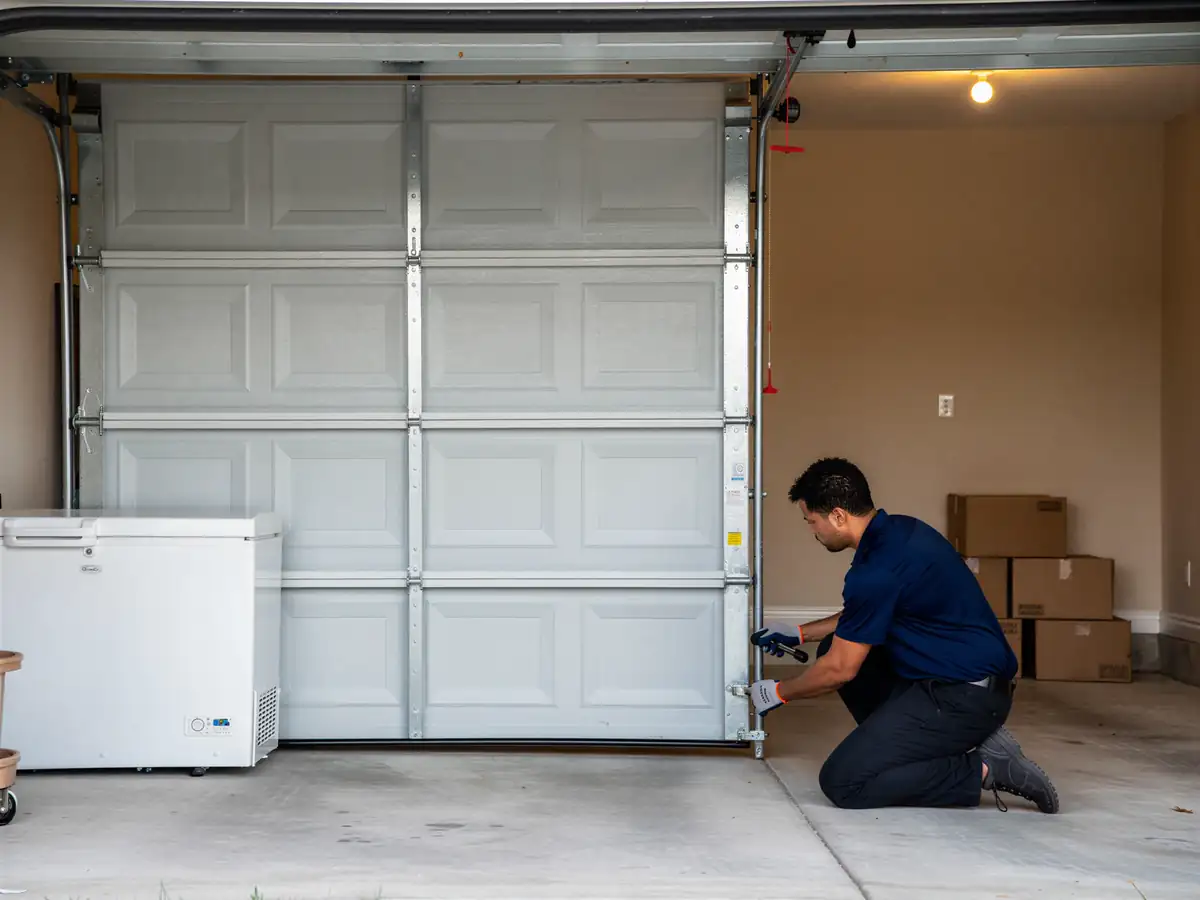
What You Are Seeing
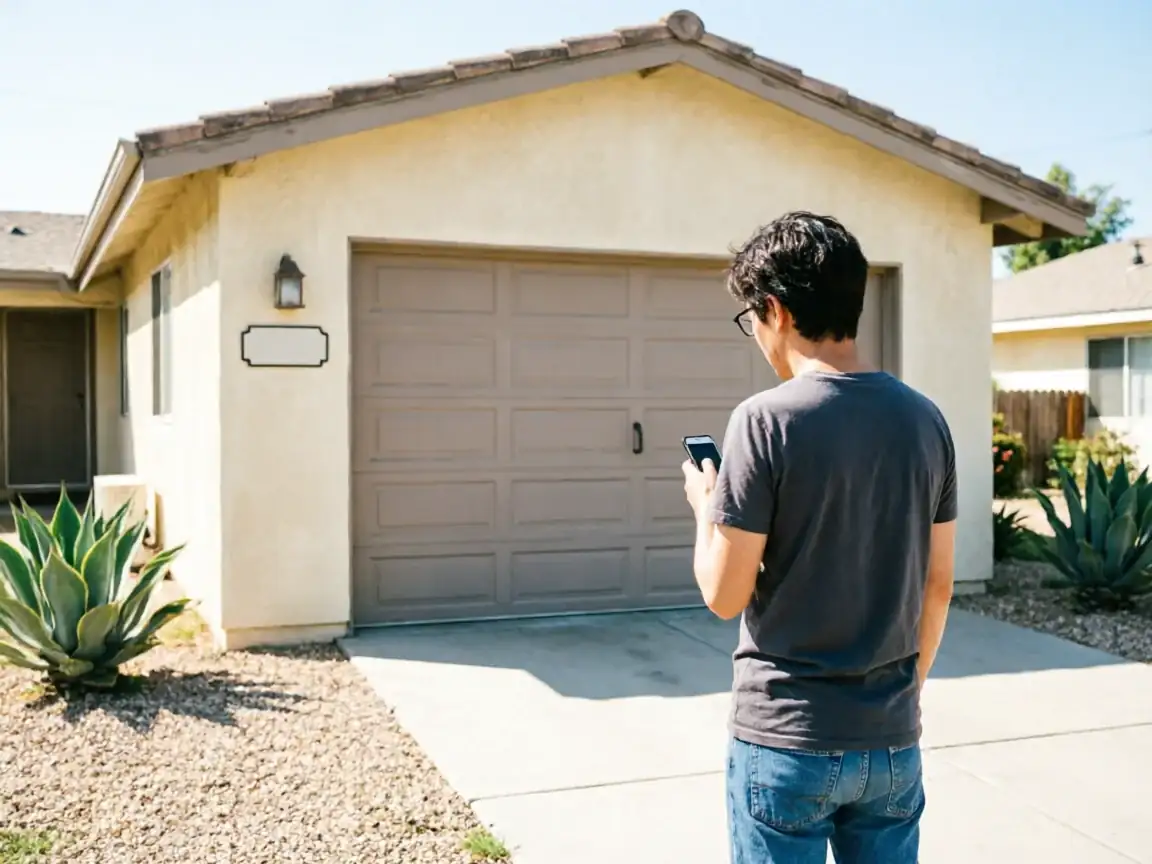
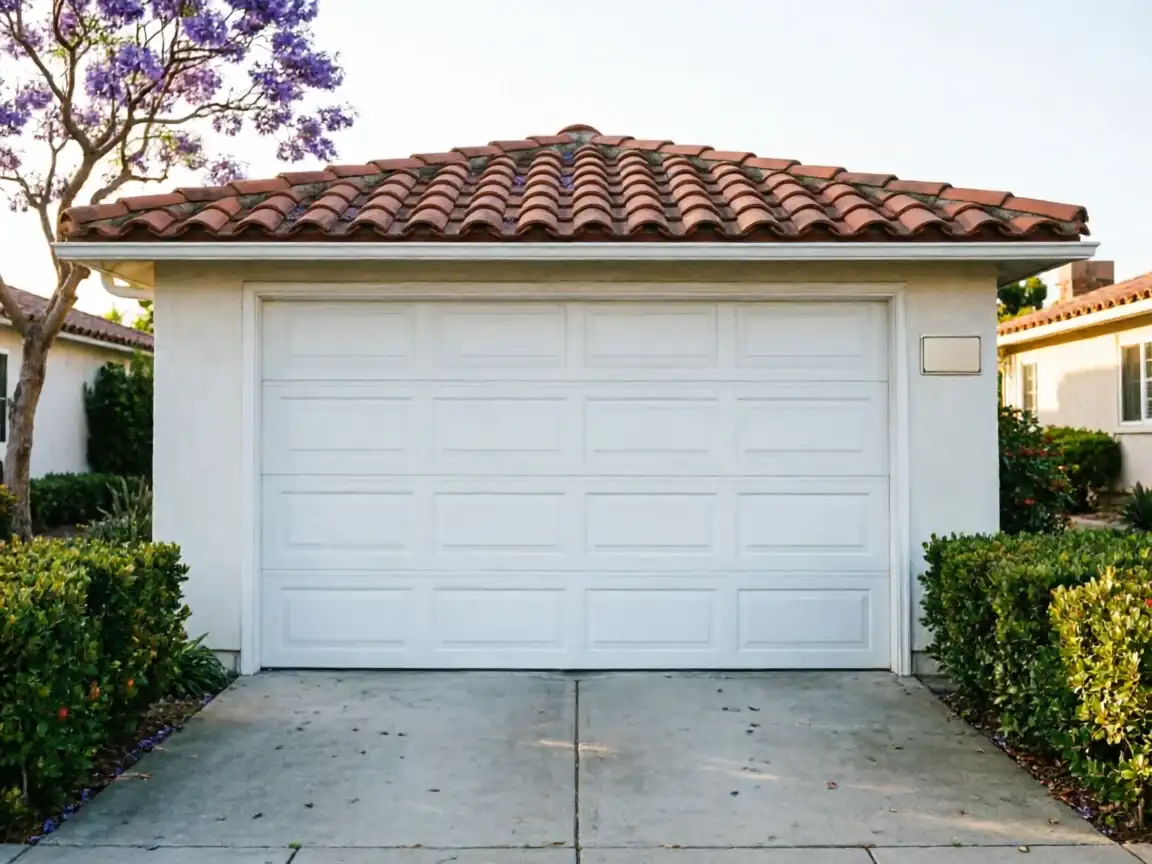
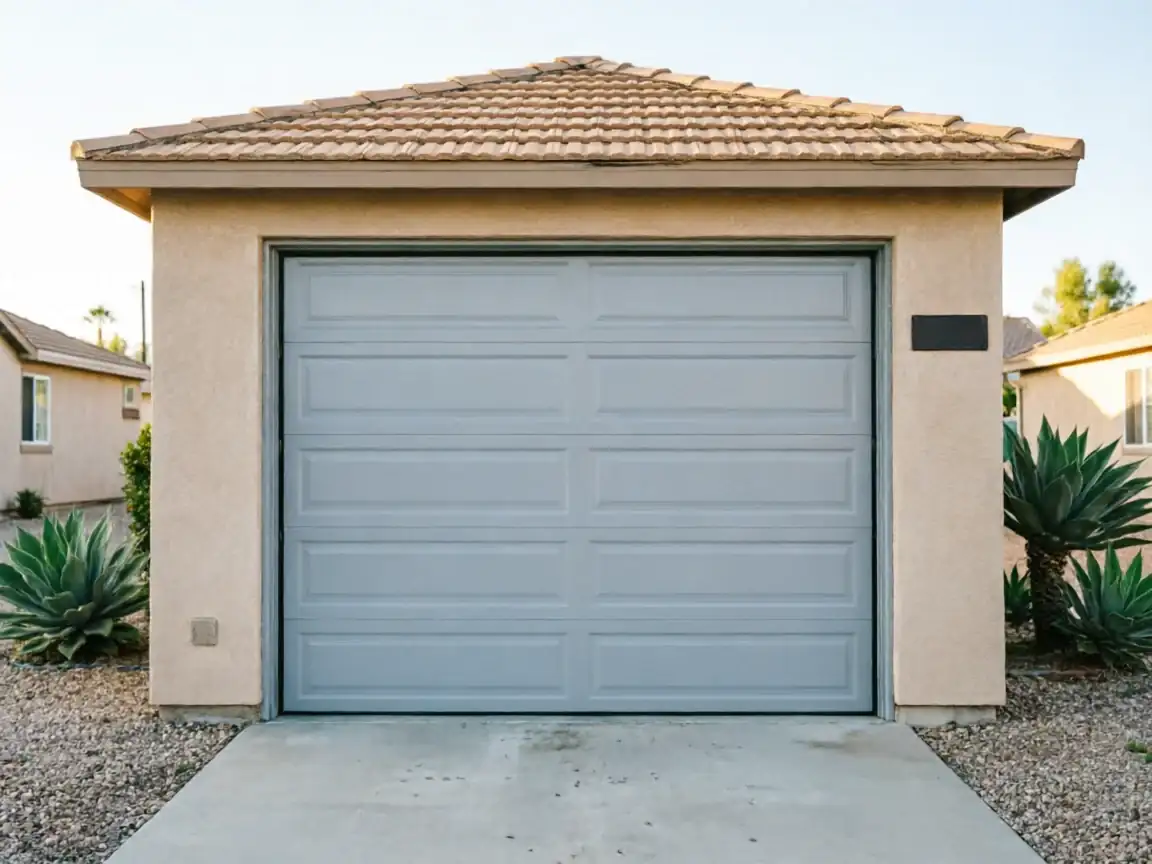
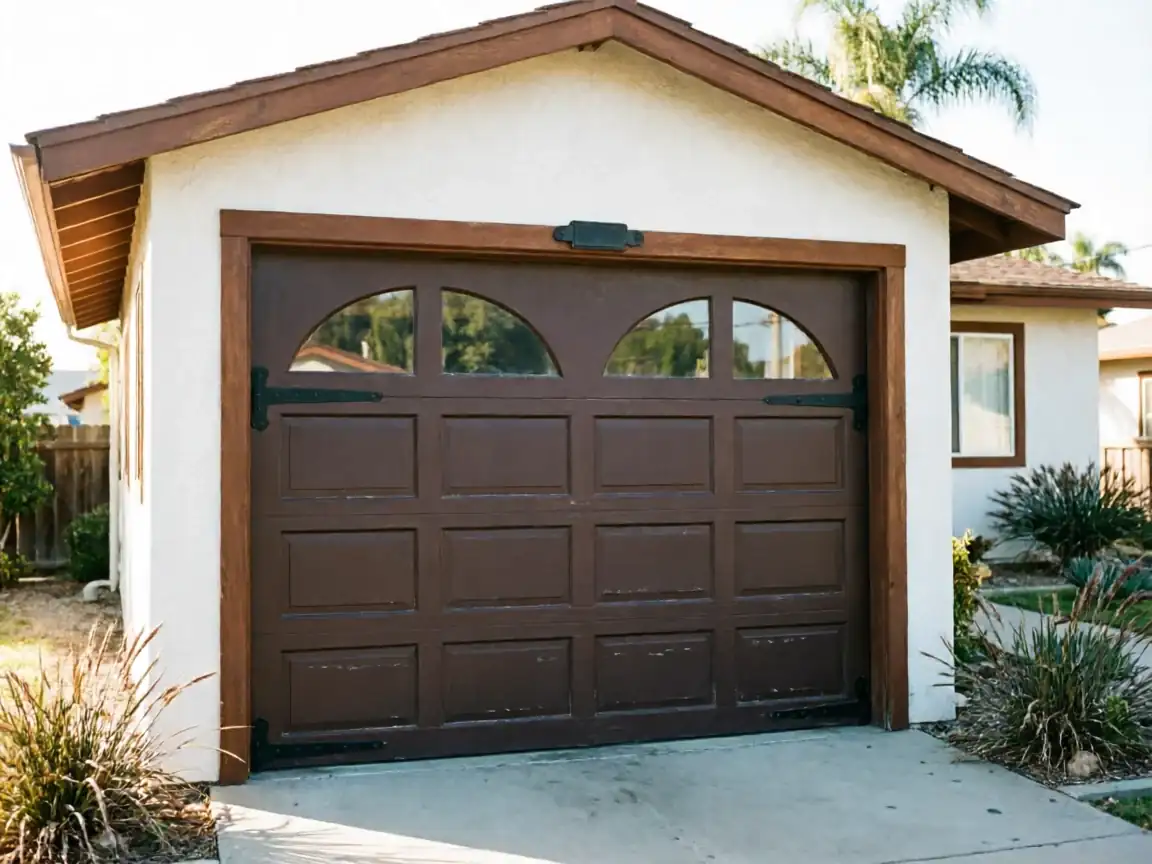
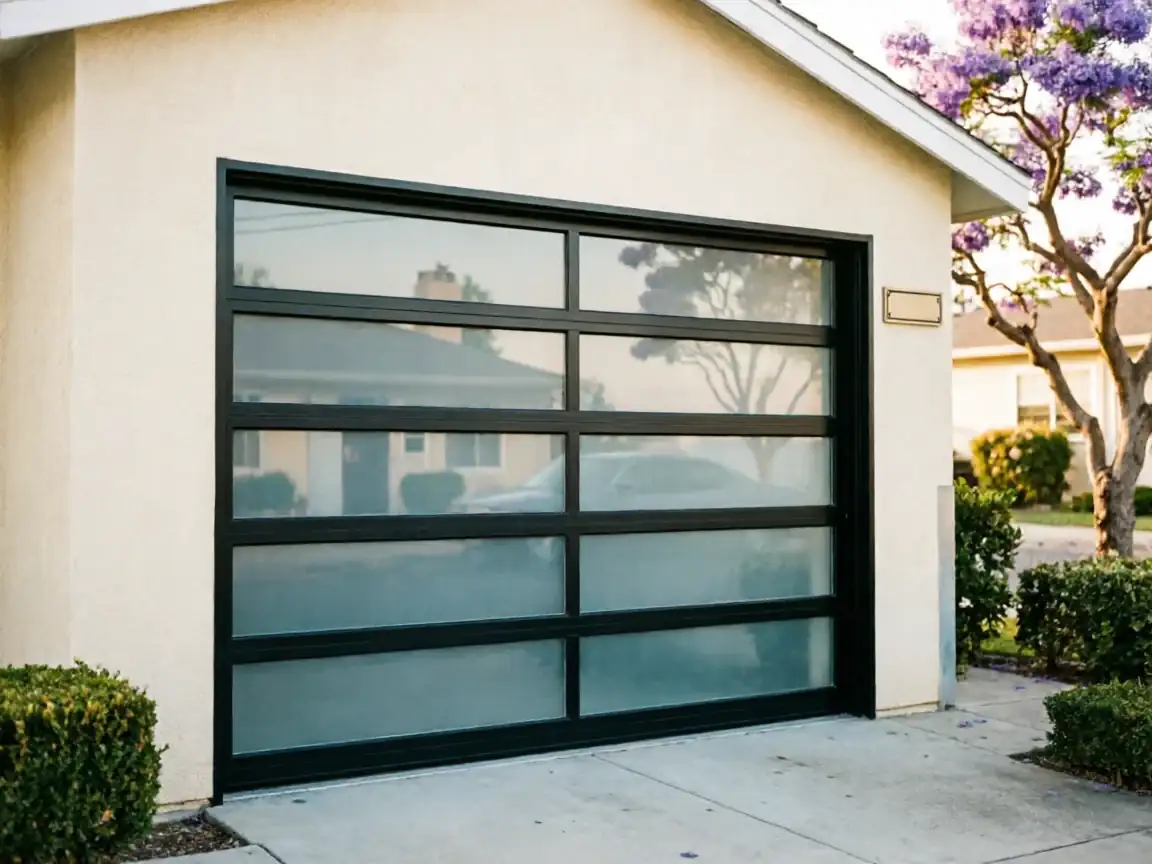
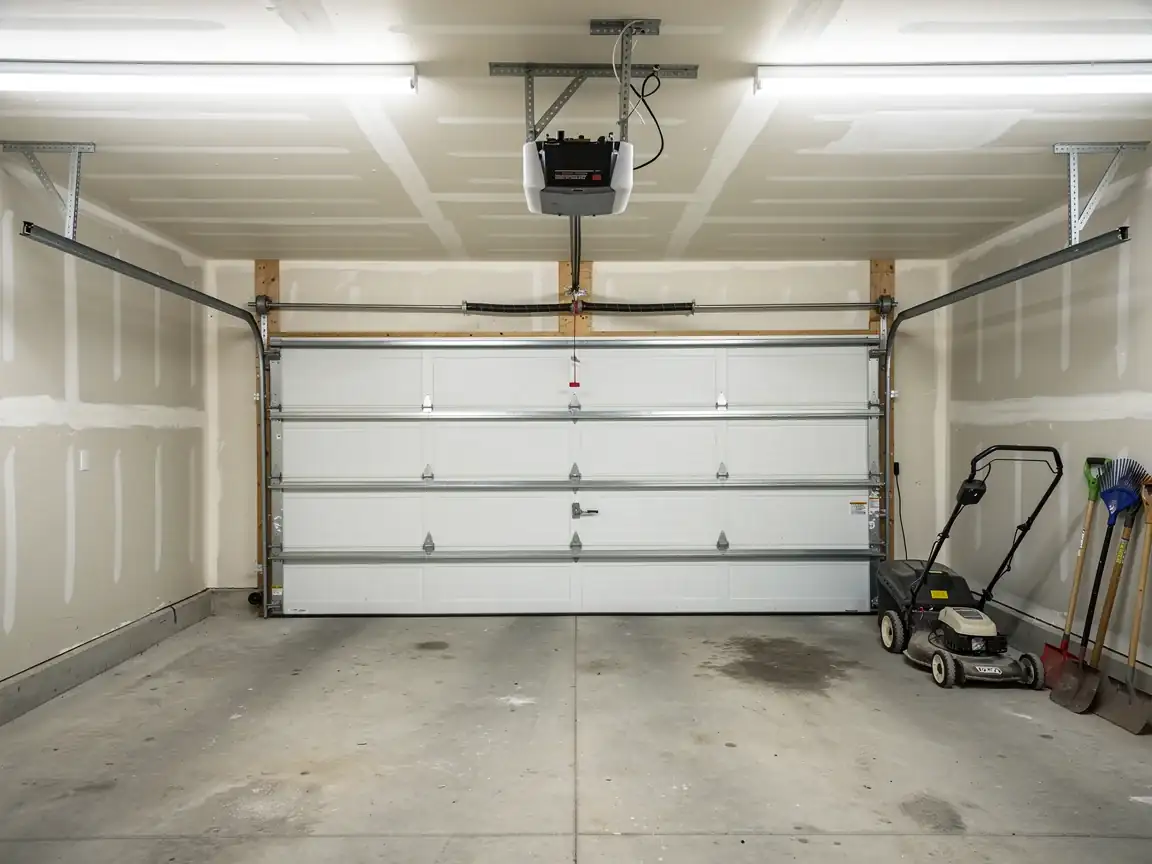
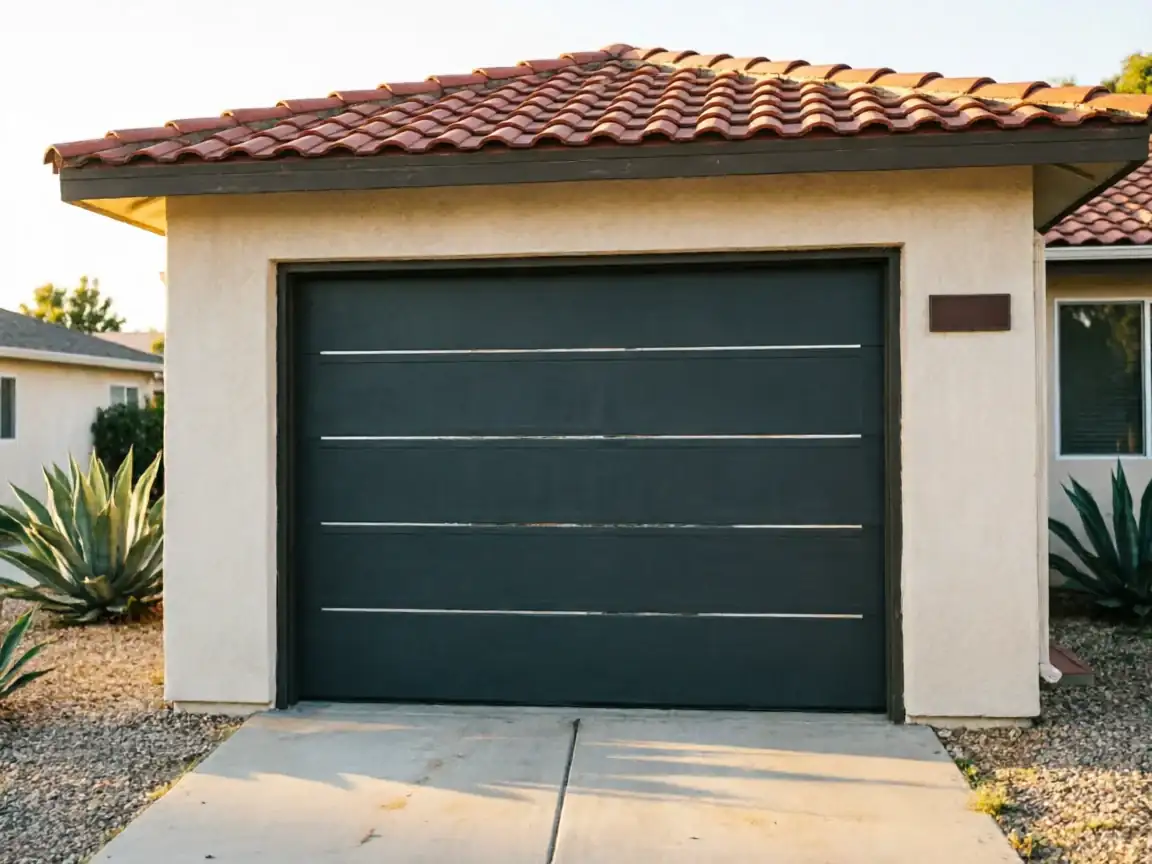
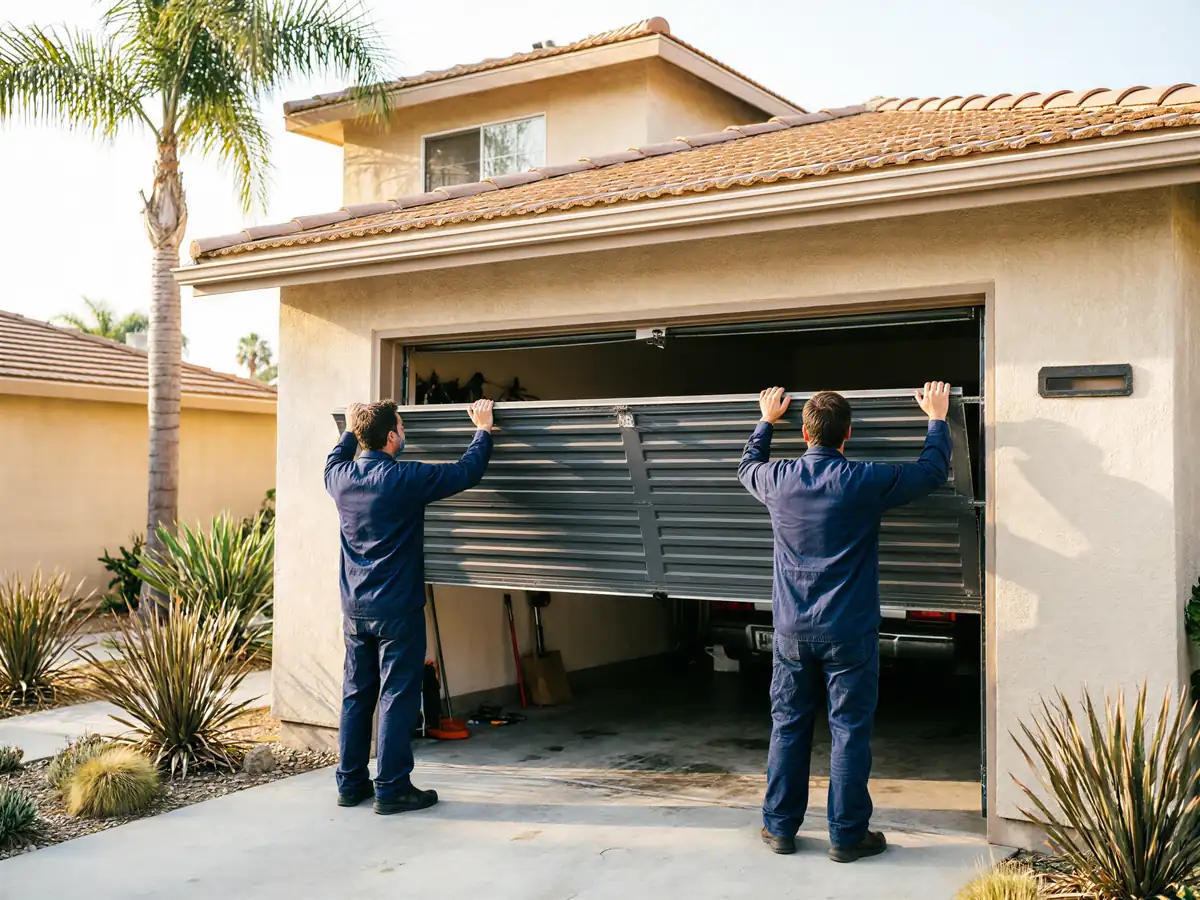
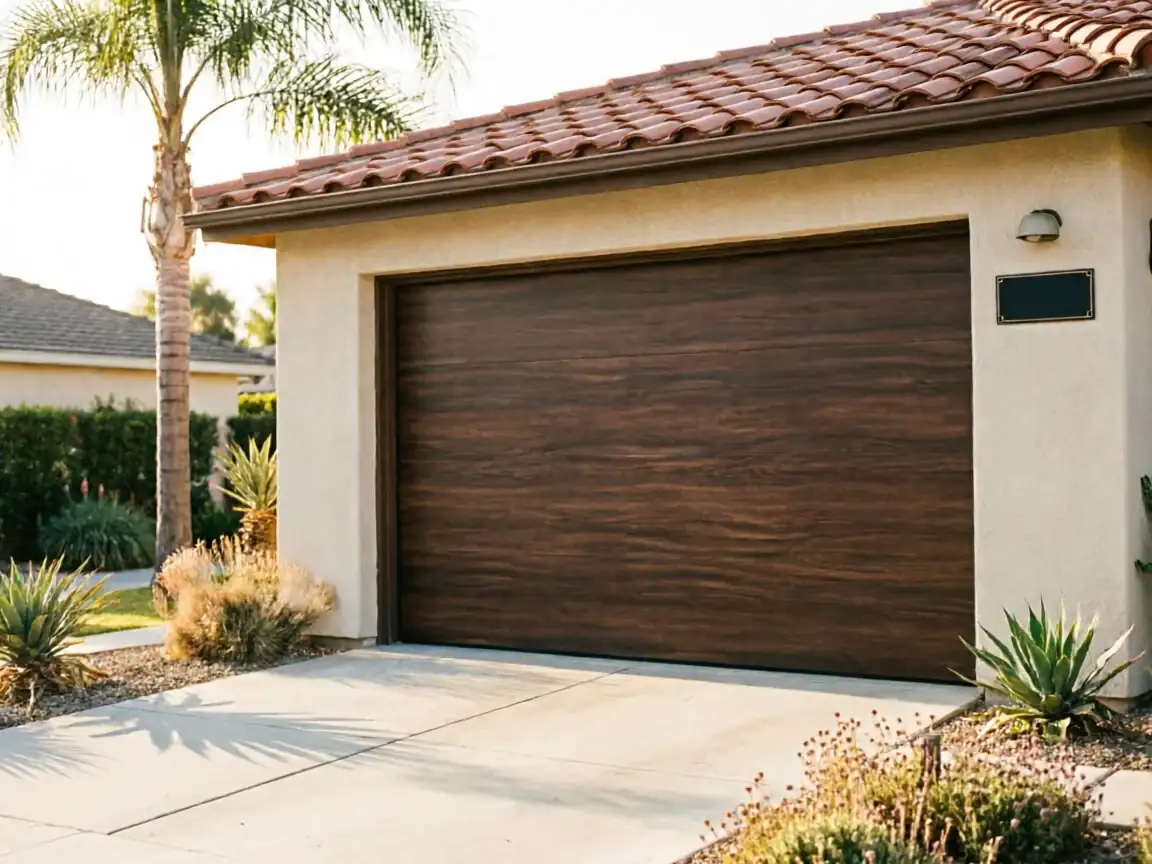
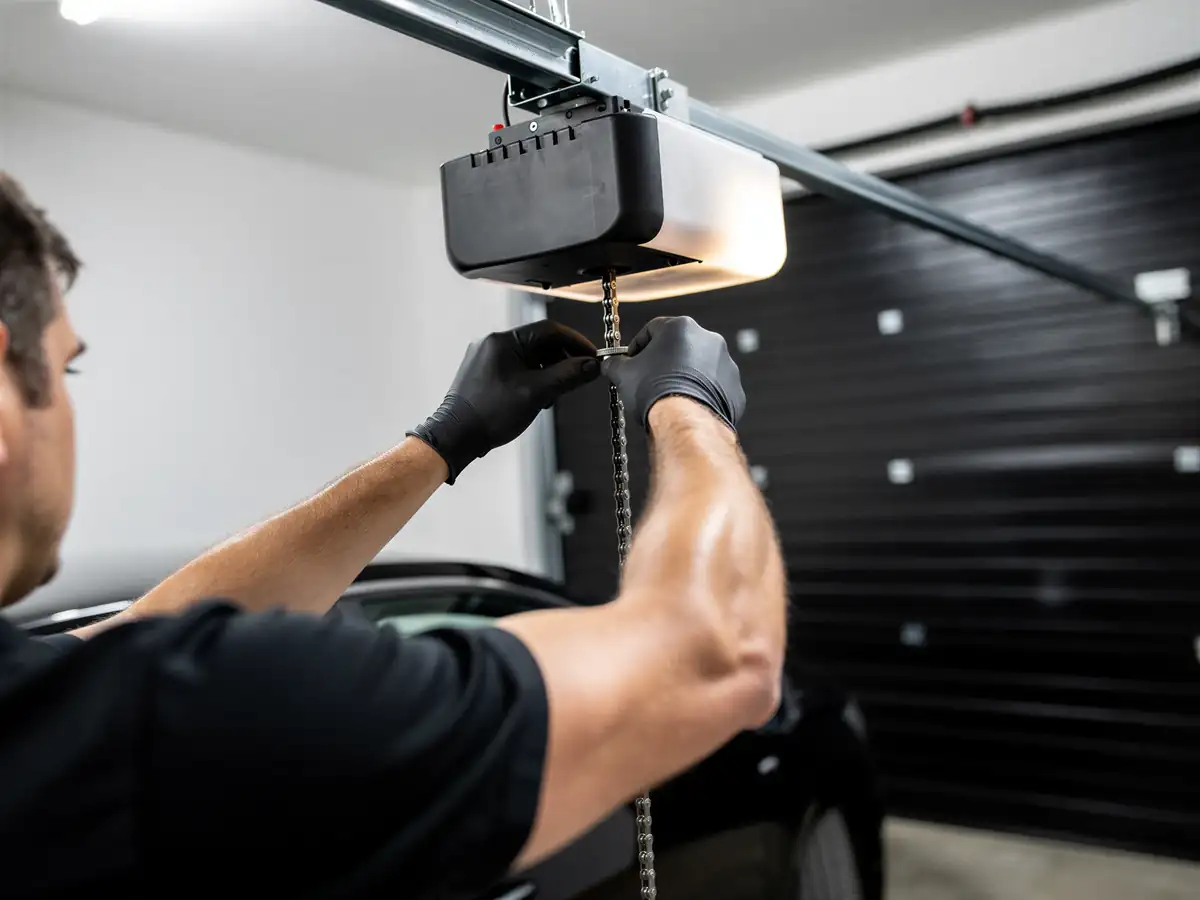
Claremont is a smaller town as these things go - around 12,185 households, not the sprawling tract count you get in some of the larger cities nearby. That size matters for the kind of calls we get. It's not a town full of identical new-build subdivisions with matching hardware; it's a tighter mix of houses, many built in the mid-1960s, with garage doors and openers that have usually had at least one owner replace parts piecemeal over the decades. When a spring goes on a Claremont door, it's often not the first repair that door has seen, and the opener bolted to the ceiling may not match the door it's lifting. We see doors here where the torsion spring is original hardware and the opener is a much newer retrofit - two systems from two different decades trying to work together. That mismatch is a common source of the complaint we hear most: 'it used to close fine and now it doesn't.' A town this size doesn't generate the volume of brand-new, warranty-covered openers that a newer development does. It generates the kind of calls where the fix has to account for what's already there, not what's in a catalog.
Time on the Job
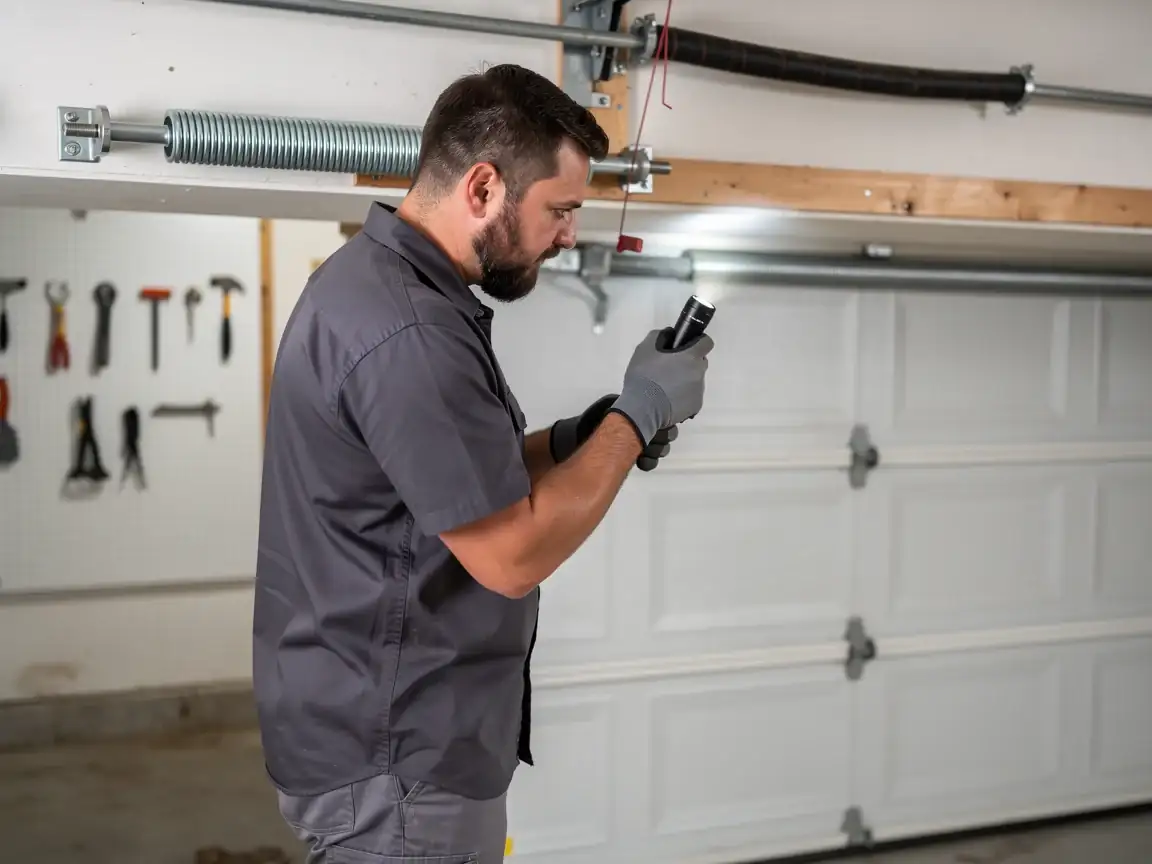
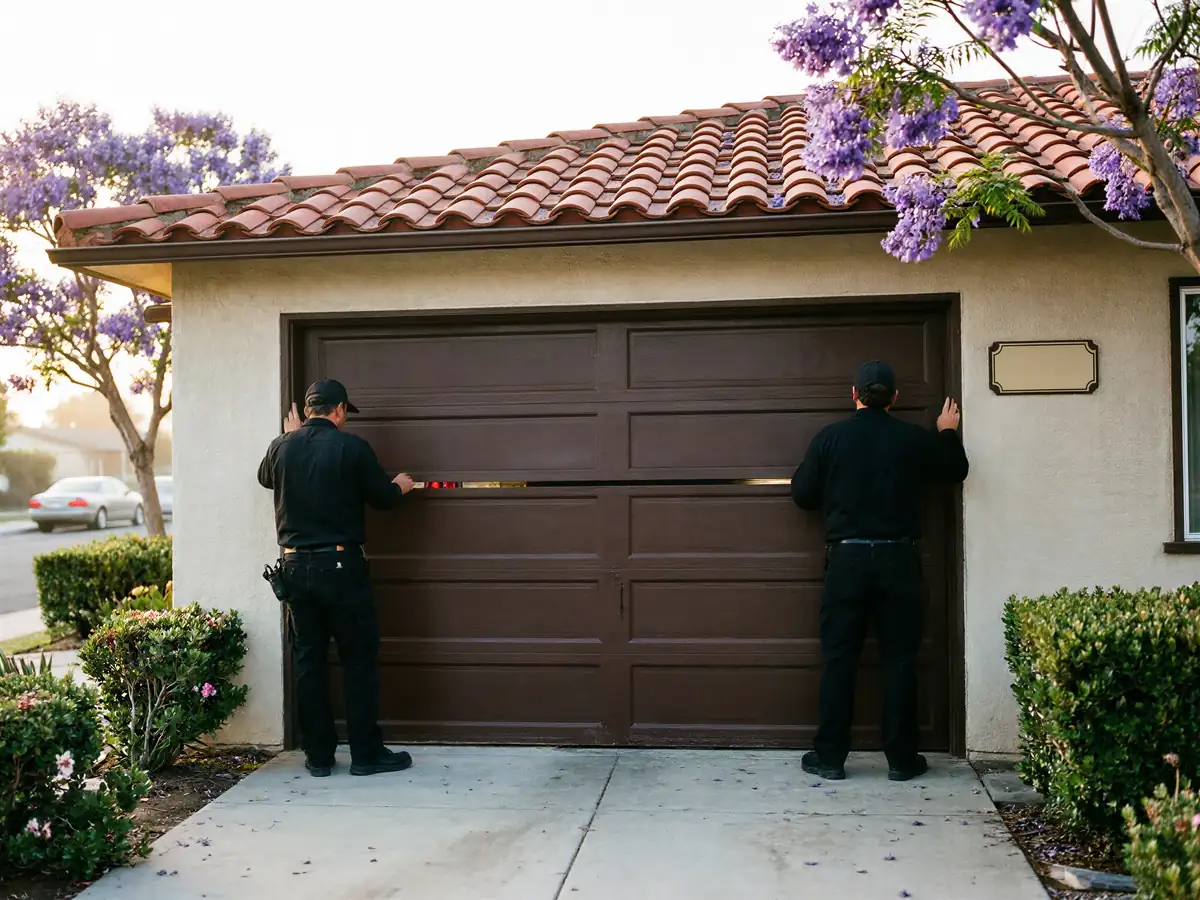
Housing in this part of the service area runs from 1951 up through 2007, with a median build year of 1965 - and Claremont's own median lands at 1966, right in that same window. That means a lot of original torsion spring setups, steel sectional doors from an era before insulated panels were standard, and track hardware sized for doors that weigh less than what's sold today. A repair on a 1966 door isn't the same job as a repair on a 2005 door, even if the symptom looks identical from the driveway. On the older doors, we're often dealing with springs wound for a lighter panel, hinges worn from fifty-plus years of cycles, and sometimes non-standard track spacing that a newer off-the-shelf part won't fit. Climate here is moderate on heat exposure, so we're not fighting the kind of extreme thermal cycling that cracks seals and warps panels fast in harsher climates - but fifty-some years of normal use still wears out springs, rollers, and cable long before anyone is thinking about replacing the whole door.
The DIY Question
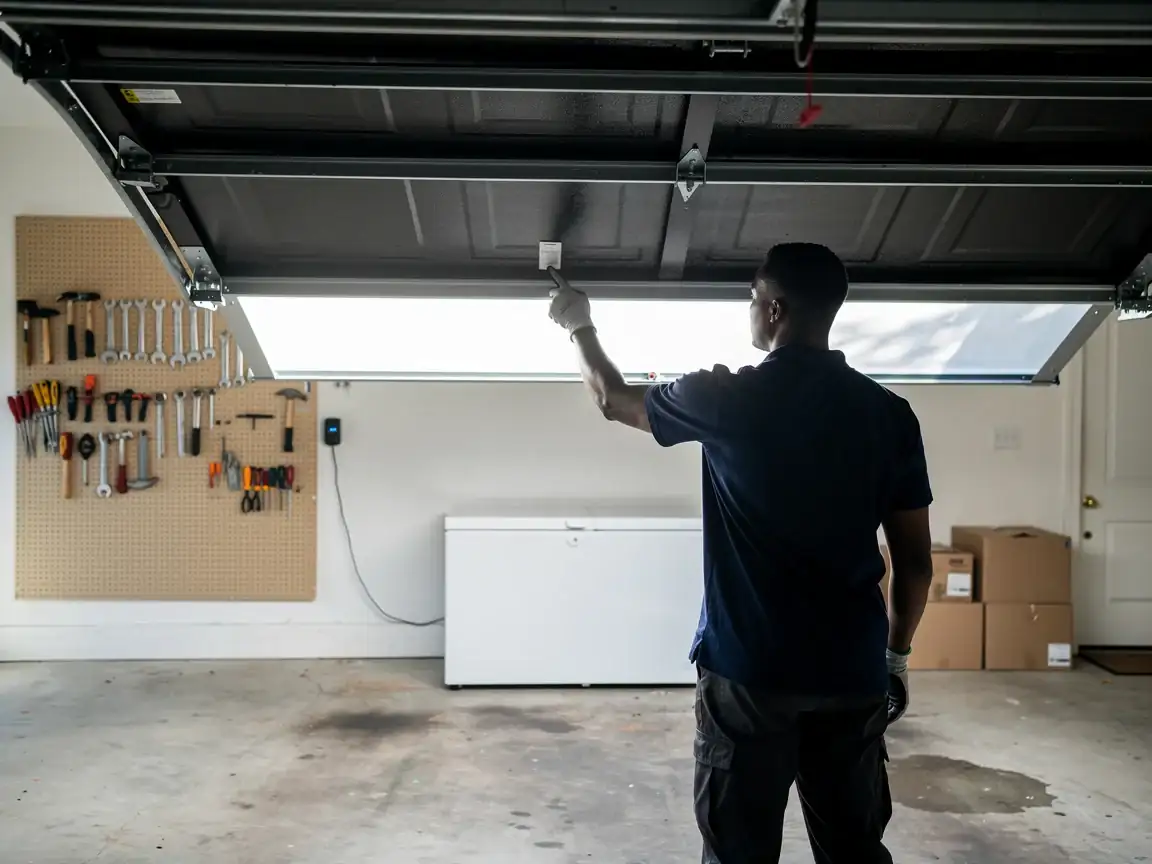
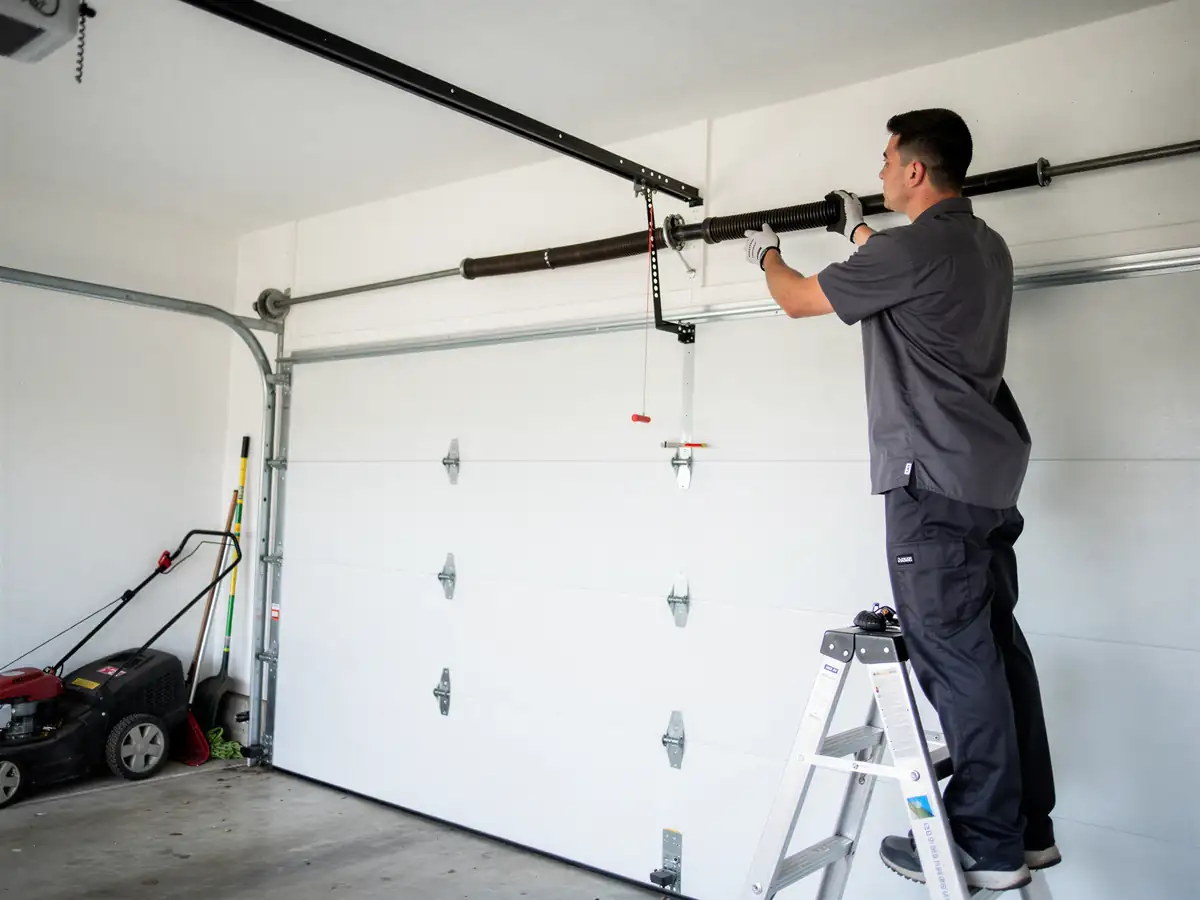
A torsion spring under tension is not a weekend project, full stop - that's true in any town. What's specific to a Claremont house built around 1965 is that the hardware holding that spring in place has had sixty years to wear, rust slightly, or get replaced with a part that isn't quite a factory match. Pulling the wrong cone off an old shaft can let a spring unwind faster than you can let go of it. Lubricating hinges and rollers, tightening visible bolts, and checking that photo-eye sensors aren't knocked out of alignment are reasonable things to do yourself. Springs, cables under tension, and anything involving the torsion bar itself are not. If your opener is newer than your door, also check that the force and limit settings actually match the door's weight - a mismatch there is a common cause of a door that reverses or won't fully close, and it's a five-minute adjustment once someone's looked at it.
The Cost of This Job
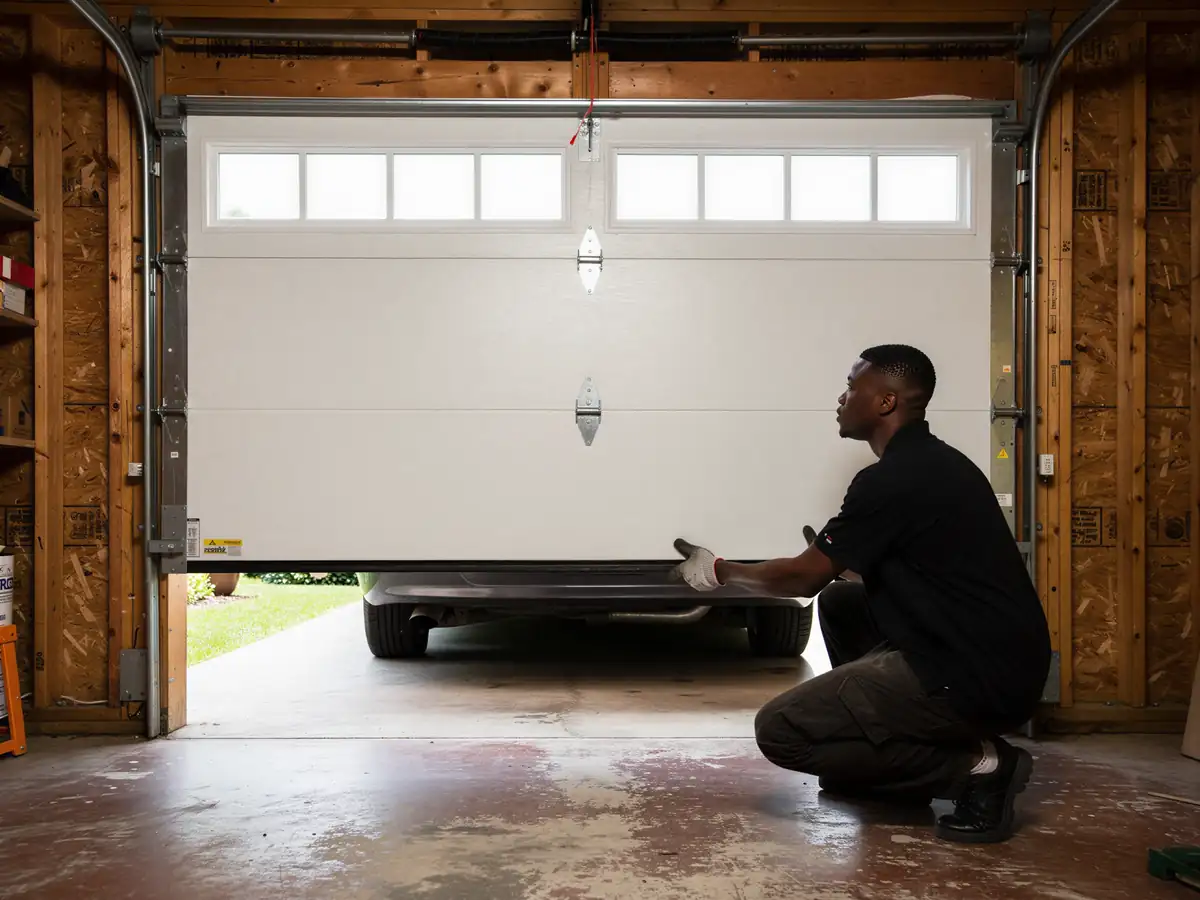
We don't post flat prices here because the job on a 1966 Claremont door with original hardware is a different quote than the job on a door with a newer opener and modern track. What we can say is that this area's household income runs higher than the service area median - Claremont sits around $122,127 against roughly $102,449 across the wider area - which doesn't change what parts cost, but it does mean we're not guessing at budget when we recommend fixing a worn spring setup properly instead of patching around it. If a door's track is bent beyond straightening or the panel itself has rusted through, replacement can end up cheaper over time than repeated spring and roller repairs on a failing structure. We'll tell you which situation you're in before we start, not after.