Why It Happens Here
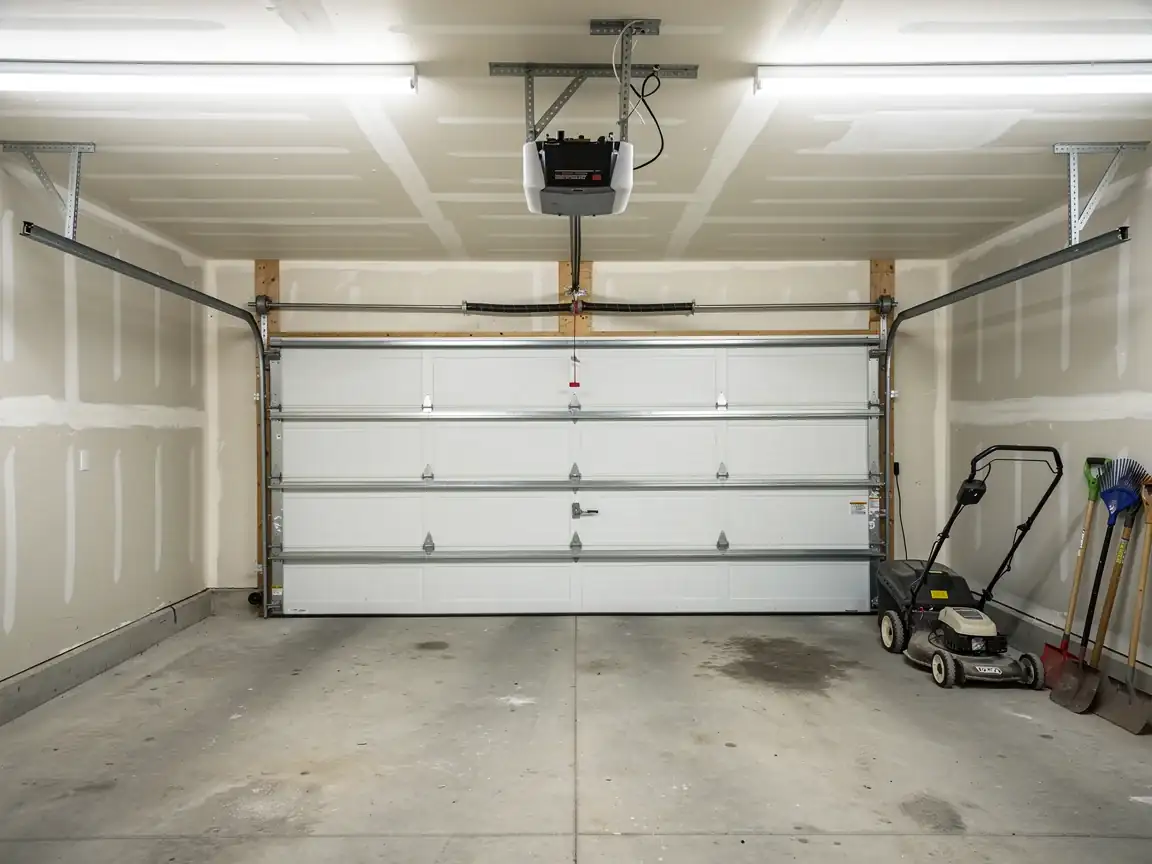
Pomona's housing stock runs from 1951 up through 2007, with the median build year sitting around 1965. That matters more than most homeowners think. A door and opener installed in the mid-1960s was built for a different load spec and a different spring gauge than what you'd get today, and a lot of those original torsion setups are still hanging on side-mounted brackets that newer parts don't match without an adapter plate.
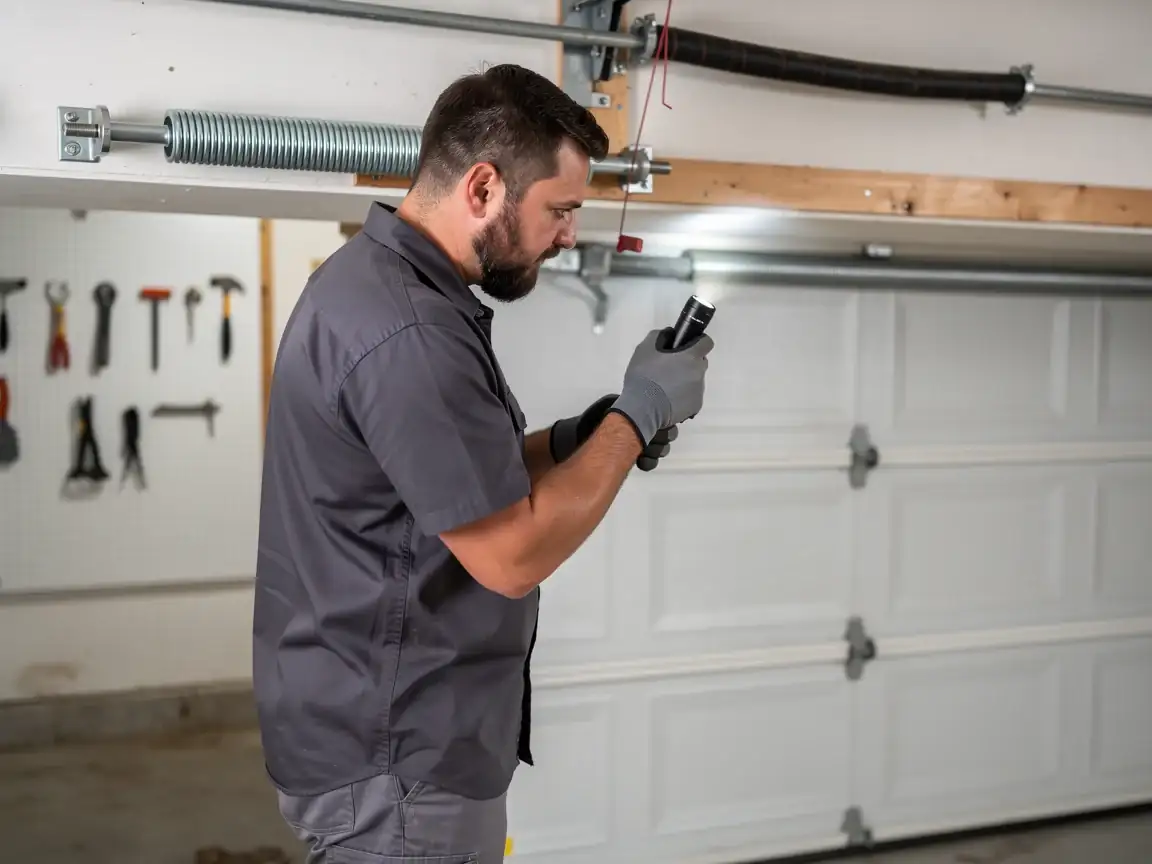
Across the wider area, the stock leans heavily 1960s-70s, which means the failure pattern repeats house to house: galvanized springs that have cycled 10,000+ times, rollers worn to an oval instead of a circle, and tracks bent from decades of minor bumps nobody ever fixed. The HEAT band here is moderate, not extreme, so we don't see the metal-fatigue-from-thermal-swing failures you'd get in a harsher climate zone - what we see instead is straight mechanical wear from age and cycle count.
Houses closer to just a couple miles SSW, tend to run newer within that same range, so the fault mix there shifts toward opener logic boards and sensor alignment rather than spring failure. Age of the house is still the best predictor we've got before we even pull into the driveway.
What You Are Seeing
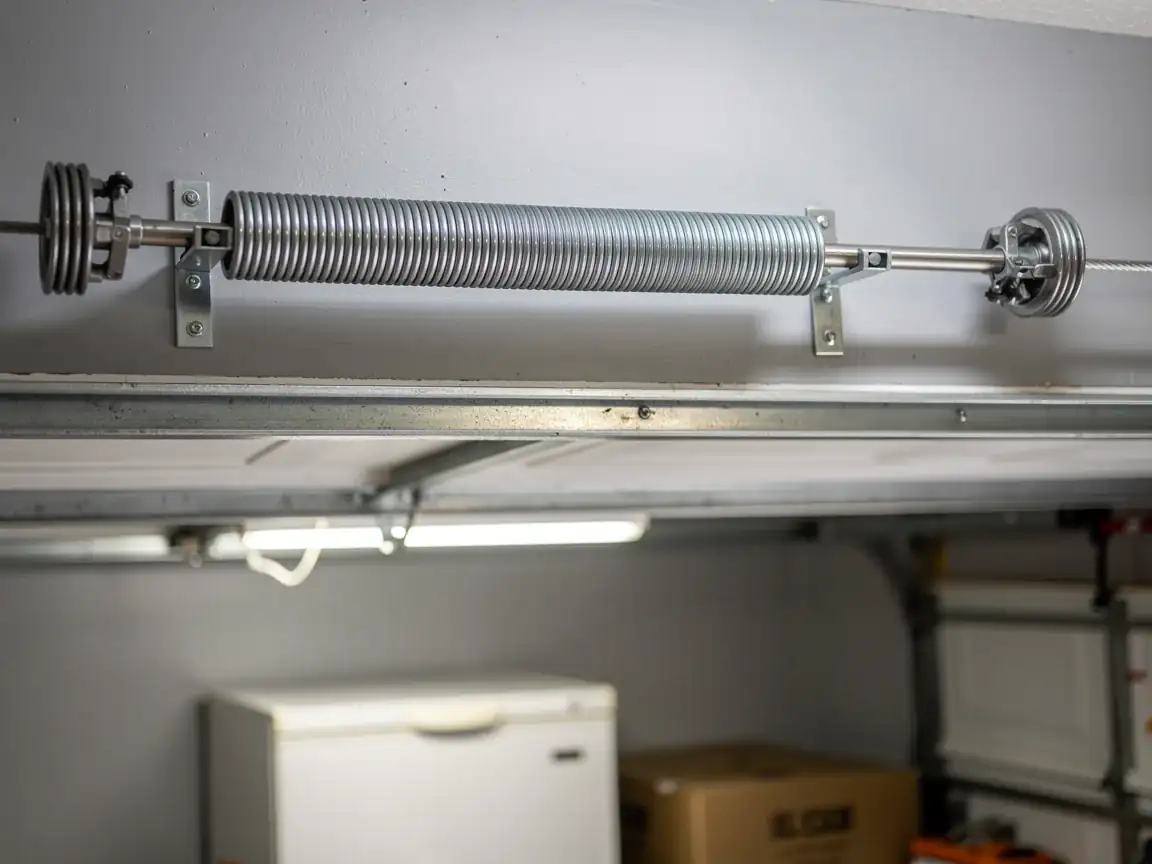
If your door won't lift and you hear a bang before it quit, that's almost always a broken torsion spring - common on the older end of Pomona's 1951-1965 stock where the spring has never been replaced. If the door lifts but the opener strains and reverses, check the rollers and track alignment first; on houses from that same era, steel rollers have usually worn down enough to bind.
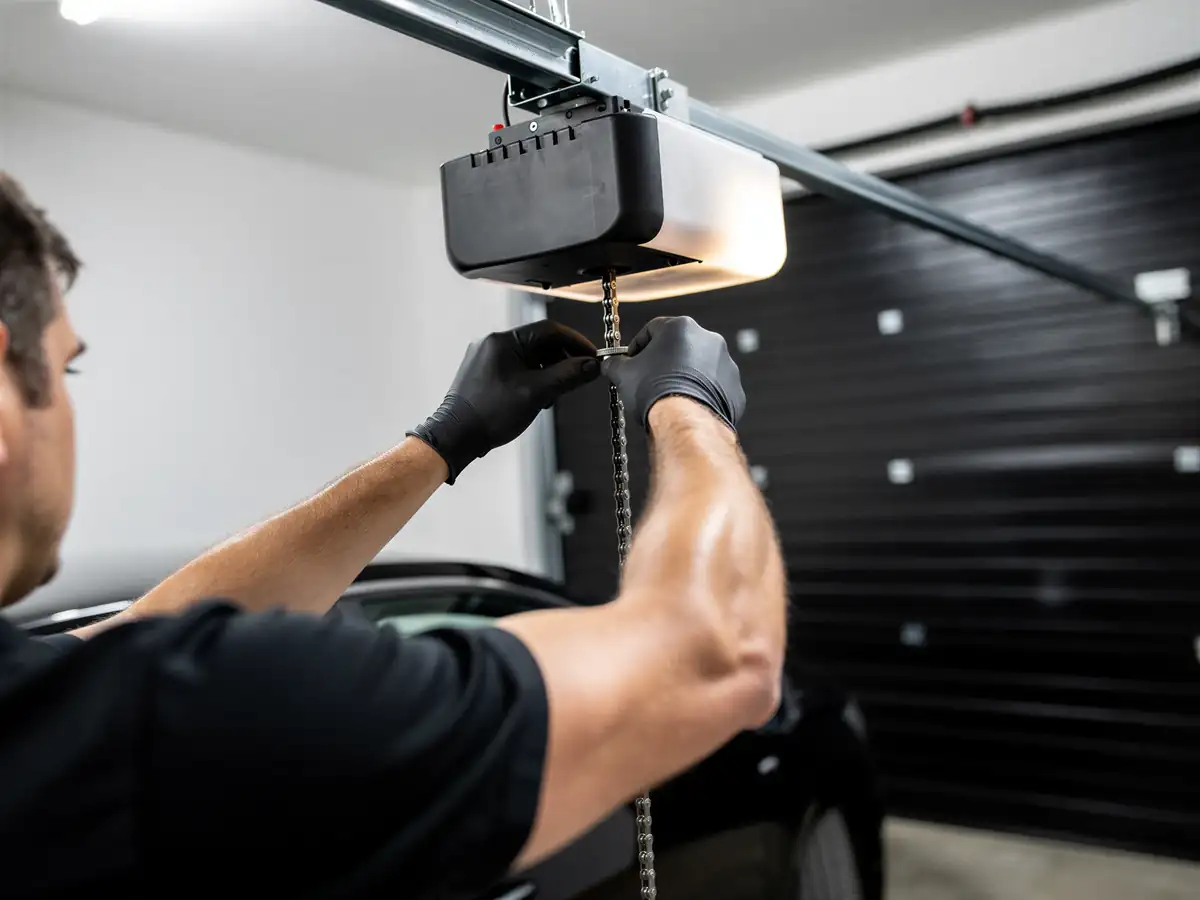
A door that opens fine but won't close, or closes and immediately reverses, points to the photo-eye sensors or the opener's force setting - more typical of the newer builds toward the 1990s-2007 end of the range, where the opener itself is the aging part rather than the spring and hardware.
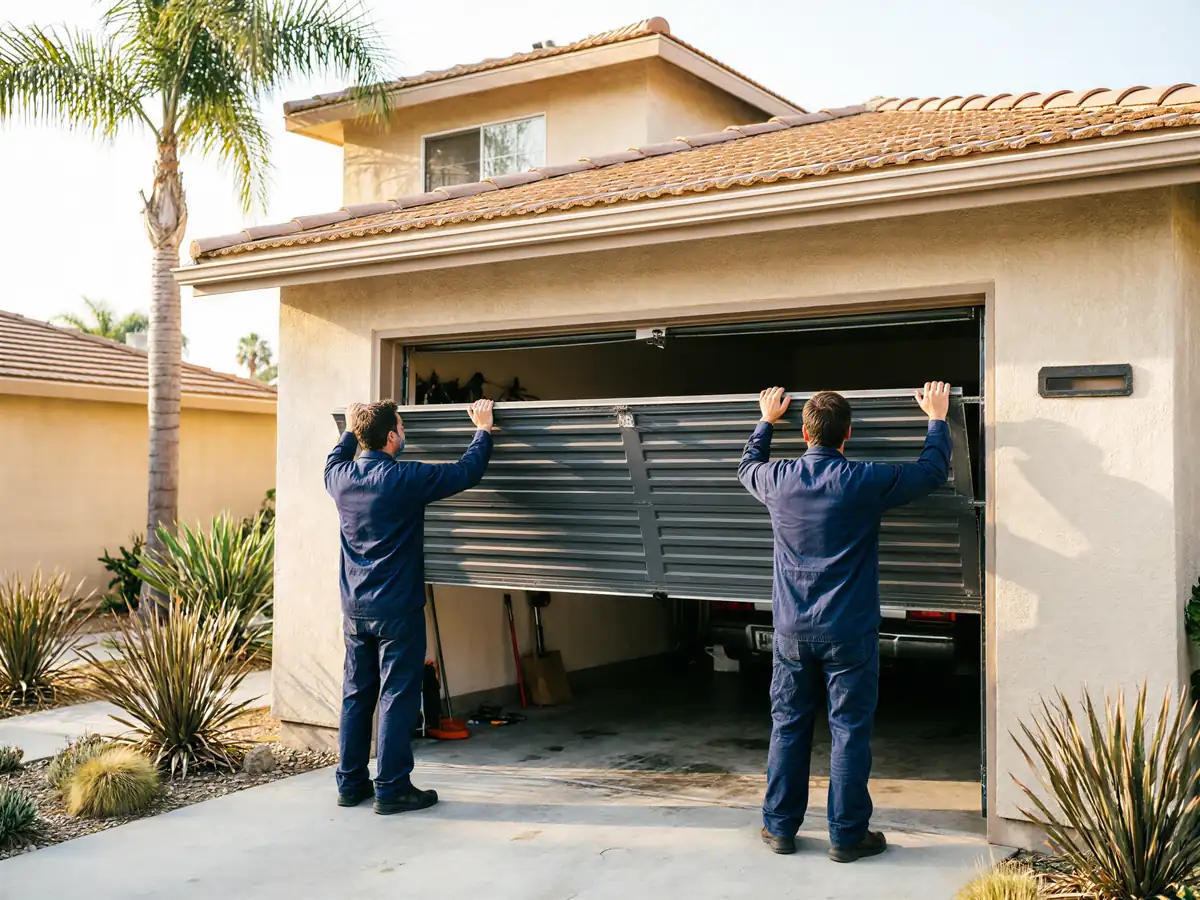
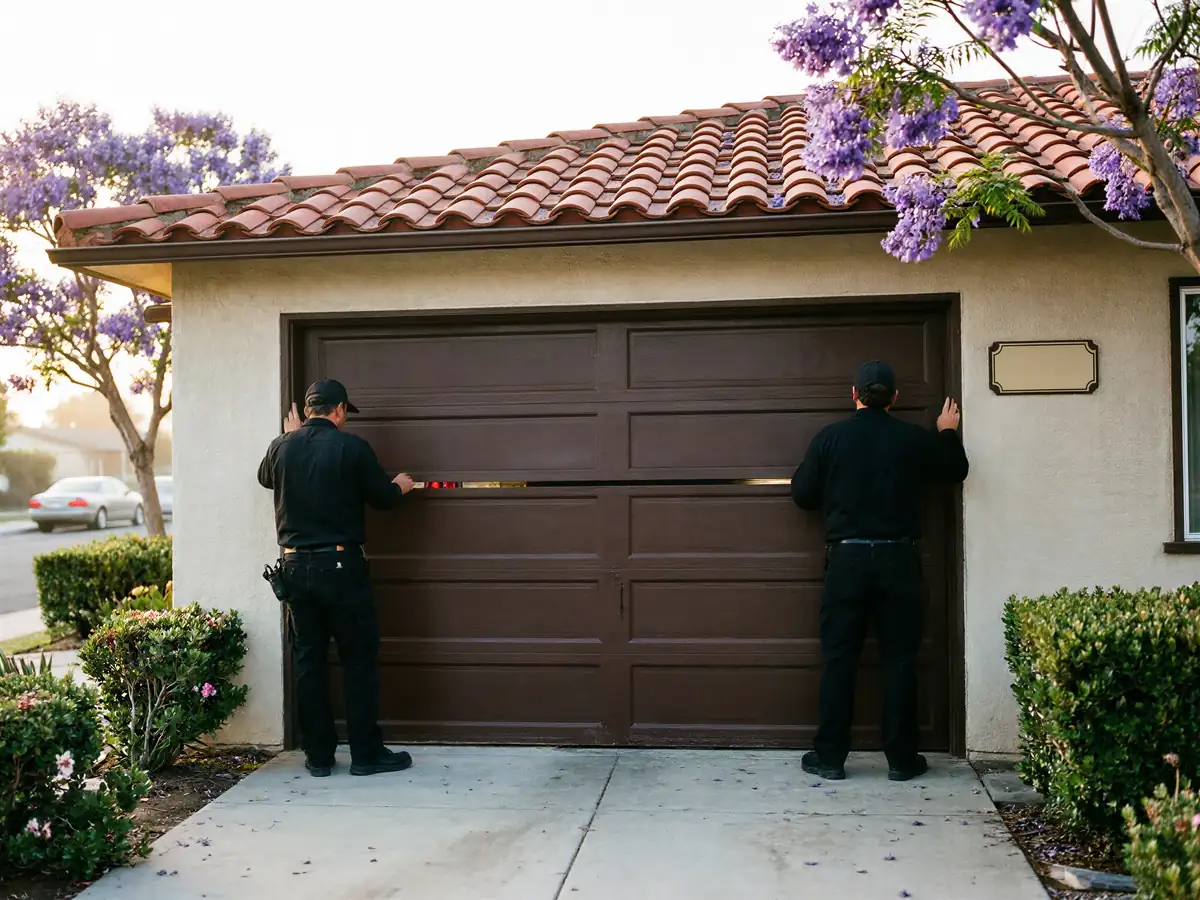
Cables that look frayed near the bottom bracket, or a door that sits crooked in the frame, both mean something has shifted out of adjustment and the door is no longer tracking square. None of these are cosmetic. A door running on a worn roller or a frayed cable is a door that can come down wrong.
The DIY Question
Some of this is fine to handle yourself
Lubricating rollers and hinges, tightening loose bolts on the track brackets, replacing worn weatherstripping - all reasonable weekend jobs.
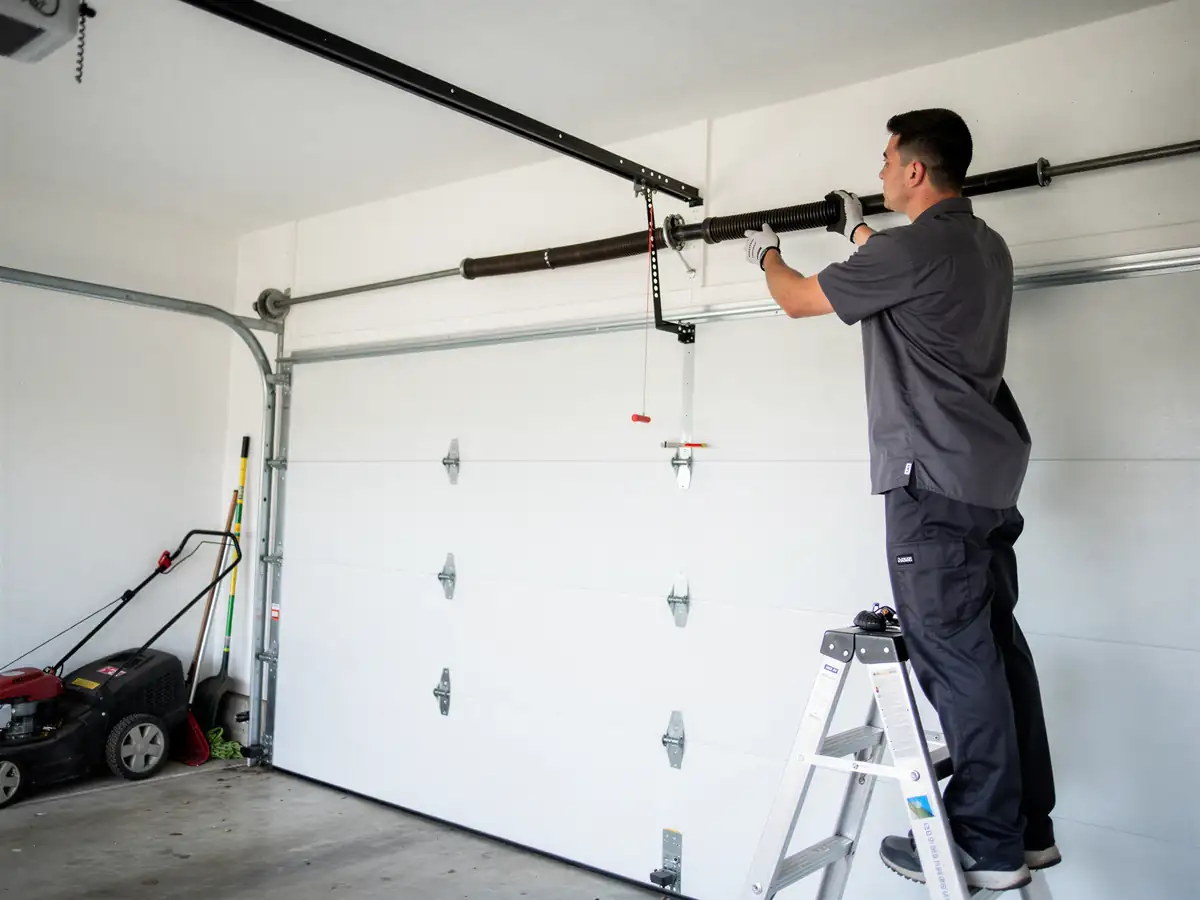
A torsion spring is not
These are wound under enough tension to break a bone or worse, and on the older Pomona homes where the original spring has been in service since the 1960s-70s build era, the steel is also more likely to be fatigued and snap unpredictably mid-adjustment. Cable replacement carries the same risk for the same reason - it's under load the whole time you're working on it.
One honest limitation
If your opener is original to a house built in that 1951-1965 window, parts for it may simply not be made anymore. At some point replacing the opener costs less than hunting for a matching logic board, and we'll tell you that straight instead of billing you for a repair that won't hold.
How to Book
Call or request a visit and tell us the age of your house if you know it - that one detail narrows down whether we're likely looking at a spring, a roller, or an opener issue before the truck even leaves. We work across Pomona and the surrounding area, including homes out toward.
You can reach us through the site at the homepage to get started.