What Local Conditions Do
Pomona sits in a moderate heat band, not the scorching desert heat you get further east, but still enough daily temperature swing to matter for steel. Garage doors here see the door skin and torsion springs heat up through the afternoon and cool fast once the sun drops behind the hills. That cycle, day after day for decades, is what fatigues spring steel and dries out the factory lubricant on rollers and hinges. It's not dramatic weather. It's slow, repeated stress on parts that were installed once and never looked at again.
Because most of the housing stock in this service area went up between 1951 and 2007, with the bulk of it from the 1960s and 70s, a huge share of the doors we're called out to are original hardware from that build era, or a replacement installed sometime in the decades since on the same old track and header. The heat doesn't break a spring on its own. It just shortens the life of a part that was already on borrowed time, and in a neighborhood built in the 60s, a lot of parts are on borrowed time.
Checking It Yourself
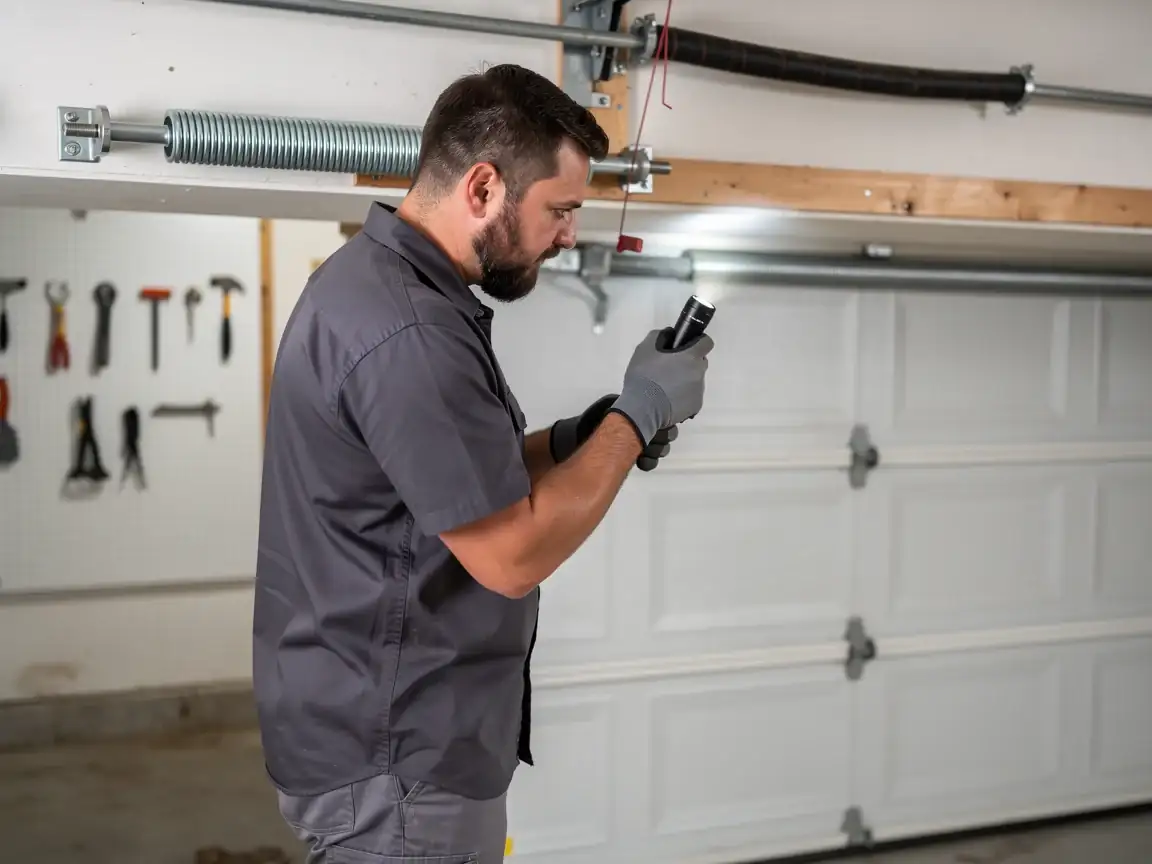
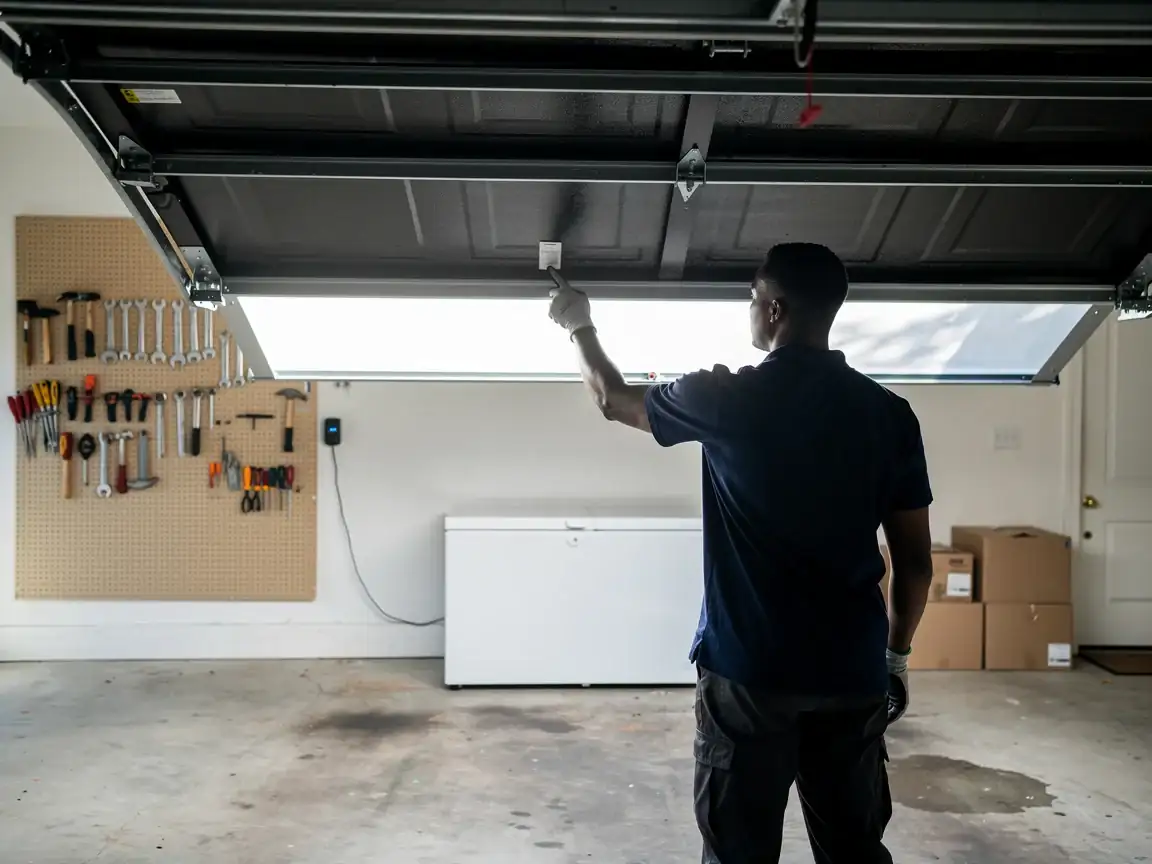
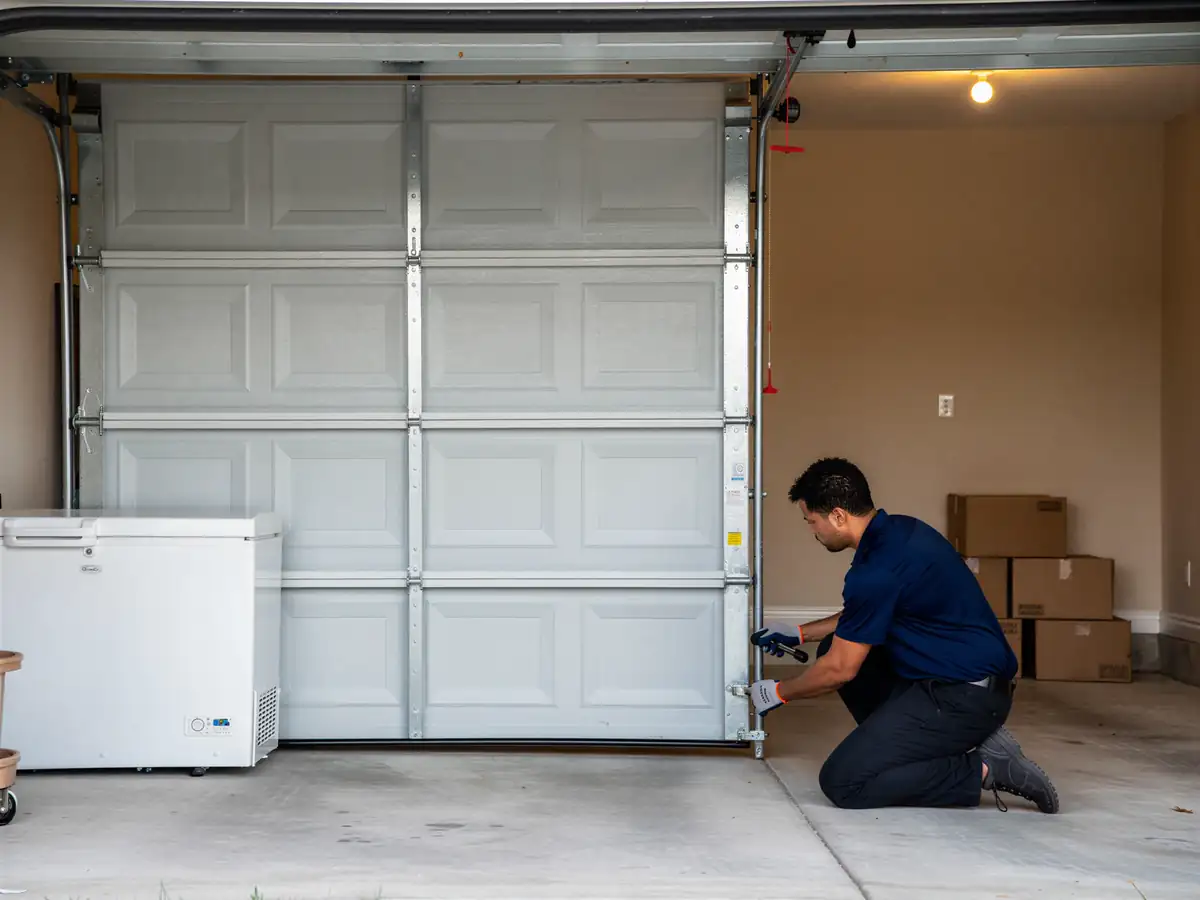
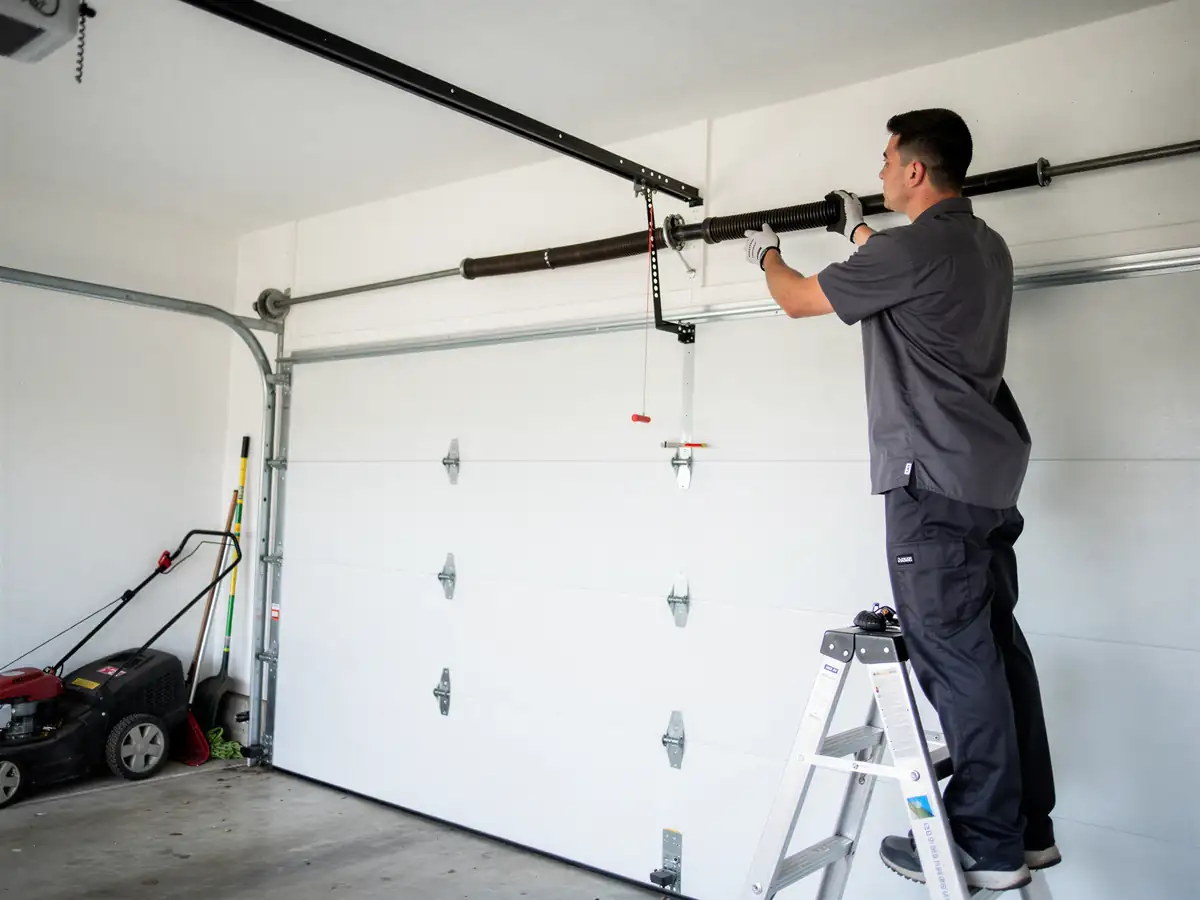
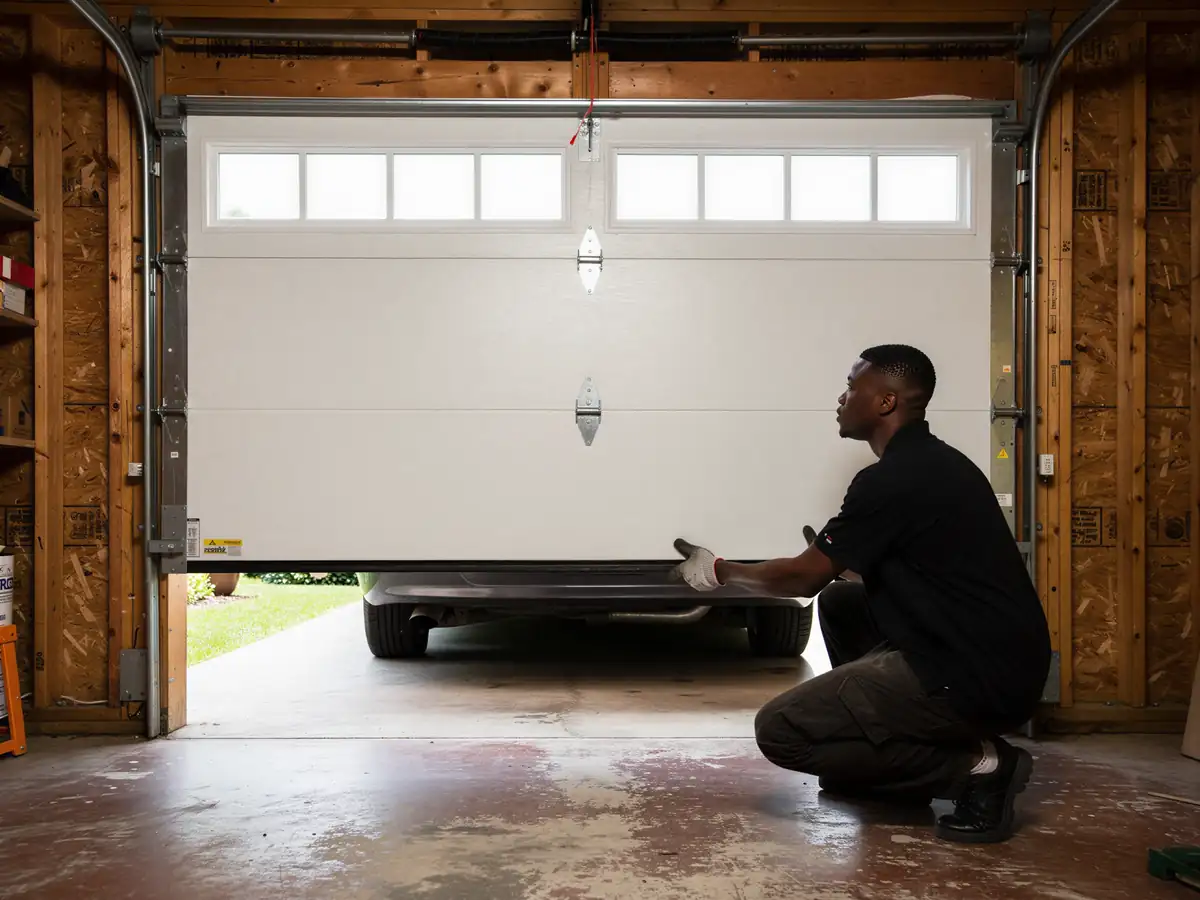
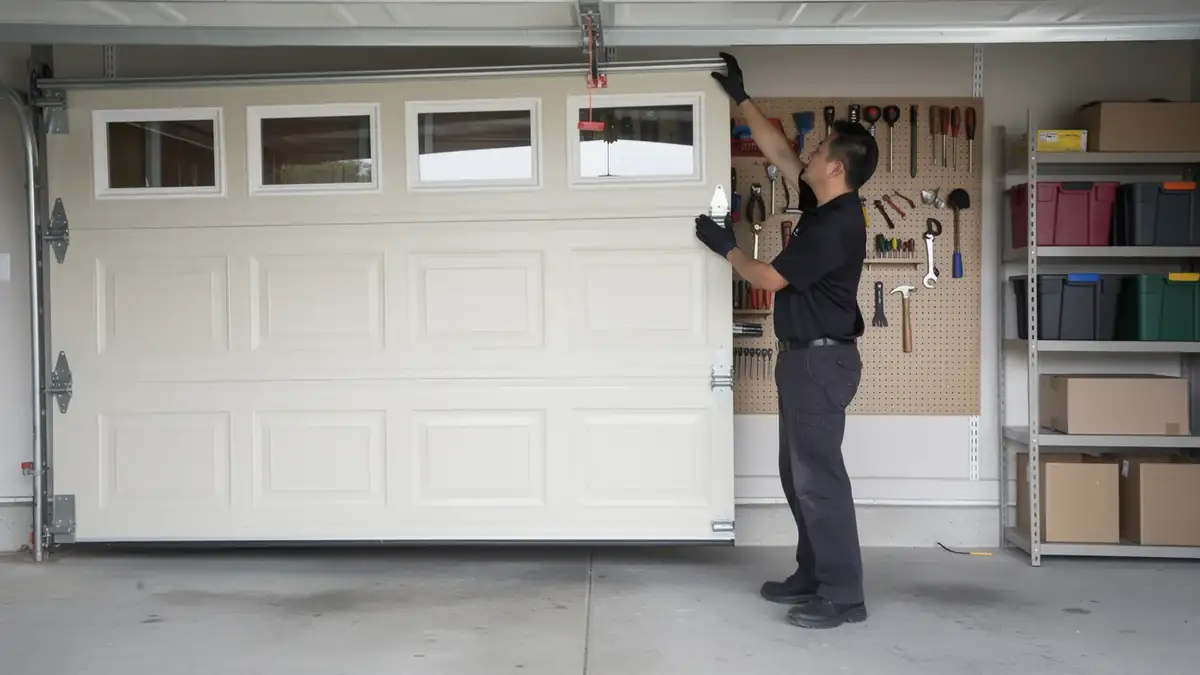
Before you call anyone, open the door halfway and let go. If it drops on its own instead of holding, that's a spring losing tension, not an opener problem. Look at the torsion spring above the door - if you can see daylight between the coils where there shouldn't be any, or the coil looks stretched unevenly on one side, that's wear from exactly the heat-cycling we're talking about.
Next, run a hand along the track where the rollers travel. Dry, gritty, or rust-colored residue means the lubricant has broken down, which happens faster here than in a milder, more consistent climate because of the daily heat swing. Rollers themselves should turn freely when you spin them by hand with the door closed. If a roller is cracked or flat on one side, it's been dragging, not rolling, probably for a while.
Last thing: listen. A door on a 1960s or 70s track with original hardware tends to groan or pop at the same point in the cycle every time, usually where a bent section meets a straight one. That's not normal and it's not something lubricant alone fixes.
The Situation
With median household construction in this service area dating to 1965
And most of the stock concentrated in that 1960s-70s window across the 45 named communities we draw from, the single biggest factor in any service call here isn't the brand of door or opener - it's the age of the track and spring system underneath whatever door is currently hung on it. A lot of homes have had the door panel itself replaced once, sometimes twice, but the original torsion hardware and track brackets from the 60s build are still doing the work.
The pattern holds across the service area: the door people see is rarely the door's real age
The Common Mistake
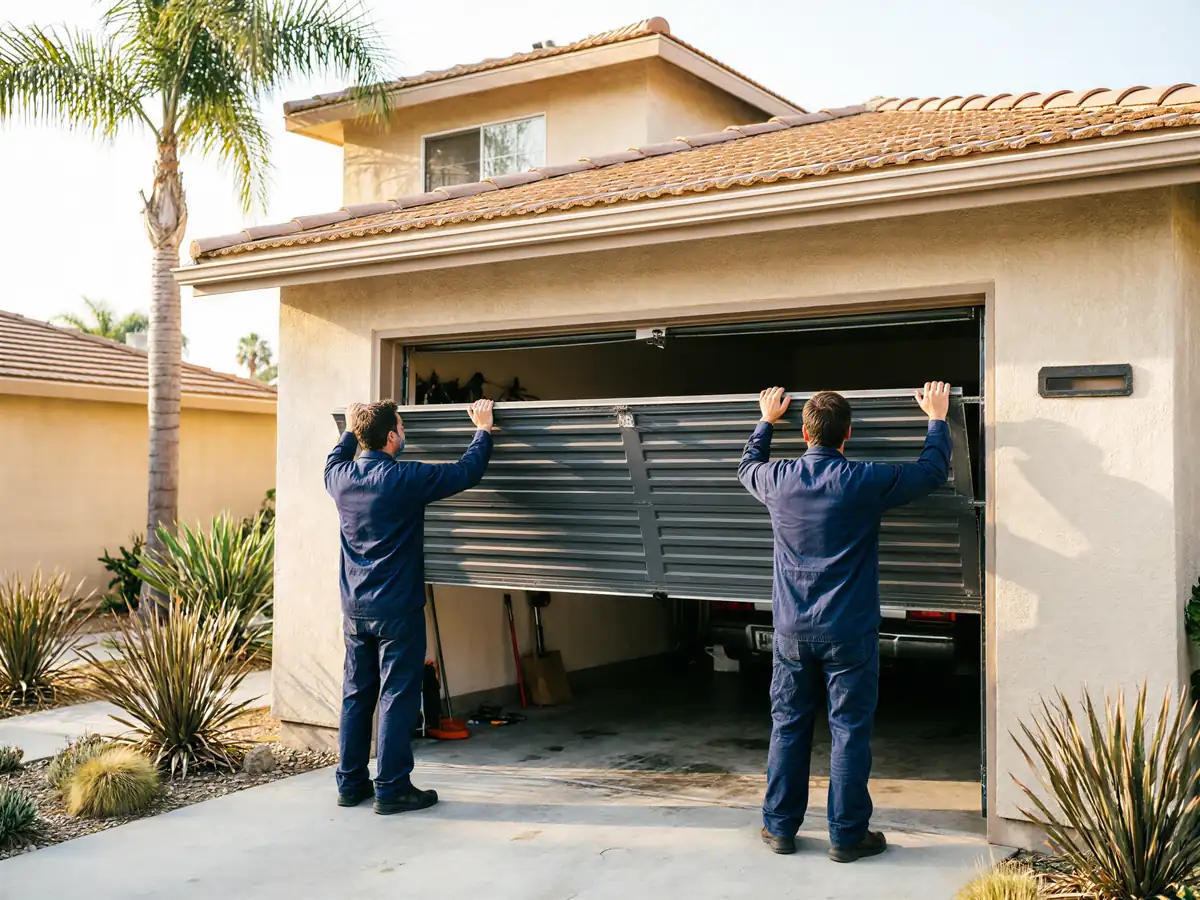
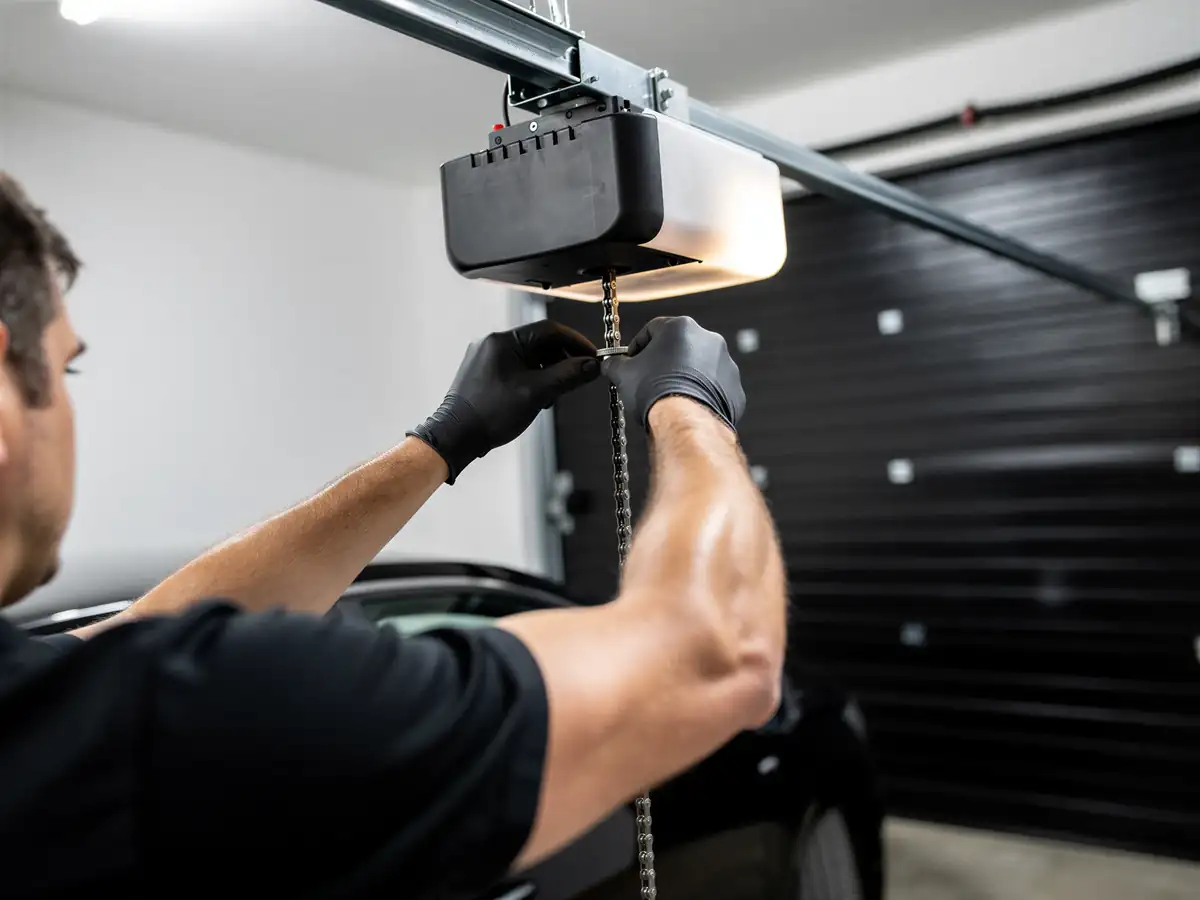
The mistake we see most is a homeowner replacing the opener when the actual problem is a spring that's lost tension from years of heat-cycling. An opener straining against a door that isn't properly counterbalanced will eventually fail, and when it does, people assume the opener was the problem. It wasn't. It was doing extra work for months because the spring beneath it quietly gave out first.
The honest limitation here: we can't tell you over the phone whether it's the spring or the opener. Those symptoms - grinding, slow travel, the door stalling partway - overlap enough that guessing wastes money. What we can tell you is that in a service area where most of the housing is from the 1960s and 70s, the spring is the first thing worth ruling out before anyone spends money on a new opener.