What Local Conditions Do
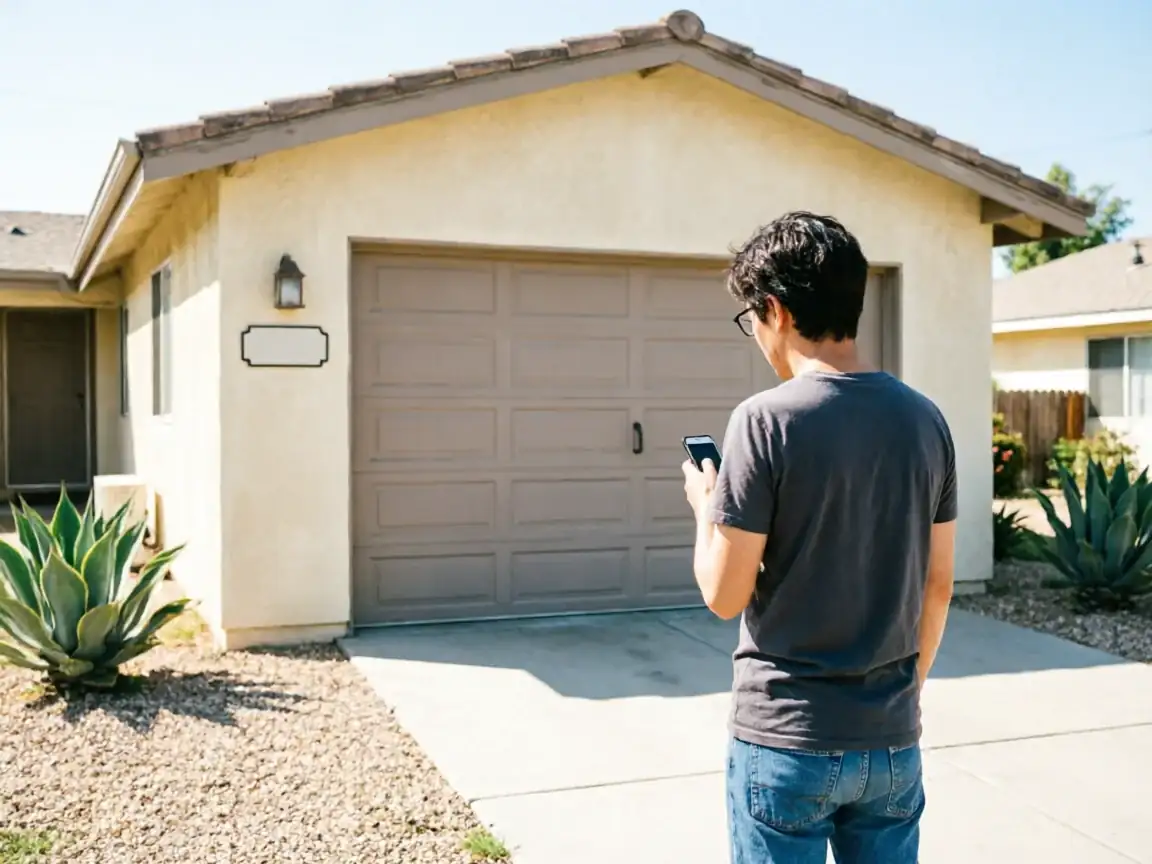
Most of the garage doors we get called on in Pomona sit on hardware that went in when the house did, and houses here were built mostly in the 1960s and 70s, with the broader stock running 1951 through 2007 and a median build year around 1965. That matters because a door from that era is almost always on a torsion or extension spring setup that's had sixty-plus years to loosen, rust at the coil ends, or get a replacement spring that doesn't match the original wind count. The heat band here is moderate, not extreme, so we don't see the kind of thermal expansion cracking that wrecks doors in harsher climates. What we do see is steady wear: dry rollers, hardened lubricant, brackets that have backed out a quarter turn at a time for decades. A noise that would mean nothing on a five-year-old door can mean a lot on a door that's been quietly degrading since the Johnson administration. That's the frame for everything below - we're talking about older hardware carrying ordinary loads, not a door in distress from weather.
Checking It Yourself
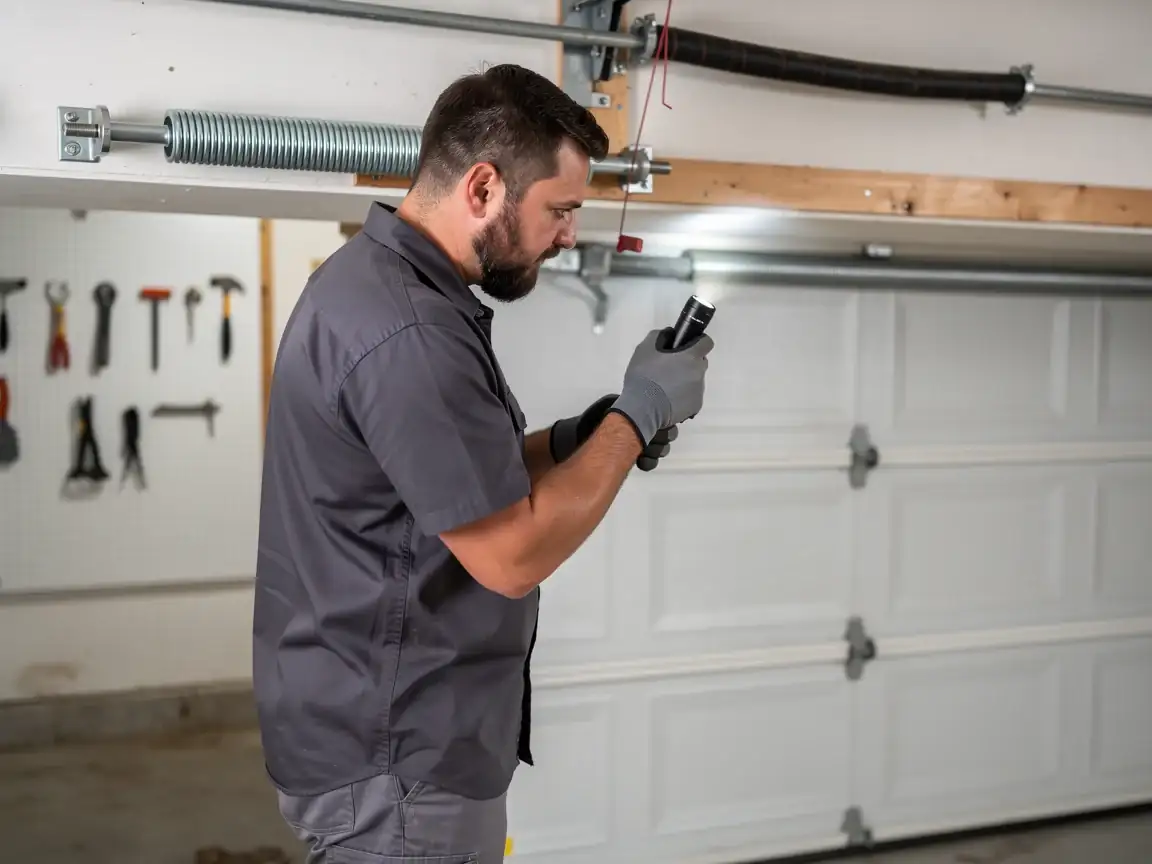
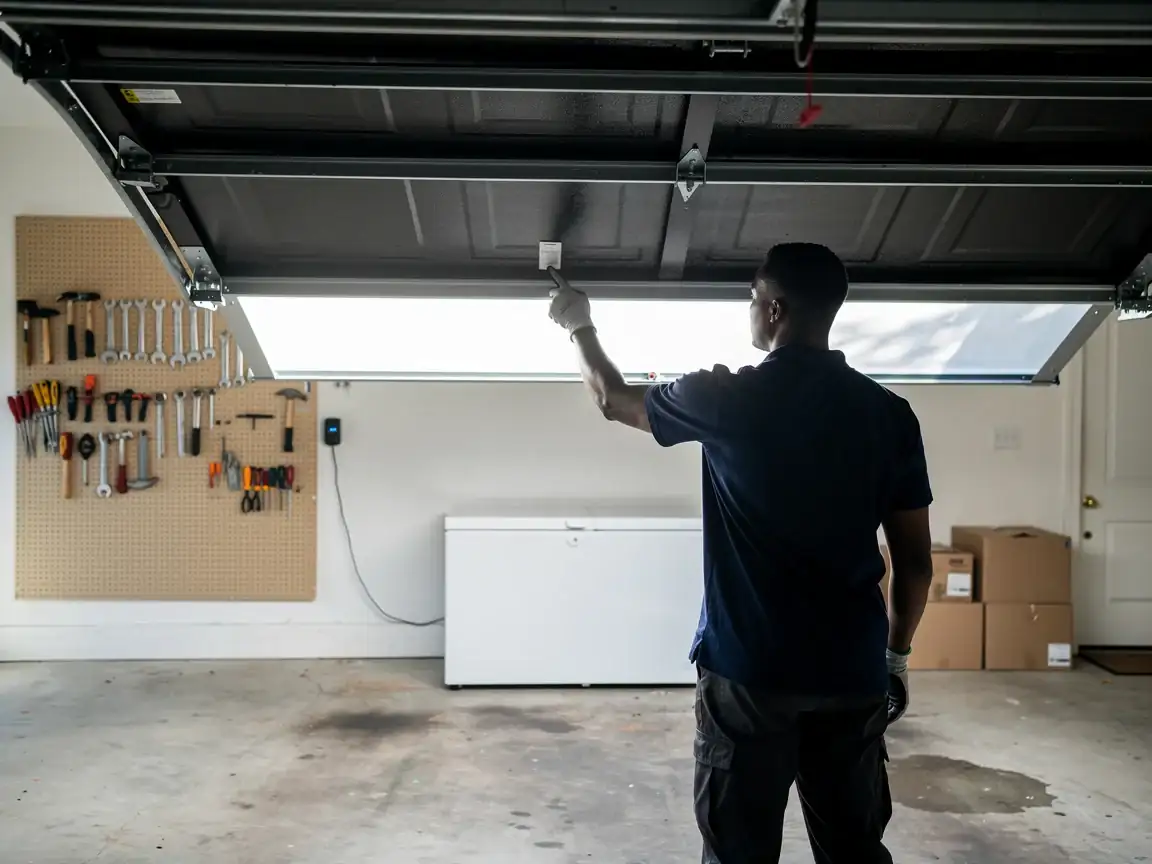
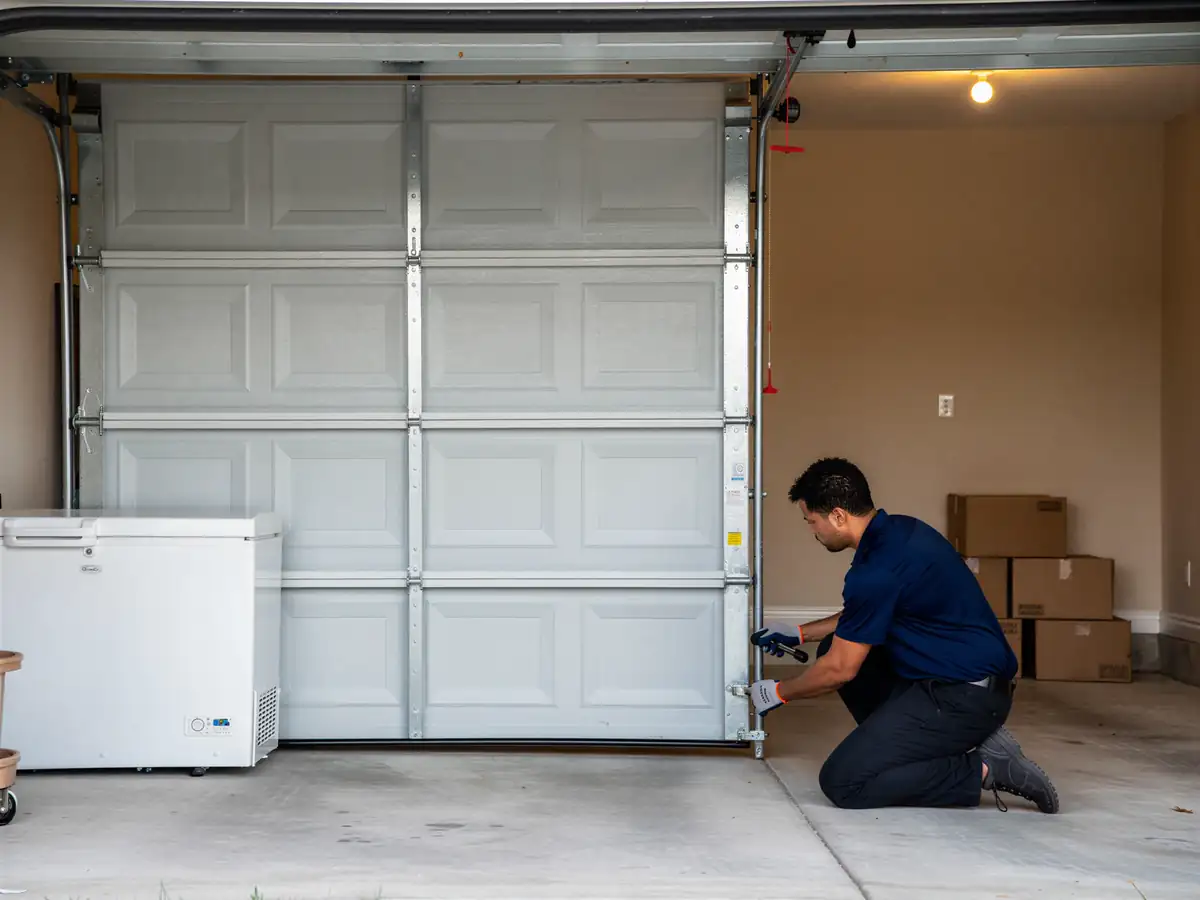
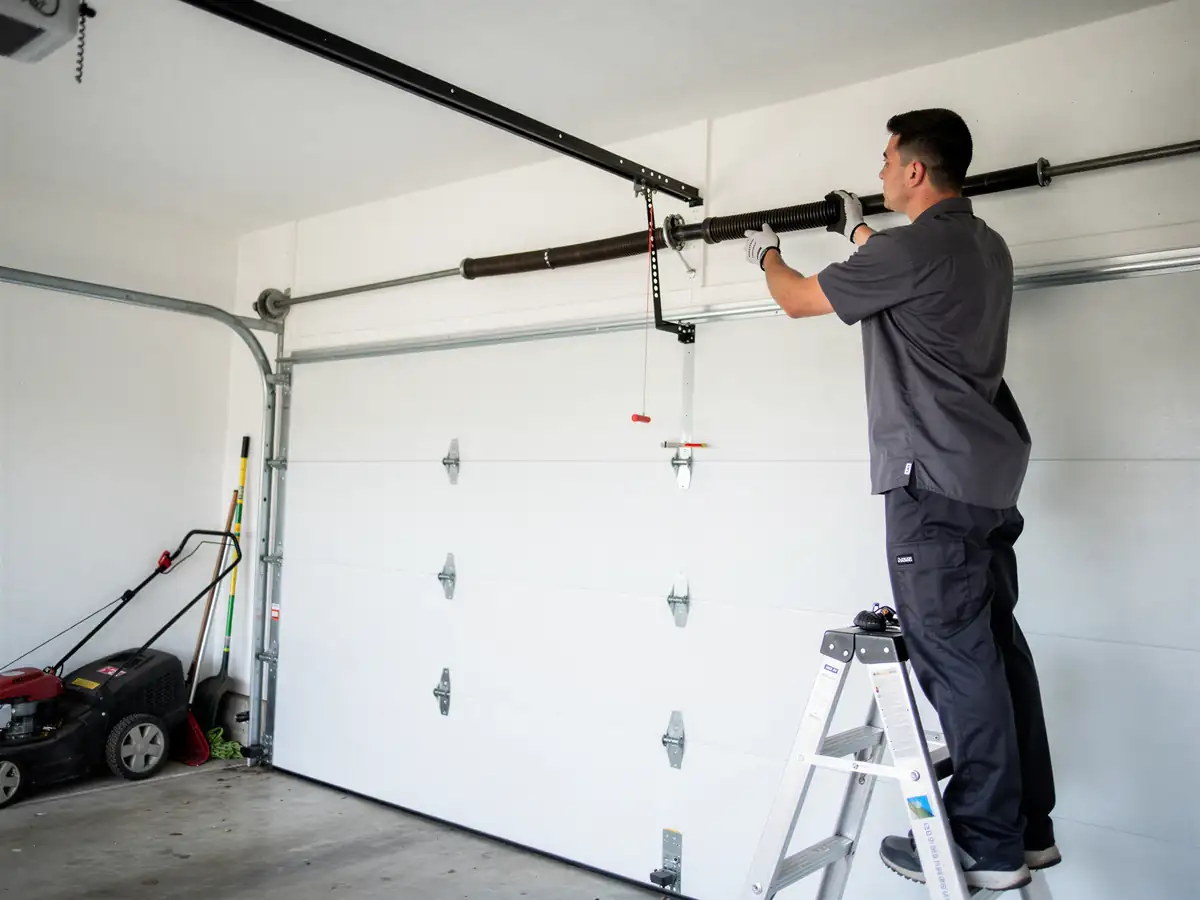
Stand next to the door, not under it, and run it up and down once. A rhythmic metallic clunk on the way up, timed with each roller hitting a track section, usually means a bent track segment or a roller that's worn flat on one side - common once a door's been cycling for a few decades on original rollers. A single loud bang, especially if the door won't move afterward, is a broken spring; don't force the opener, it'll just burn out the motor trying to lift dead weight. A grinding sound that rises and falls with the door's position often points to a bearing plate that's lost its lubrication, which on older torsion setups happens gradually and is easy to miss until it's grinding loud enough to hear from the driveway. If the noise is a high-pitched squeal only at the very top or bottom of the travel, check the strut above the top panel - on doors from the 1960s-70s era that strut is original more often than not, and it can work loose at the fasteners over time.
The Common Mistake
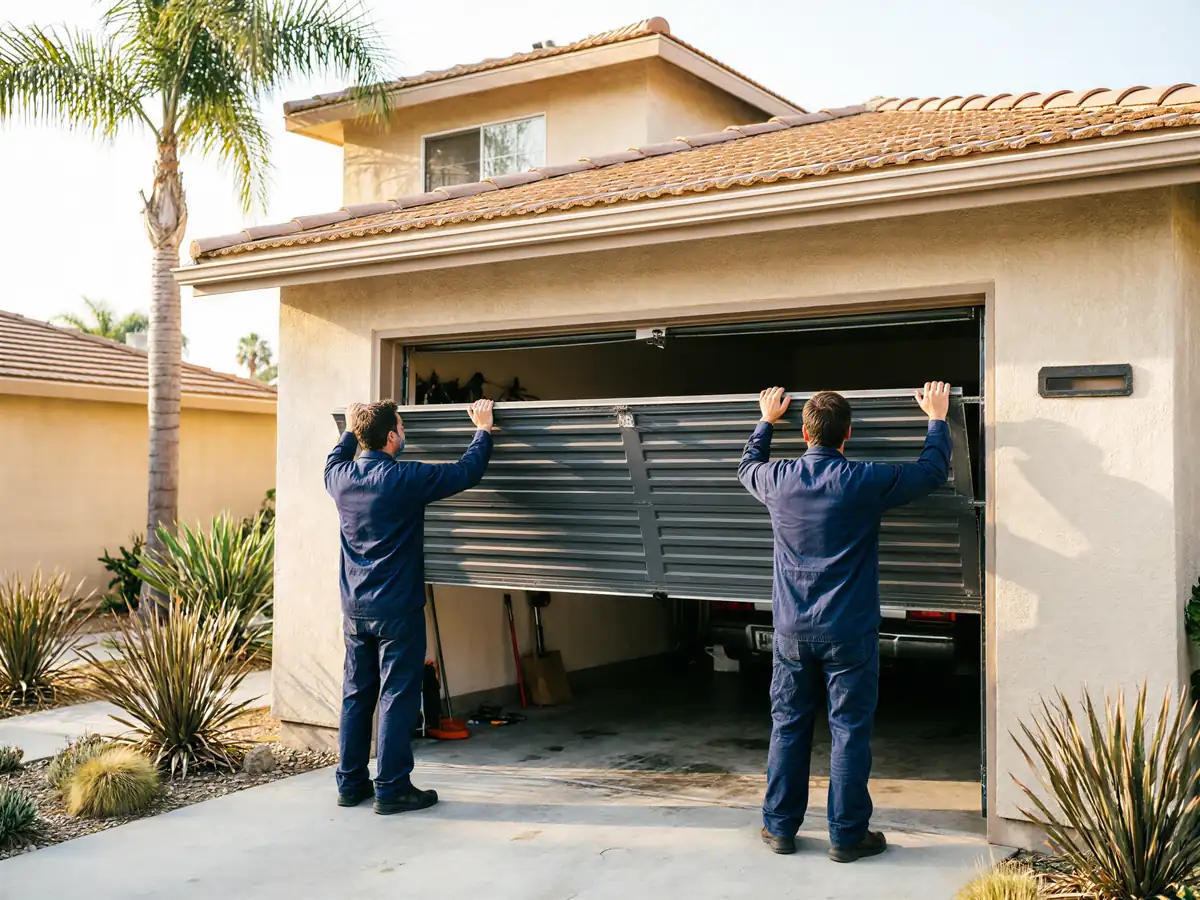
The mistake we see most is spraying WD-40 on everything and calling it maintenance. It quiets a noise for a week and then the grinding comes back louder, because WD-40 is a solvent, not a lubricant - it strips old grease off the bearings and rollers it's supposed to help. On a door that's been running since the 1960s or 70s build wave, that's the opposite of what it needs. The other mistake is assuming a noisy door means a new door. We don't replace doors that can be serviced - springs, rollers, and bearing plates are a smaller job than a full replacement, and on this era of hardware that's usually what's actually worn out. One limit worth being straight about: if the track itself is bent badly enough, or the door panel has rusted through at the bottom, parts for some of these original door models aren't something we stock, and we'll tell you that up front rather than string out a repair that won't hold.