What Local Conditions Do
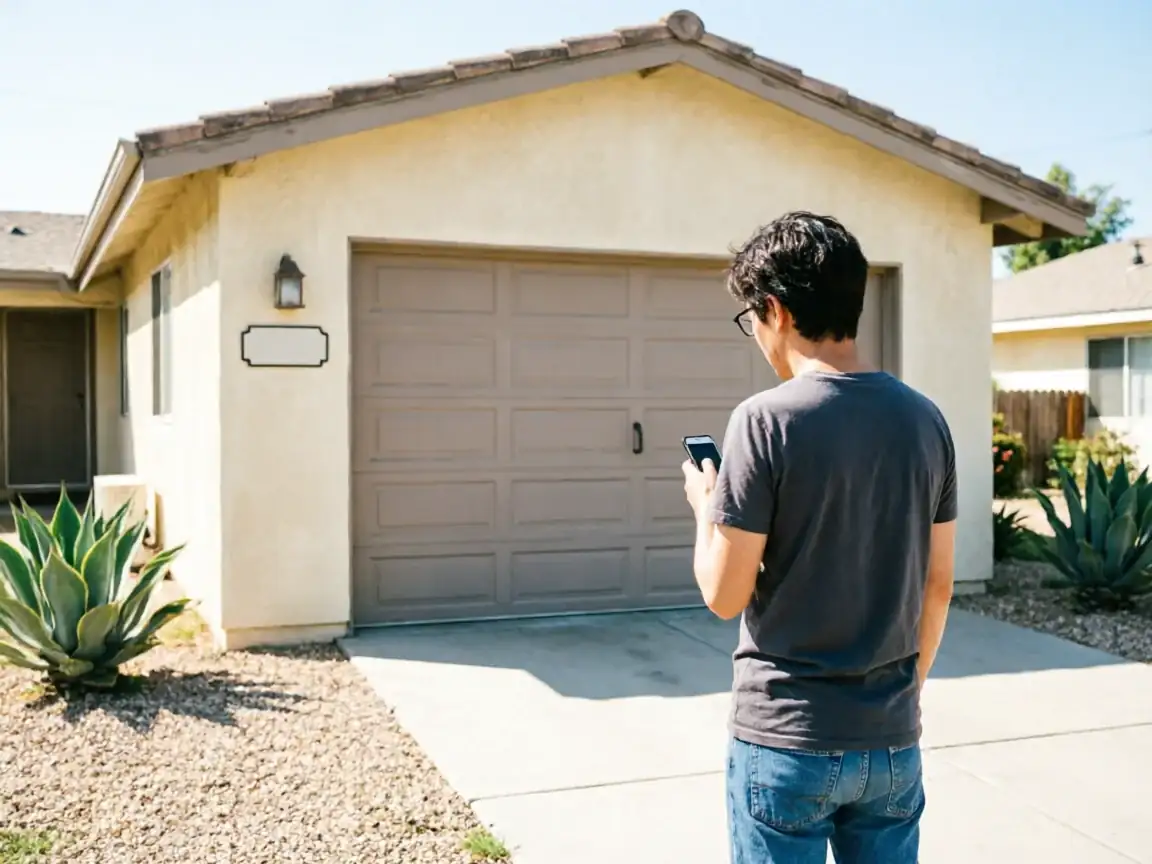
Most of Pomona's housing went up between 1951 and 2007, with the median build year sitting around 1965, and the bulk of the stock across the area's named neighborhoods dating to the 1960s and 70s. That matters for garage doors because insulation requirements for residential garage doors didn't exist when these houses were framed. A door installed to match a 1965 build is almost always a single, uninsulated steel or aluminum skin over bare struts. No foam core, no thermal break, no weatherstrip spec beyond whatever the builder threw in.
Pomona sits in a moderate heat climate band, not an extreme one, so the lack of insulation isn't a comfort emergency the way it would be in a desert town. But it does mean the door panel itself has had five, six, sometimes seven decades to oxidize, warp, and loosen at the seams with nothing but thin steel holding its shape. On an uninsulated panel, every ding shows, every seam flexes, and the hardware carries more of the load because the skin isn't doing any structural work.
If your house falls in that 1960s-70s band - and most in this area do - assume your door was built to a spec that predates modern R-value expectations, not to a standard anyone upgraded along the way.
Checking It Yourself
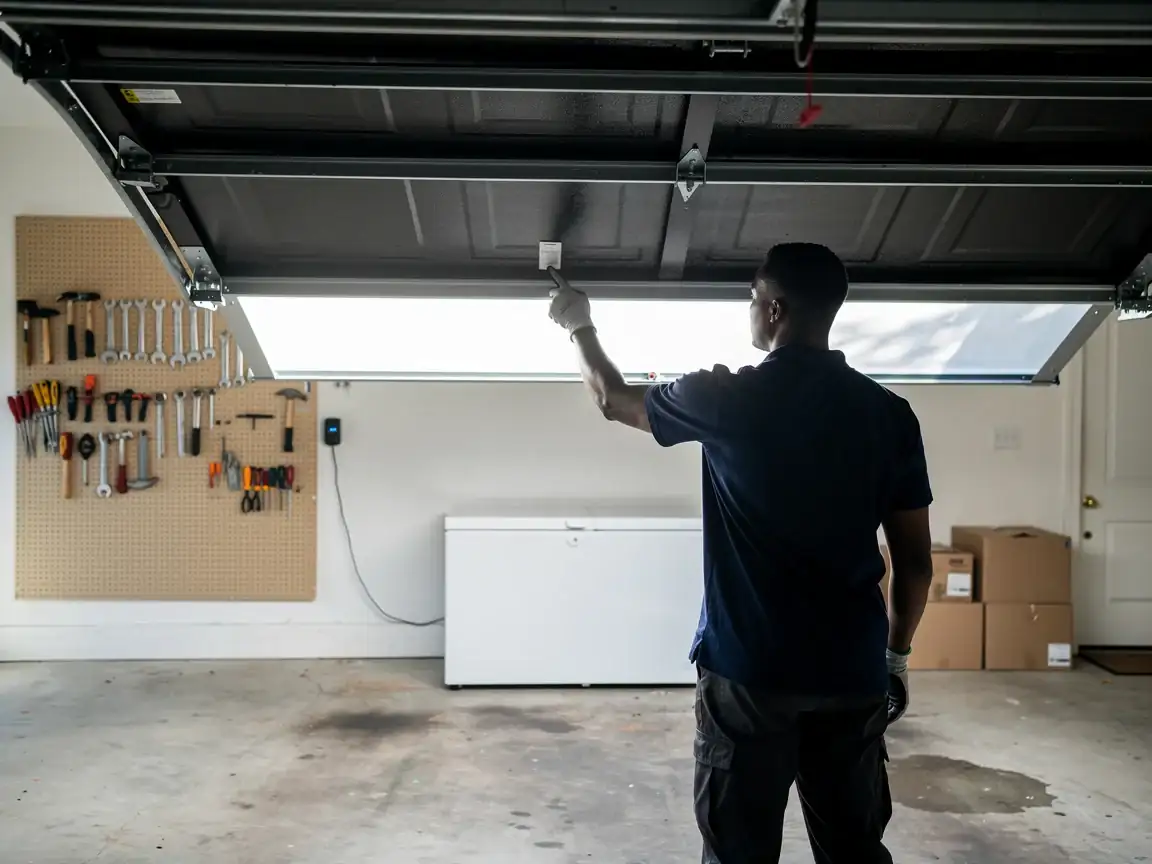
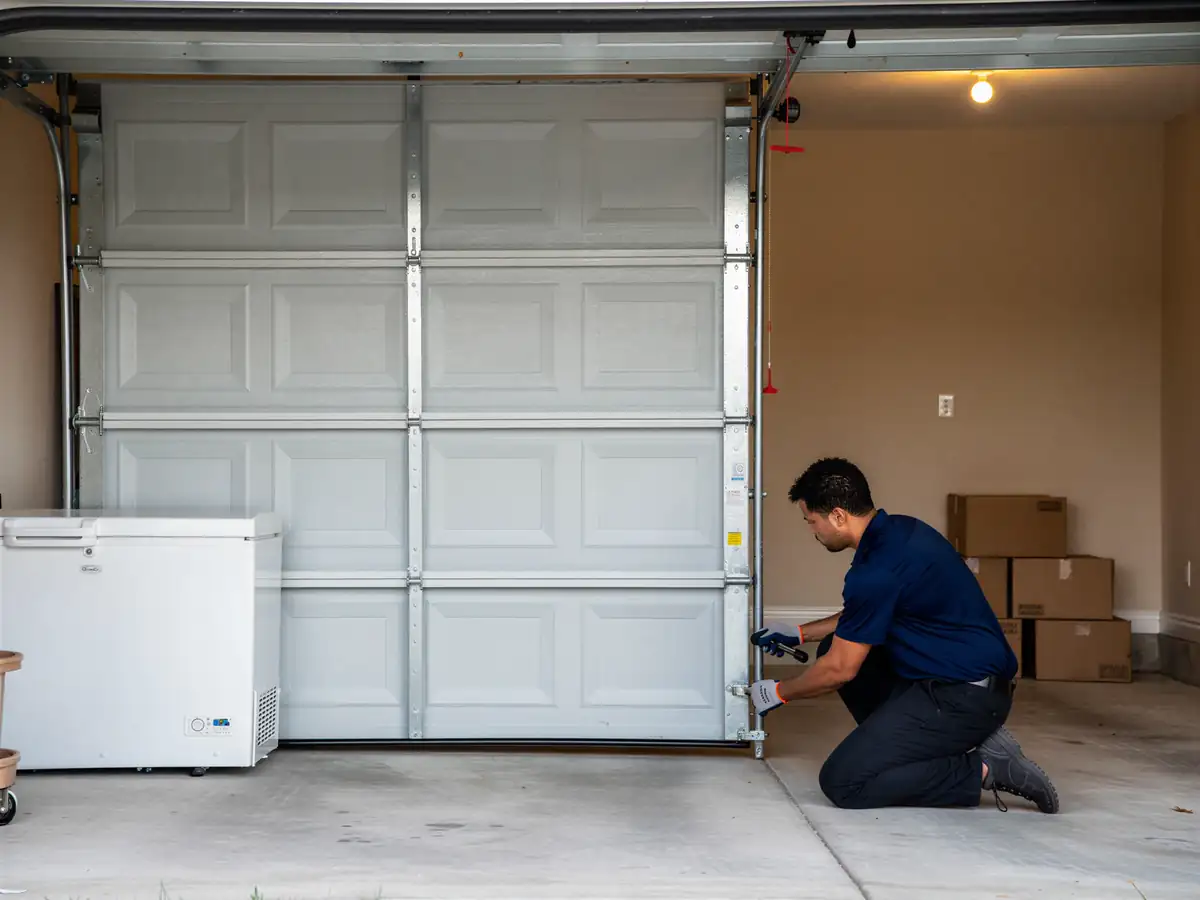
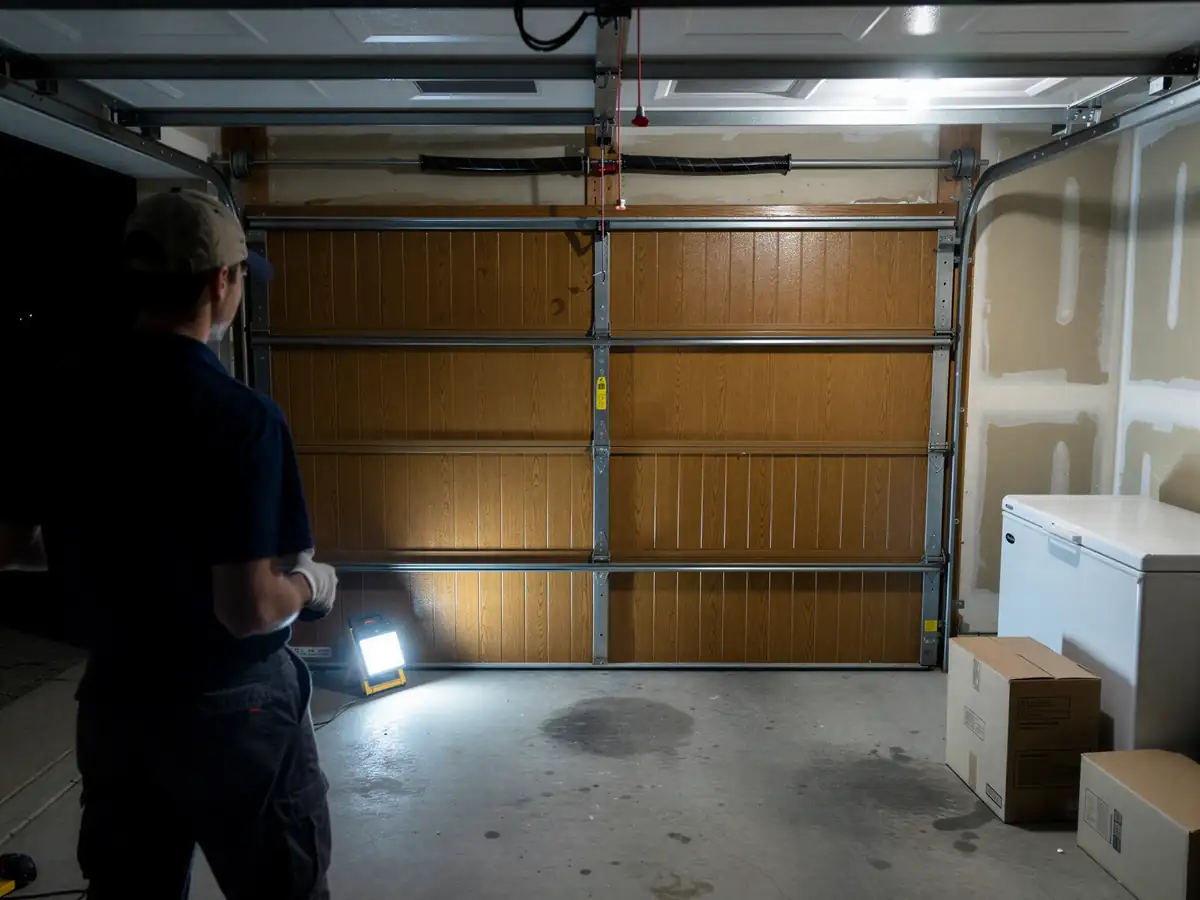
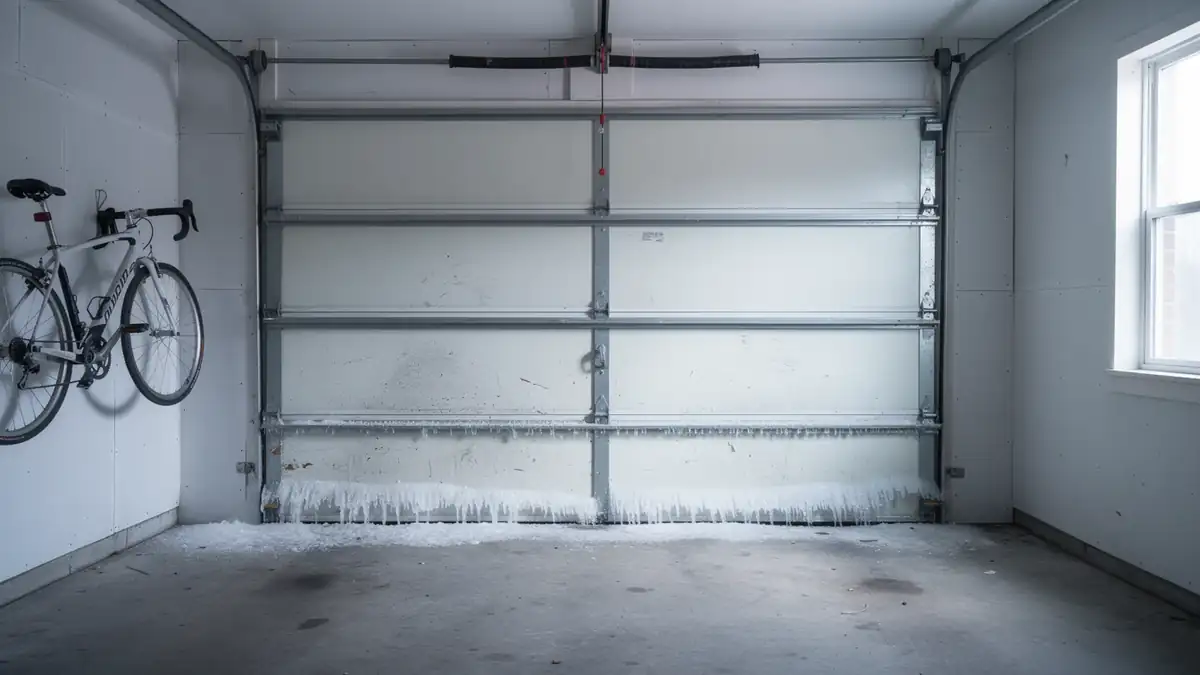
Open your garage and look at the inside face of the door. If you see bare metal ribs with nothing between them, or a thin sheet with no visible foam, that's original-era construction consistent with a house from the 1960s or 70s. Press on a panel between the ribs - if it flexes and pops back with a tinny sound, there's no insulation layer stiffening it.
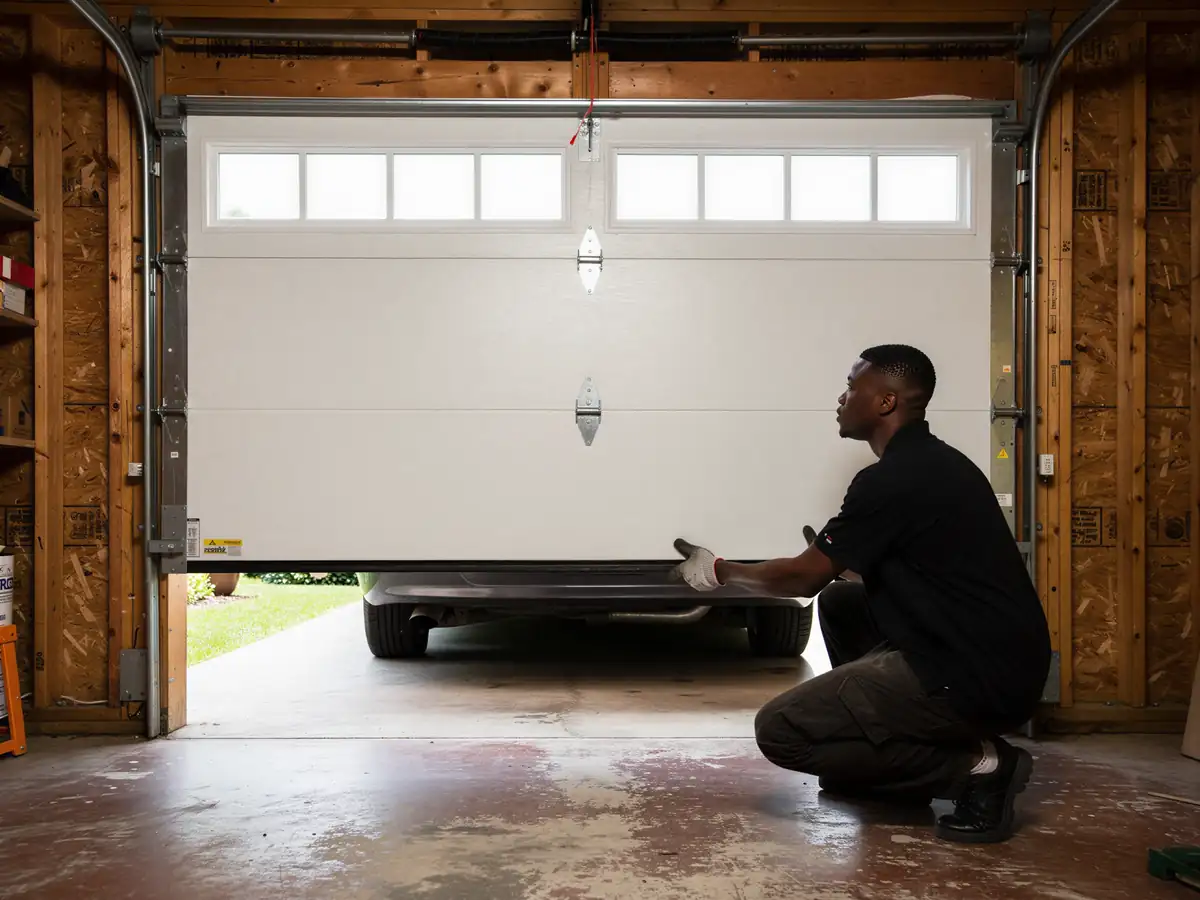
Check the bottom seal too. On a door this old, the astragal is often cracked, flattened, or missing sections, which on a moderate-heat climate like Pomona's won't freeze pipes but will let dust and heat straight through on summer afternoons.
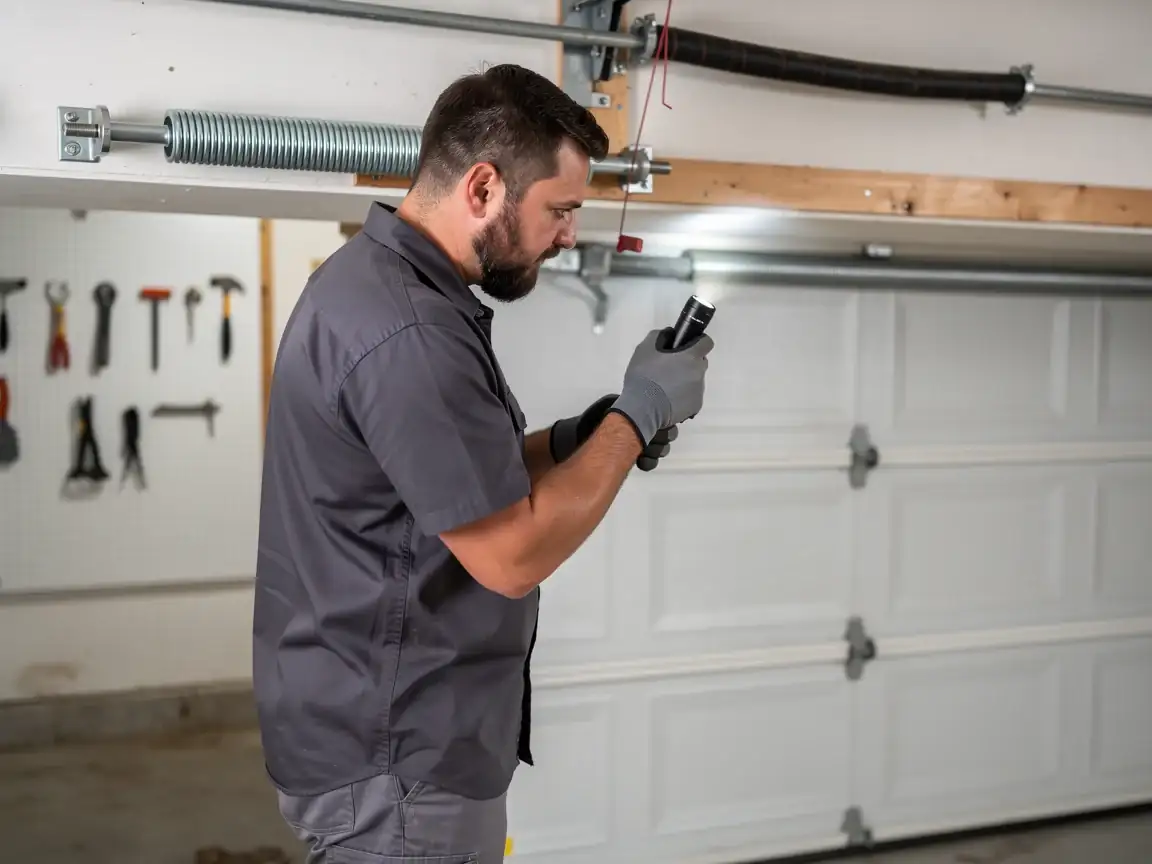
Look at the track brackets and hinges for rust bleed or elongated screw holes - decades of thermal expansion and contraction on an unisulated steel panel put more cyclic stress on these fasteners than a modern insulated door would. None of this requires tools, just fifteen minutes and a flashlight.
The Situation
With 249,850 owner-occupied houses across this service area and median household income at $102,449
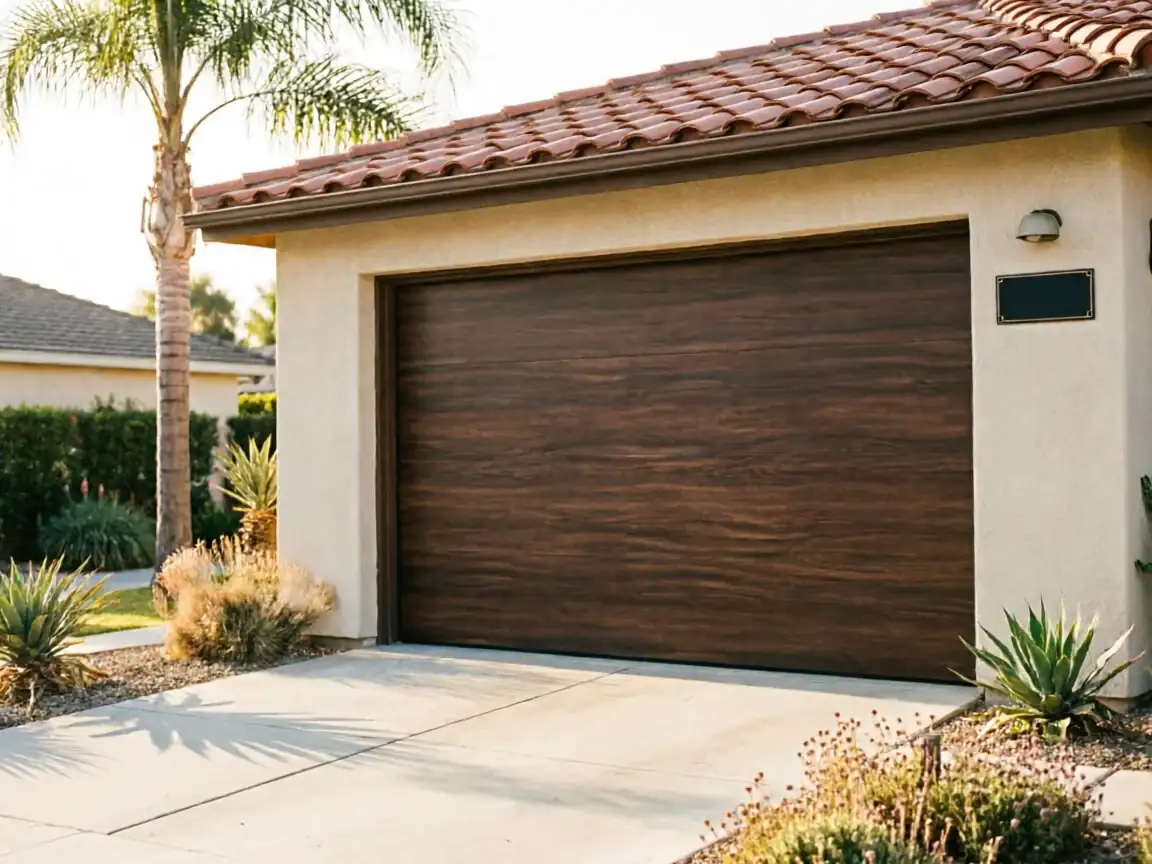
A lot of owners here are sitting on a door that's original or close to it, on a house that was never built with insulation standards in mind. That's not a crisis - it's just the reality of a housing stock with a median build year around 1965. The door works. It opens, it closes, it's been doing that for fifty-plus years.
- 249,850 owner-occupied
- $102,449 median household income
What it usually can't do is match what a modern door offers
A quieter close, a stiffer panel that doesn't dent from a bike handlebar, or a core that cuts down on heat radiating into an attached garage during a hot afternoon. None of that is a safety issue. It's a comfort and durability gap that comes from the door predating the rules, not from anything broken.
The Common Mistake
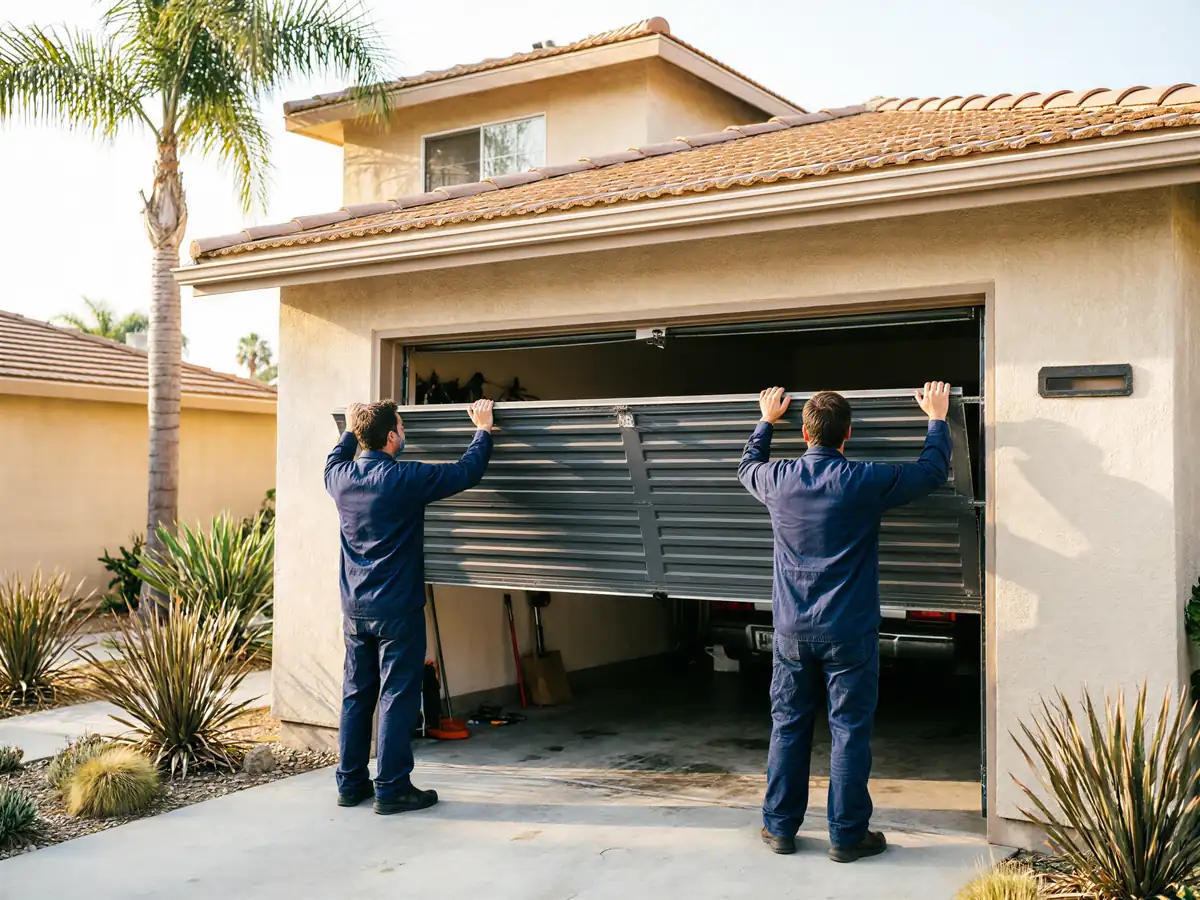
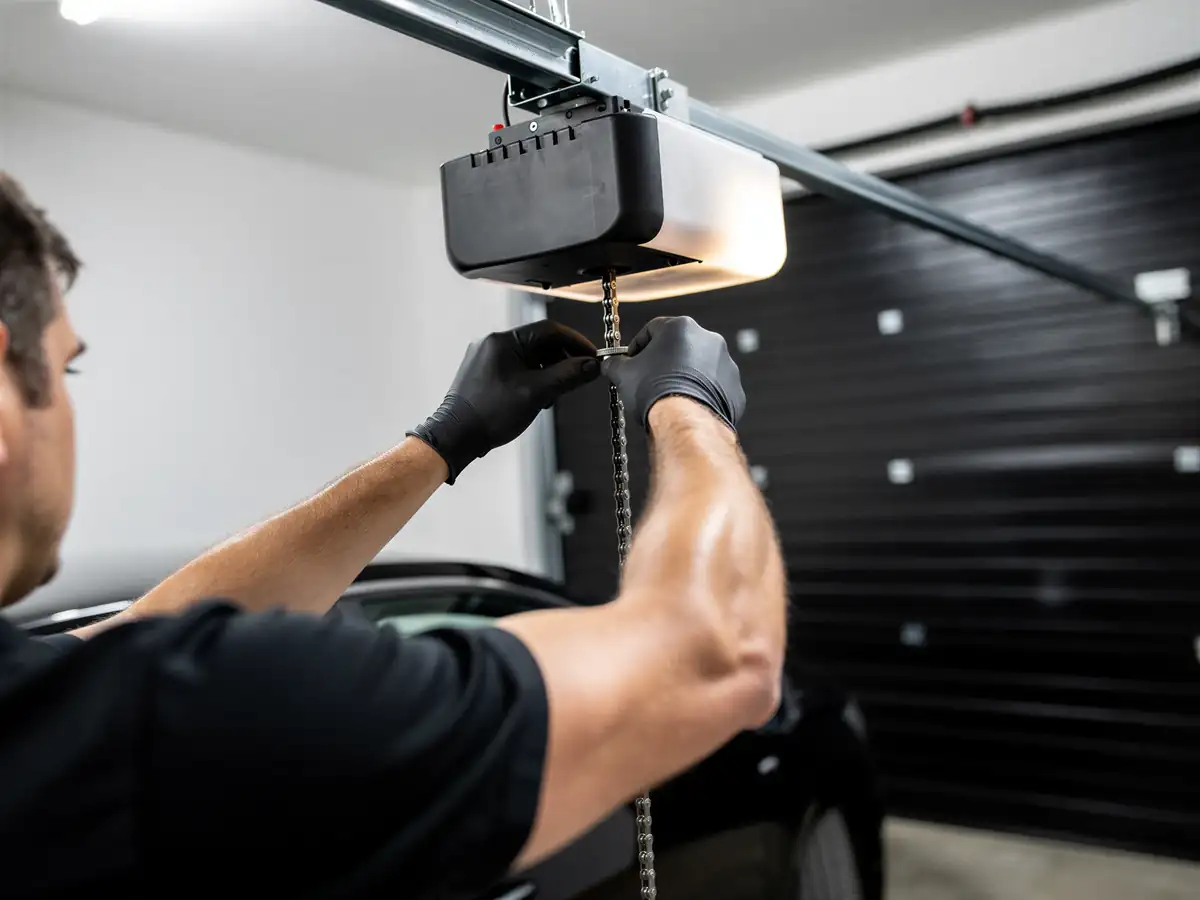
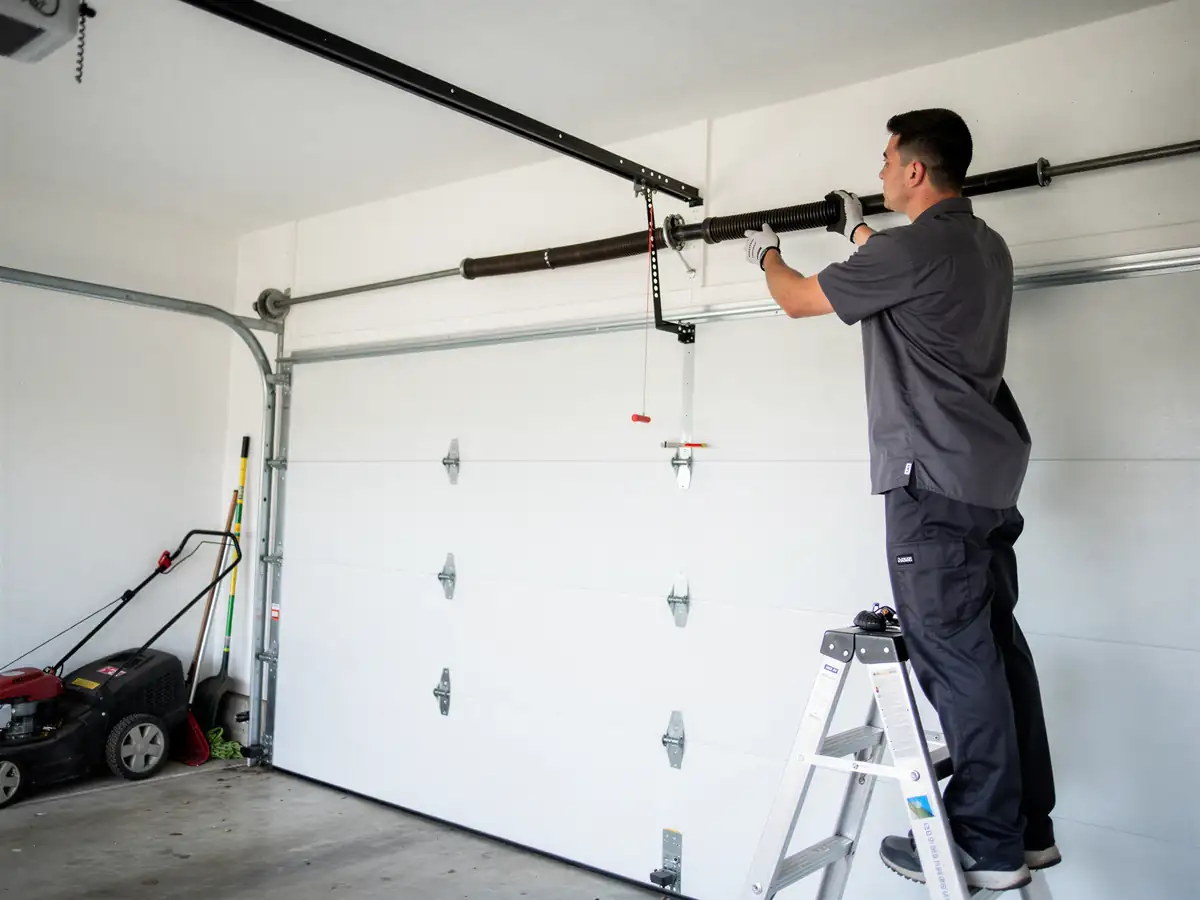
The mistake we see most is someone replacing hardware - springs, rollers, a cable - on an old uninsulated panel and expecting it to suddenly run like a new door. New hardware on a fifty-year-old skin still rattles, still flexes, and still radiates heat the same way it always did, because the panel itself was never built to a thermal spec in the first place.
The other mistake is assuming insulation retrofit kits solve this. Foam board glued into an old steel panel without ribs designed for it adds weight without adding real stiffness, and on hardware sized for the lighter original door, that extra weight shortens spring and opener life. If a panel from the 1960s or 70s stock common across this area is warped or heavily dented, we're honest that replacement beats patching - a new insulated door on the original track is usually less work and less money over time than fighting an old skin. That's a limitation worth knowing before you spend on a repair that won't change how the door feels day to day.