What Local Conditions Do
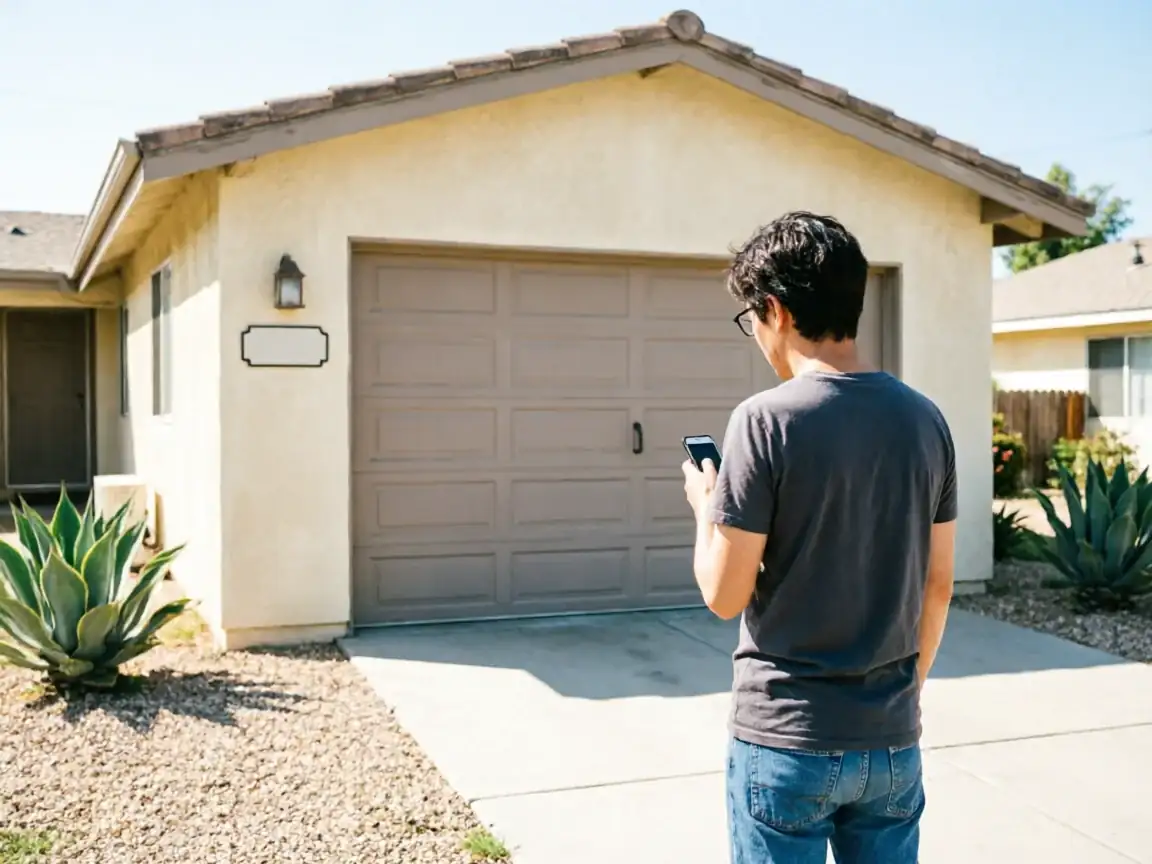
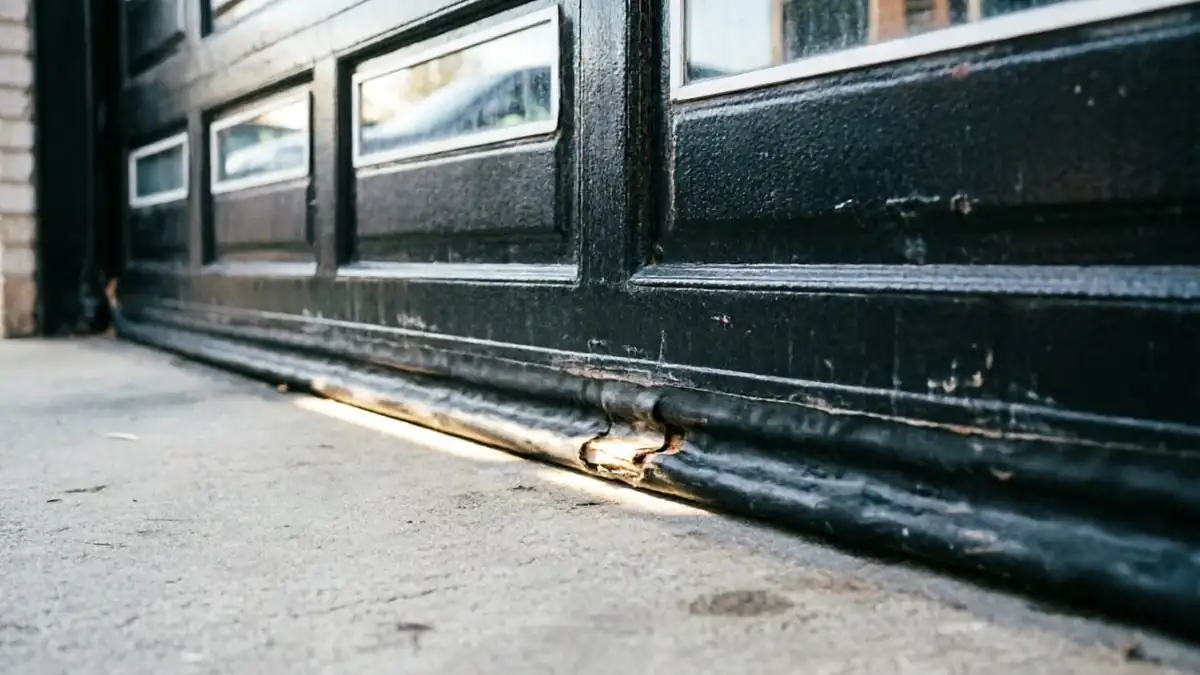
Most houses in Pomona went up between 1951 and 2007, with the bulk of that stock clustered in the 1960s and 70s, which is exactly when steel doors started shipping with thin vinyl bulb seals instead of real weatherstripping. Across Pomona's 45 named areas, that 1960s-70s building run means the same style of aluminum track and single-ply seal shows up house after house, whether you're near the older tracts or out toward the newer pockets. Pomona sits in a moderate-heat climate band, so the seal failure here is less about cold snaps and more about UV and heat cycling cracking the vinyl over fifty-plus years. The bottom seal goes brittle and splits along the bottom edge first, usually on the sun-facing side of the door. You get a thin line of daylight at the threshold, dust blowing in under the door during a Santa Ana wind, and eventually a gap wide enough that you can see it from the driveway. None of this is dramatic. It's just decades of heat doing what heat does to rubber and vinyl, one degree cycle at a time, on a door that was never built to last this long in the first place.
Checking It Yourself
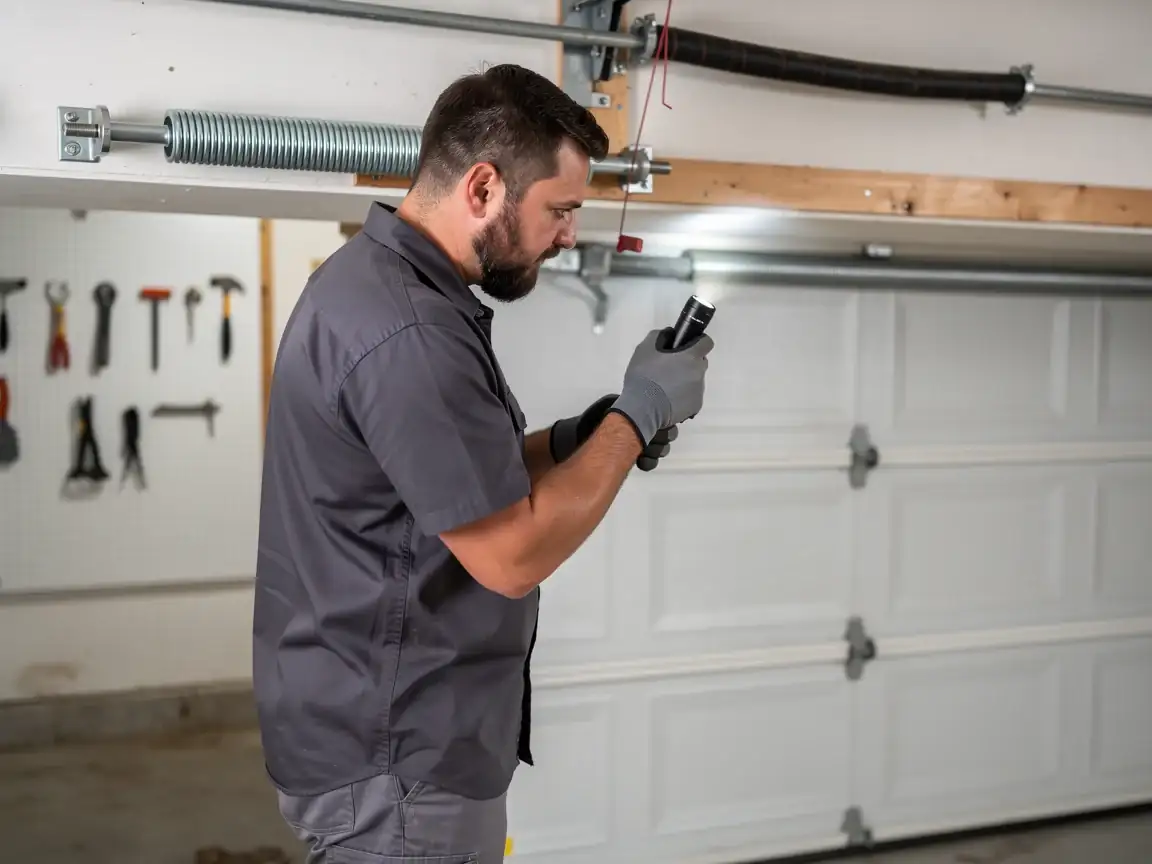
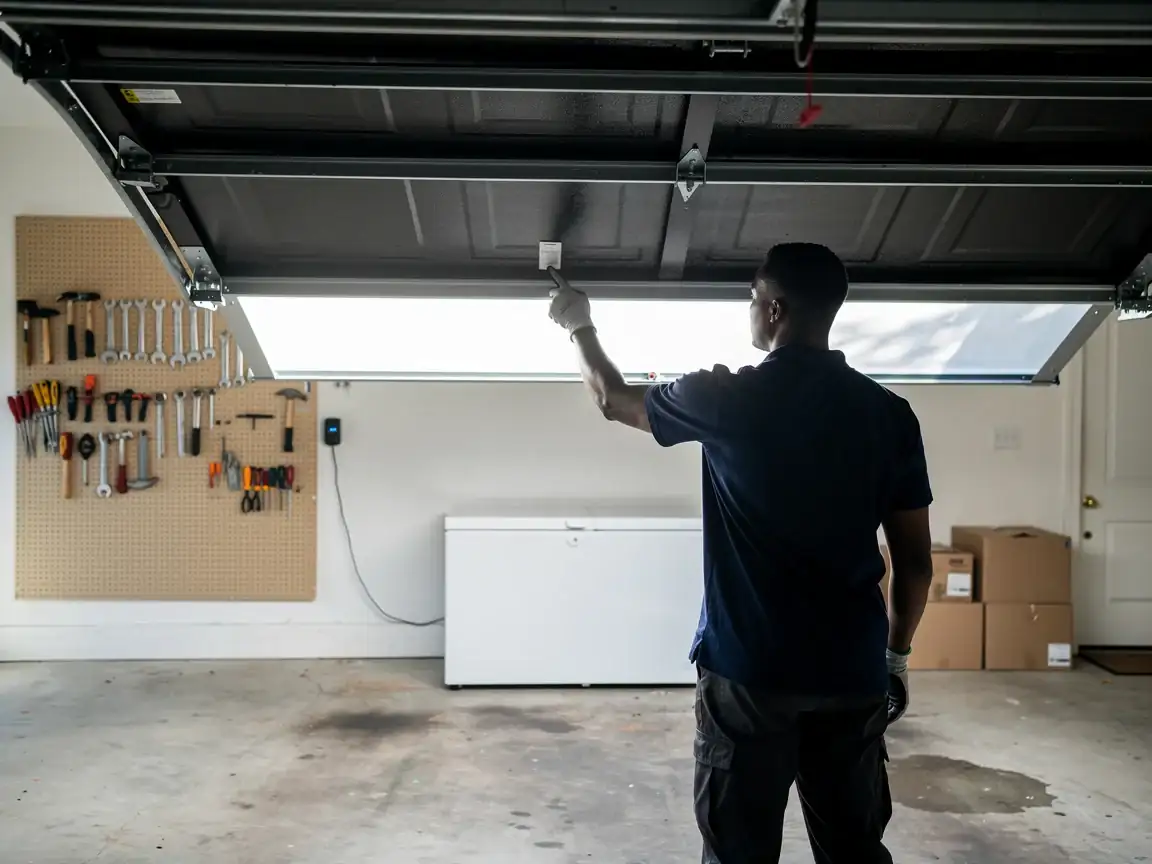
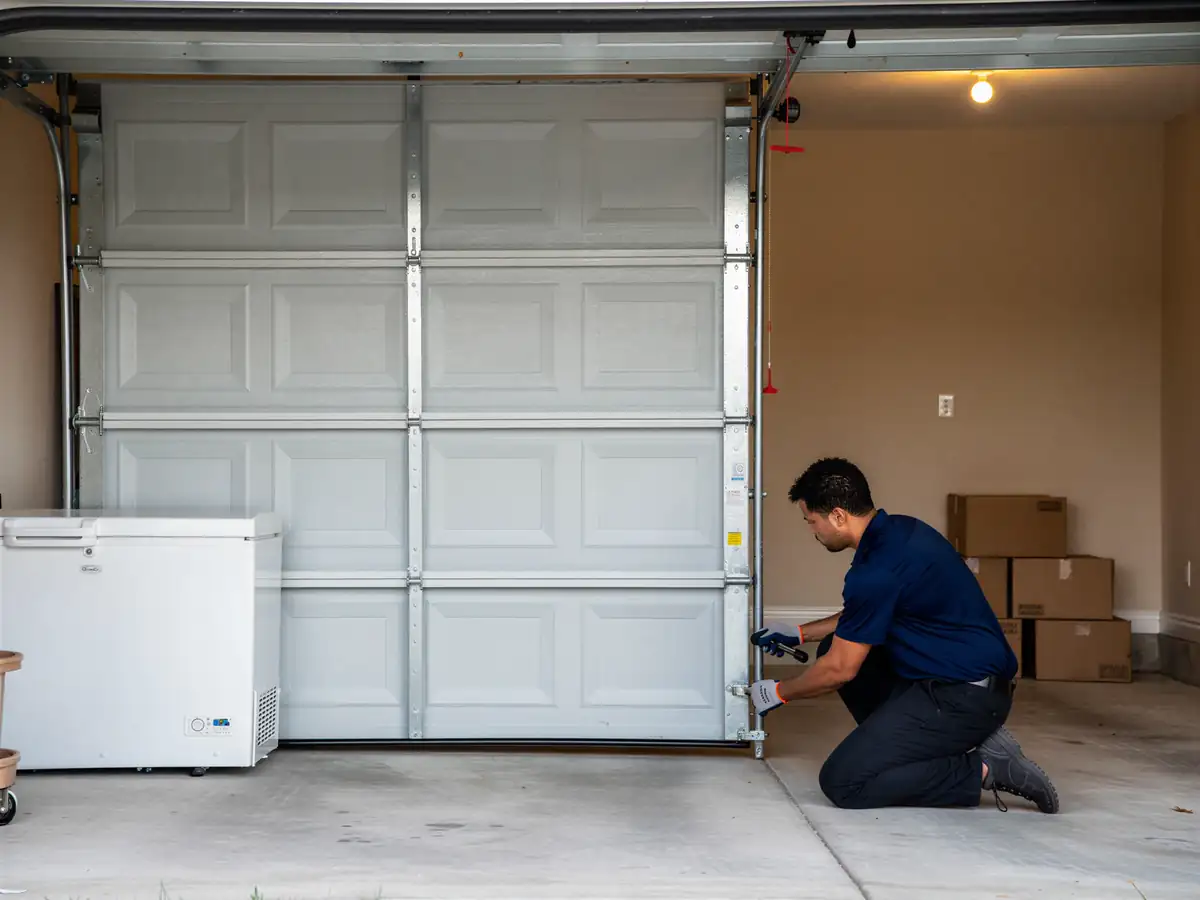
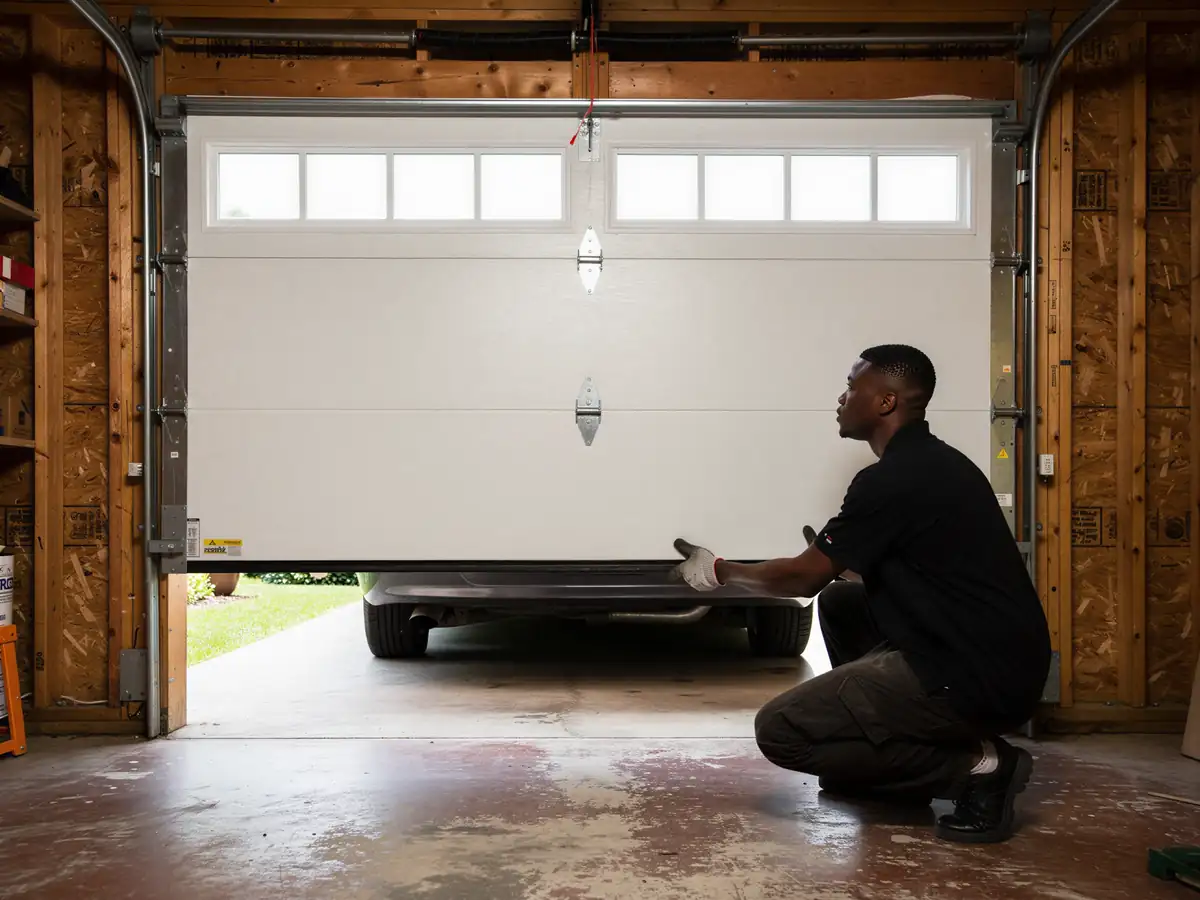
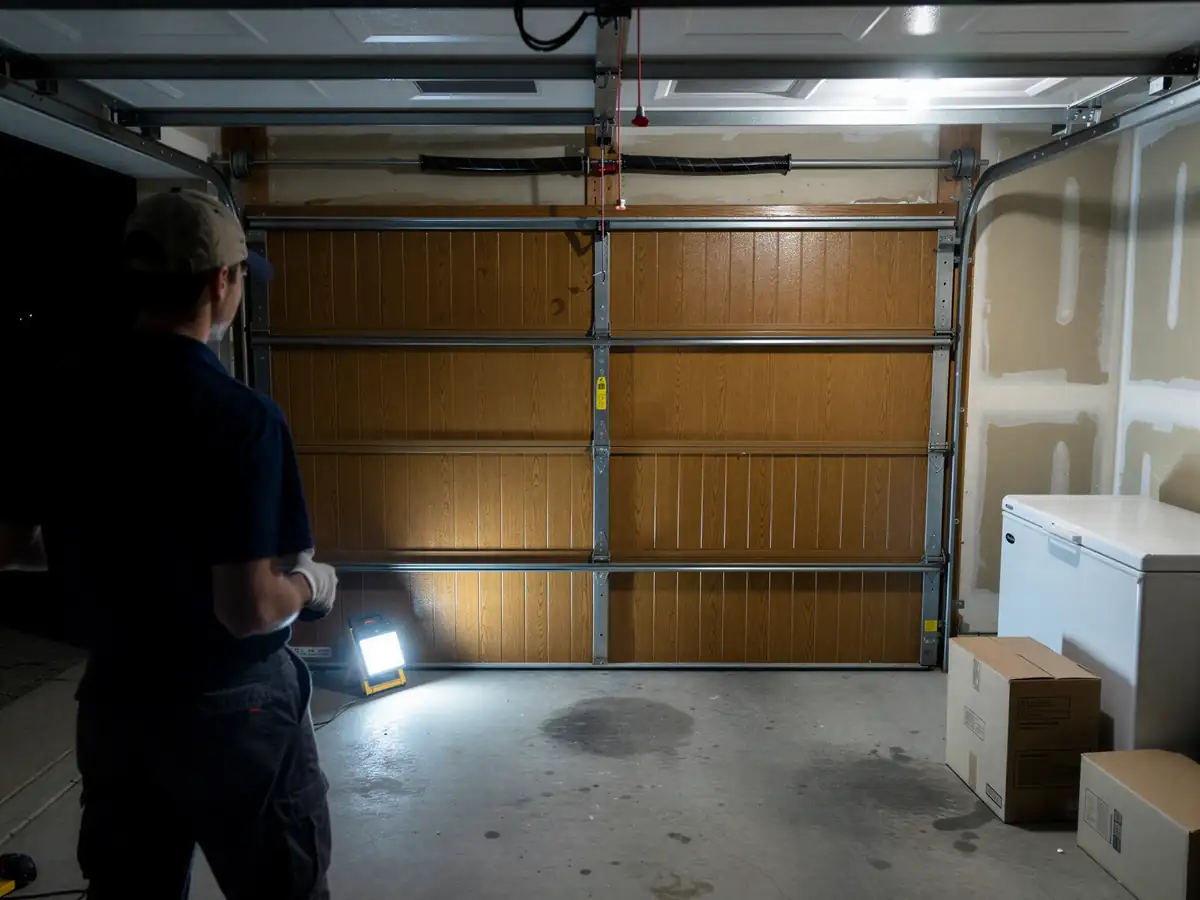
Close the door and walk the perimeter with a flashlight at dusk, when the contrast between inside and outside light is easiest to see. Check the bottom astragal first since that's the seal doing the most work and taking the most UV exposure. If it's cracked, flattened, or pulling away from the aluminum retainer, that's your draught source. Check the side seals where the door meets the jamb, especially on older tracts where the track itself may have shifted slightly over fifty-plus years of use - on a lot of 1960s and 70s installs the jamb seal was an afterthought, just a strip of felt or thin vinyl nailed to the frame. Run your hand along the gap on a windy day. If you feel air movement, that's a seal problem, not an opener or spring problem. One thing a flashlight check won't tell you: whether the gap is from a worn seal or from a door that's racked slightly out of square on its track. If the daylight line isn't even across the bottom, it's worth having someone look at the track alignment before you just swap the seal.
The Common Mistake
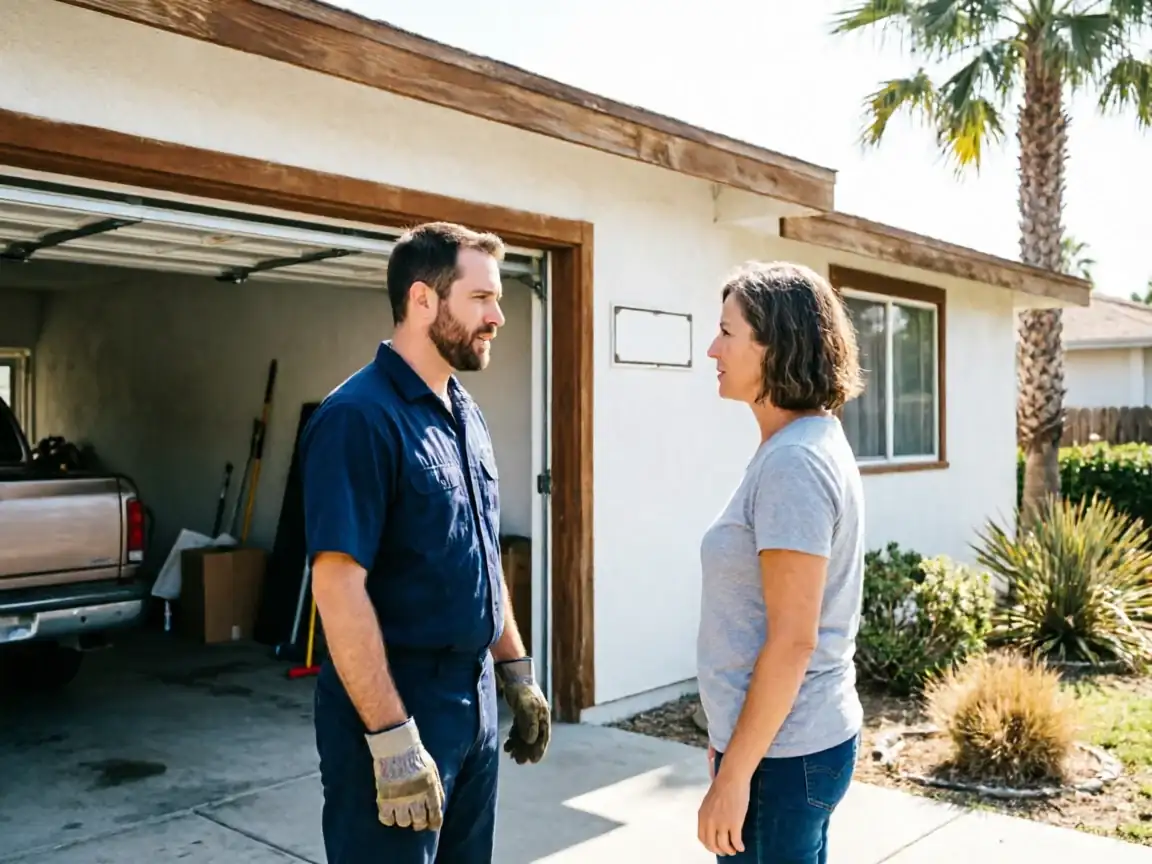
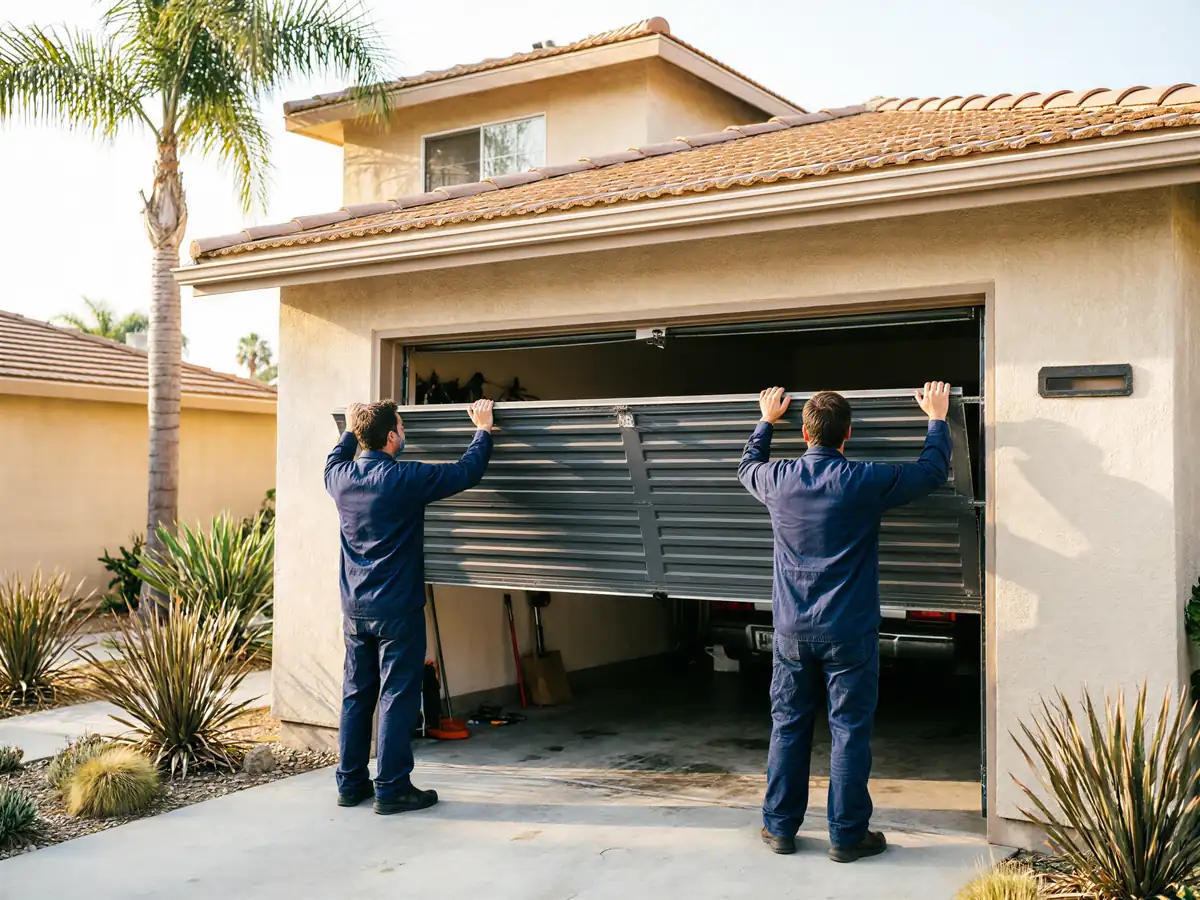
The mistake we see most is someone buying a universal bottom seal at a hardware store and jamming it into a retainer track that doesn't match. A lot of the 1960s and 70s doors around Pomona use a retainer profile that's narrower than what ships on newer doors, so a generic seal either won't seat right or pops out within a season. The other mistake is treating every draught as a seal problem when sometimes it's the door sitting slightly off its track after decades of settling. Here's the honest limit: we don't stock every retainer profile on the truck, and on some of the older tracts a matching seal track is a special order, not a same-day fix. If your door is on one of those older profiles, it's worth asking before assuming it's a quick swap. Sometimes the right call is a new bottom panel section rather than chasing a seal that doesn't fit the track anymore.