Why It Happens Here
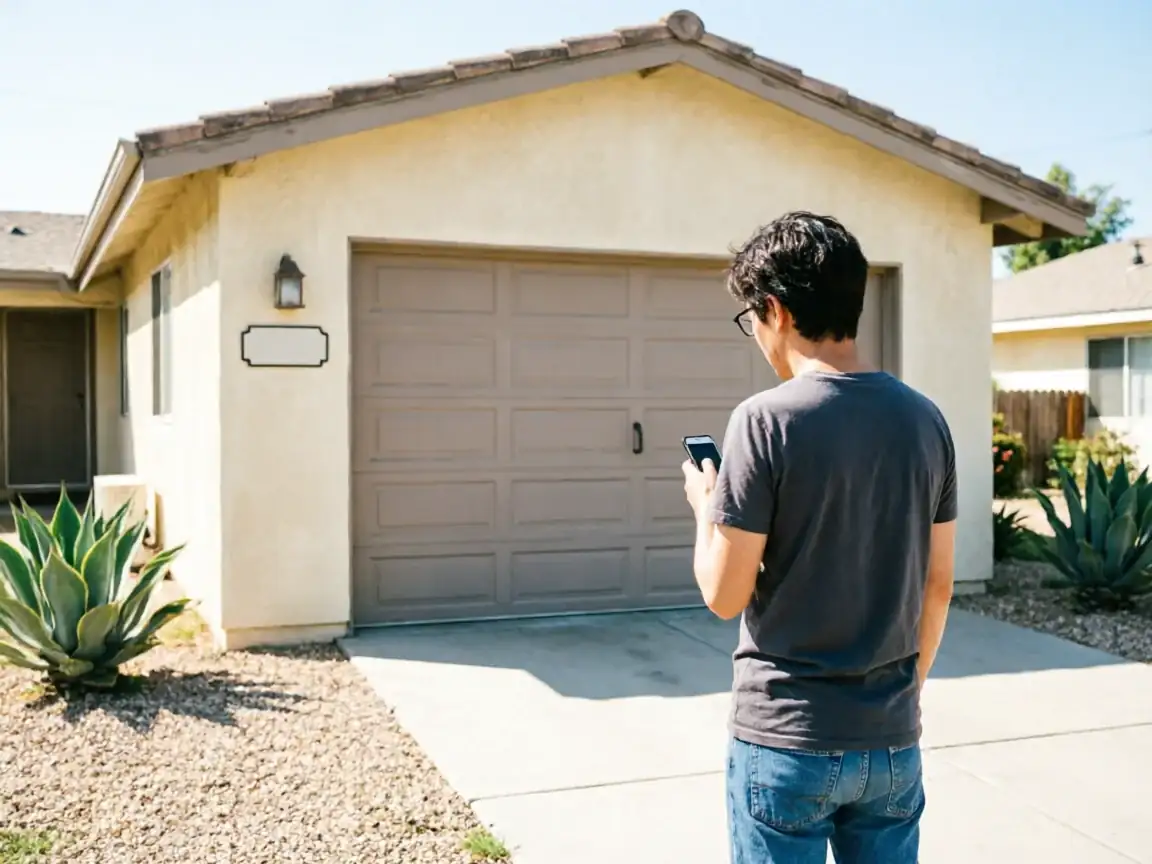
Most of the garage doors we look at in Pomona sit on houses built somewhere between 1951 and 2007, with the bulk of that stock going up in the 1960s and 70s. That matters because a door and opener installed or replaced during that window has now put in thirty, forty, sometimes fifty years of cycles on the same springs, rollers, and track brackets. Nothing on a garage door is built to last forever, and nobody budgets for maintenance on a part they forget exists until it breaks.
Pomona sits in a moderate-heat climate band, not the extreme desert heat you'd get further inland, but still enough summer heat cycling to dry out lubricant, harden nylon rollers, and let steel track pull slightly out of alignment as the garage frame expands and contracts year after year. It's not one bad day of weather that does the damage. It's forty summers of it on hardware that was never serviced.
A house built in 1965 and a house built in 1995 age differently even on the same street, because the torsion spring cycle count and the roller material changed over that span. We don't guess at your door's age from your house's age, but if your neighborhood matches the 1960s-70s pattern common across this area, the parts under strain are usually the same ones.
What You Are Seeing
The early signs are quiet. A door that used to glide now hesitates for a second before it moves. The opener sounds like it's working harder than it used to, even though nothing looks obviously broken. Rollers that have gone from nylon-smooth to flat-spotted make a rhythmic thump as they turn, especially noticeable on doors that haven't been touched since they were installed.
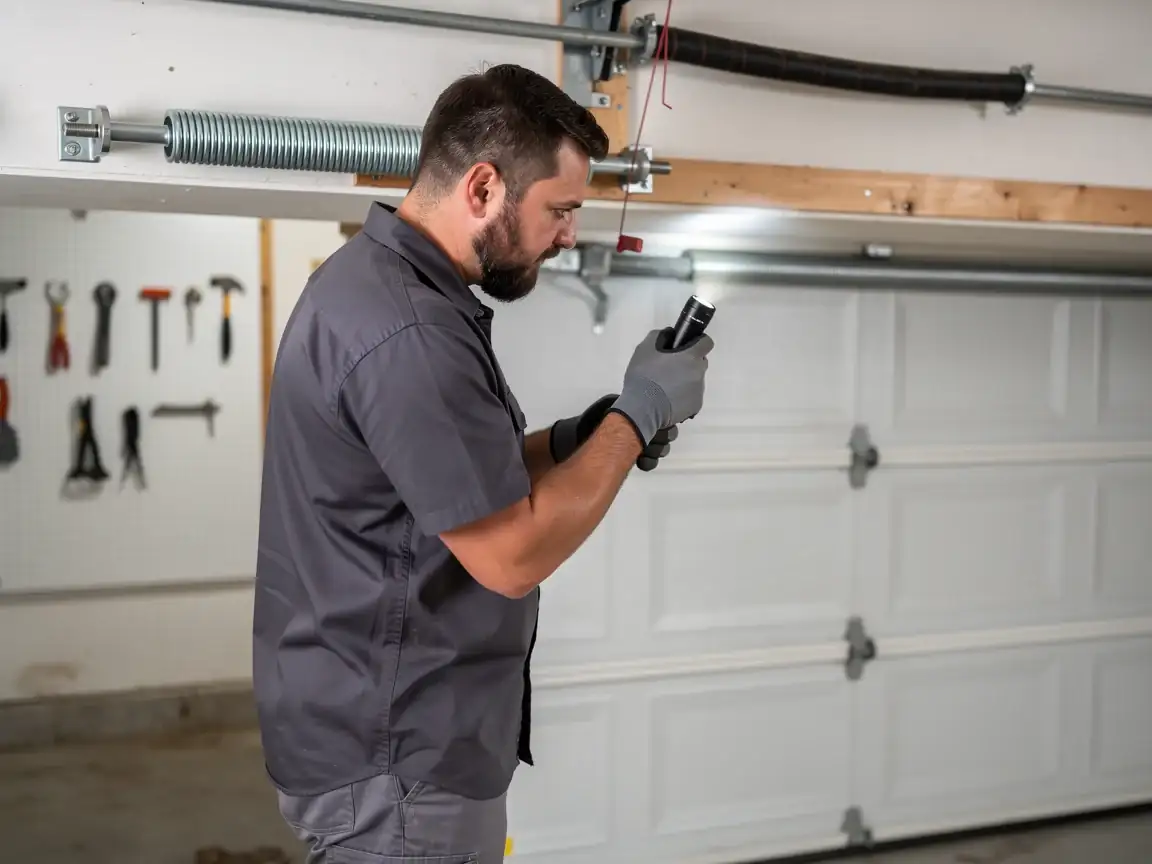
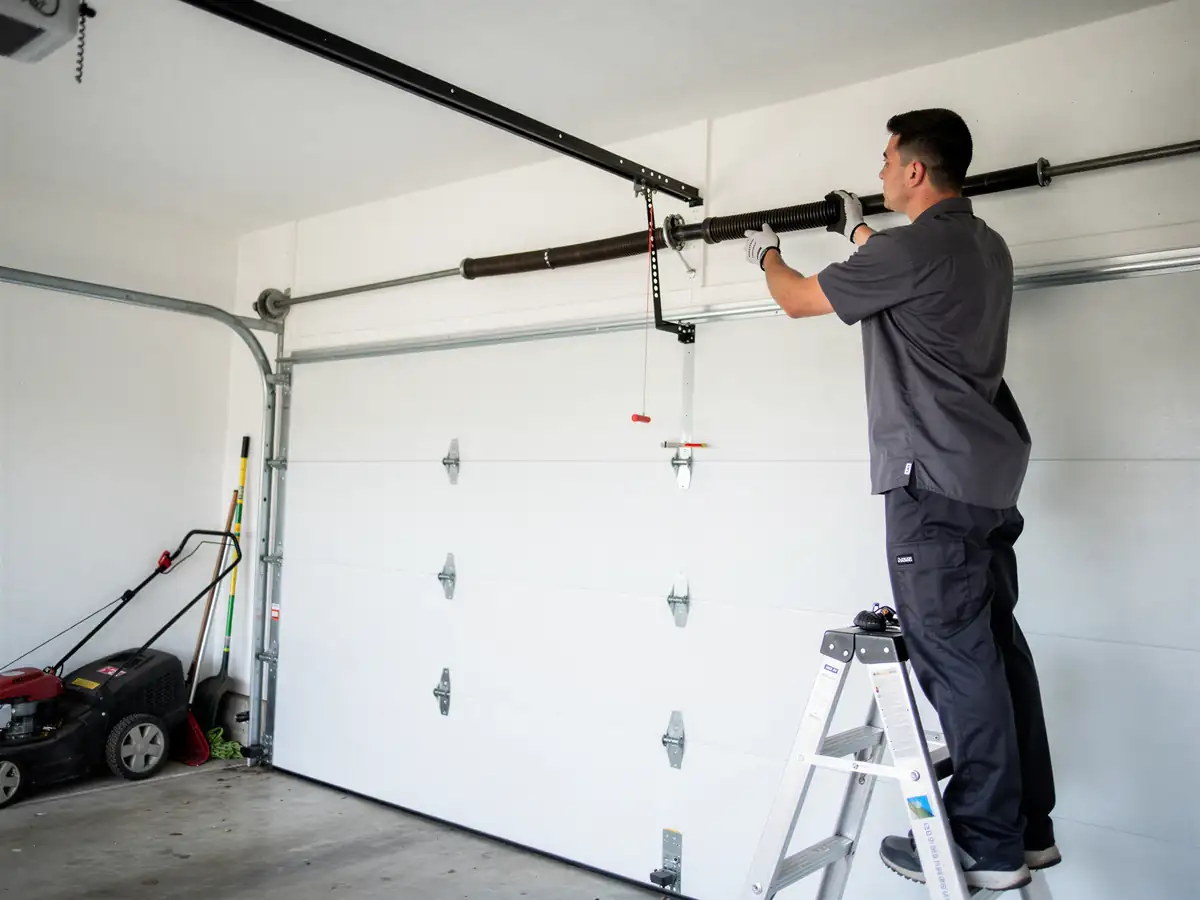
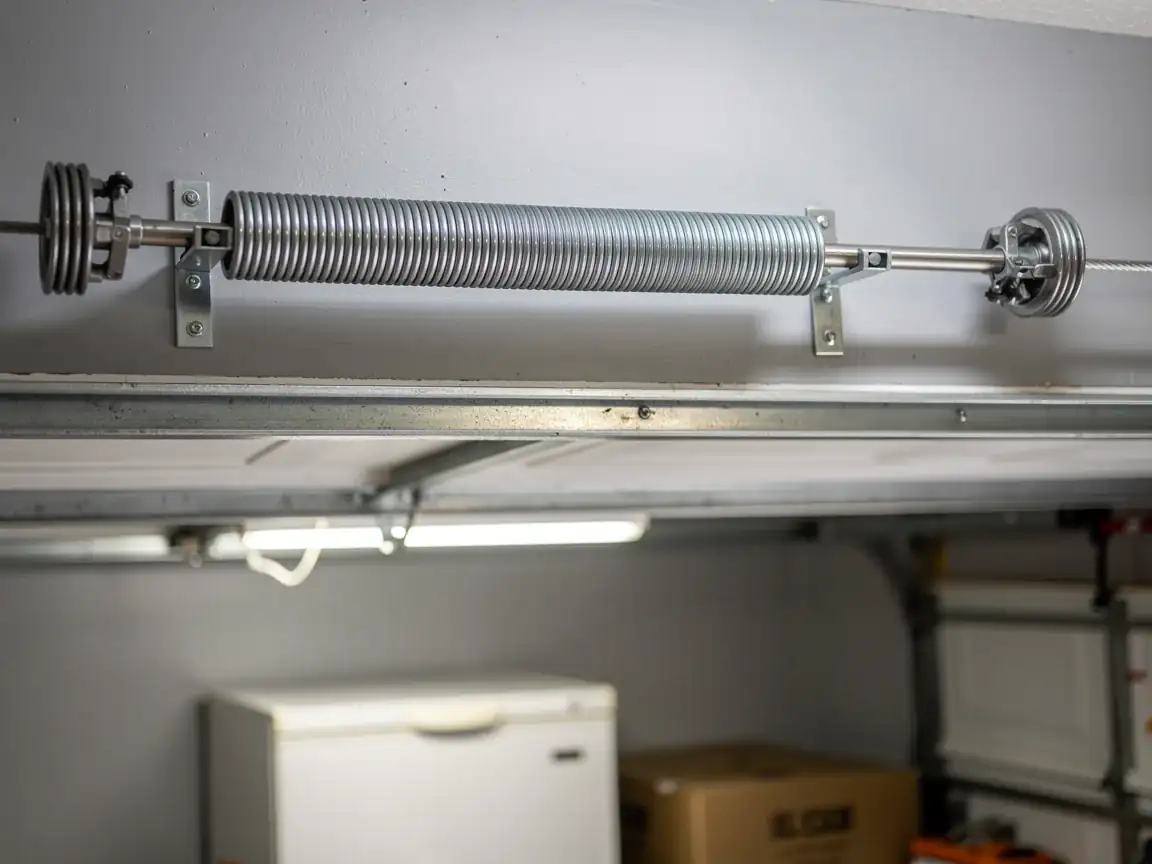
On older torsion systems, which are common on houses from this build era, you'll sometimes see a visible gap in the spring coil, or rust starting at the winding cone where moisture sits longest. Cables that have frayed at the bottom roller bracket are another one we see often on doors this age, and that's not a cosmetic issue, it's a safety issue.
If your door is original to a house built in that 1960s-70s window, the hardware has likely never been lubricated, balanced, or re-tensioned. That's not unusual. Most homeowners never know maintenance is a thing until a part lets go. The honest answer is that a lot of this wear is invisible until you're looking for it, which is the whole point of a scheduled check rather than waiting for a failure.
The DIY Question
There's a real line between what a homeowner can safely do and what needs a trained hand
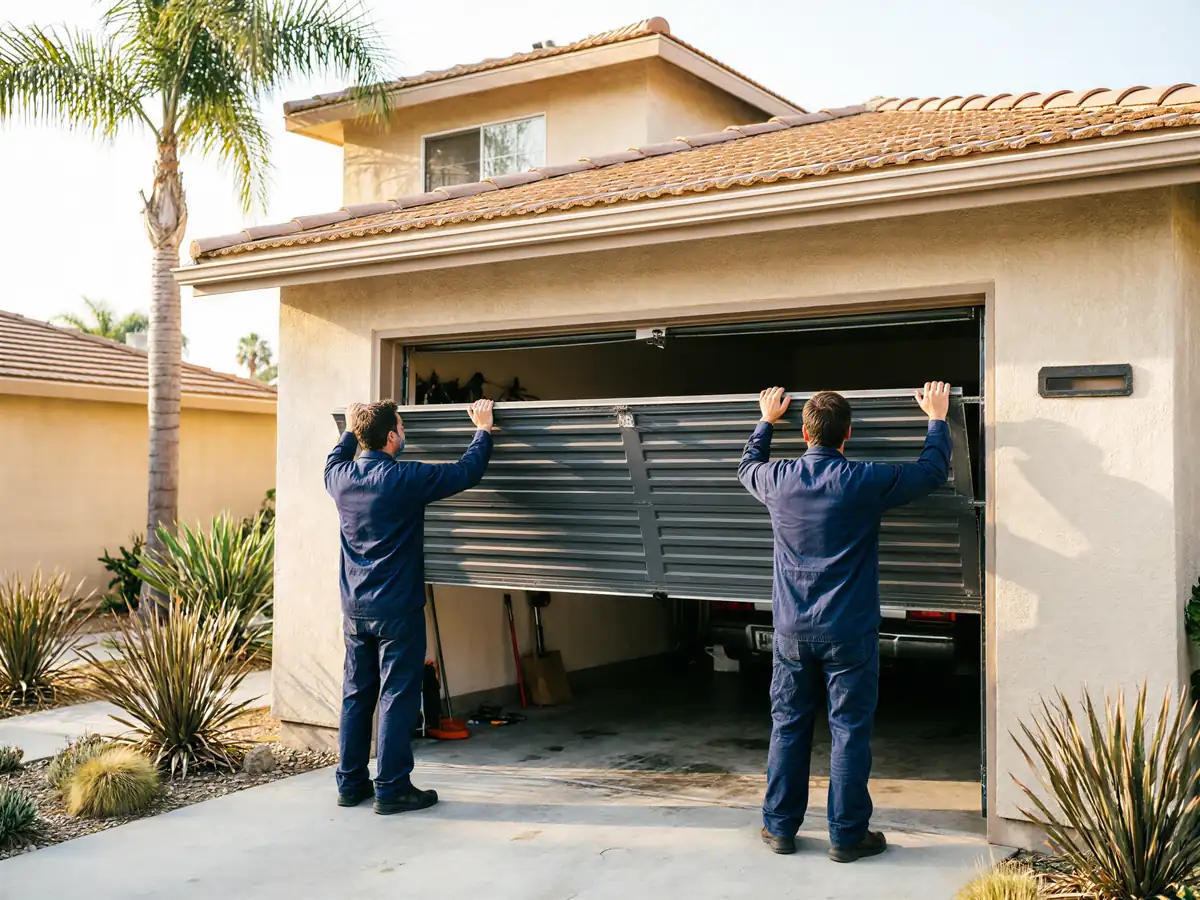
And torsion springs sit firmly on the far side of that line. These springs are wound under enough tension to cause serious injury if they let go while you're working on them, and that risk doesn't go down because a spring looks old or weak. We won't talk anyone through adjusting spring tension over the phone.
What you can reasonably do yourself
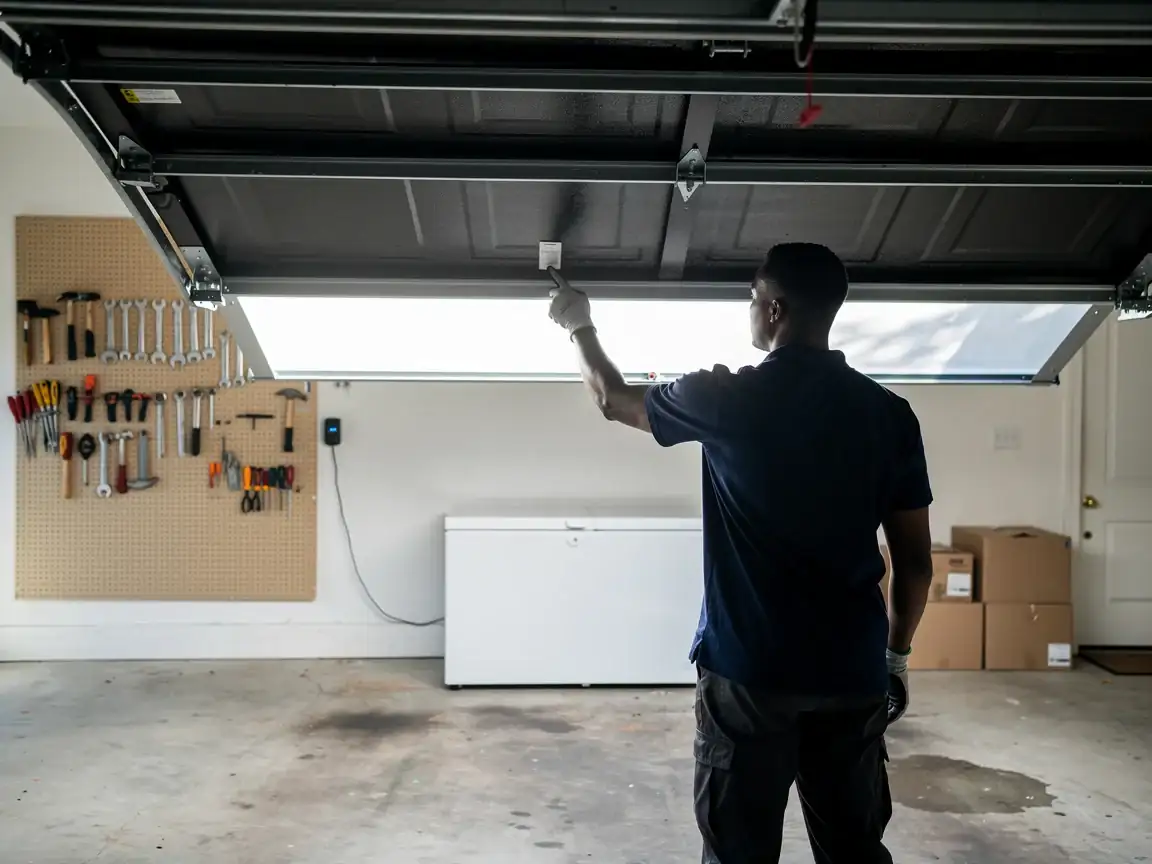
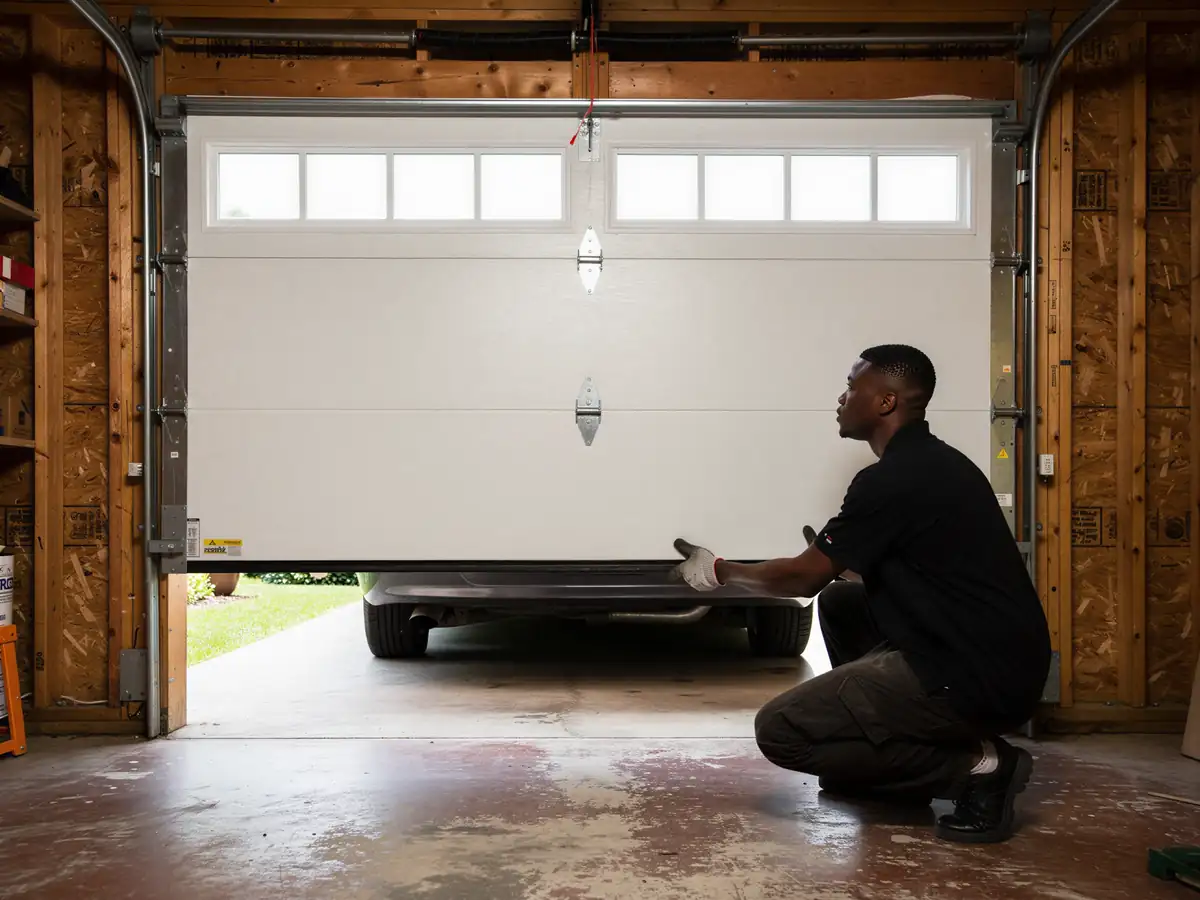
Wipe down and visually inspect the track for dents or debris, check that the door reverses when it hits an object, and listen for new noises so you can describe them accurately when you call. Lubricating hinges and rollers with the right garage door lubricant (not WD-40, which washes out grease rather than adding it) is also fair game for most owners.
Where we draw the line is anything involving the torsion spring, the cables, or the overhead track brackets holding the door's weight
On a house with original 1960s-70s hardware, these parts have had decades to fatigue in ways you can't always see from the ground. If a spring looks original to the house, treat it as a call, not a project.
How to Book
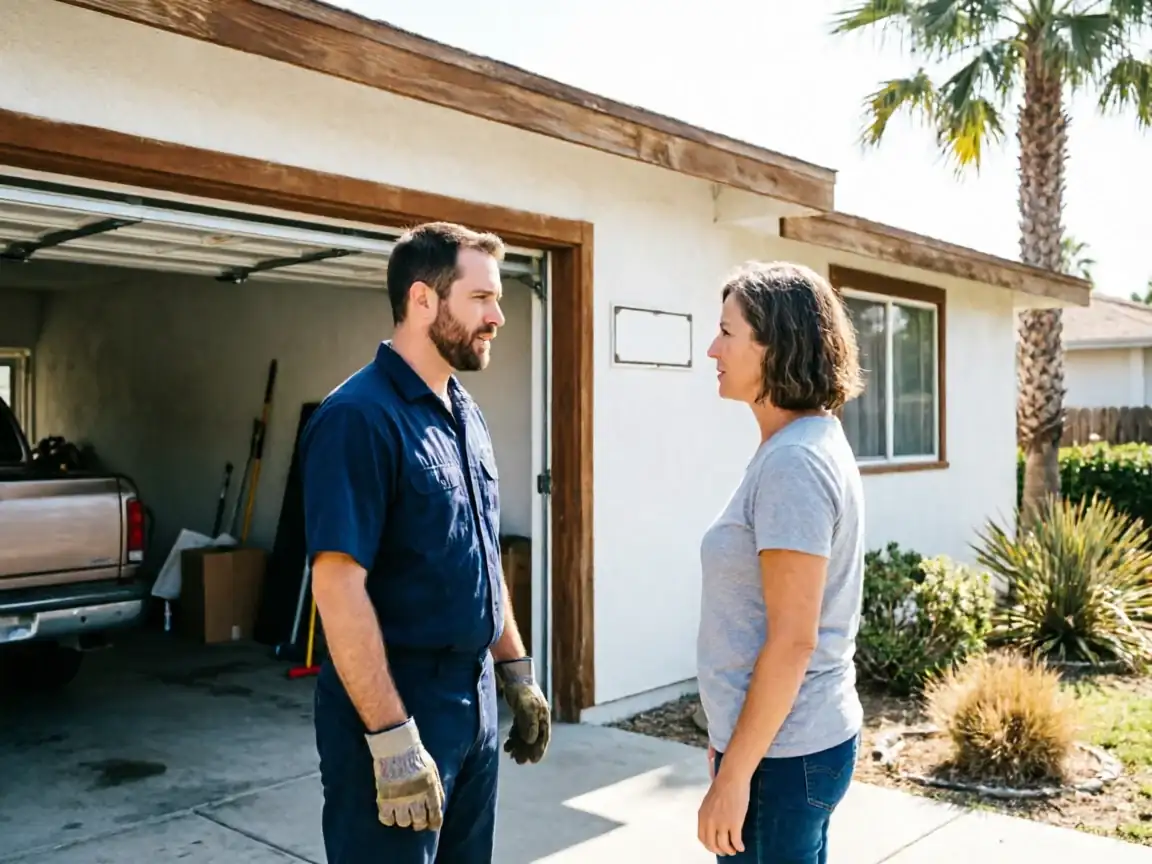
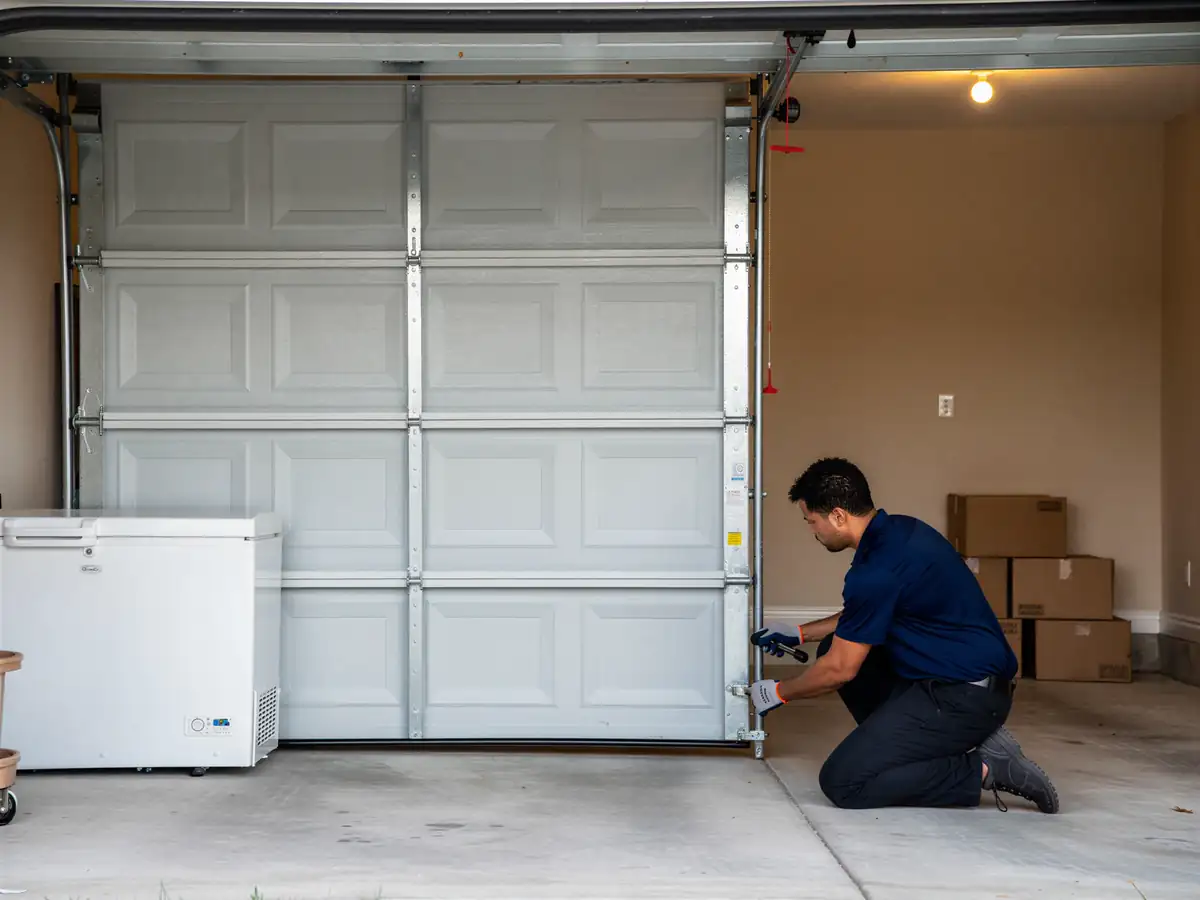
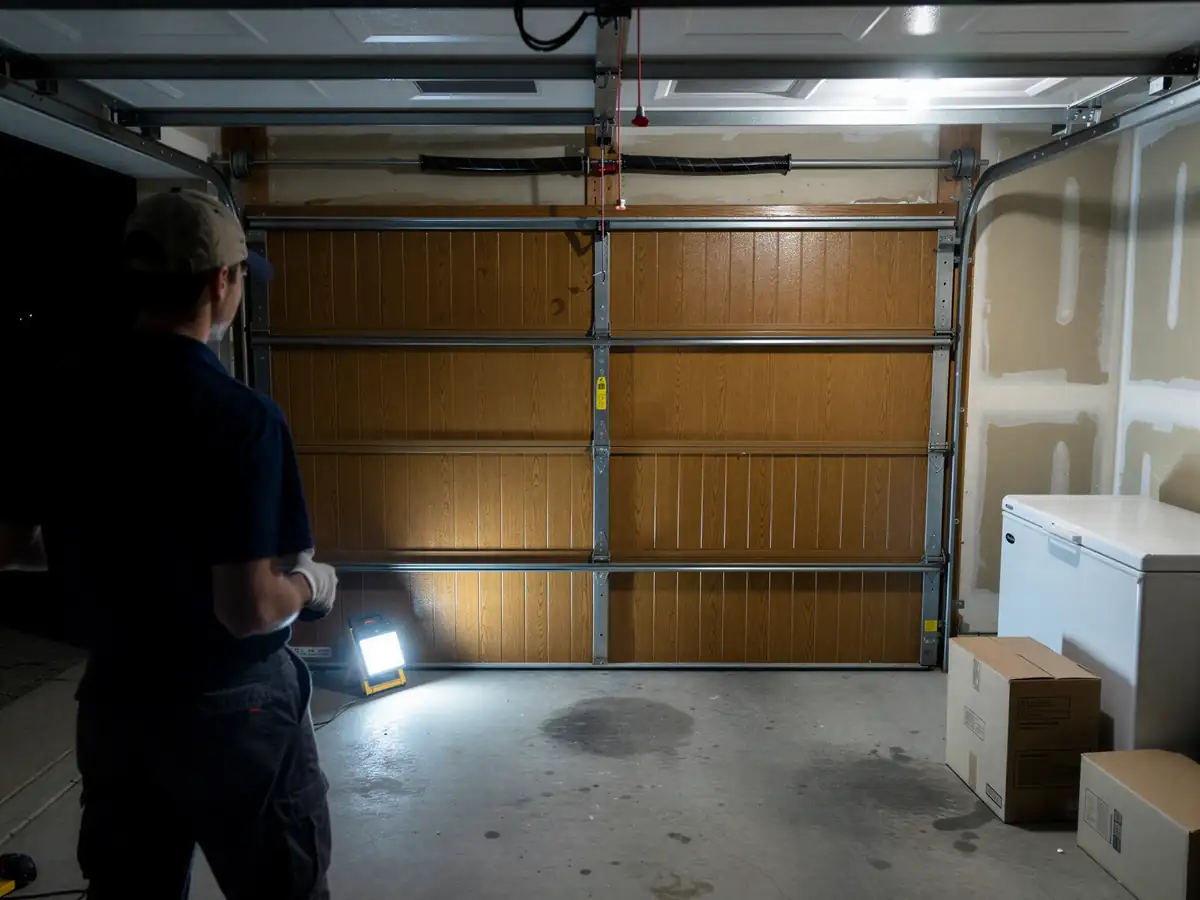
A maintenance visit covers the stuff that quietly wears out on a door this age: spring tension check, track alignment, roller and hinge condition, cable inspection, and opener force settings. We tell you plainly if something's fine for now versus something that needs scheduling before it becomes an emergency call.
Across the area we work in, roughly a quarter million houses are owner-occupied, and most of them share that same 1960s-70s build pattern, so this isn't a one-off inspection routine we invented for a single street. It's the same handful of wear points we check on nearly every visit, because the housing stock here ages in a consistent way.
One limitation worth saying up front: if your opener or spring system is old enough that parts are no longer made for it, maintenance can only buy you time, not a permanent fix, and we'll tell you that instead of running up a bill on a system that's due for replacement. Head to our home page to see the full range of what we handle and get in touch to set a visit.