Why It Happens Here
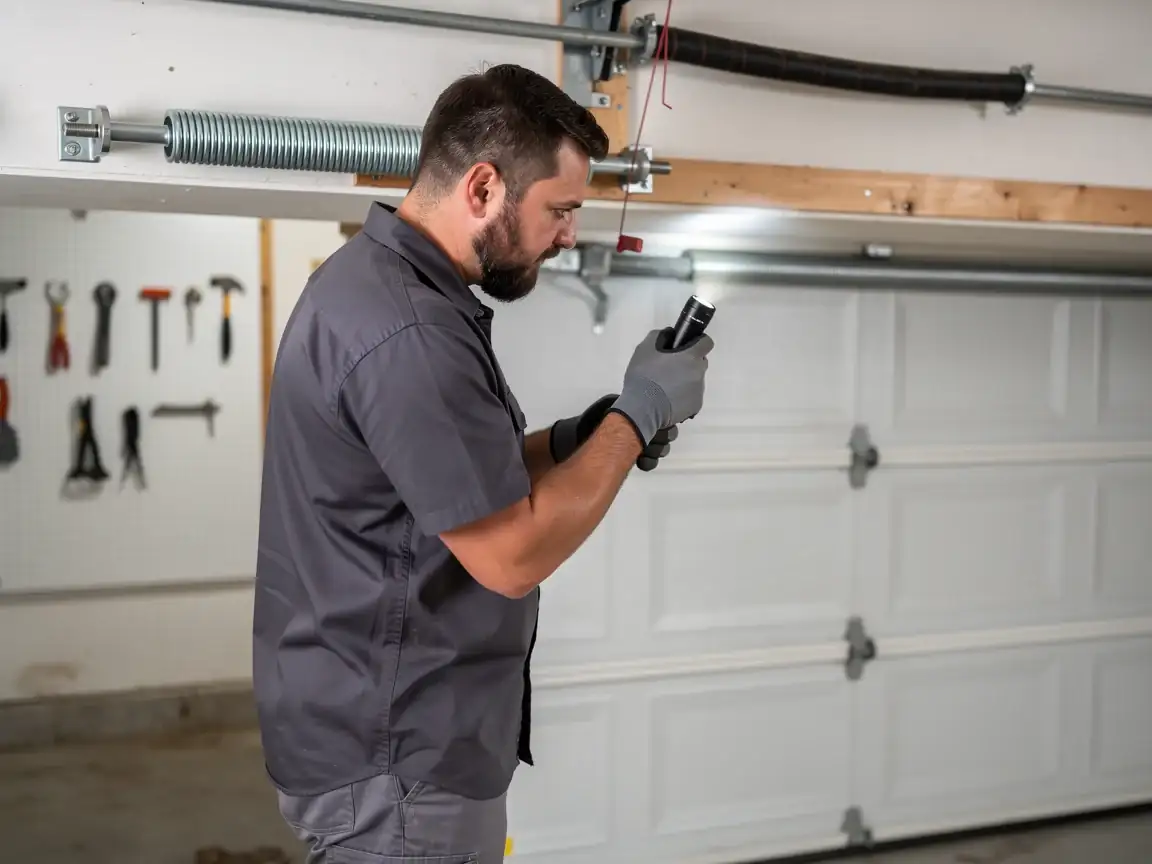
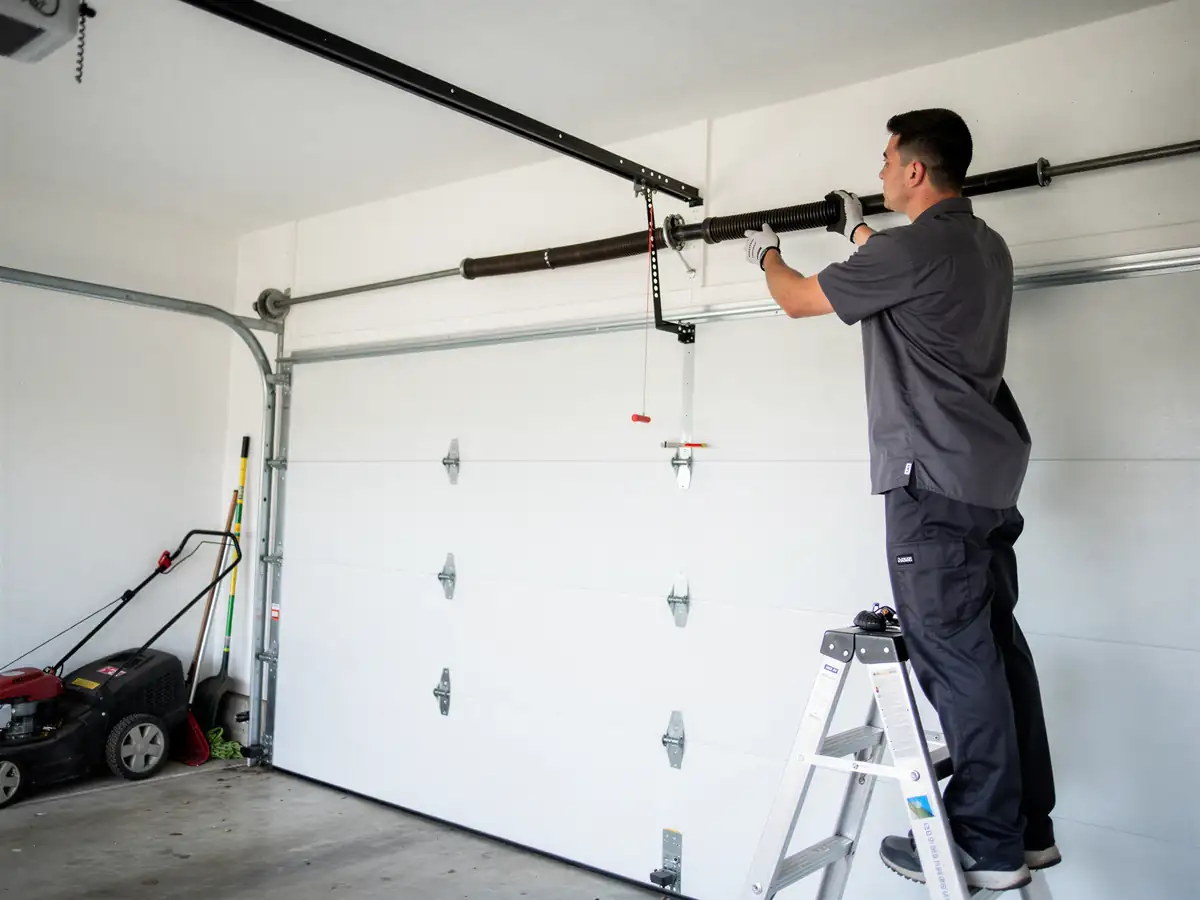
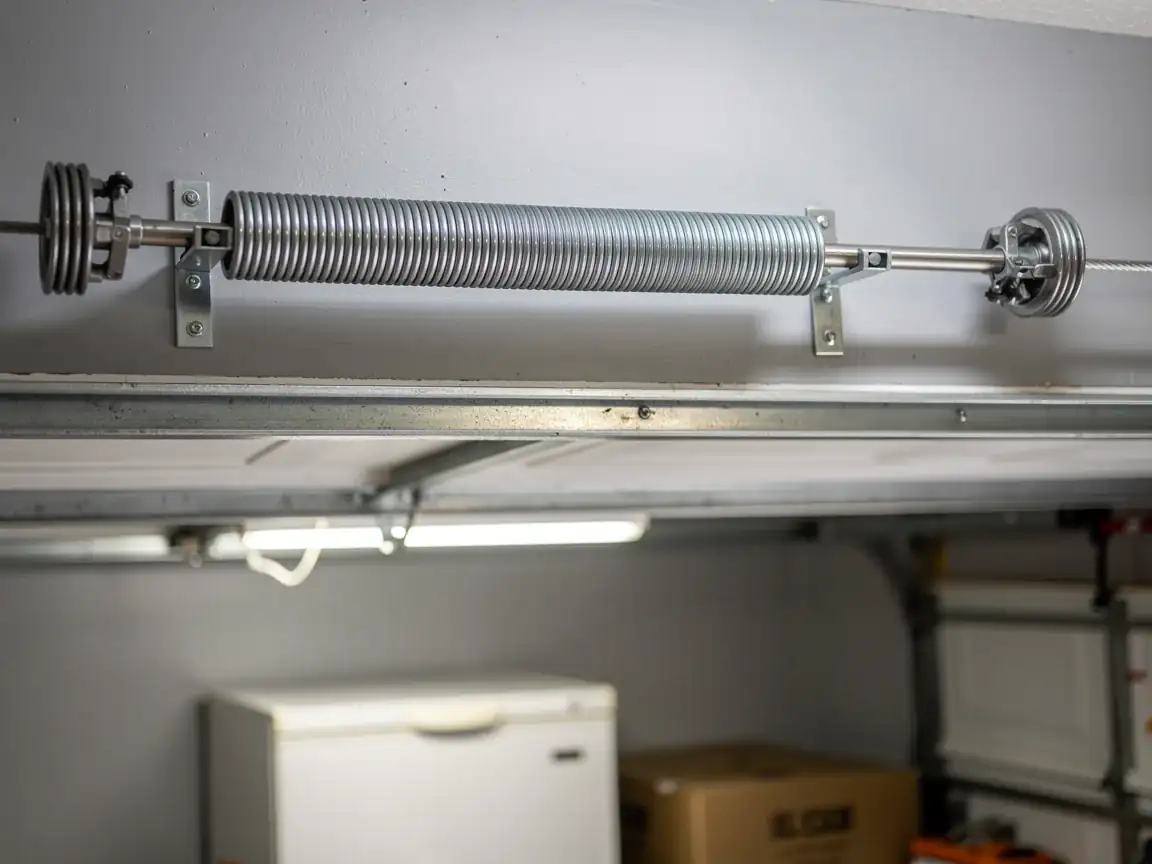
Most of Pomona's housing went up between 1951 and 2007, with the median build year sitting around 1965, and the bulk of the stock across the area's 45 named neighborhoods dates to the 1960s and 70s. That matters for one reason: torsion springs and the galvanized cable that rides them don't last 50-plus years. A spring rated for 10,000 cycles has long since burned through its life on a house built in 1965, and when it finally lets go, it goes without warning - usually at the worst possible hour.
The climate here plays a part too. Pomona sits in a moderate heat band, which sounds mild, but repeated heat cycling dries out spring lubricant and stiffens nylon rollers faster than a cooler climate would. Add decades of that cycling to original hardware that was never swapped, and you get the two most common emergency calls we see: a snapped torsion spring on a double door, or a cable that's frayed through and finally parted.
Newer tract construction elsewhere might push these failures out another decade. Pomona's stock doesn't have that cushion. If your door is original to a house from that era, the hardware inside the torsion tube is older than most of the cars in the driveway.
What You Are Seeing
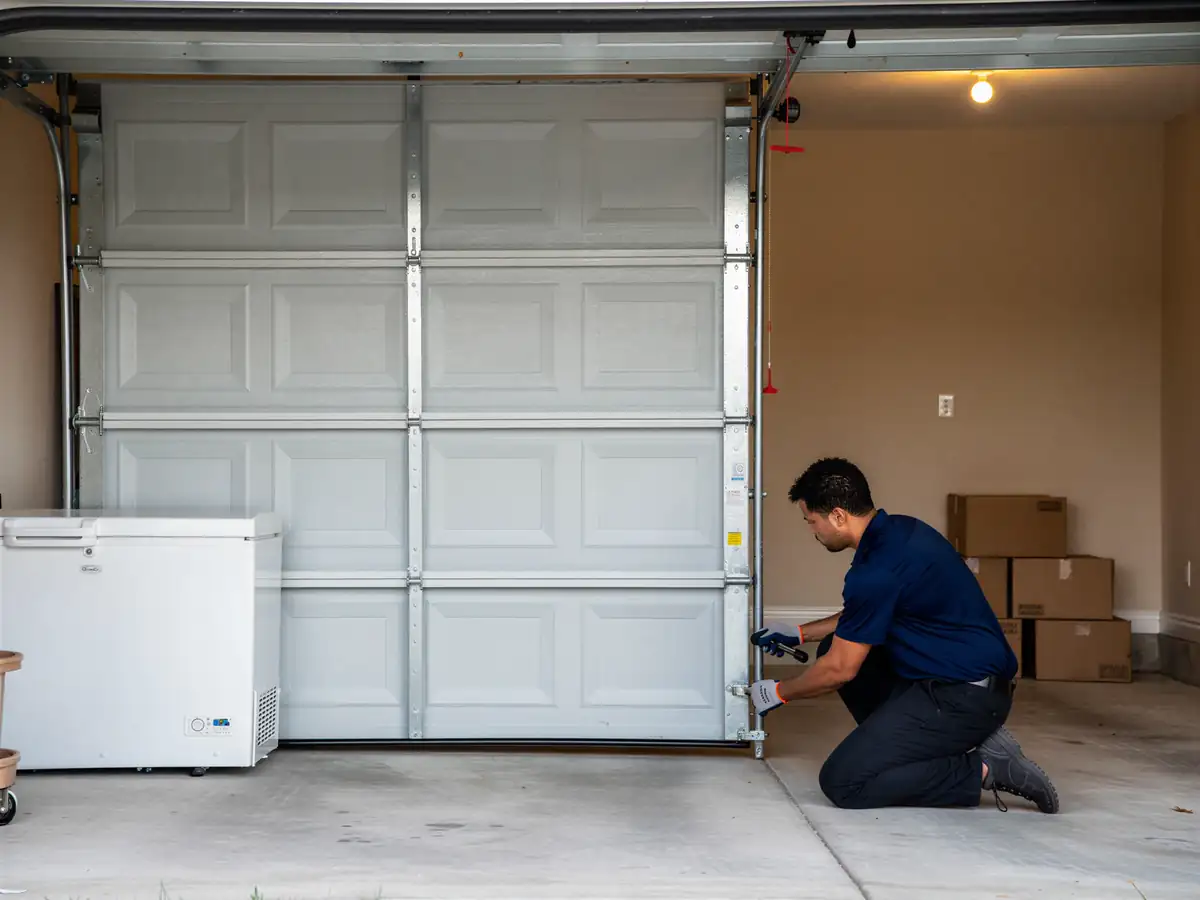
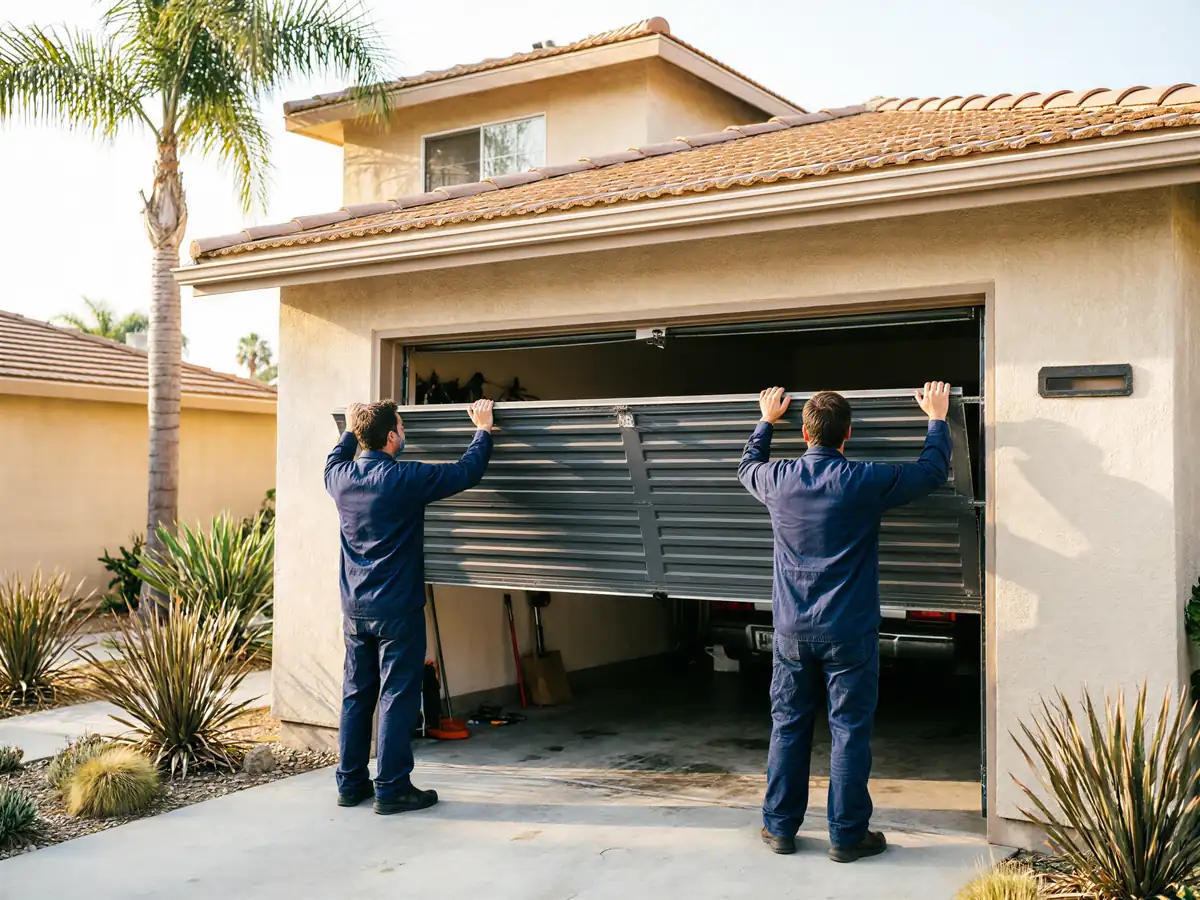
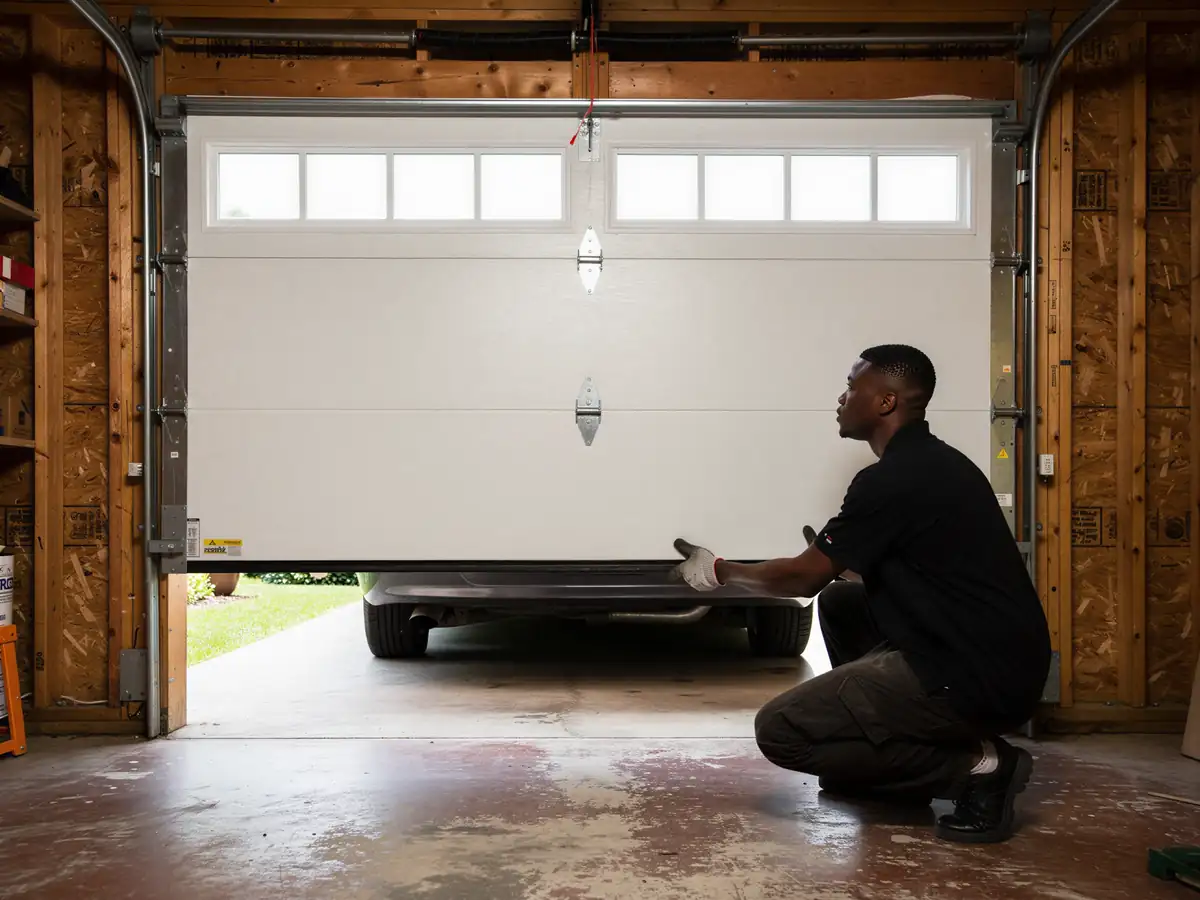
A door that won't budge, with the opener motor humming but the door not moving, usually means a broken spring - the opener isn't built to lift a door's full weight alone. If one side of the door looks tilted or crooked in the frame, that's a cable that's slipped off the drum or snapped outright. A loud bang followed by the door refusing to open is almost always the spring going.
Grinding or popping when the door moves, especially near one of the vertical tracks, points to a roller that's worn through on hardware this old - original rollers from a 1960s or 70s install are long past their service life. A door that opens but won't stay open, sliding back down a few inches, is often a cable or spring that's partially failed and about to go the rest of the way.
What you should not see is the door suddenly dropping while someone's underneath it or a vehicle is halfway out. That's the point where this stops being a repair call and becomes a safety call - get clear and call before trying anything else.
The DIY Question
A torsion spring holds enough stored force to do real damage to a hand, a face, or a car hood if it lets go while you're working on it
We don't recommend touching the spring, the cables, or the torsion tube yourself, full stop - this isn't a YouTube job, and we say that as people who do this for a living.
What you can safely check
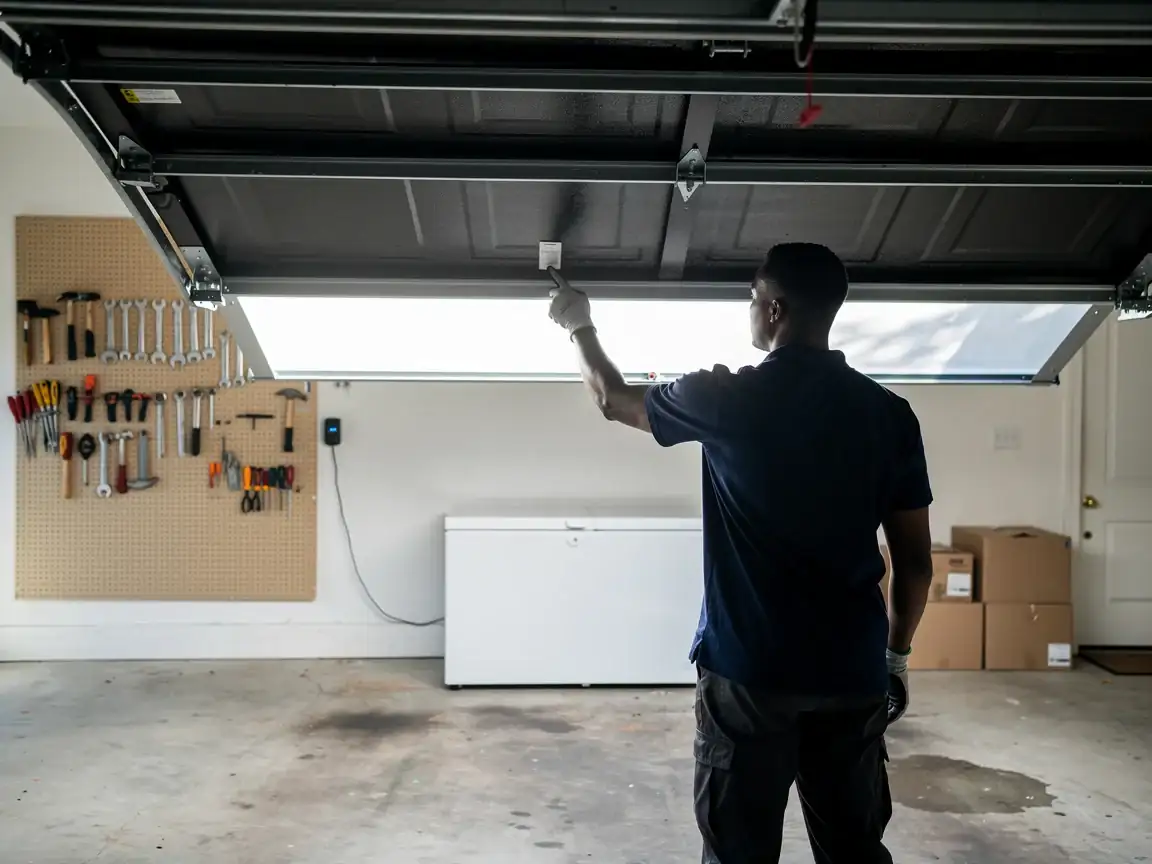
Whether the opener is getting power, whether the photo-eye sensors near the floor are aligned and clean, and whether anything is physically blocking the track. Those three things account for a fair number of calls that turn out not to be hardware failures at all.
Honest limitation: if your door is original to a house built in the 1960s or earlier and the spring has gone
We're often replacing more than just the spring - the drum, the cable, sometimes the rollers are at the same age and condition. We'll tell you straight if a full hardware changeout makes more sense than patching one part, rather than sending a truck back out in six months for the next piece that fails.
How to Book
Call us when the door won't move, won't stay up, or looks like something's come apart on the track. Tell us what you're seeing - humming opener with no movement, a bang before it stopped, a cable hanging loose - it helps us bring the right parts the first time, especially for hardware this old.
Don't force the door open or closed by hand once you suspect a spring or cable has gone. That's how the damage spreads from a $200 part to a bent track or a dented panel.
Visit / to reach us.