What Local Conditions Do
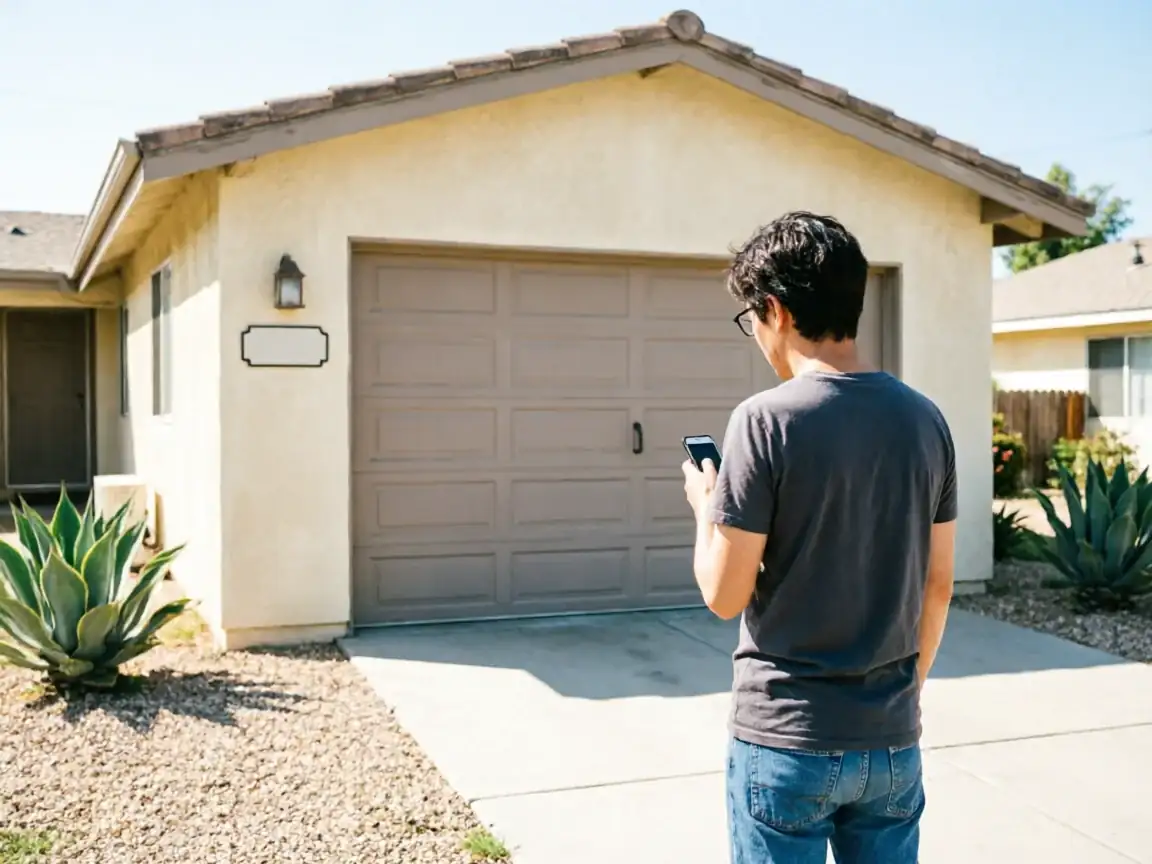
Most houses in Pomona went up between 1951 and 2007, with the median landing around 1965, which puts a lot of original one-piece doors still hanging on 1960s torsion hardware. Across the 45 named areas that make up this stretch of the service area, the typical home dates to the 1960s or 70s, old enough that the springs have likely been swapped once already, if ever.
Pomona sits in a moderate heat band, not the valley highs you get out toward Chino Hills or Eastvale, so the damage here shows up as dried-out lubricant and slow panel fatigue rather than warped tracks from extreme swings. Heat doesn't snap a cable the way a hard freeze does elsewhere - it works slower, drying grease out of rollers and hinges over years until the door starts binding or sagging on one side. That slow failure is why a door that still looks fine can be a week from a spring letting go, and why a door that sounds rough can still have another ten years in it if the track and rollers are sound underneath the noise.
Checking It Yourself
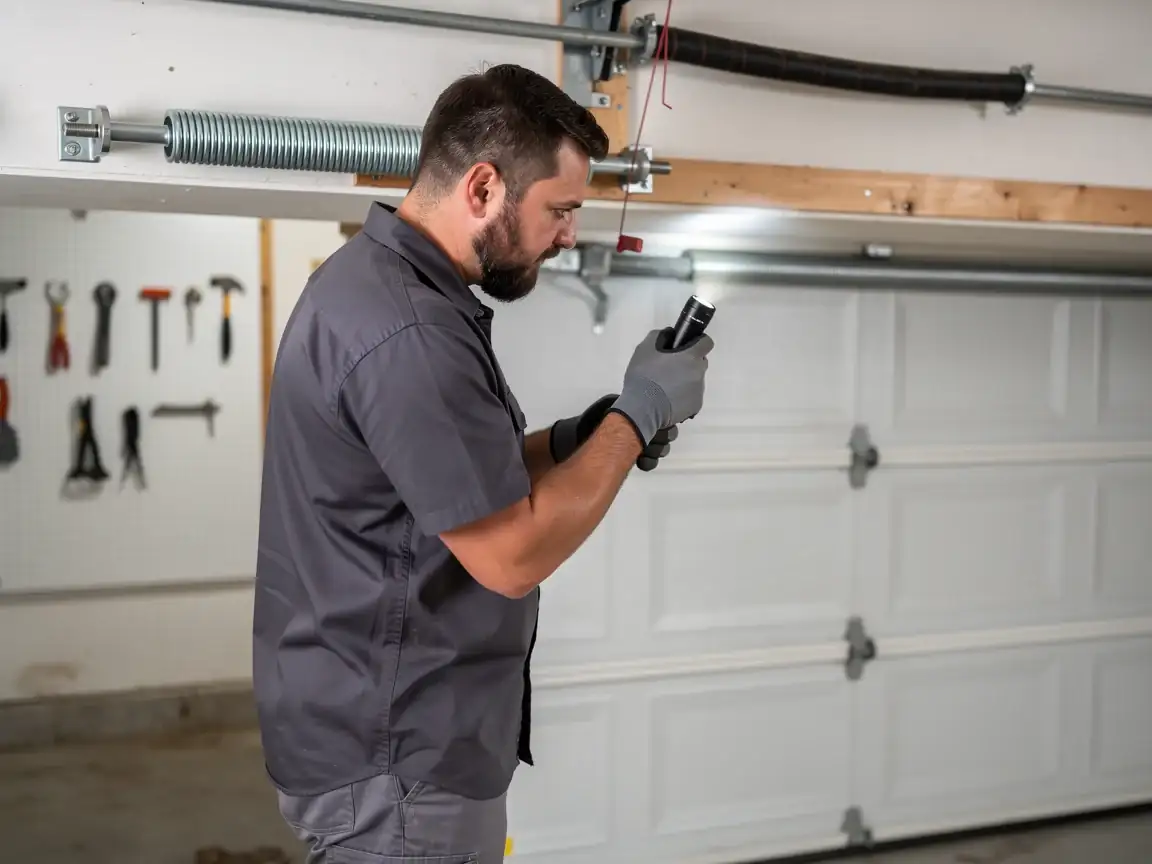
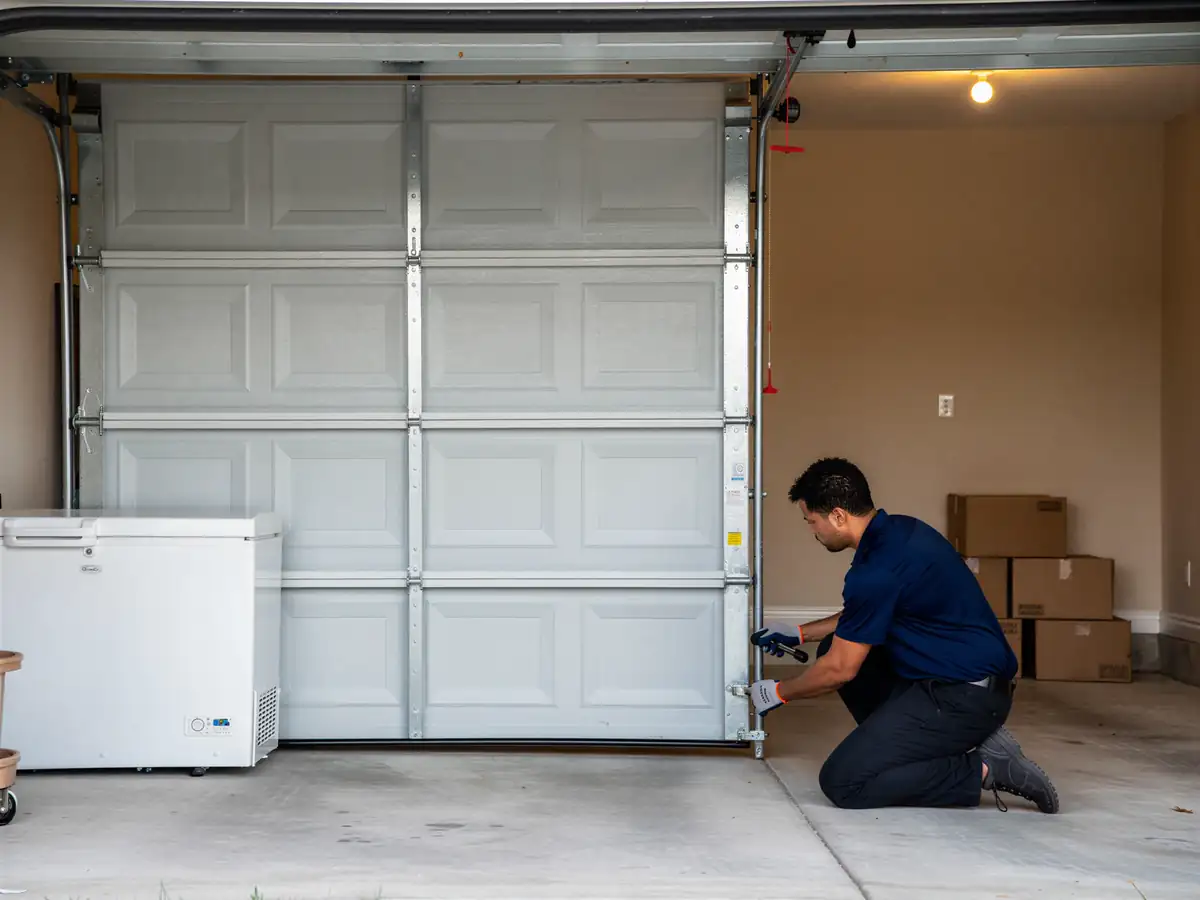
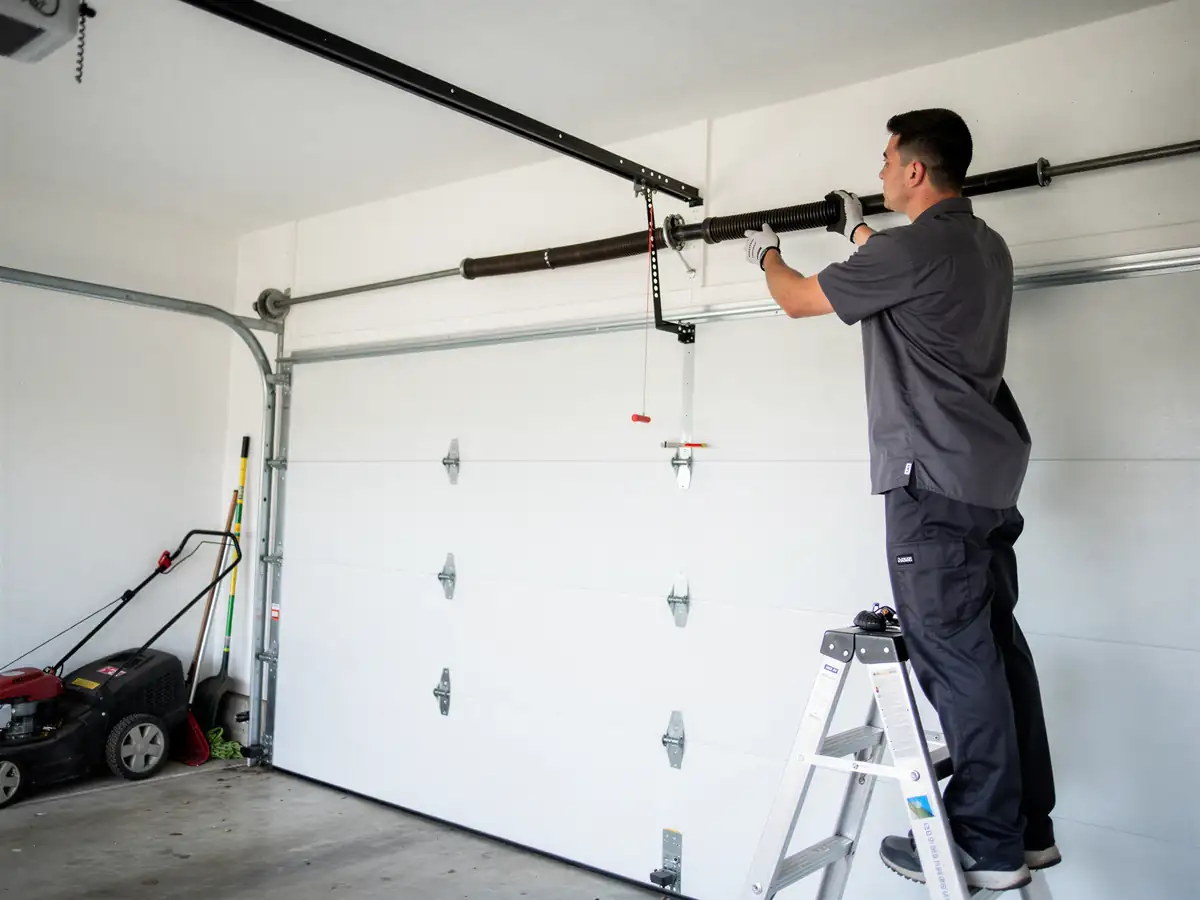
Start with the springs. If your torsion spring sits on a shaft above the door and you can see a gap in the coil wider than a finger, that's a break - don't lift the door, call someone. If you've got two stretched springs on either side above the horizontal track instead, that's an older extension setup, more common on the original installs from the 1960s and 70s stock around here, and it fails differently - the cable is doing the holding, so check that cable for fraying near the bottom bracket.
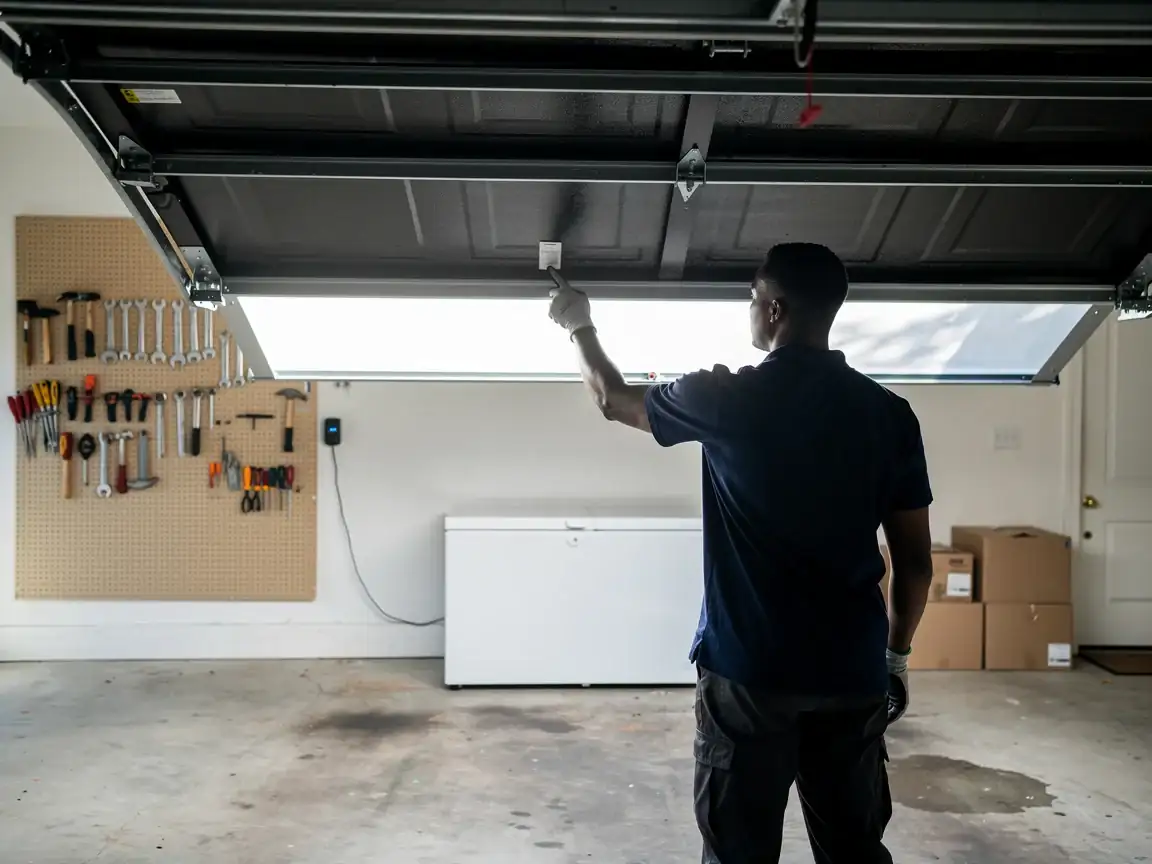
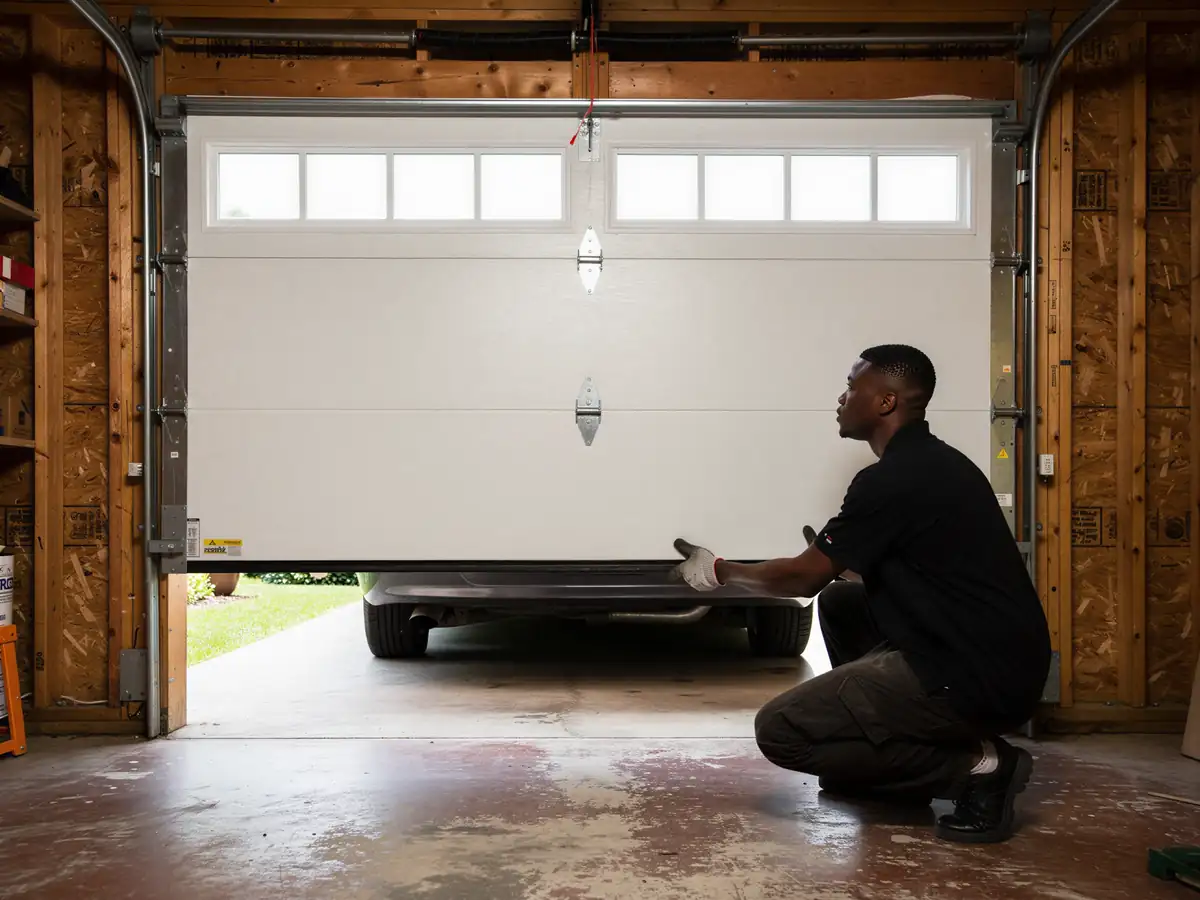
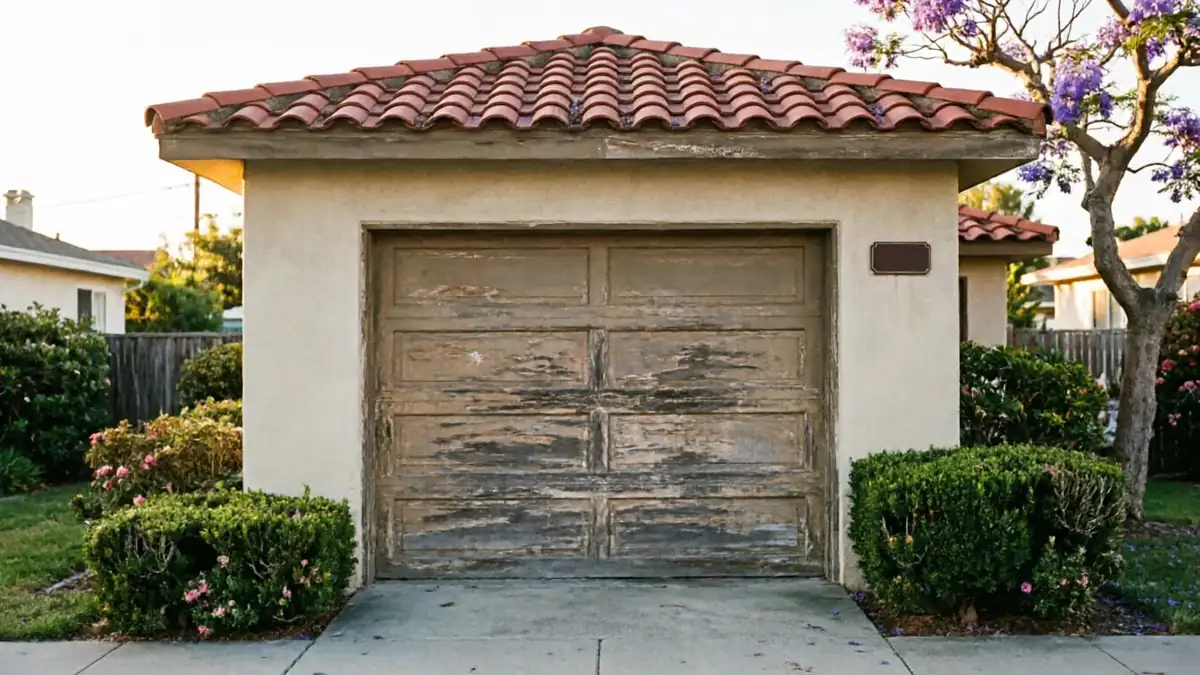
Next, open the door halfway by hand with the opener disconnected. It should stay put. If it drifts down, the springs are losing tension and the door is working the opener harder than it should. Check the panels for rust bubbling at the bottom edge - common on doors that have sat through enough seasons near sprinklers or a low spot in the driveway. None of this tells you for certain what's wrong, but it tells you whether you're looking at an adjustment or a teardown.
The Situation
This area has 538,102 households and 249,850 owner-occupied houses
With a median household income of $102,449. That matters here specifically because it means most owners calling about an old door aren't choosing between fixing it and doing nothing - they're choosing between a repair bill and a replacement bill, and can actually afford either one if the math makes sense.
- 538,102 households
- 249,850 owner-occupied
- $102,449 median household income
That changes the advice
On a newer door, you fix what's broken and move on. On a door that's original to a 1965-era build, the question is whether the rest of the hardware is worth propping up around one repair. A new spring on a track that's rusted through at the mounting brackets just moves the next failure a few months down the road. With the income and ownership numbers this area has, it's usually worth paying for an honest look at the whole door rather than patching the one part that failed.
The Common Mistake
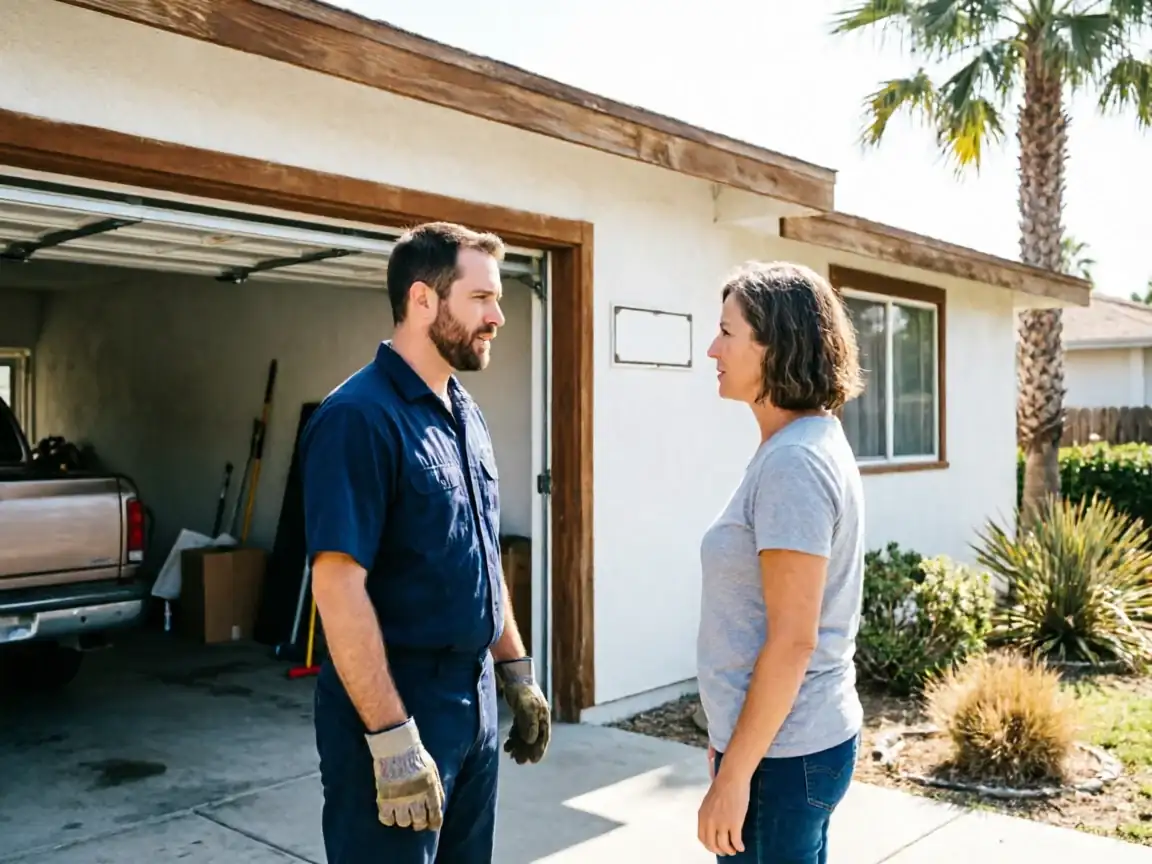
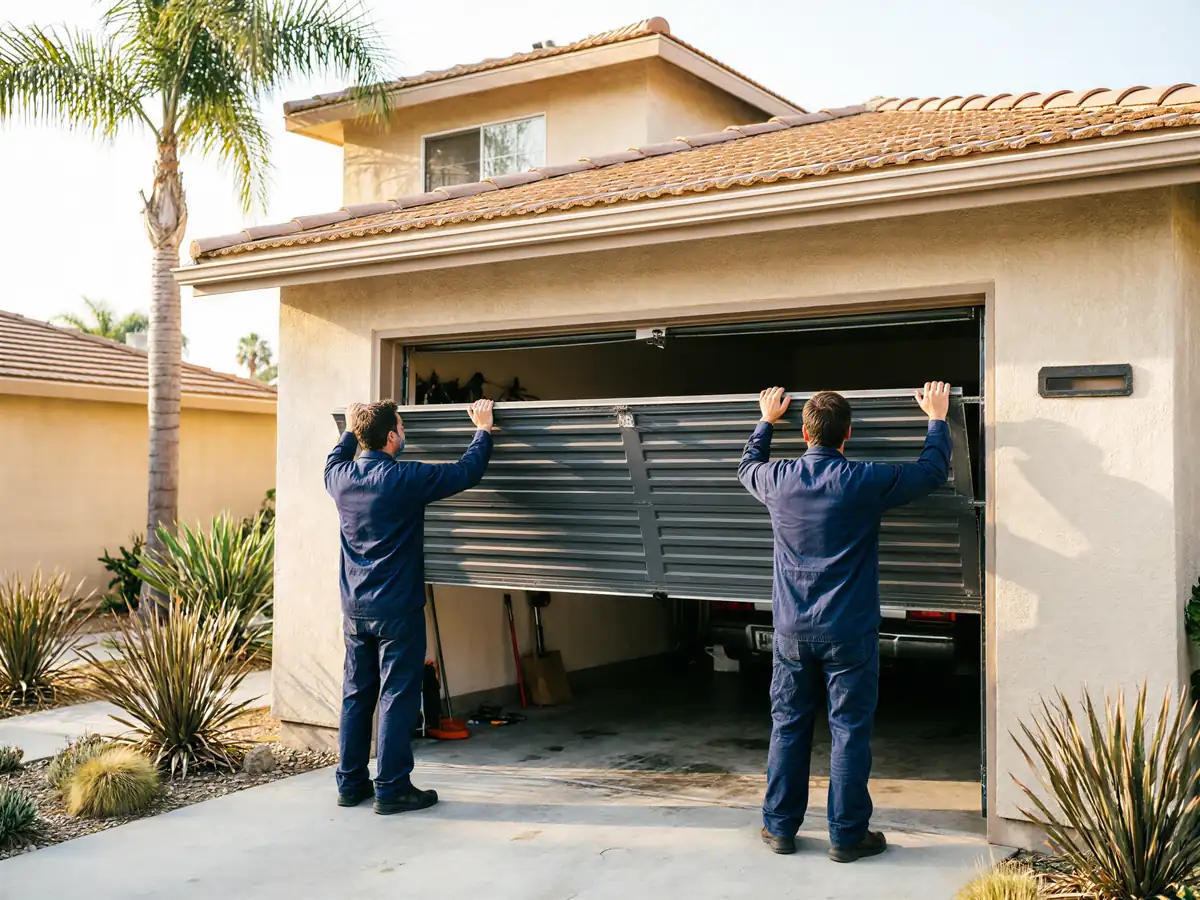
The mistake we see most is replacing a door that only needed a spring and a tune-up, because one loud bang convinced the owner the whole thing was shot. The other mistake runs the opposite way - patching a door from the original 1960s construction run after run because the first repair was cheap, until the track is so worn the new spring can't hold proper tension and it's back to banging within a season.
Here's the honest limit: a door install sheet dated to a 1965-era tract home means parts like the original drum or bottom bracket may not be stocked anywhere locally anymore. When that happens, repair isn't cheaper than replacement - it's slower, and you're waiting on a part that might not show up. We won't quote a repair on hardware we can't actually get. If your door falls into that gap, we'll tell you straight rather than stringing out a repair that was never going to hold. You can see what we cover at /.