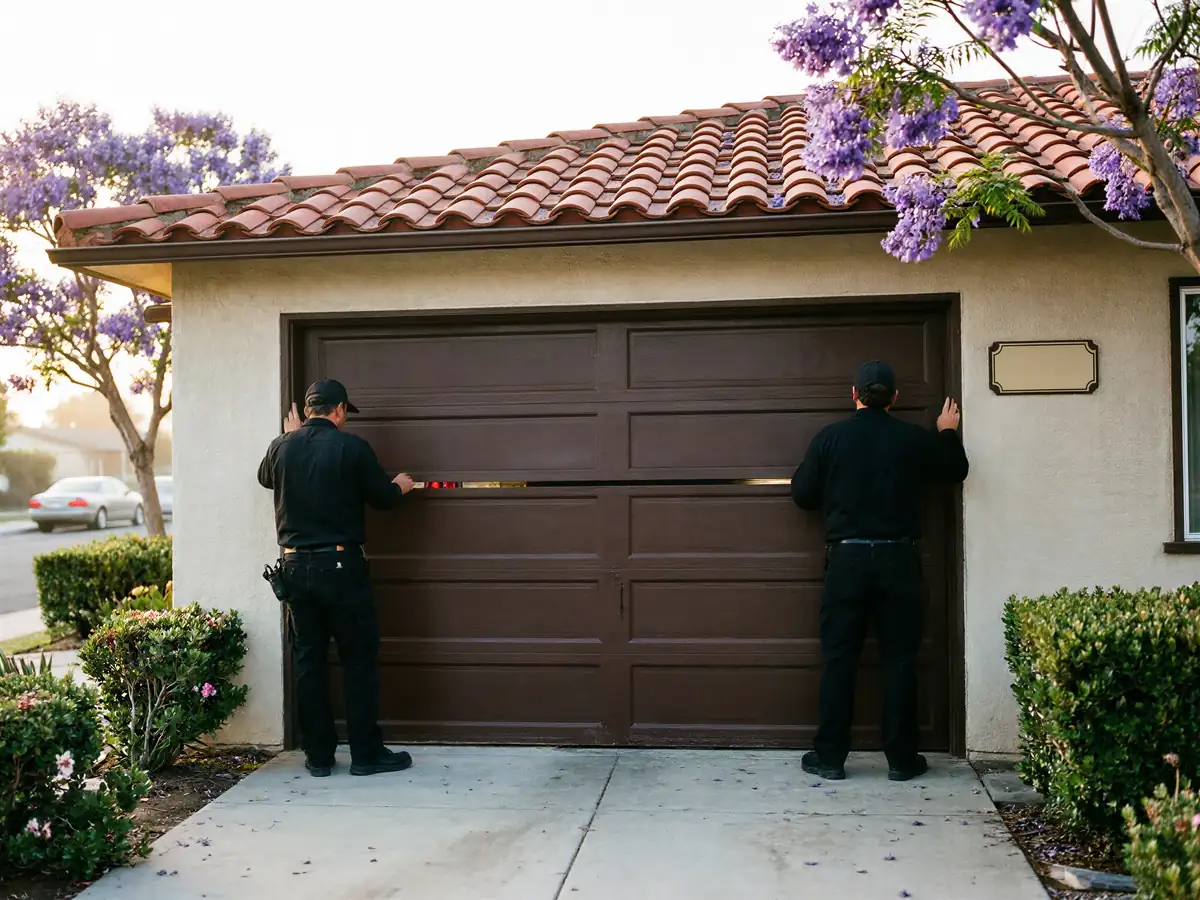
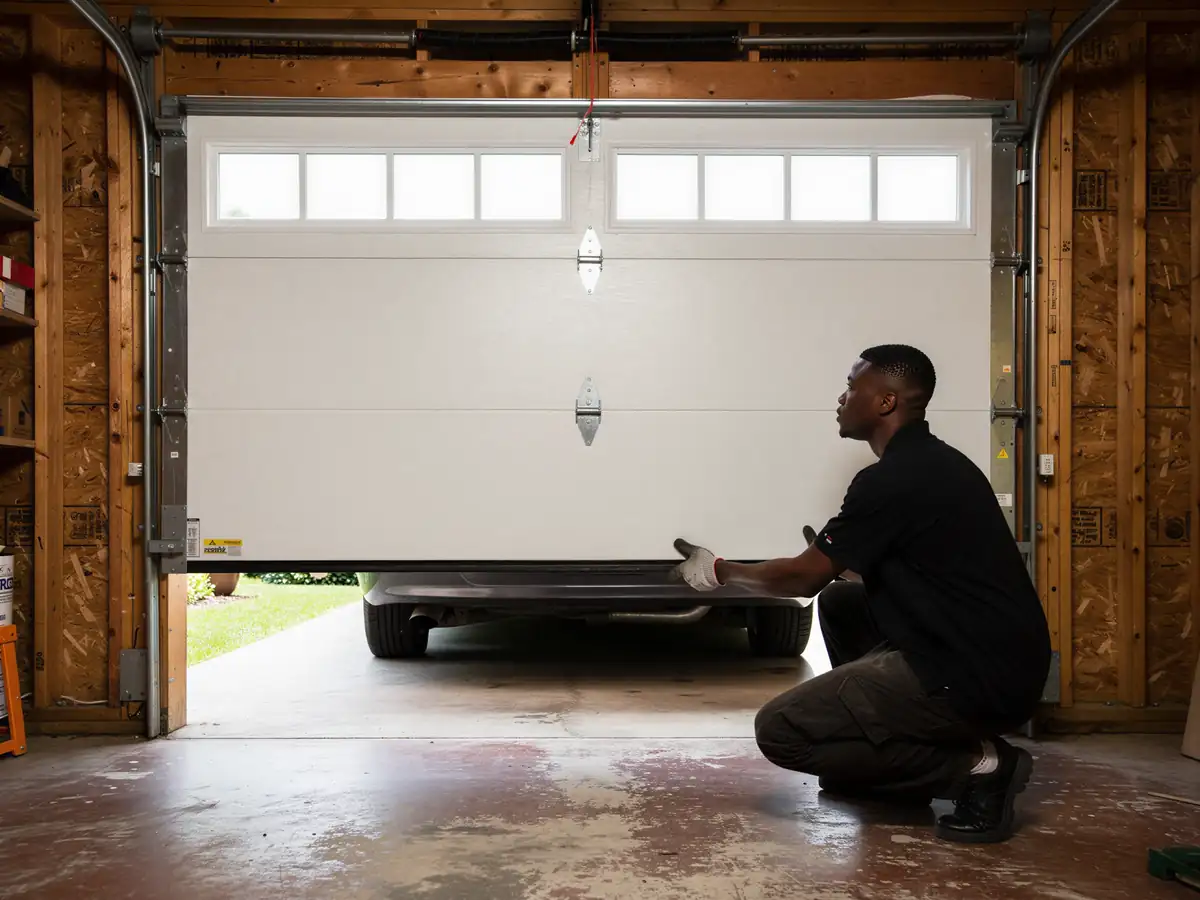
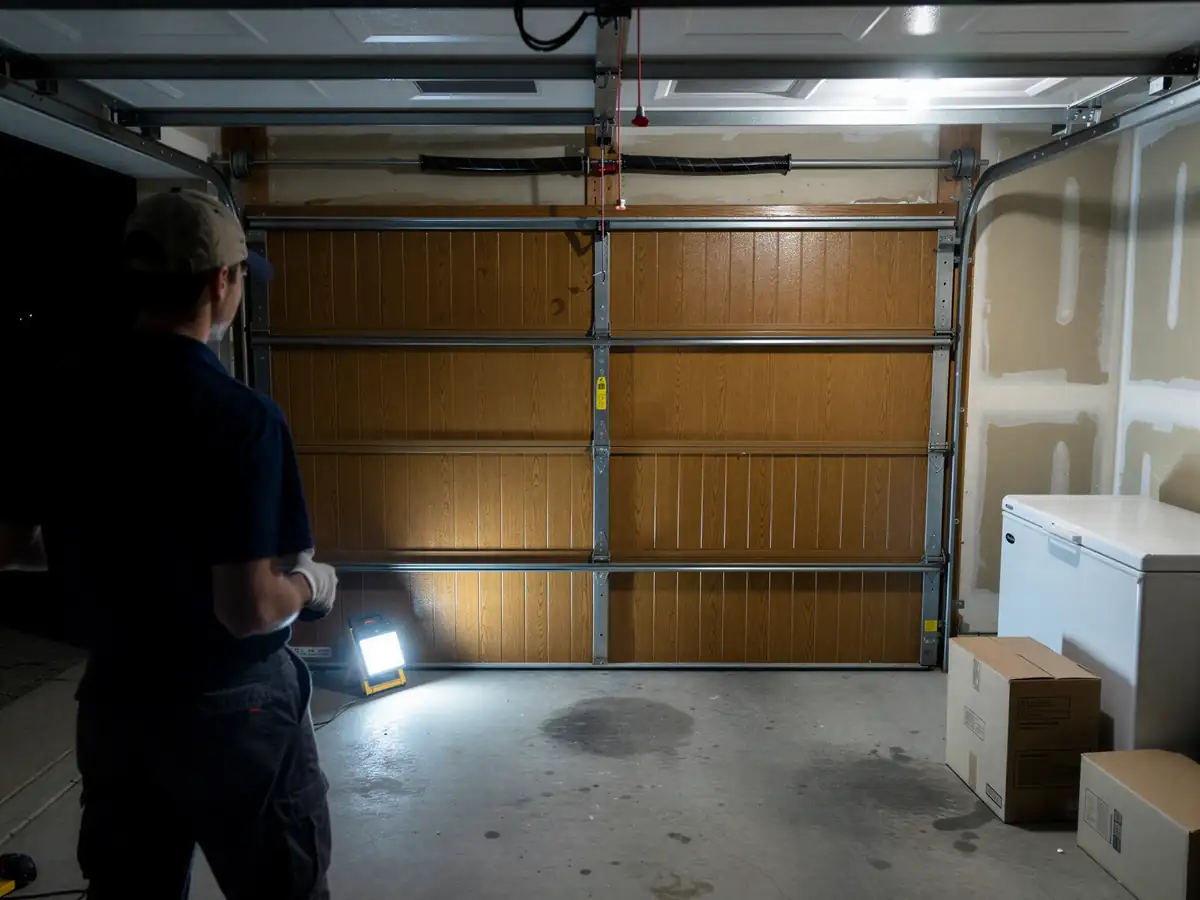
What We Do Not Do
We don't keep a crew stationed in West Covina. We run out of Pomona, eight miles west, and every job here is a drive, not a walk from a depot. That means we don't promise a same-hour arrival just because you're close to the freeway corridor - we quote a window when you call and we stick to it, but we're not pretending to have a truck idling two streets over.
We also don't carry every obsolete part on the truck. A lot of West Covina garages still have hardware from the late 1960s, and some of those parts are special-order. If your spring size or track bracket isn't something we stock, we'll tell you the lead time instead of jury-rigging a fix that won't hold.
We don't do cosmetic panel matching on doors old enough that the manufacturer stopped making that style decades ago. If one panel on a 1968 door gets crushed, we'll be straight with you about whether a patch panel exists or whether the whole door needs to go. Sometimes replacement is the honest answer, not the upsell.
How That Shows Up in the Door
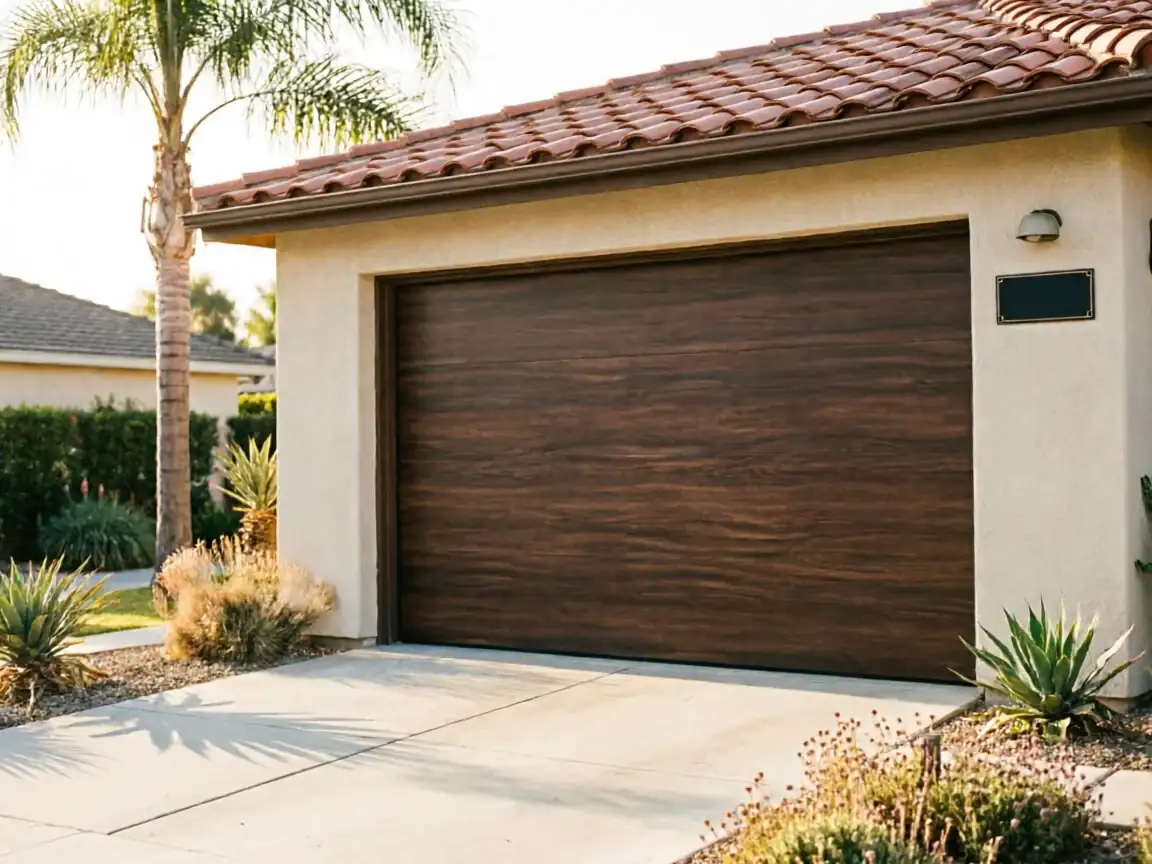
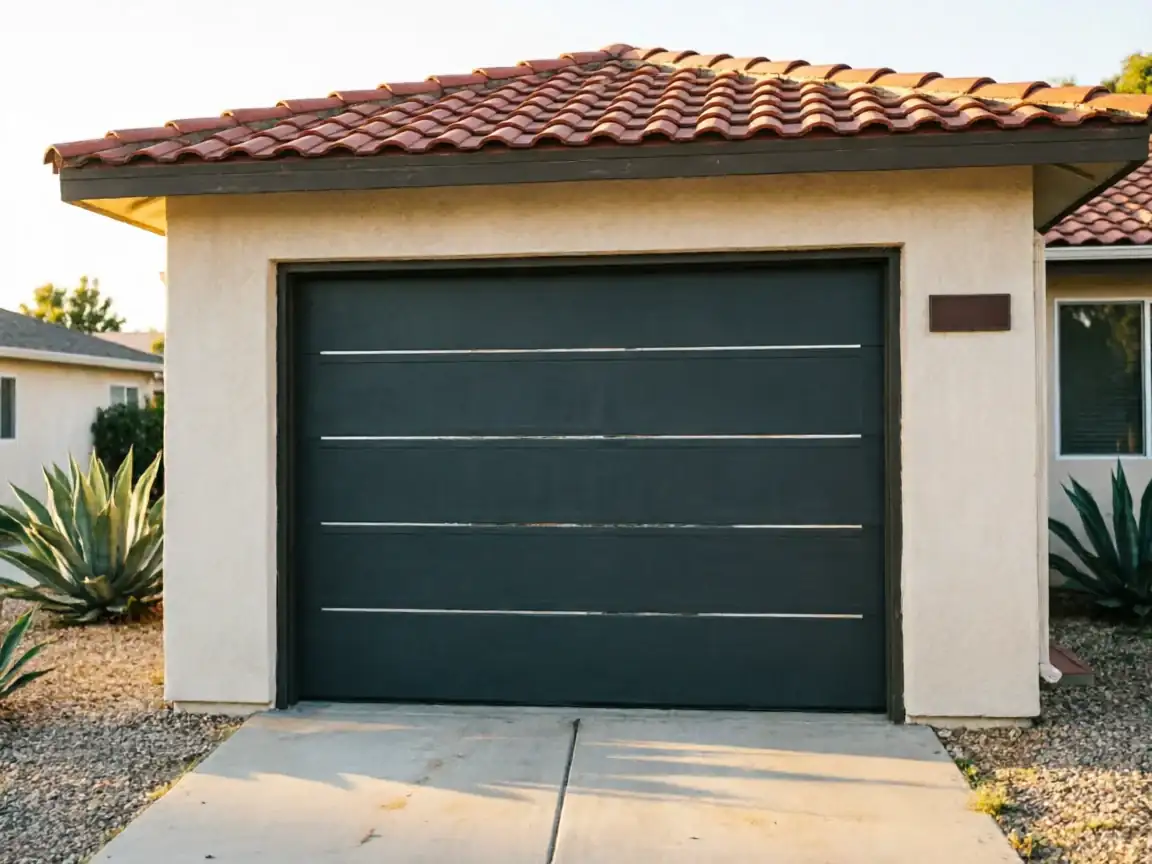
The median house in this part of West Covina went up around 1968, a few years past the 1965 midpoint for the wider service area and squarely in the second wave of San Gabriel Valley tract building. That later date matters: by 1968 builders had mostly moved past the early one-piece slab doors and into sectional doors on torsion springs, but the openers bolted on later were still chain-drive units from the 1970s and 80s, retrofitted onto hardware that predates them.
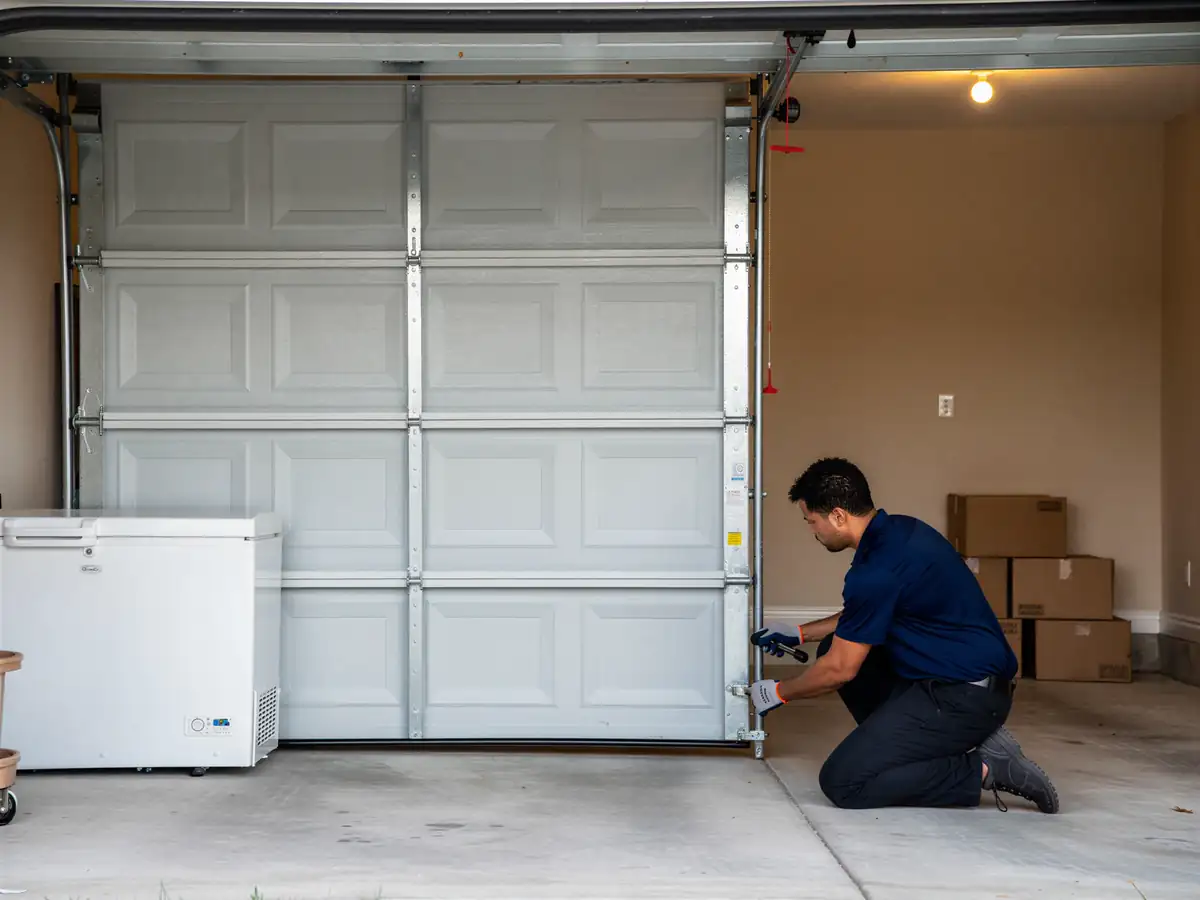
What that gives us on a service call is a mismatch - a torsion spring sized for the original door weight, an opener added ten or fifteen years after the house was built, and brackets that were never meant to carry that opener's pull. We see stripped gears and worn drive sprockets on units that are themselves 30-plus years old, sitting on track that's older still. It's not one failure point, it's a stack of three different decades of parts working against each other, and diagnosing which layer actually broke is most of the job.
What We Do Most in This Area
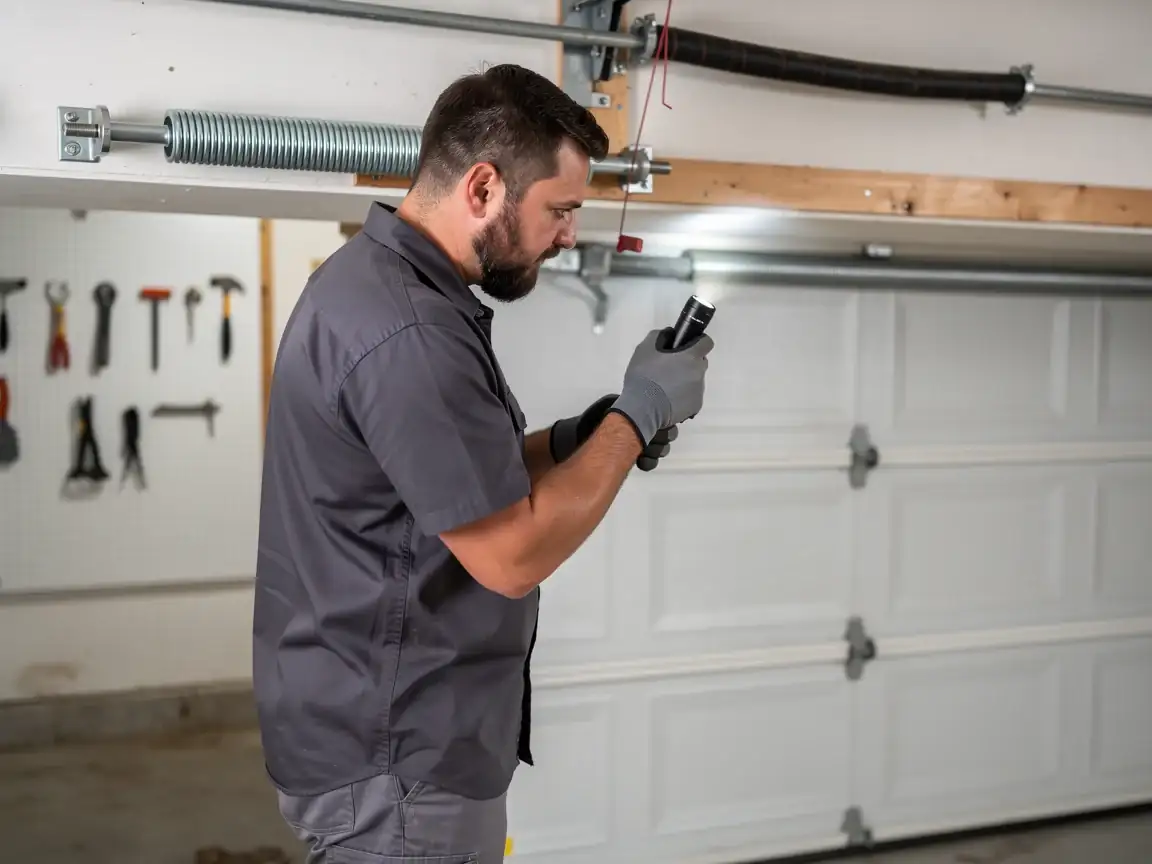
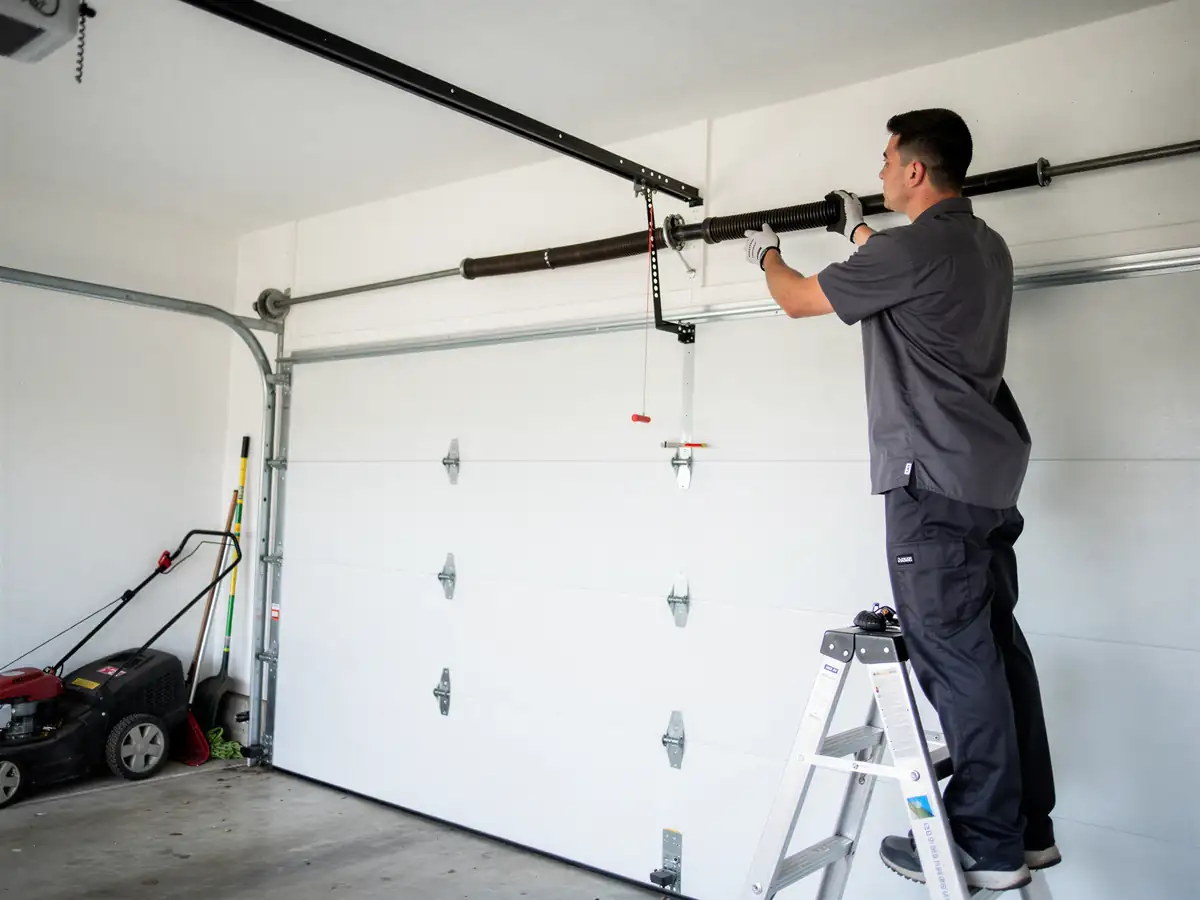
Torsion spring replacement is the call we get most from this part of West Covina
And it tracks with the 1968 build date - these are original or second-generation springs, well past any reasonable service life, and they go in the cold months when the metal's tightest. Right behind that is opener gear and sprocket replacement, for the reason above: the drive unit is often a later addition straddling older track.
We also get a fair number of calls on bent track and off-track rollers
Houses from this era typically have single-car or narrow two-car bays, and a door that's been knocked slightly off its rail by a car bumper or a too-aggressive manual override tends to bind rather than fail outright - it just gets harder to lift every month until someone calls. Cable fraying shows up too, usually paired with the spring call since both run on the same clock.
Heat isn't a dominant factor in failures here the way cold snaps are
The region sits in a moderate heat band, so we're not chasing warped panels from sun exposure the way some desert-adjacent areas do.
What Was Built Here
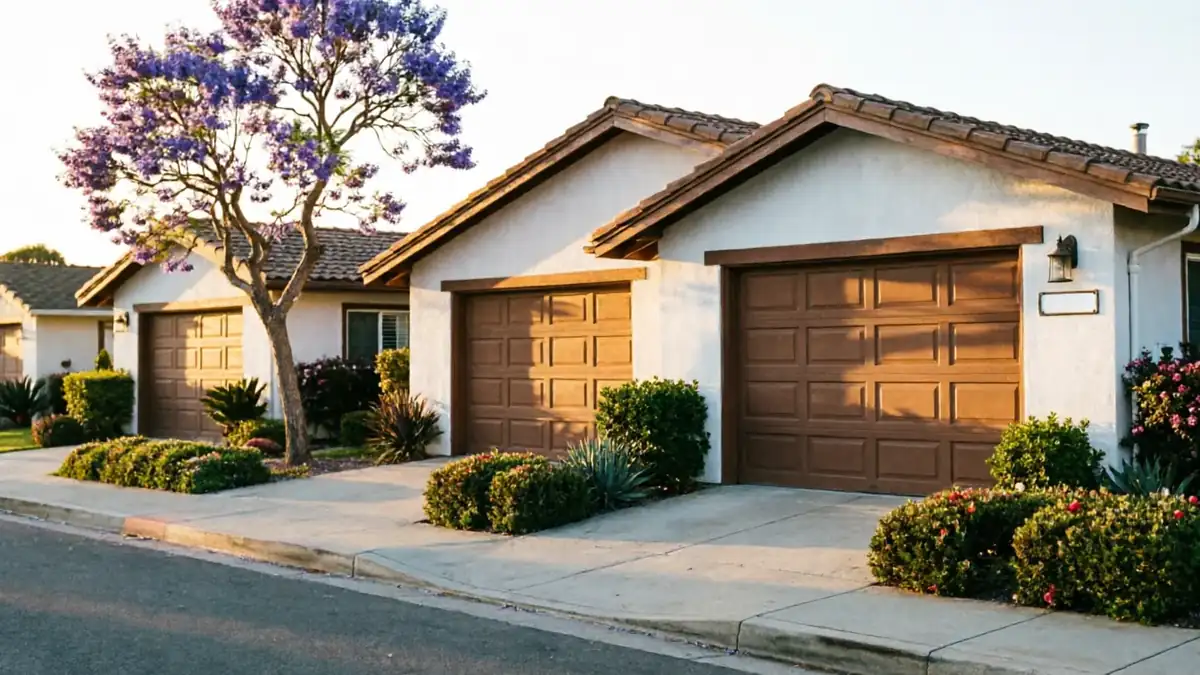
West Covina's housing here centers on 1968, part of the broader 1951-2007 range across the Pomona Garage Door Pros service area, but closer to the later edge of the 1960s-70s cluster that defines most of the 45 named communities we cover. That one small date difference - three years past the regional median - is enough to shift the typical hardware generation from early torsion to mid-era torsion, which changes spring wire gauge and drum size more than people expect.
The area runs about 32,586 households, smaller than the 538,102-household footprint across the whole service area, and median income here sits at $98,570 - a bit under the $102,449 regional figure. That gap doesn't change what breaks, but it does shape what people ask for: more repair-first calls, fewer full-replacement upsells taken without a second thought.
We're eight miles out from our Pomona base to get here, which is close enough that a diagnostic visit and a parts run back for an uncommon spring size isn't an all-day affair.