What We Do Not Do
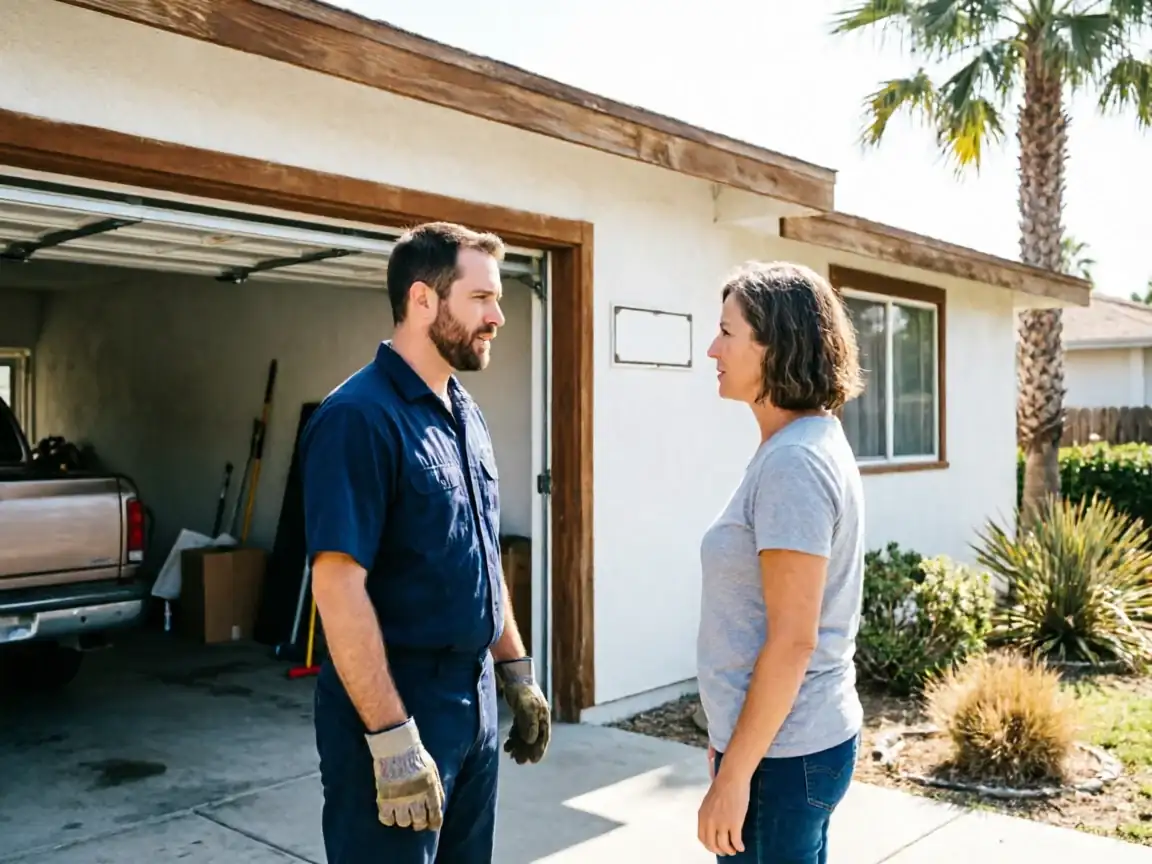
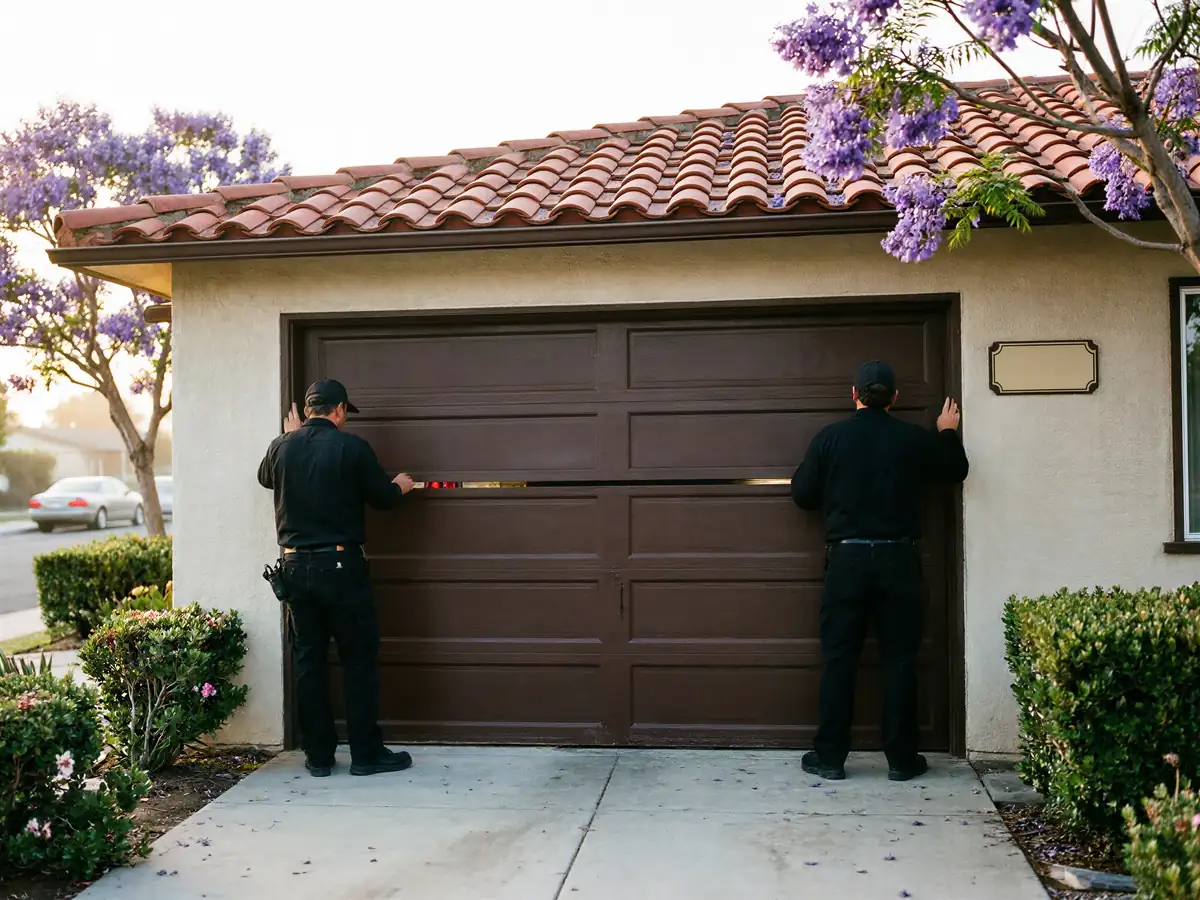
We don't keep a truck parked in Chino Hills. We run out of Pomona, about 8 miles west, and every job here is a drive, not a walk-in. That means we're not the outfit to call if you need someone standing in your driveway in ten minutes - we don't make response-time promises we can't back up.
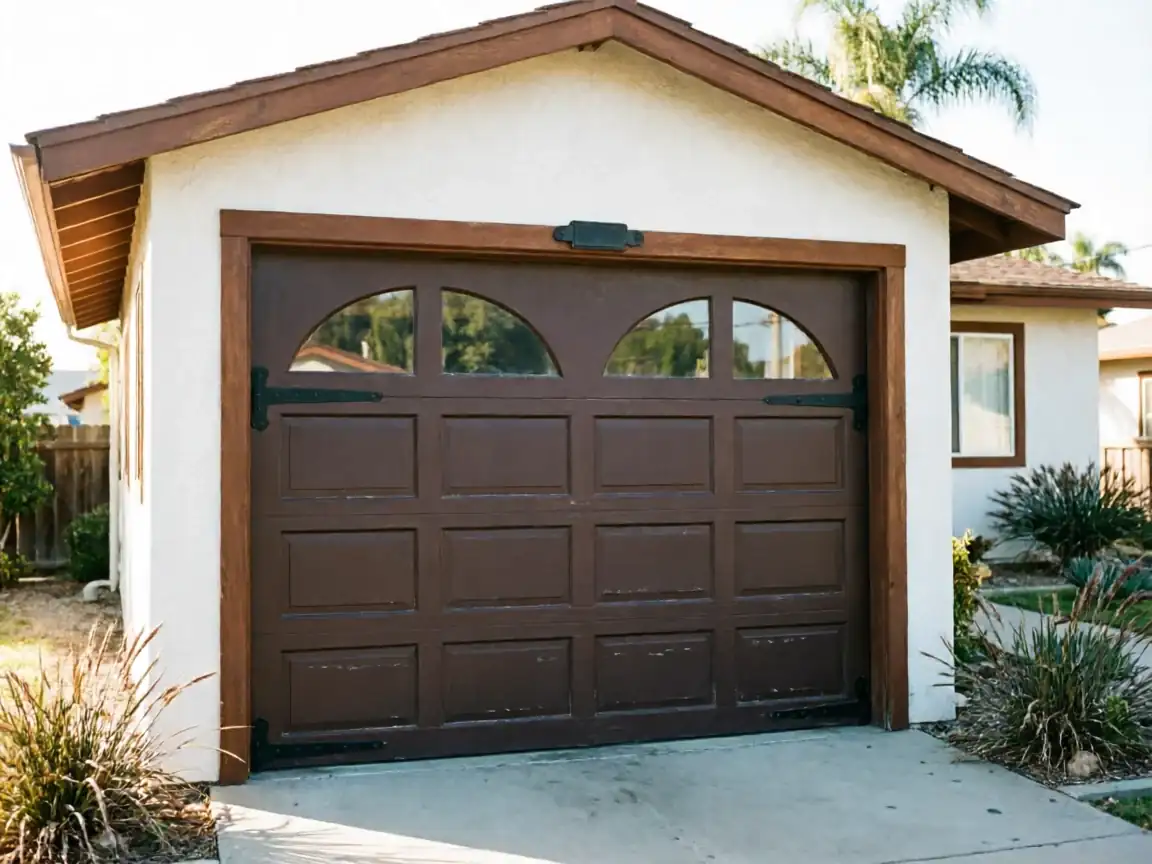
We also don't carry a deep stock of parts for the oldest one-piece garage doors and their side-mounted torsion hardware. That's common gear in Pomona's older tracts, but it's not what we run into out here, so we don't stake a claim on it.
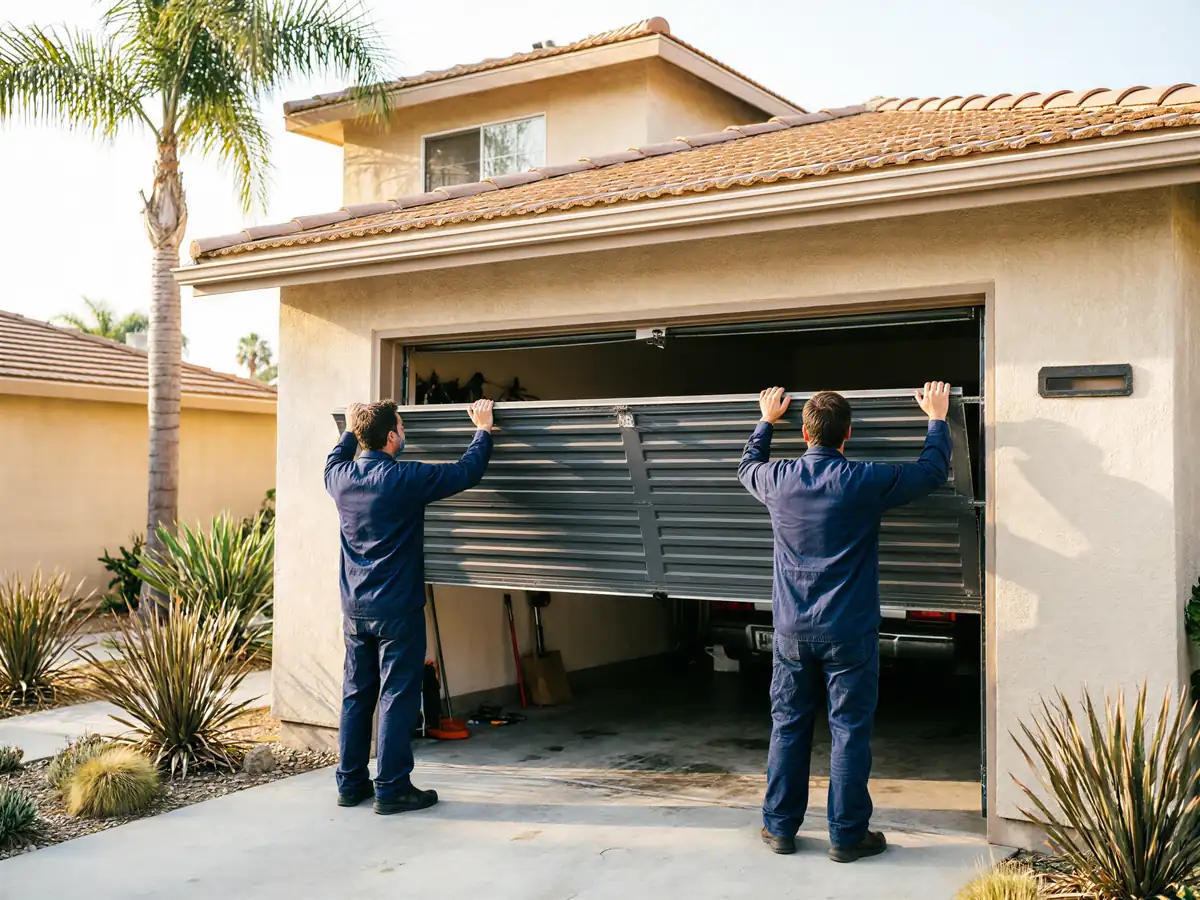
And we're straight about when a repair isn't worth it. If a panel's bent past reasonable alignment or an opener board is more than a decade past its support life, we'll tell you replacement beats another patch job, even if that's a smaller ticket for us.
What we are is a crew that drives the distance and knows what's actually behind most Chino Hills garage doors once we get there.
How That Shows Up in the Door
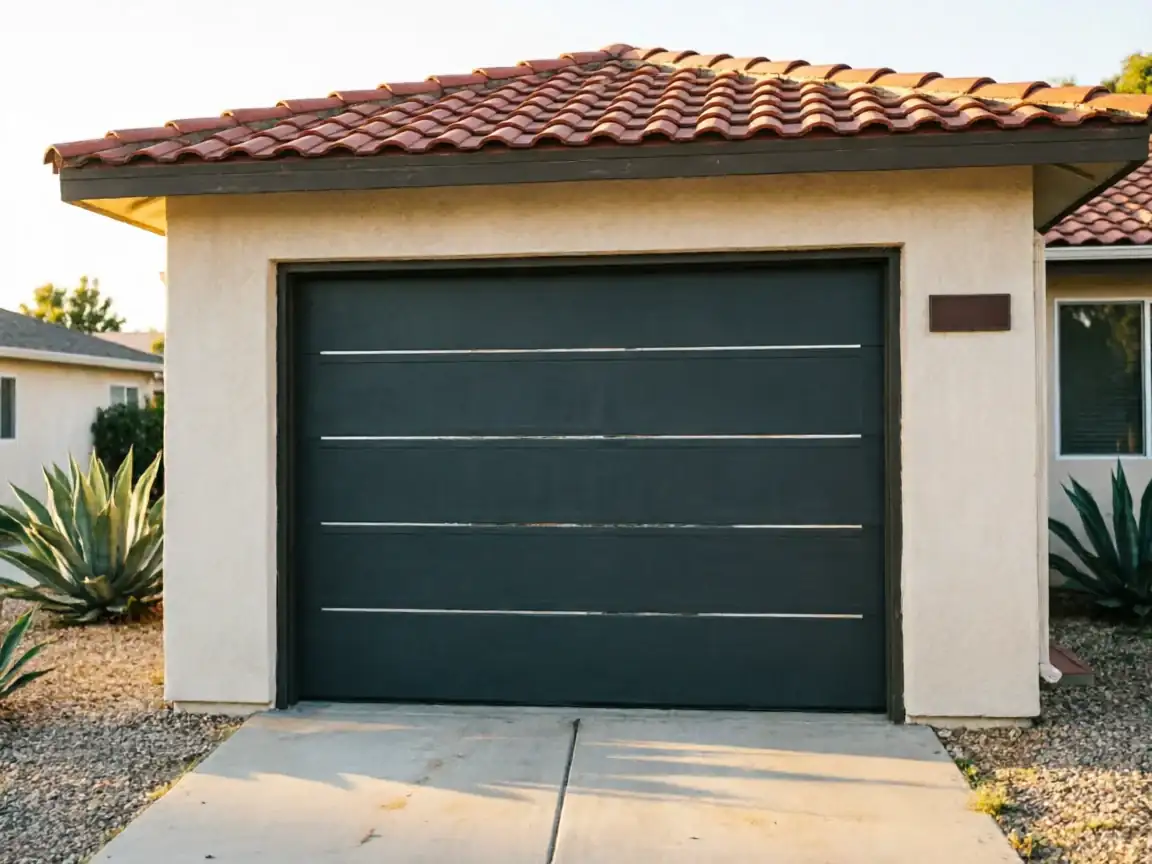
Pomona's housing runs 1951 to 2007 with a median around 1965 - old enough that a lot of doors in town are still original one-piece slabs on side-mounted torsion springs, the kind that nobody stocks new parts for. Chino Hills is a different build era. The median home here went up around 1990, a quarter century newer than Pomona's own median, which changes the door in front of us before we even open the truck.
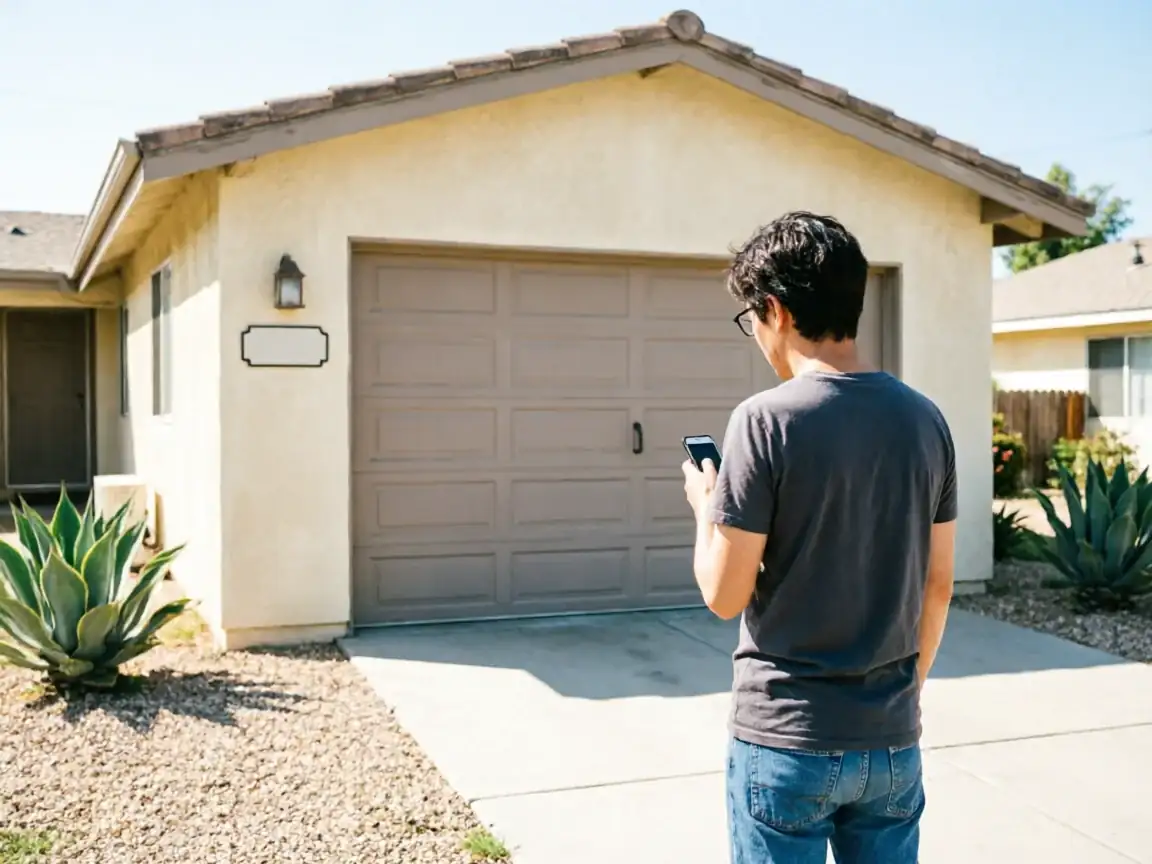
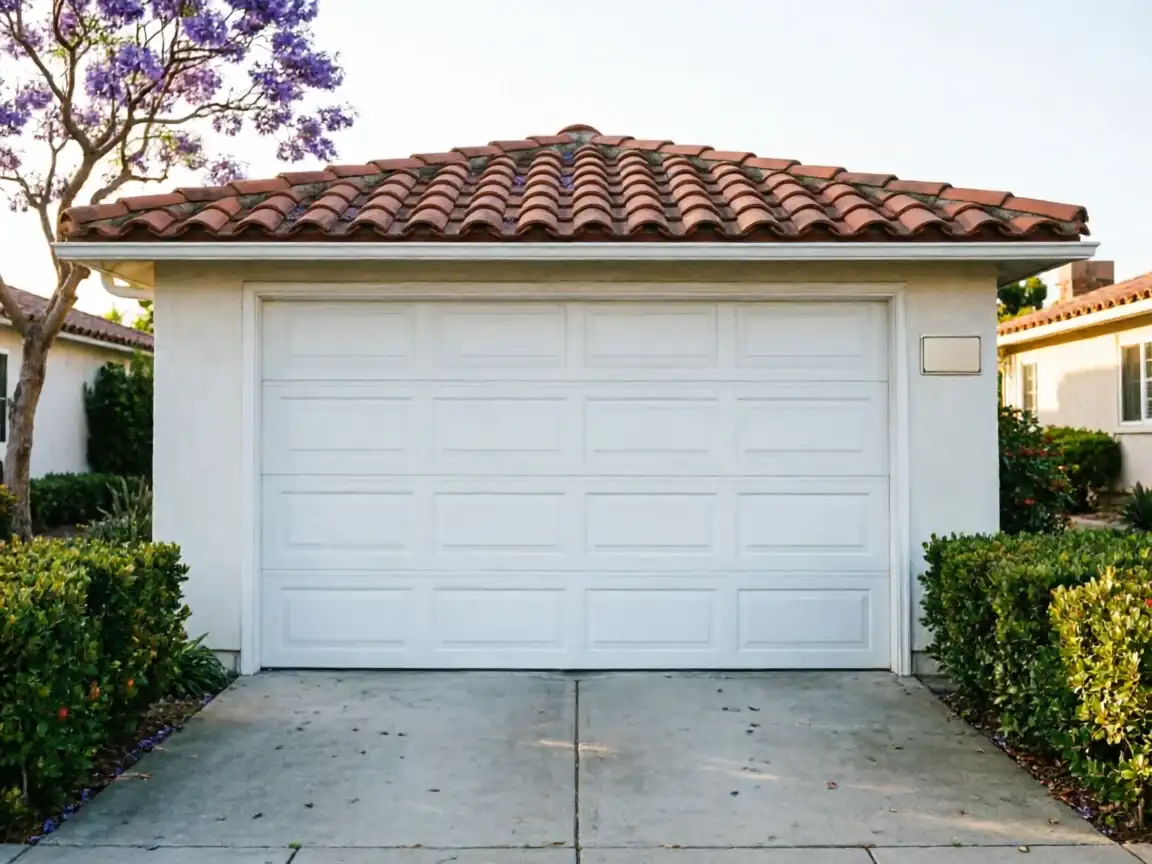
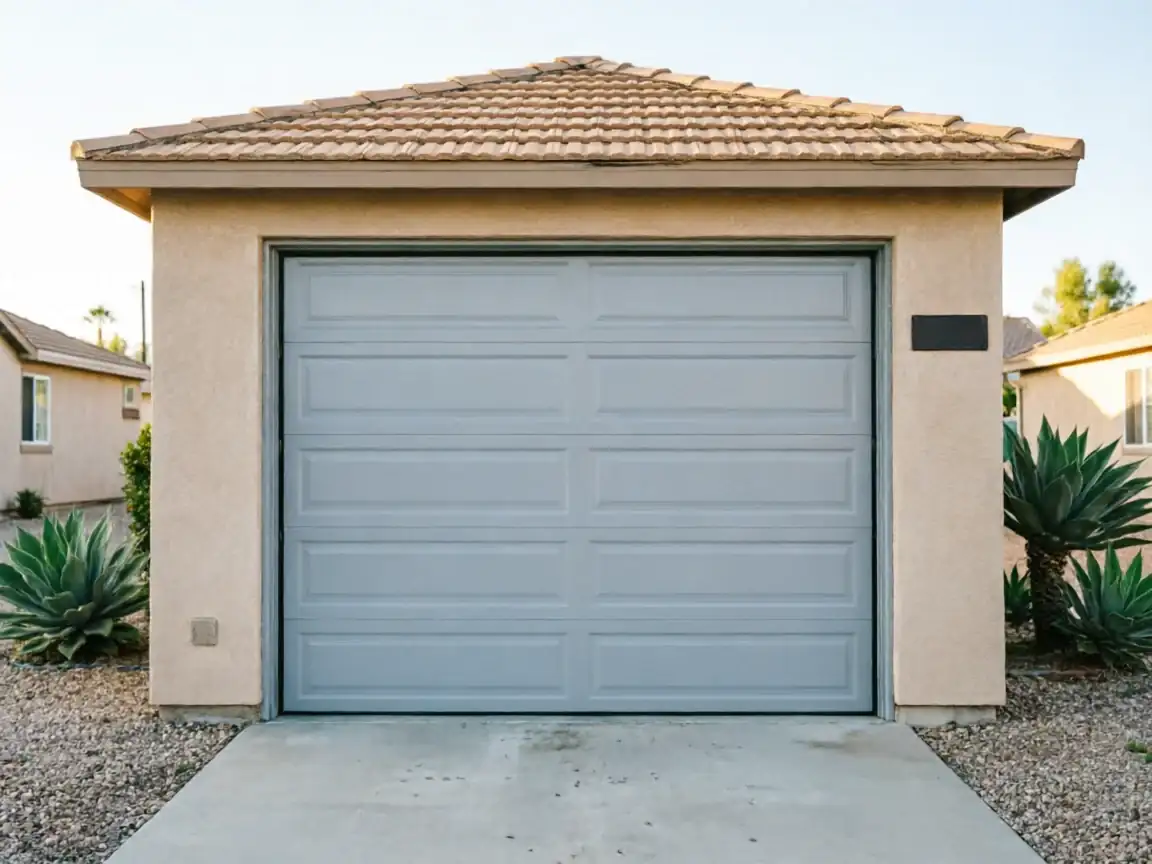
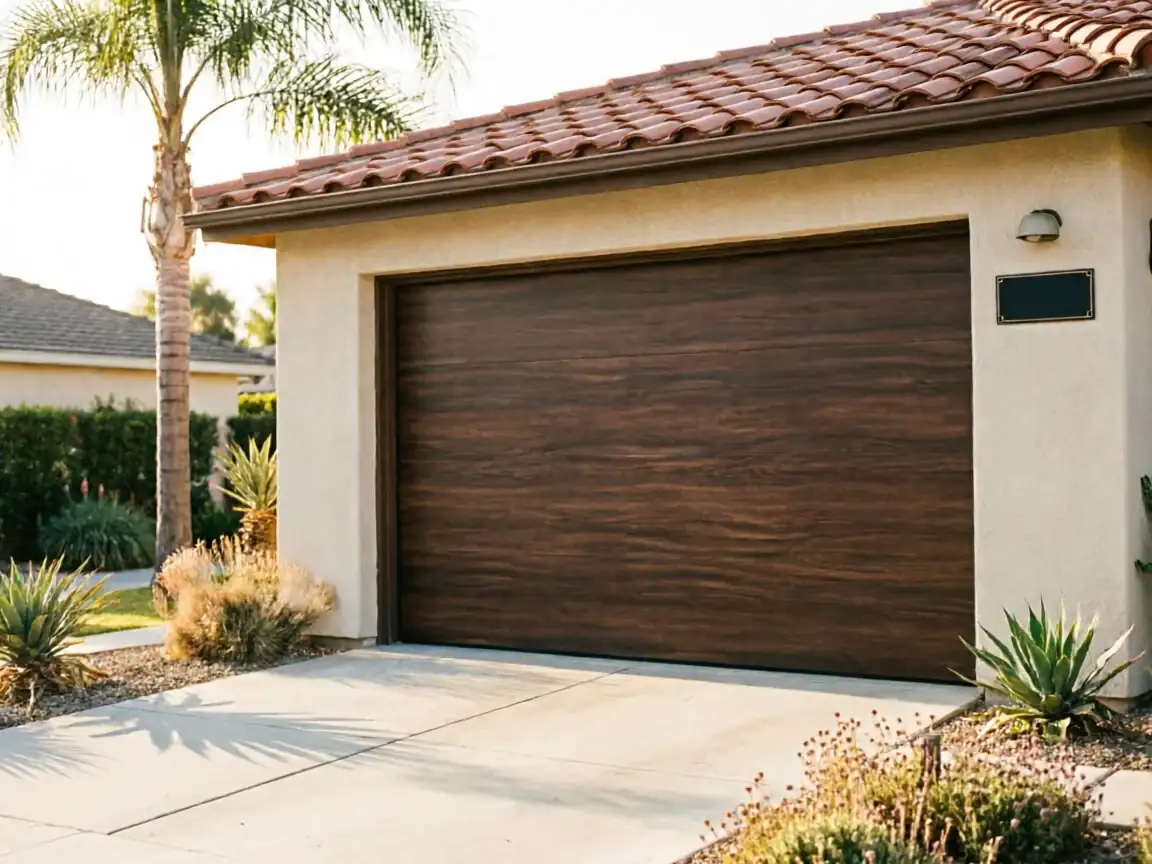
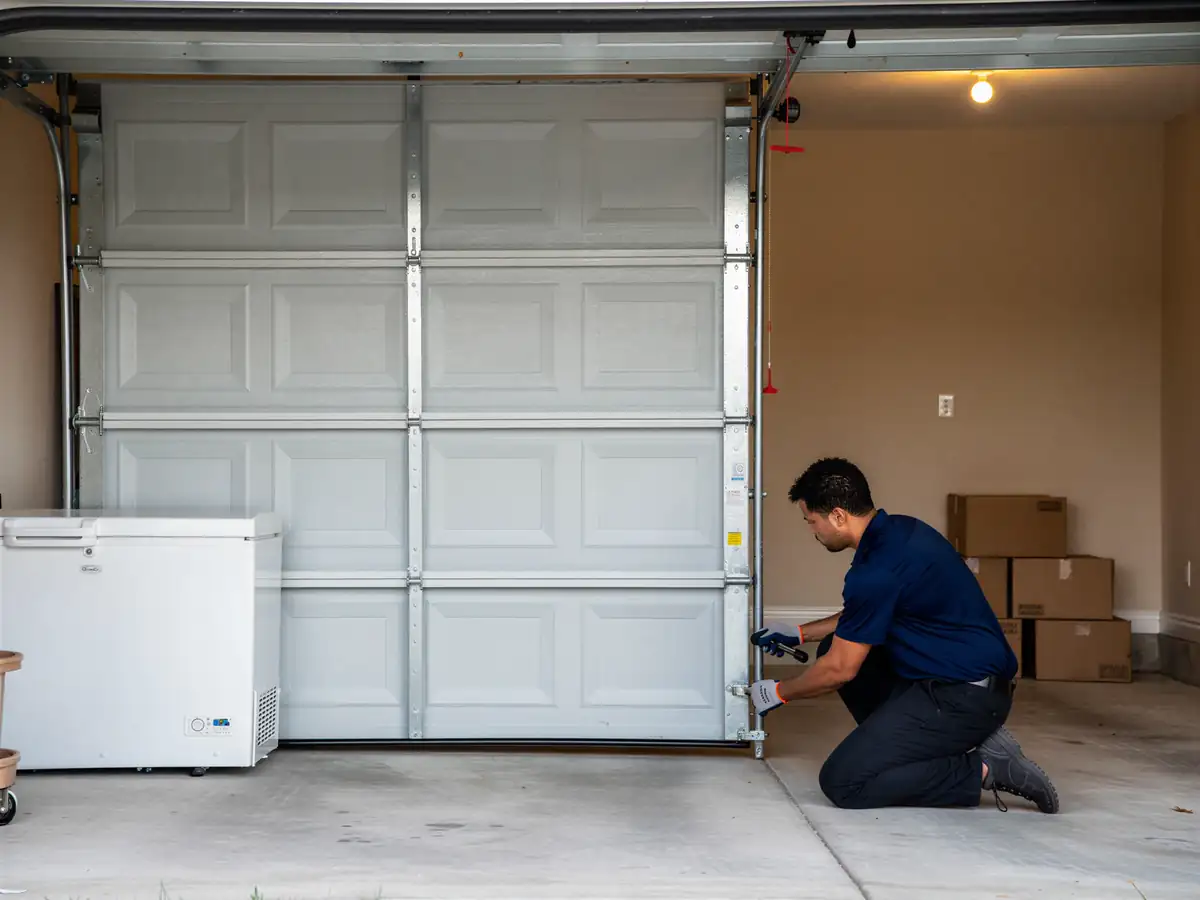
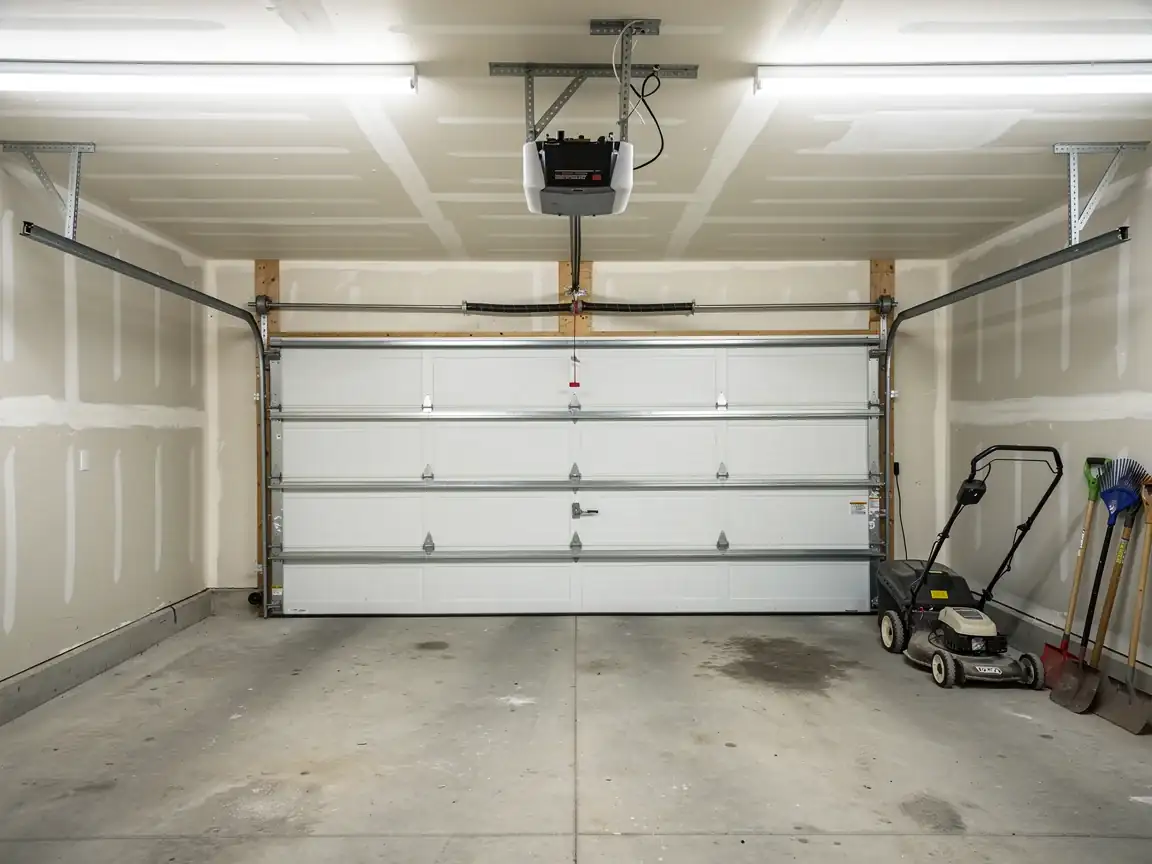
A 1990-era garage almost always has a steel sectional door on a center-mounted torsion spring over the header, running on standard-width galvanized track with nylon rollers. The opener is a chain or belt drive with a circuit board and photo-eye sensors, not the mechanical screw-drive units you'll still find on older Pomona stock. The failure points are different too - board and sensor faults, worn nylon rollers, torsion spring fatigue after enough open-close cycles - rather than the seized or rusted mounting hardware we see on 1960s one-piece doors closer to our shop.
What We Do Most in This Area
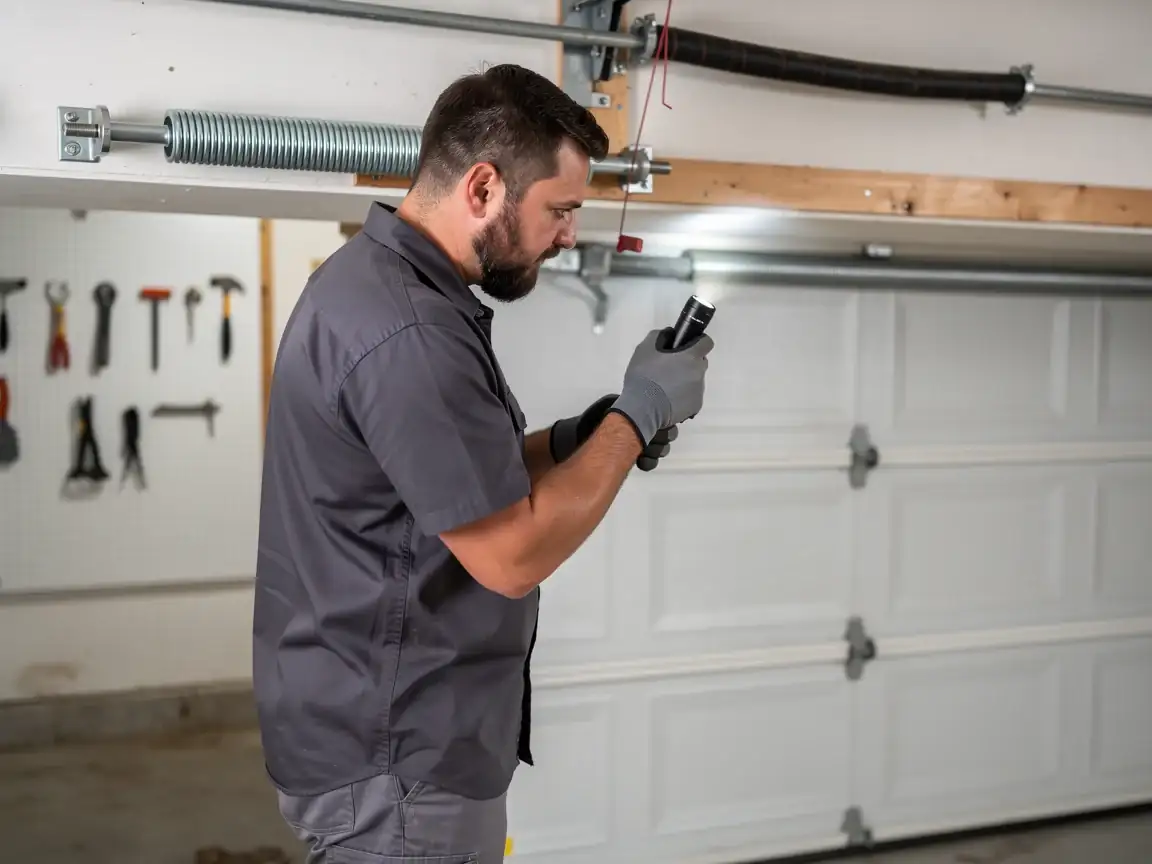
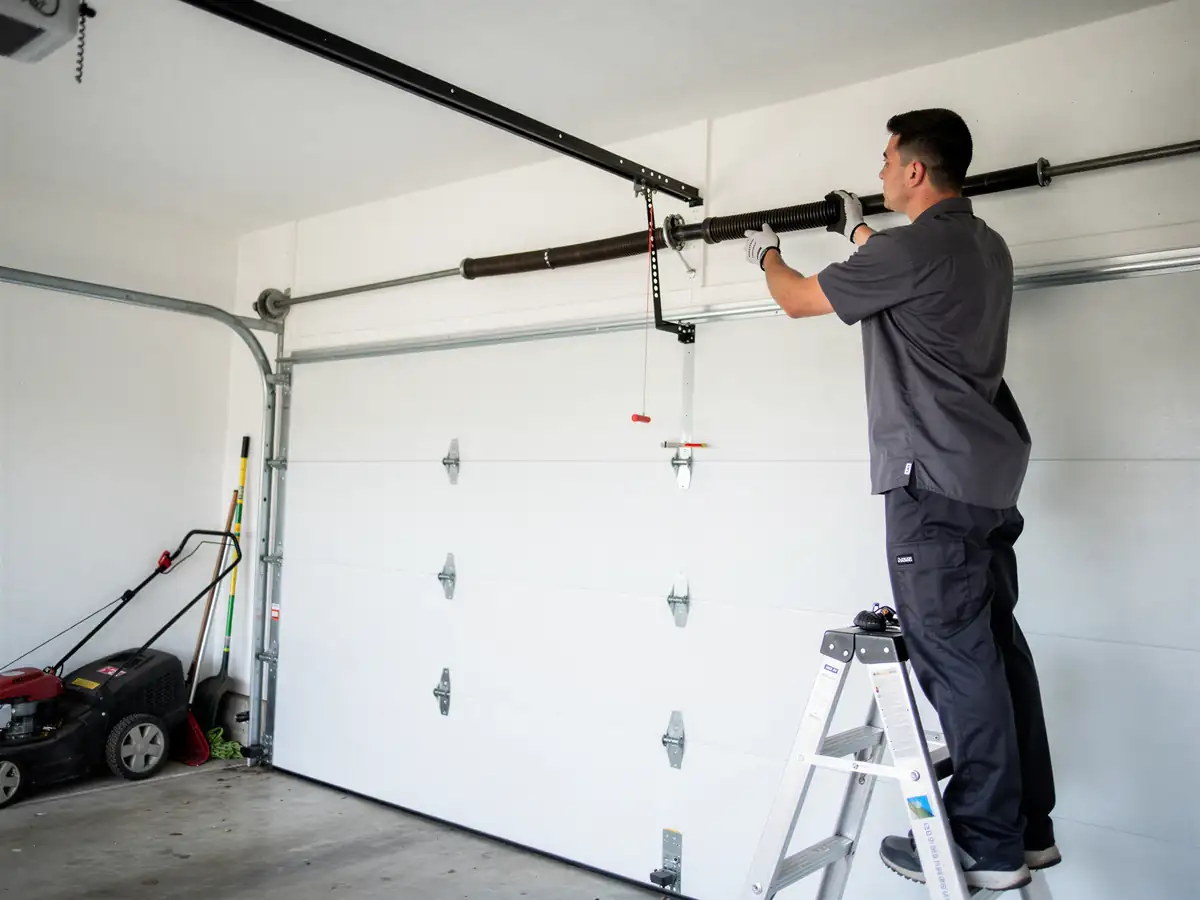
The call we get most out here is a torsion spring that's lost tension on a steel sectional door
The door feels heavy, won't hold position halfway up, or the opener strains and reverses. That's standard-width torsion spring work, not the odd-sized hardware you'd find on an older slab door.
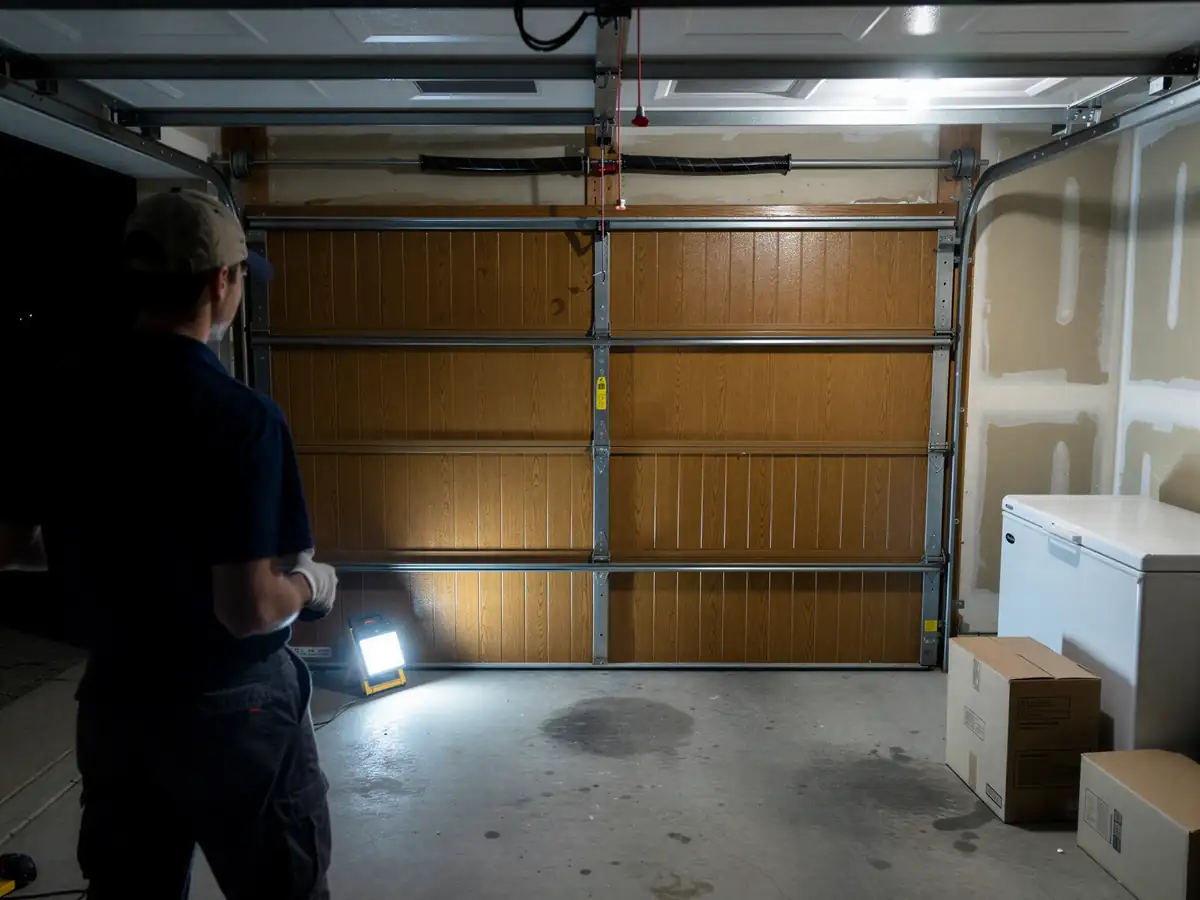
Second most common is opener trouble
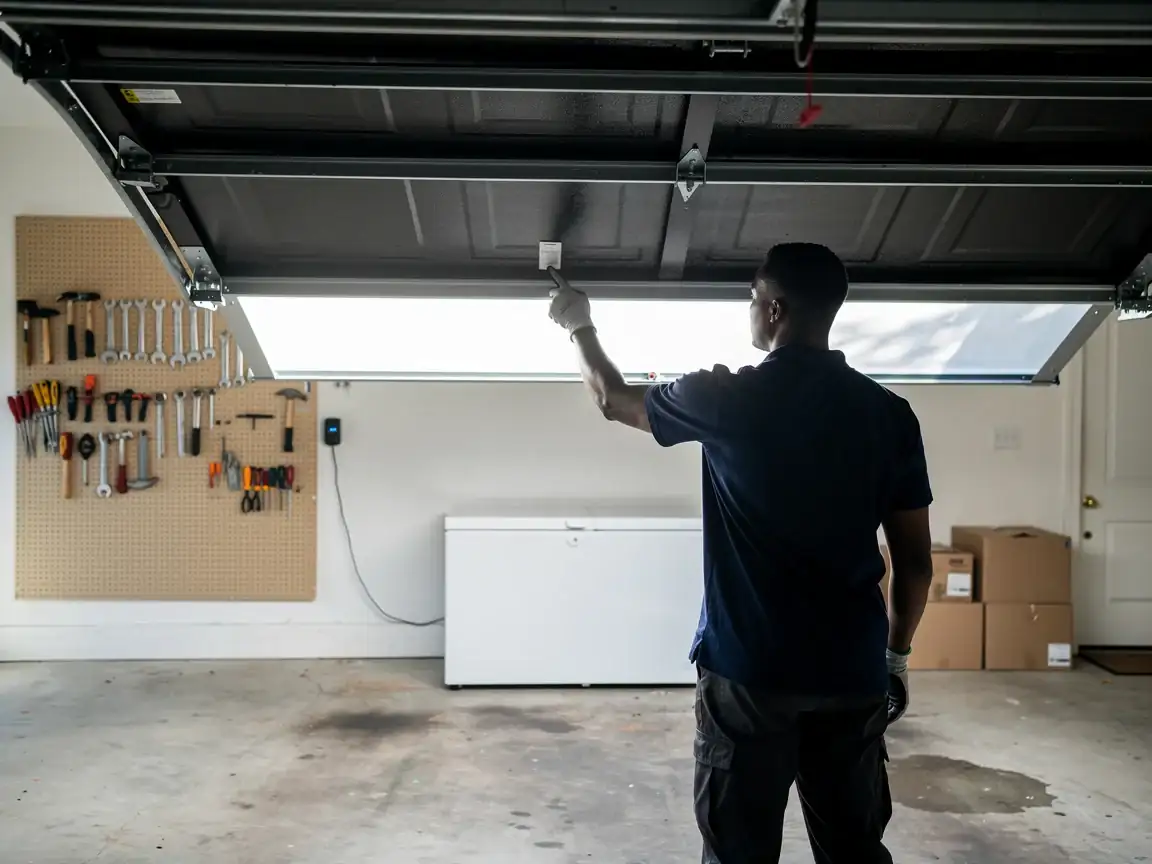
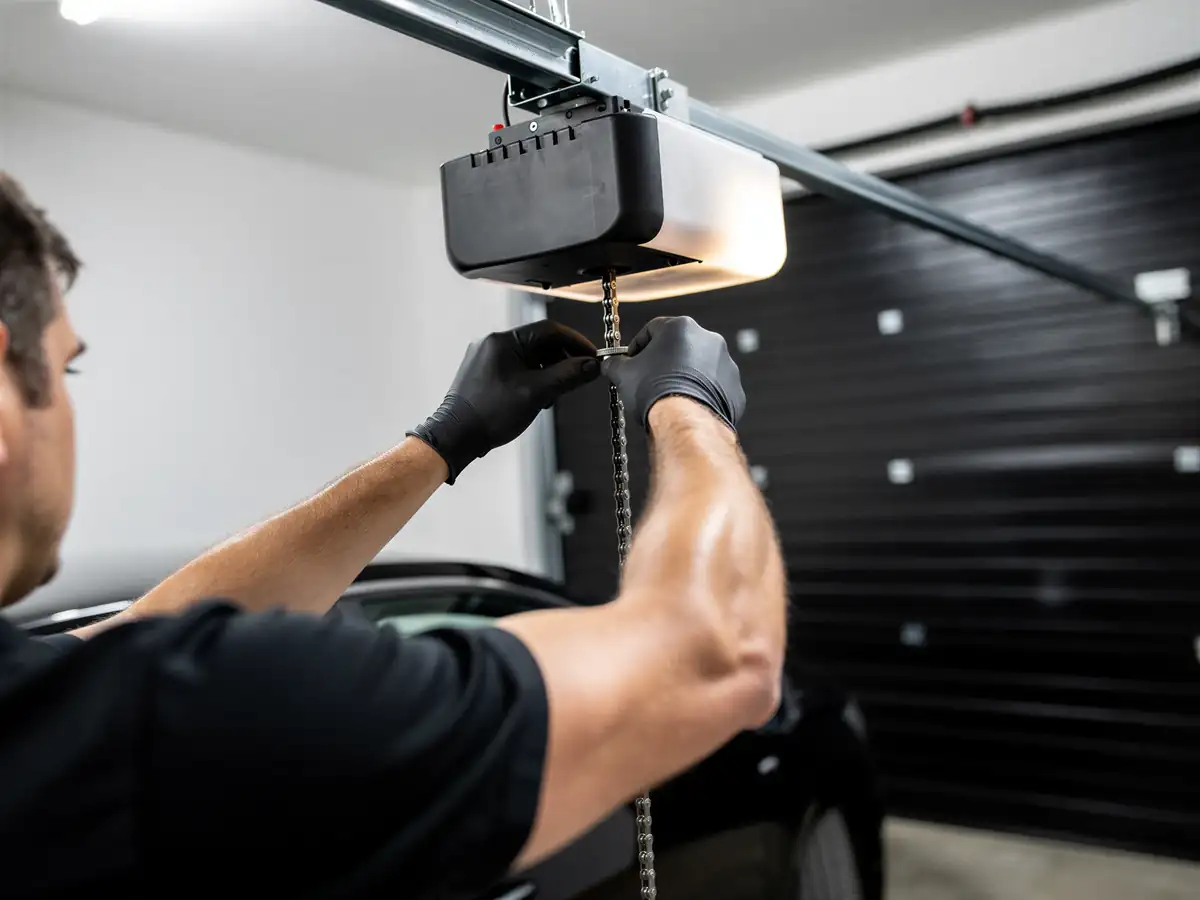
A circuit board that's stopped talking to the remote, a photo-eye sensor knocked out of alignment, or a safety reversal that won't reset. These are newer systems with boards and sensors, and most of the fix is diagnostic - finding which component failed - rather than brute mechanical repair.
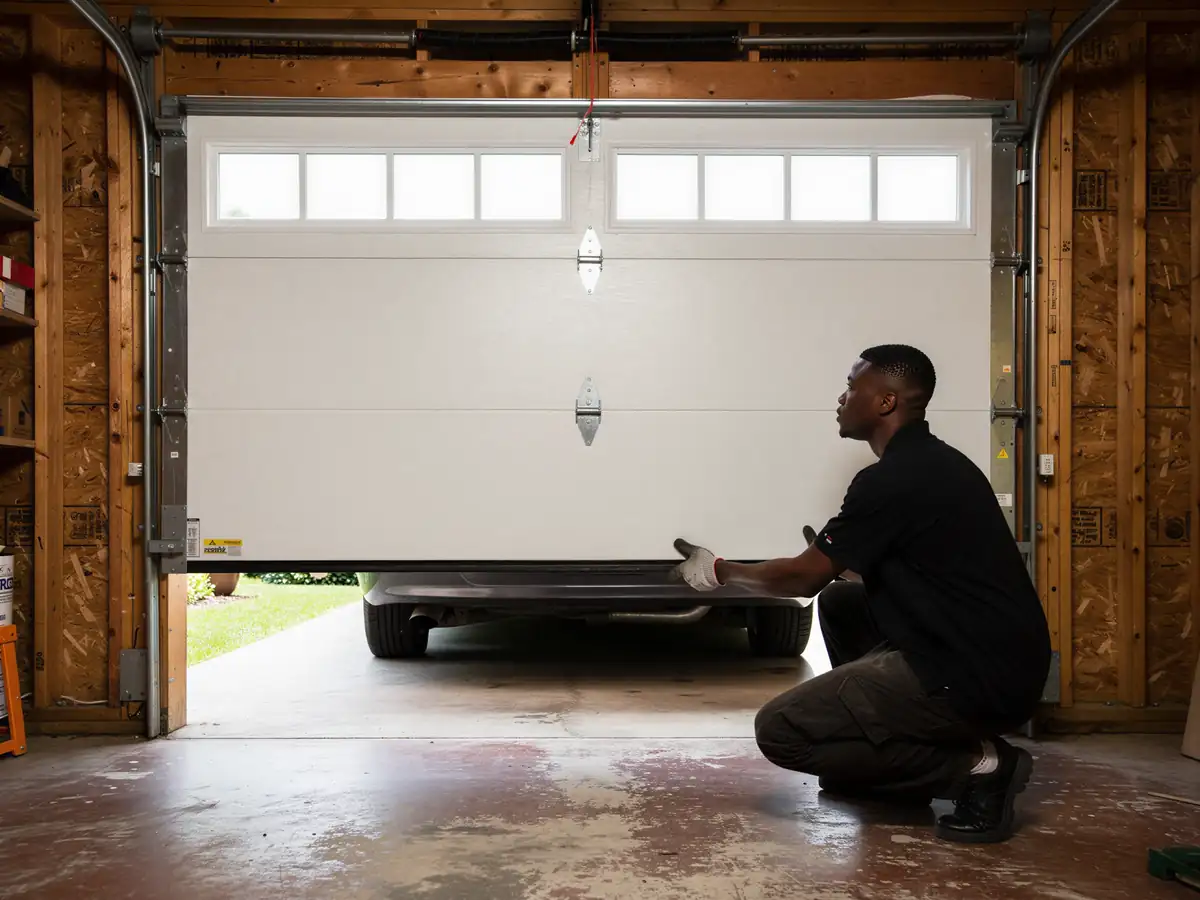
We also do a fair amount of roller and track work
Nylon rollers on 1990s-era doors wear and crack over the decades, and once they do, the door rattles or binds on the track. It's a straightforward swap once we're on site, but it's worth catching before a cracked roller jumps the track entirely.
What Was Built Here
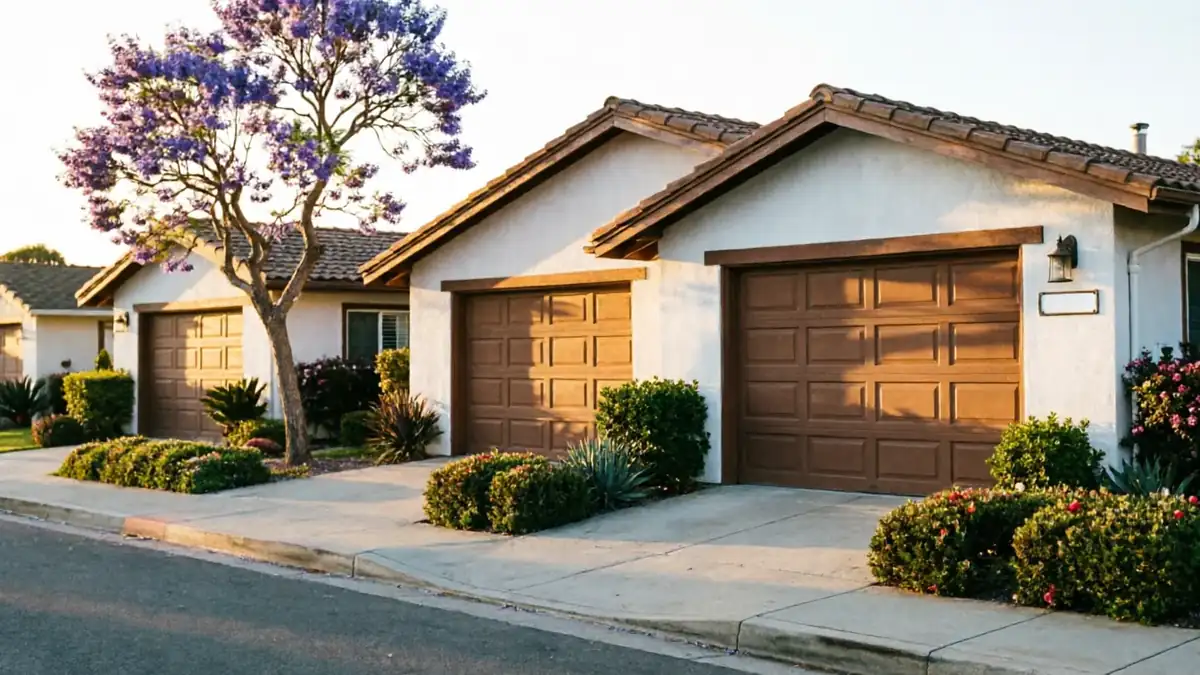
Chino Hills largely built out around 1990, decades after much of Pomona's housing stock went up, and that later build date is the whole story behind what we work on out here. Newer construction means standard steel sectional doors, torsion springs sized to modern codes, and openers with electronics rather than purely mechanical drives.
The area carries roughly 25,485 households, and household income here runs well above the wider Pomona service area median of $102,449 - newer homes with higher-end finish tend to come with heavier insulated doors, which puts more load on springs sized for lighter slabs if a door was ever swapped out of spec.
Climate here sits in the same moderate heat band as the rest of the Pomona service area, so we're not dealing with different thermal cycling - just a different door generation. We're eight miles out, which means we plan the trip, but the job itself is usually a cleaner diagnosis than on an older door: fewer legacy parts, more standardized hardware.