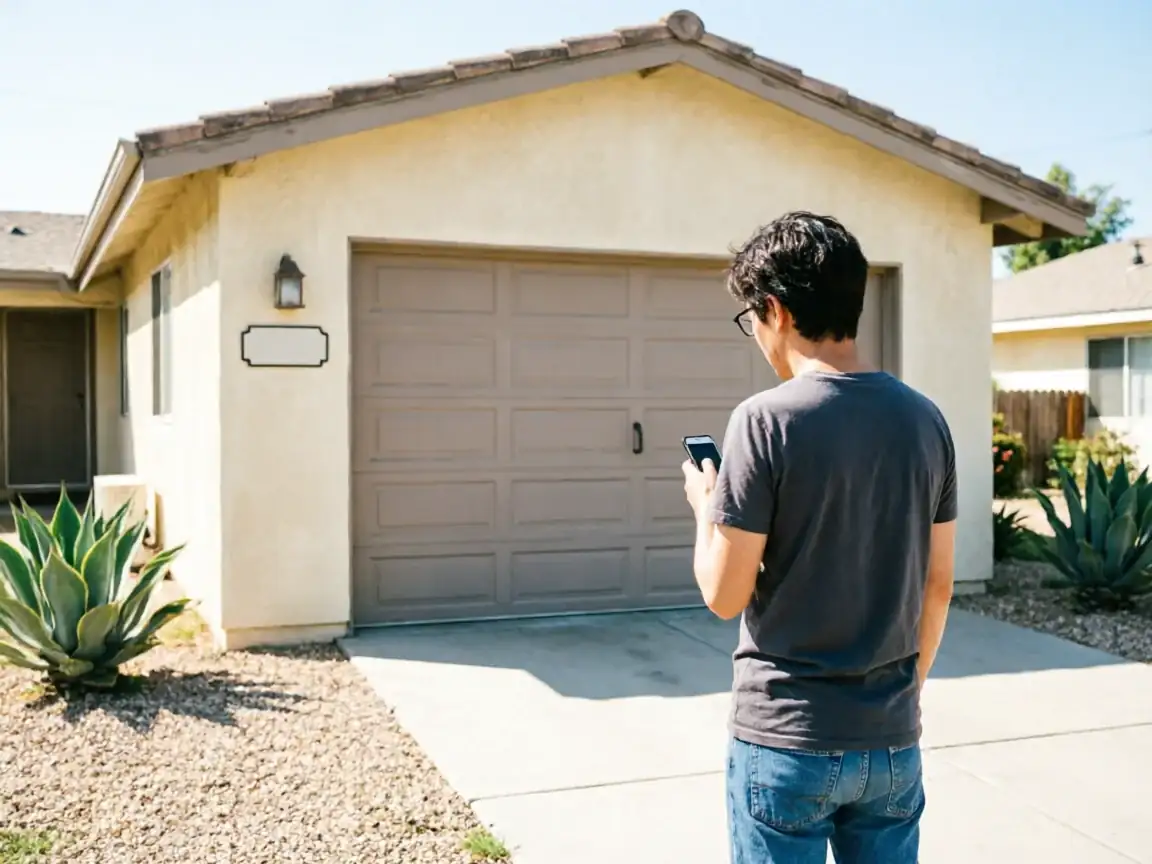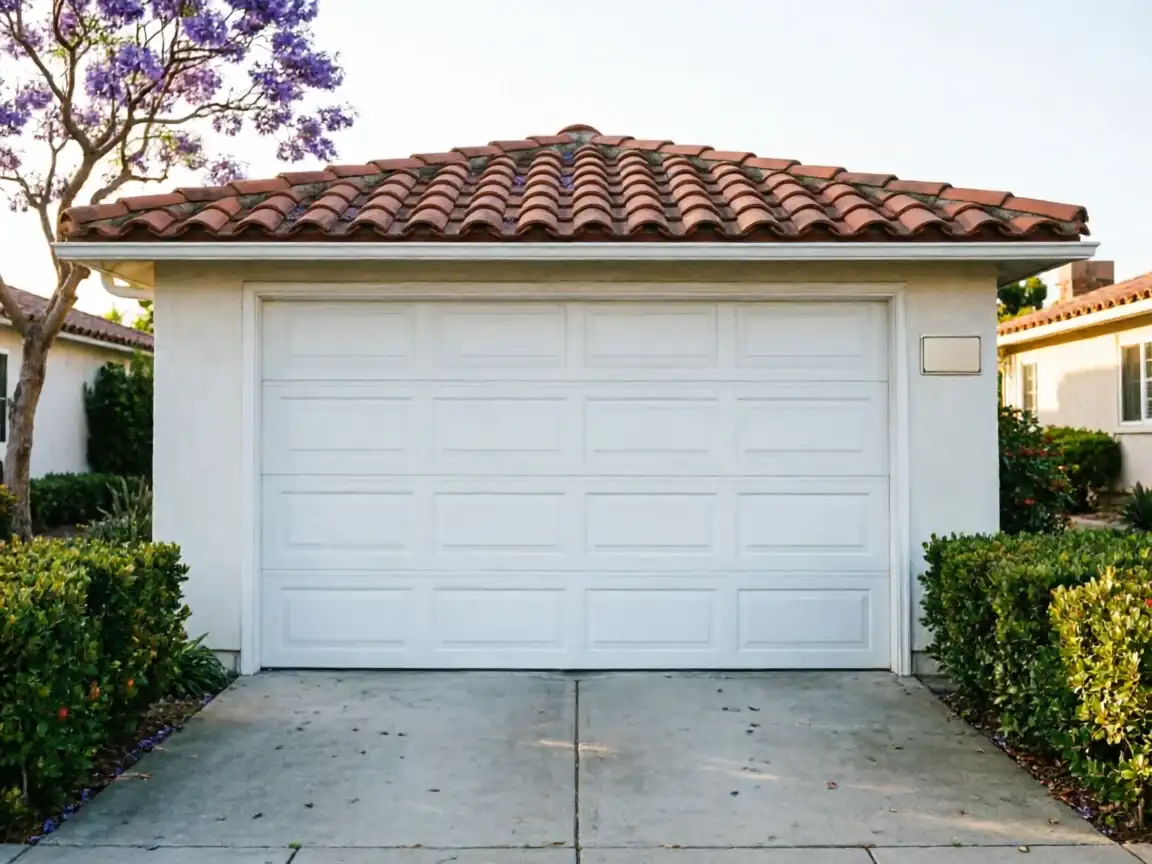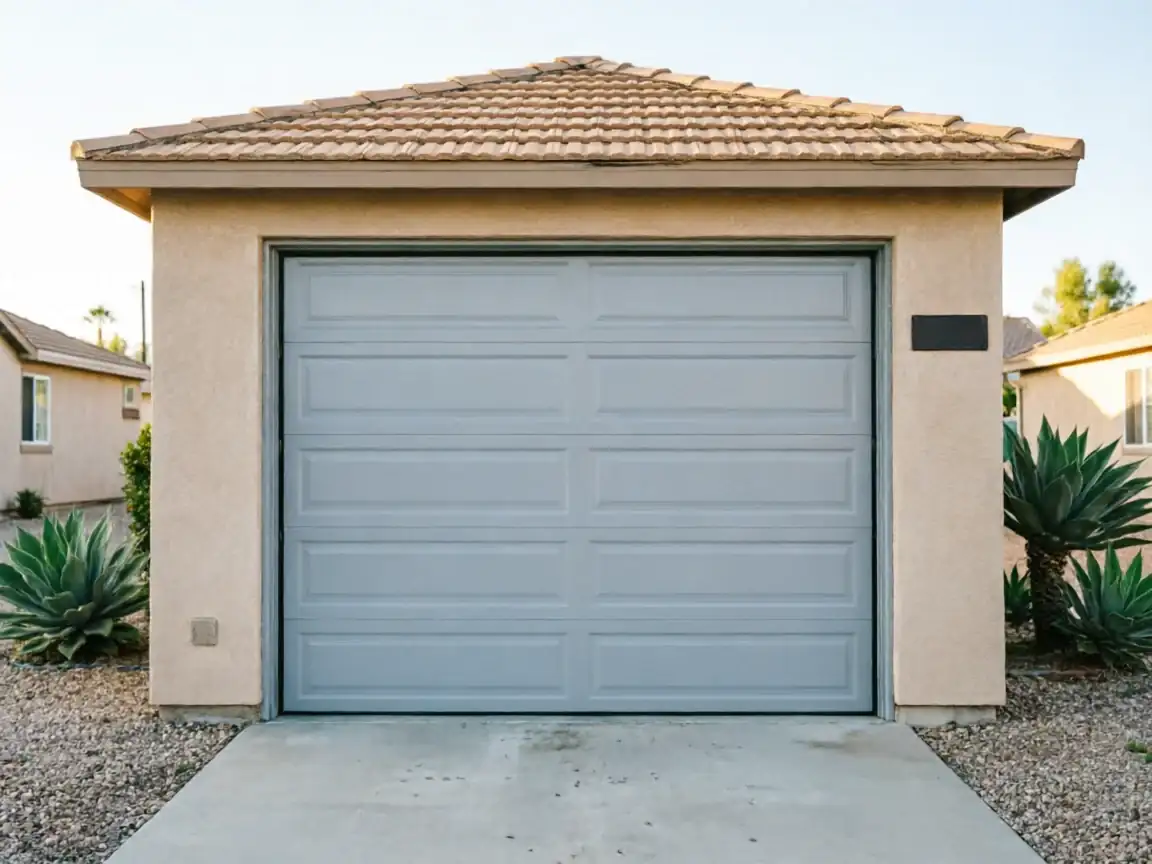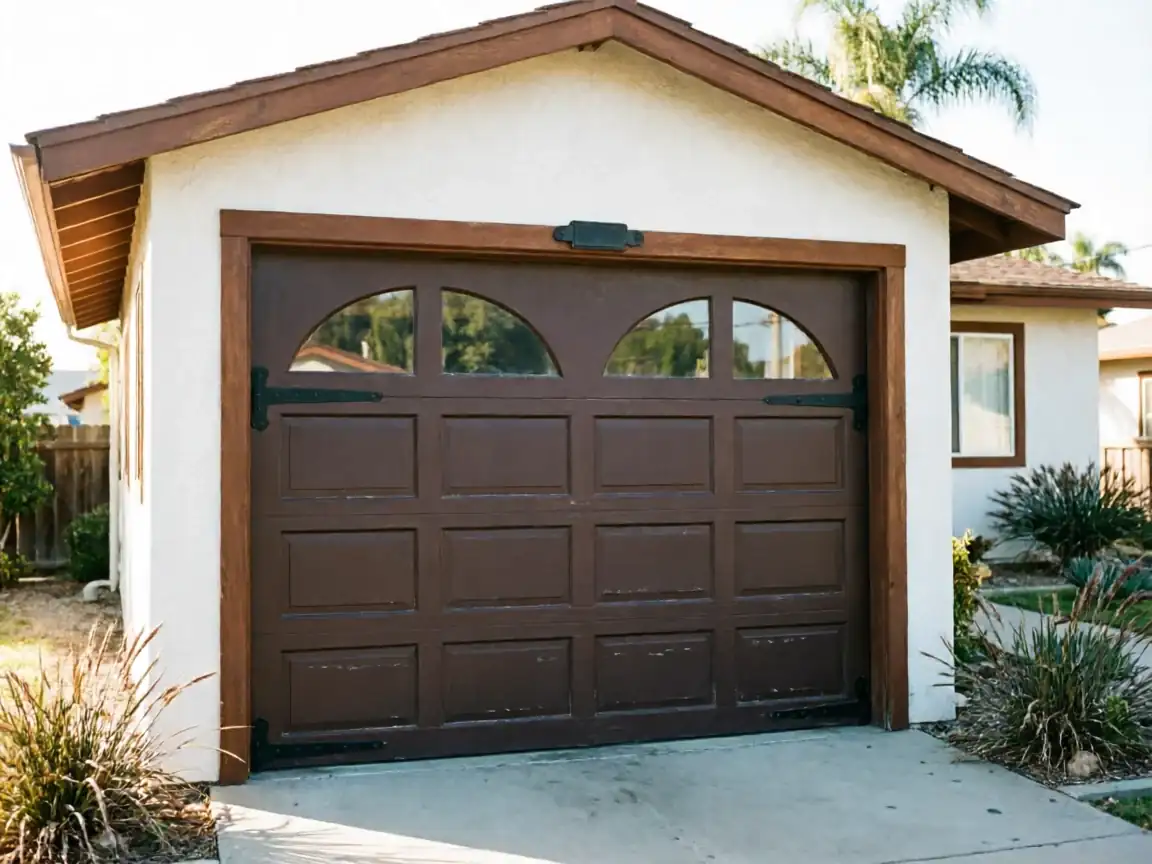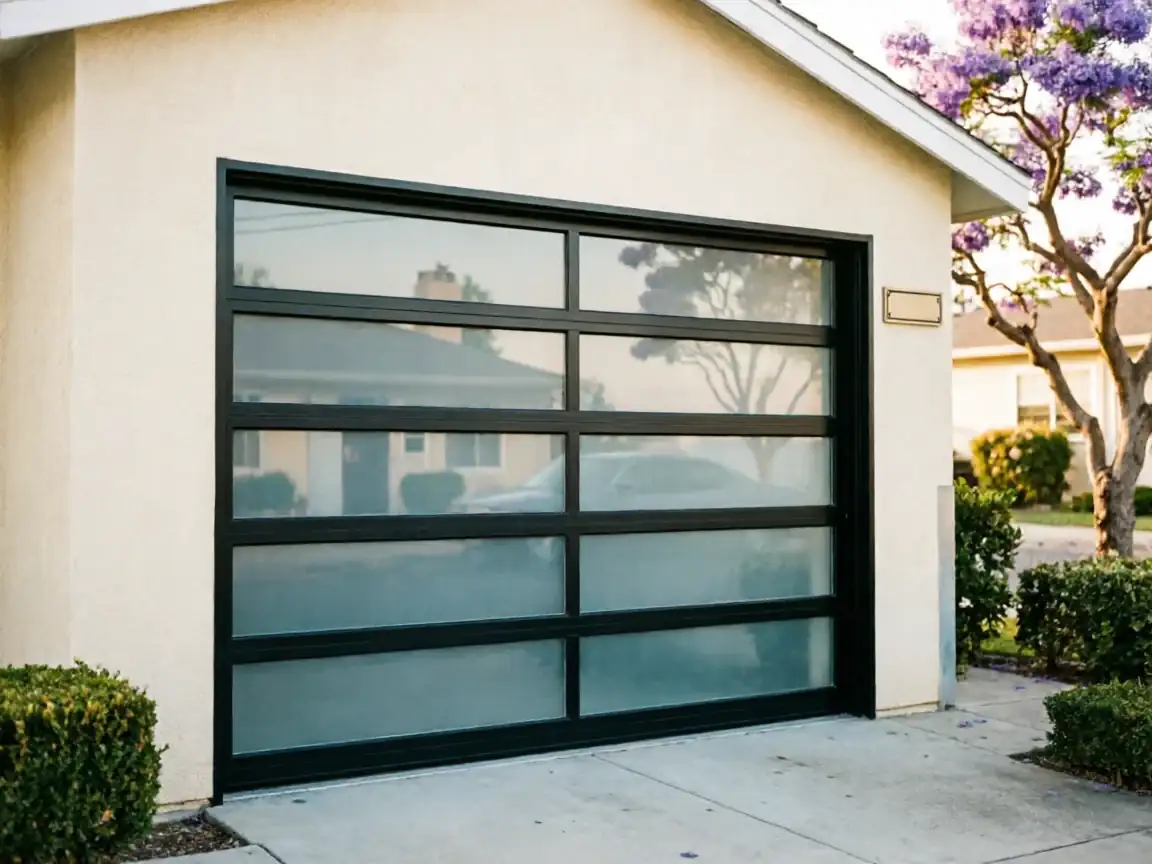
What You Are Seeing
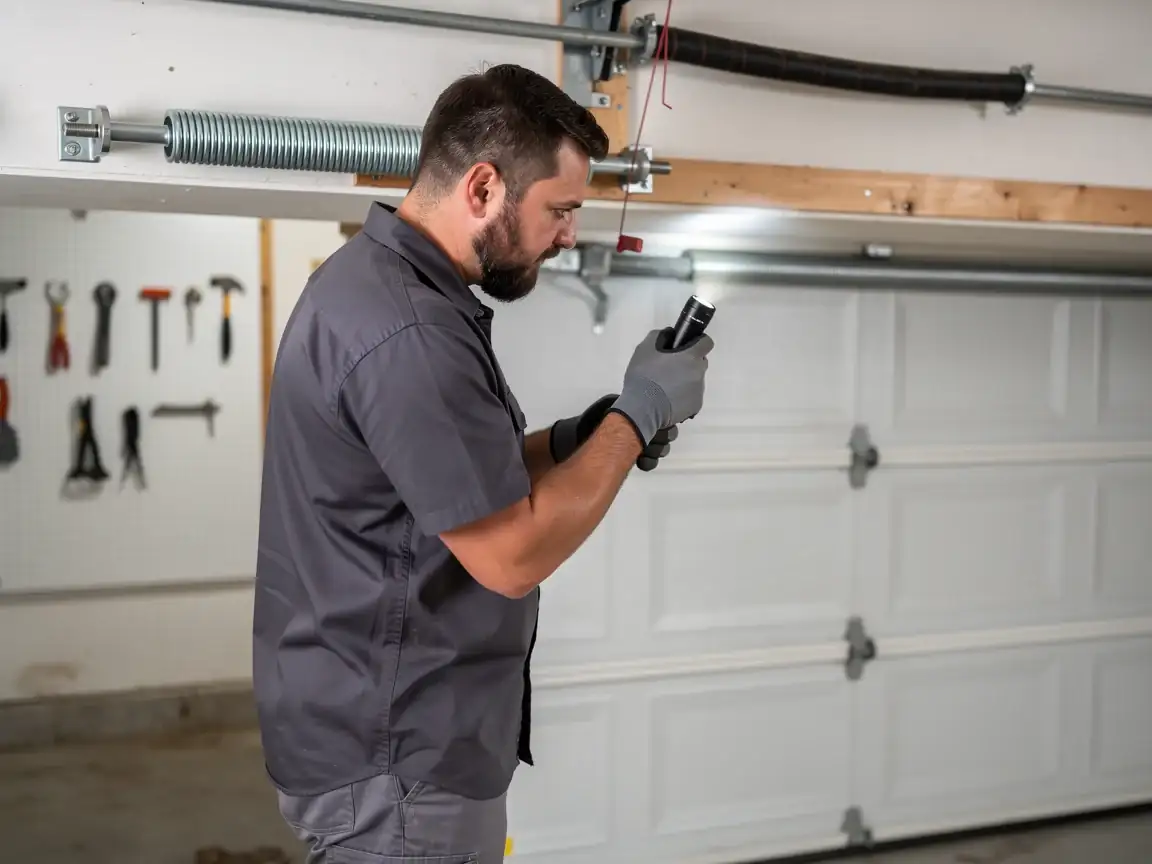
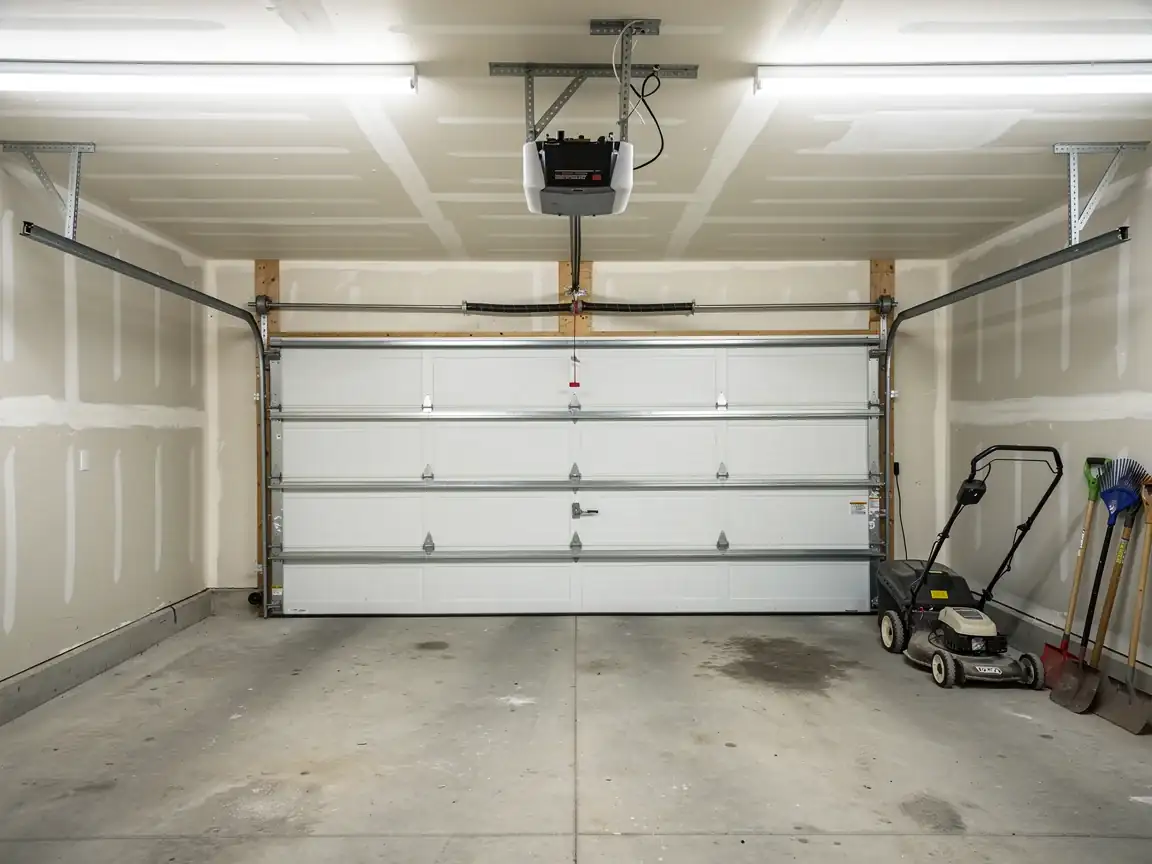
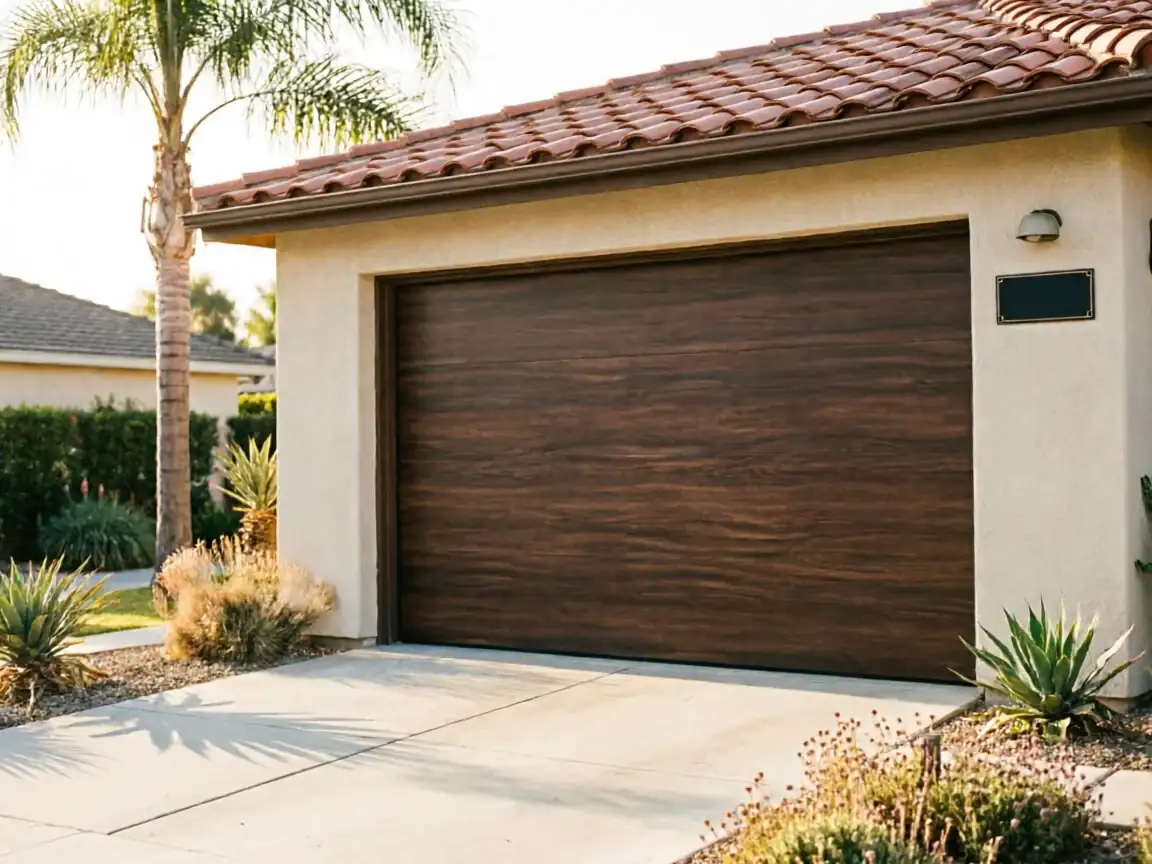
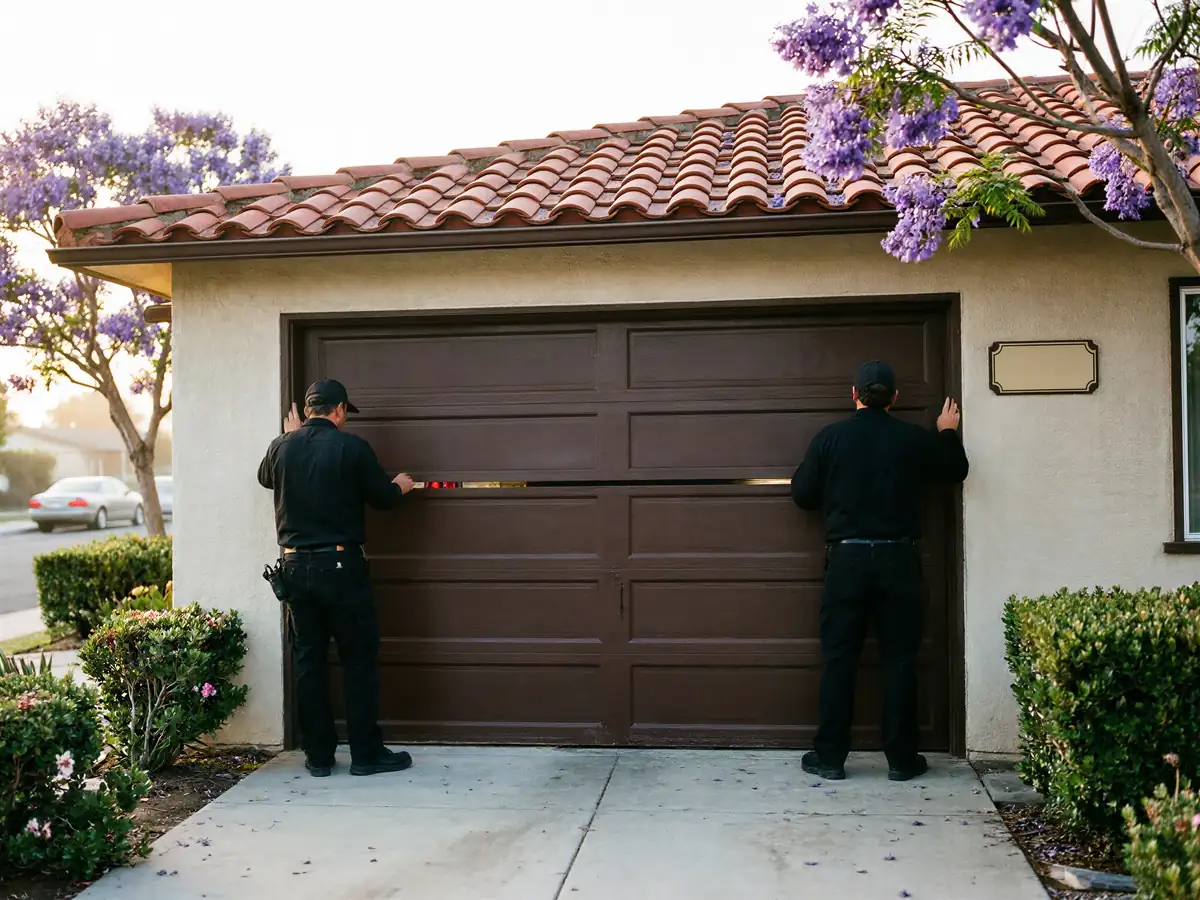
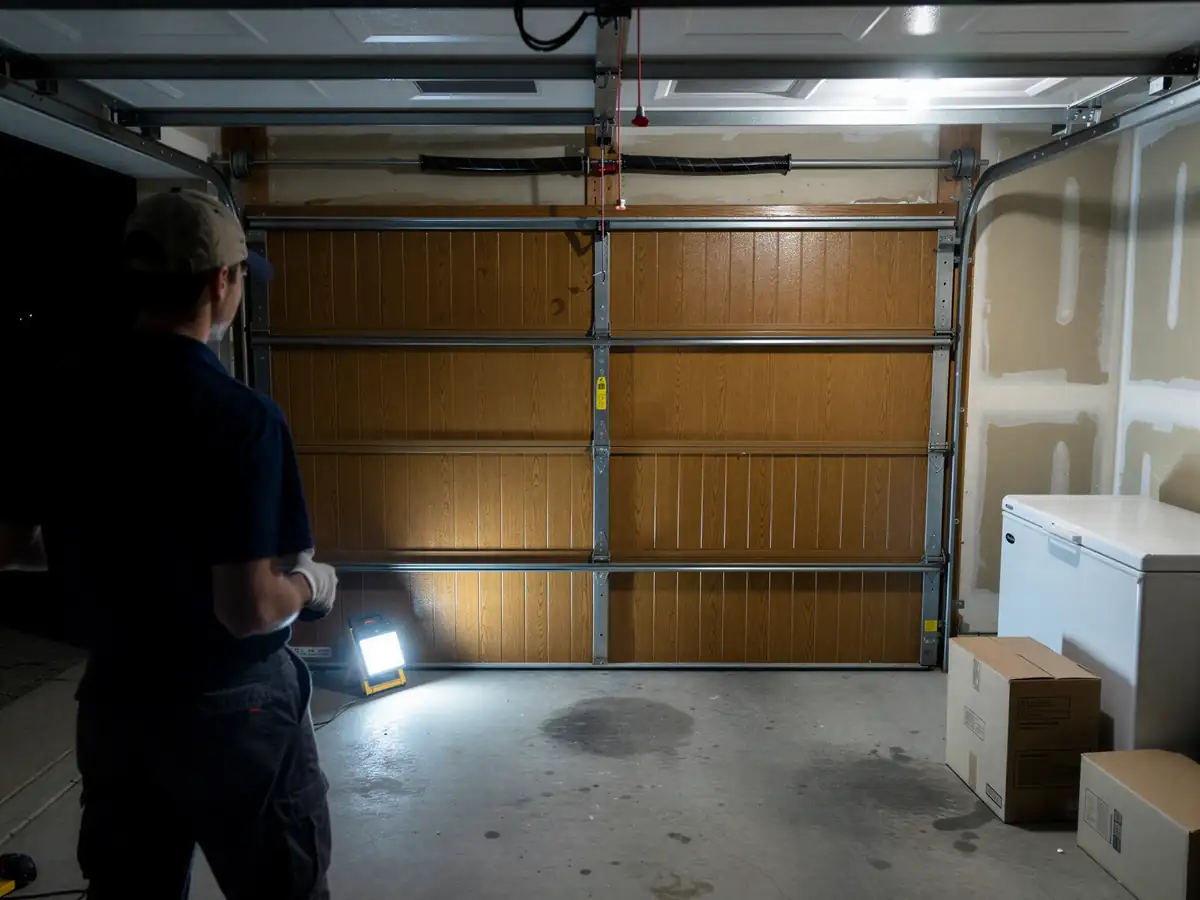
Claremont's median home was built around 1966, which puts most garage doors and their hardware squarely in the era before anyone thought about yearly upkeep. If a house here hasn't had a door replacement, there's a real chance the torsion spring, the lift cables, and the track brackets are the same ones installed when the slab was poured. Steel ages, galvanizing wears thin, and bearings that have spun for five decades don't give much warning before they seize or snap. What you're usually seeing isn't a broken door so much as hardware that's finally caught up to its age: a spring that's lost tension and makes the opener strain, rollers worn into an oval shape that rattle in the track, or a bottom bracket with hairline rust where the cable loops through. None of that shows up as an obvious problem until the day it does.
Time on the Job
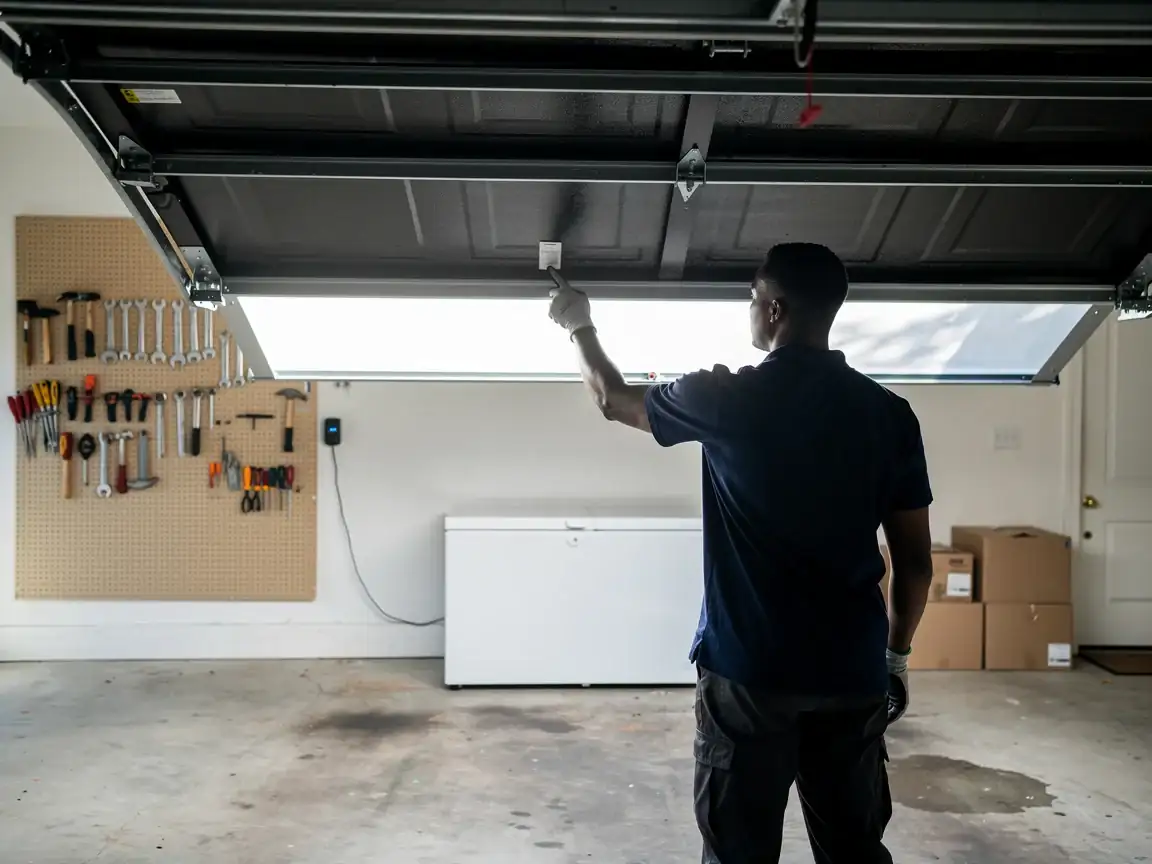
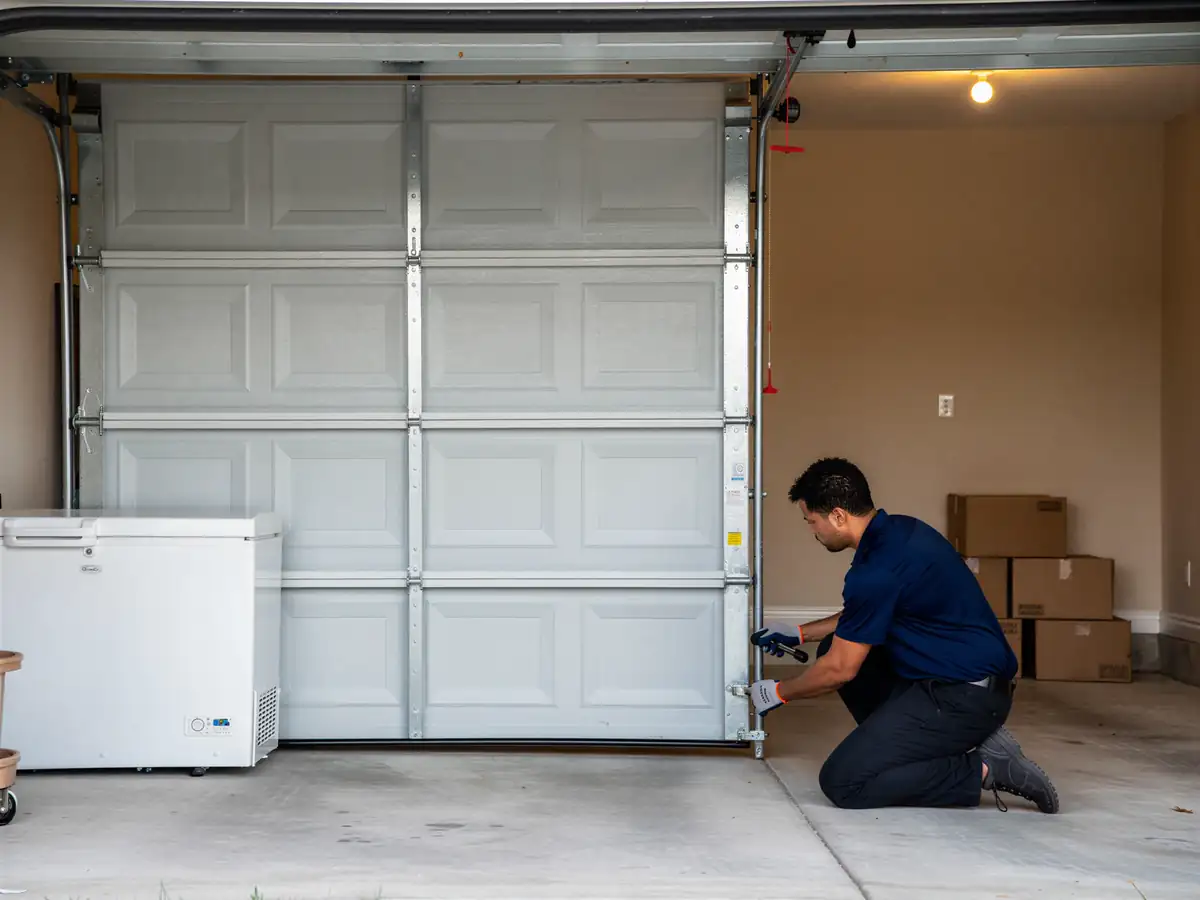
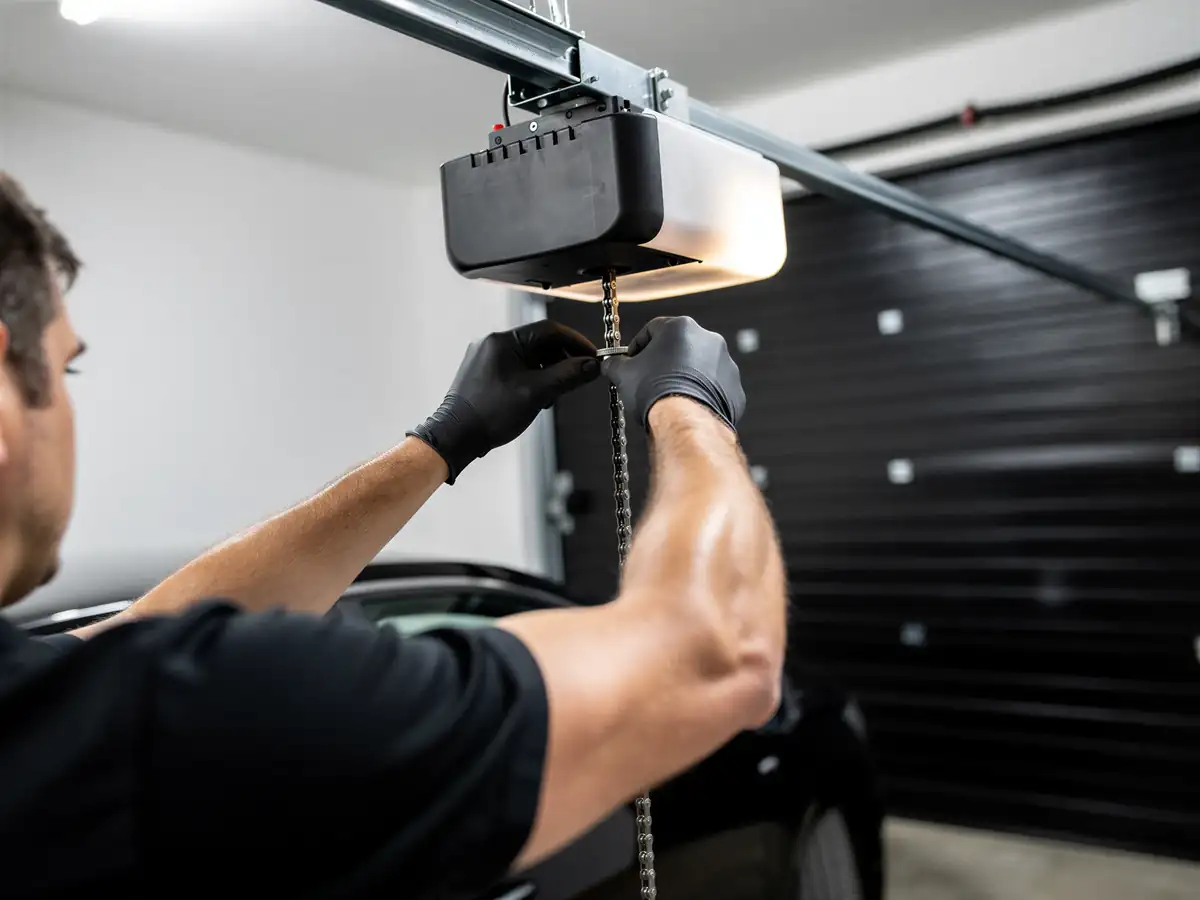
A standard maintenance visit covers lubrication, hardware inspection, spring tension check, track alignment, and opener safety testing. We come from our shop in Pomona, about 5 miles away, so travel isn't a factor in how long the visit takes once we're there. Most Claremont jobs run on the longer side of normal for this kind of call, simply because original hardware from the 1960s takes more careful inspection than a door installed in the last ten years. We're not rushing a spring check on a cable that's been load-bearing for 50-plus years.
The DIY Question
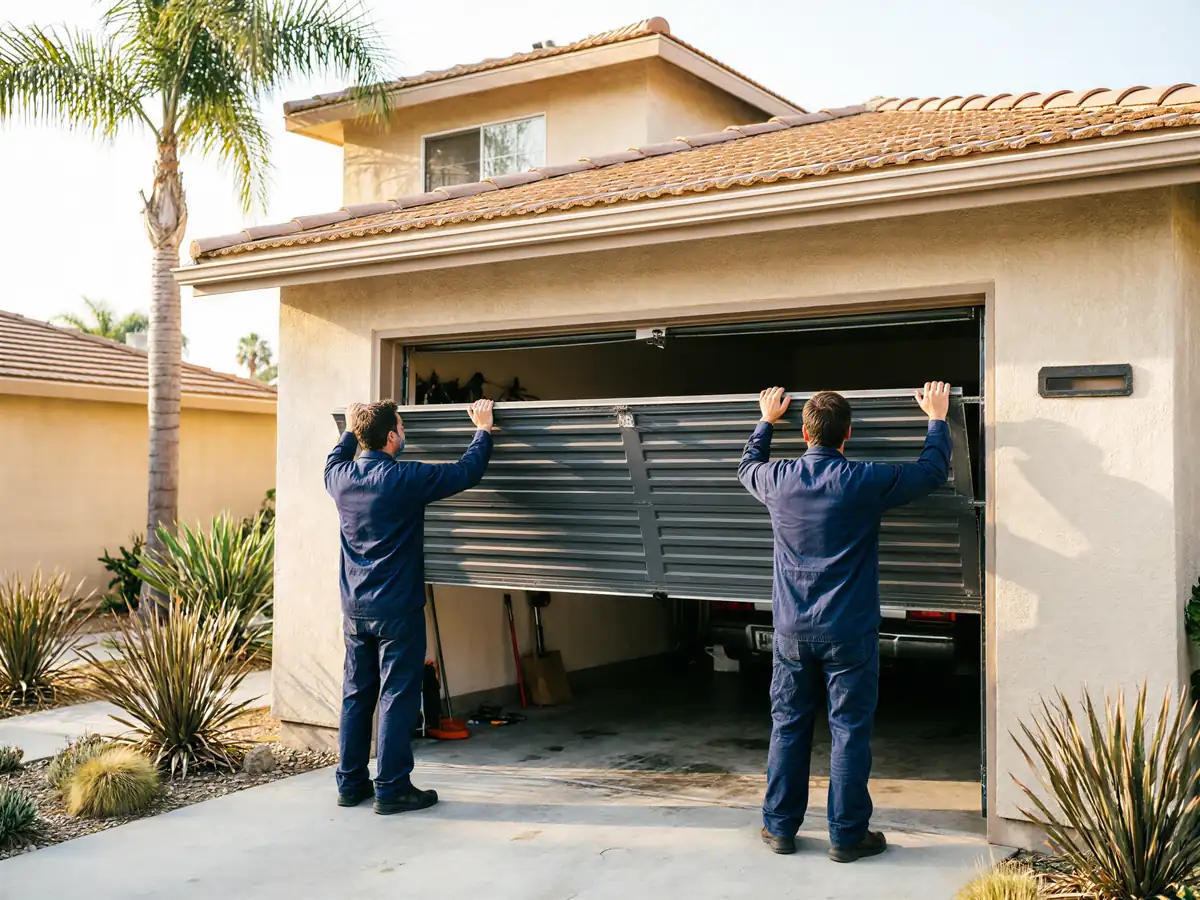
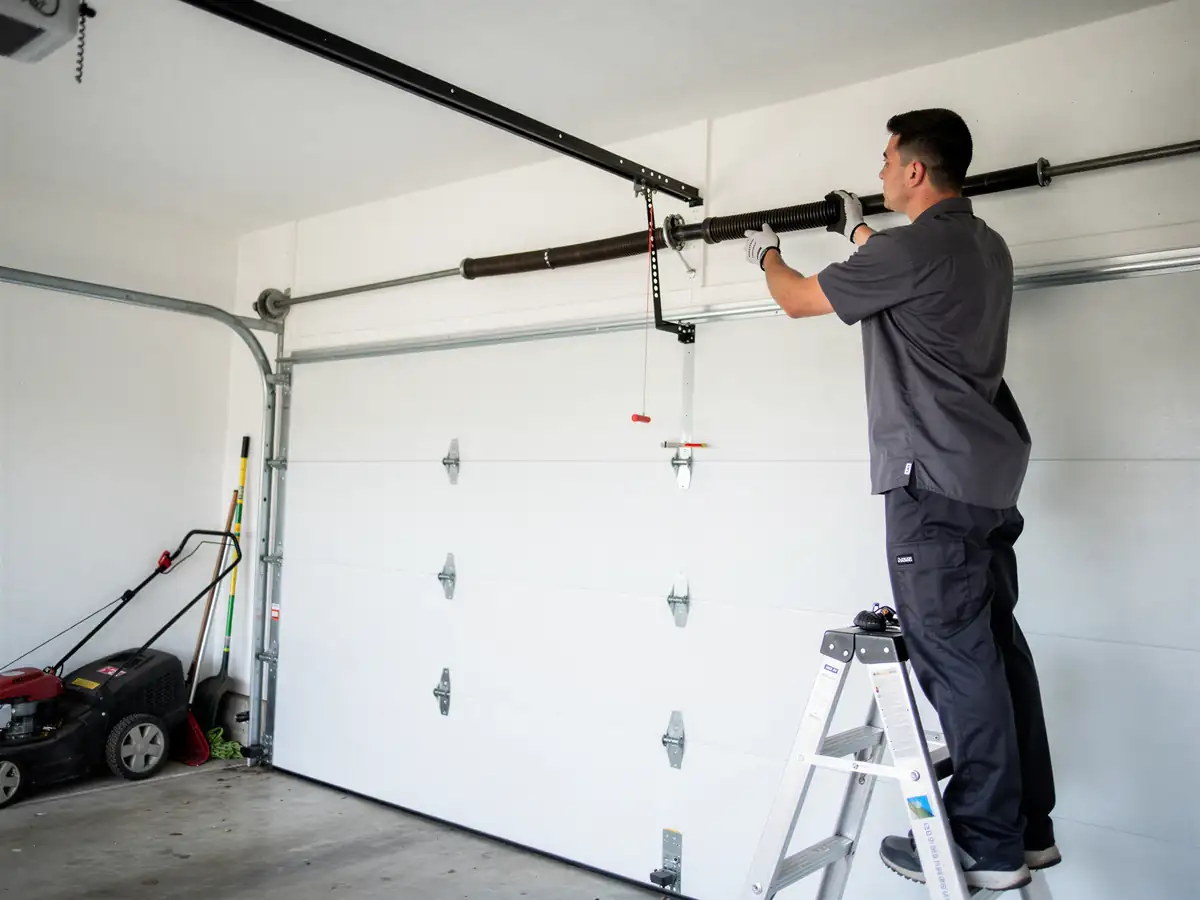
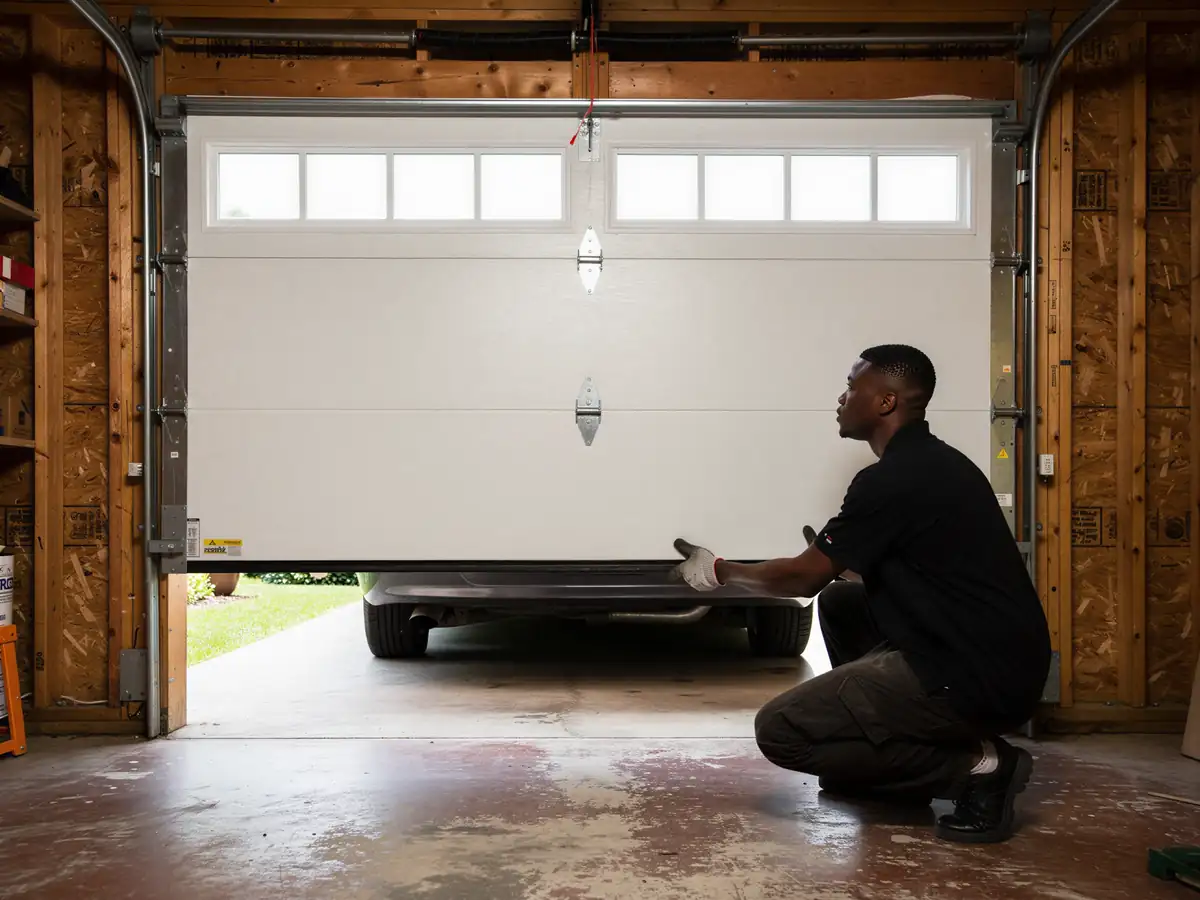
Lubricating hinges and wiping down tracks is fine to do yourself, and it's worth doing between visits. What isn't worth doing yourself is touching the torsion spring. On a door with original 1960s-era hardware, that spring has had decades to develop metal fatigue nobody can see from outside, and a spring under tension that lets go can break a hand or worse. If your opener is straining, the door is heavier to lift by hand than it used to be, or you hear a grinding sound from the rollers, that's a call, not a weekend project. We'll also tell you honestly when a repair isn't worth it - if the track brackets are rusted through the mounting points, patching one piece just moves the failure to the next.
The Cost of This Job
We don't publish flat prices for maintenance because what a door needs depends on what's still original and what's already been swapped out. A door that's had its springs and rollers replaced in the last decade costs less to service than one still running everything from the build year, since the older hardware takes more time to check and more often needs a part on the spot rather than just a tune-up.