What Can Go Wrong
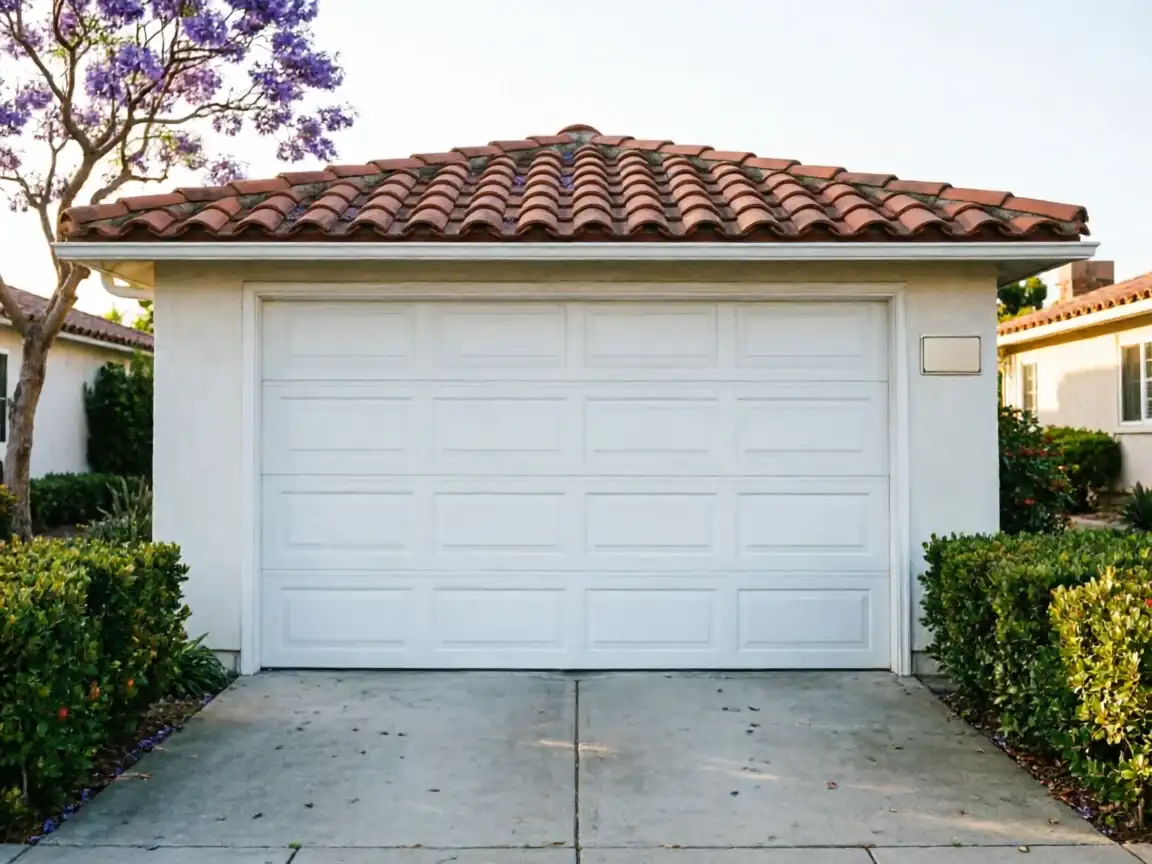
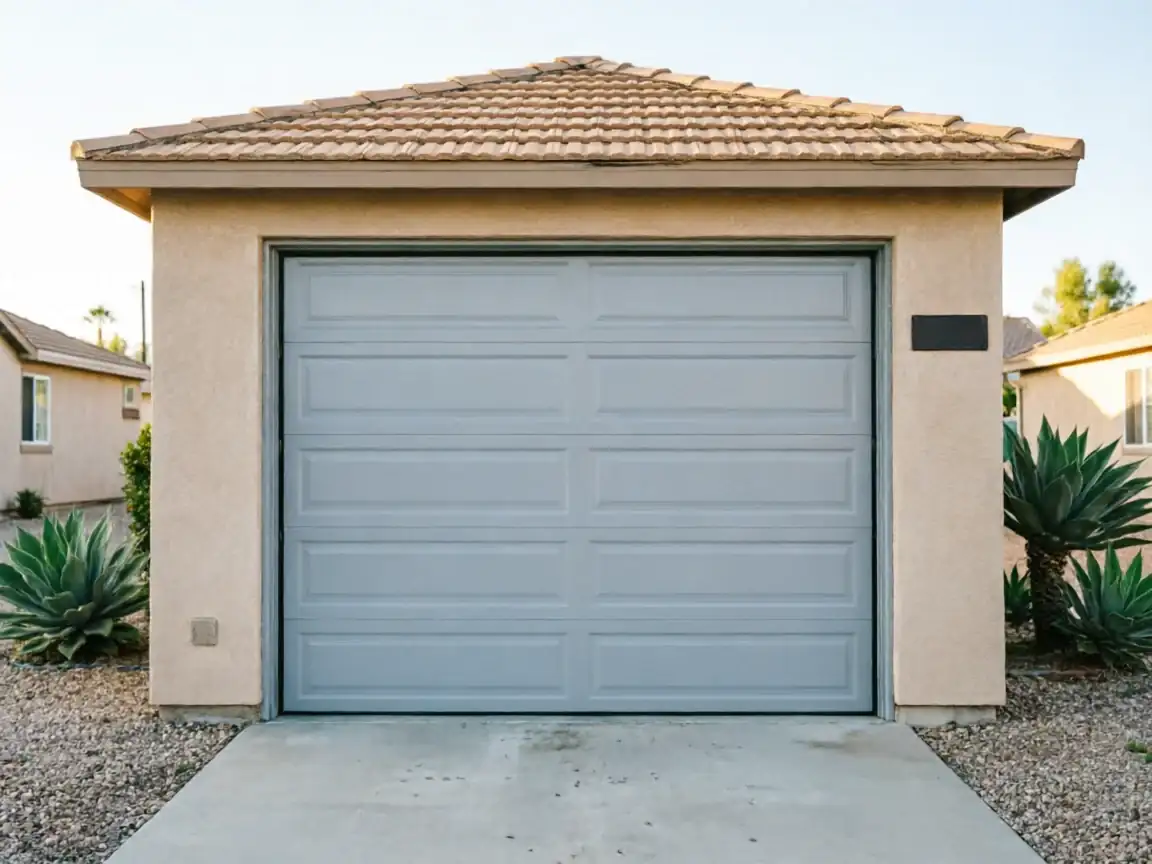
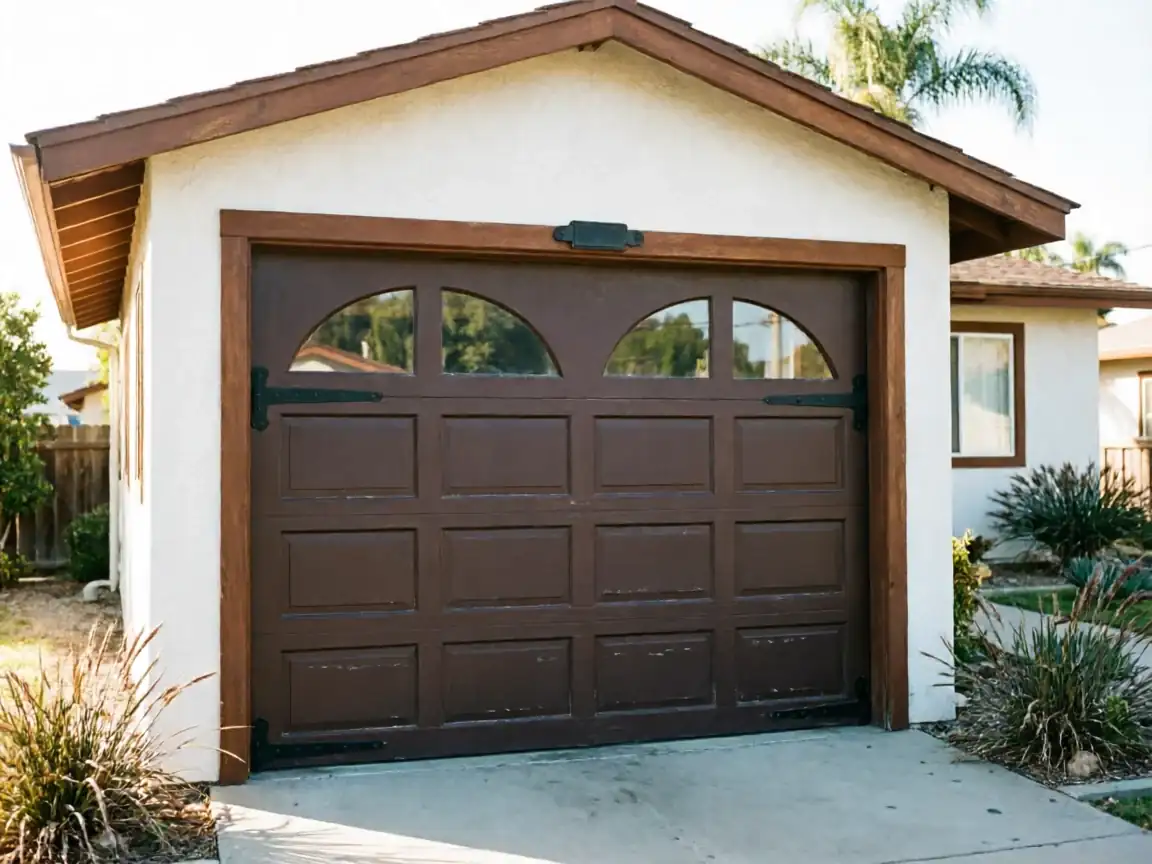
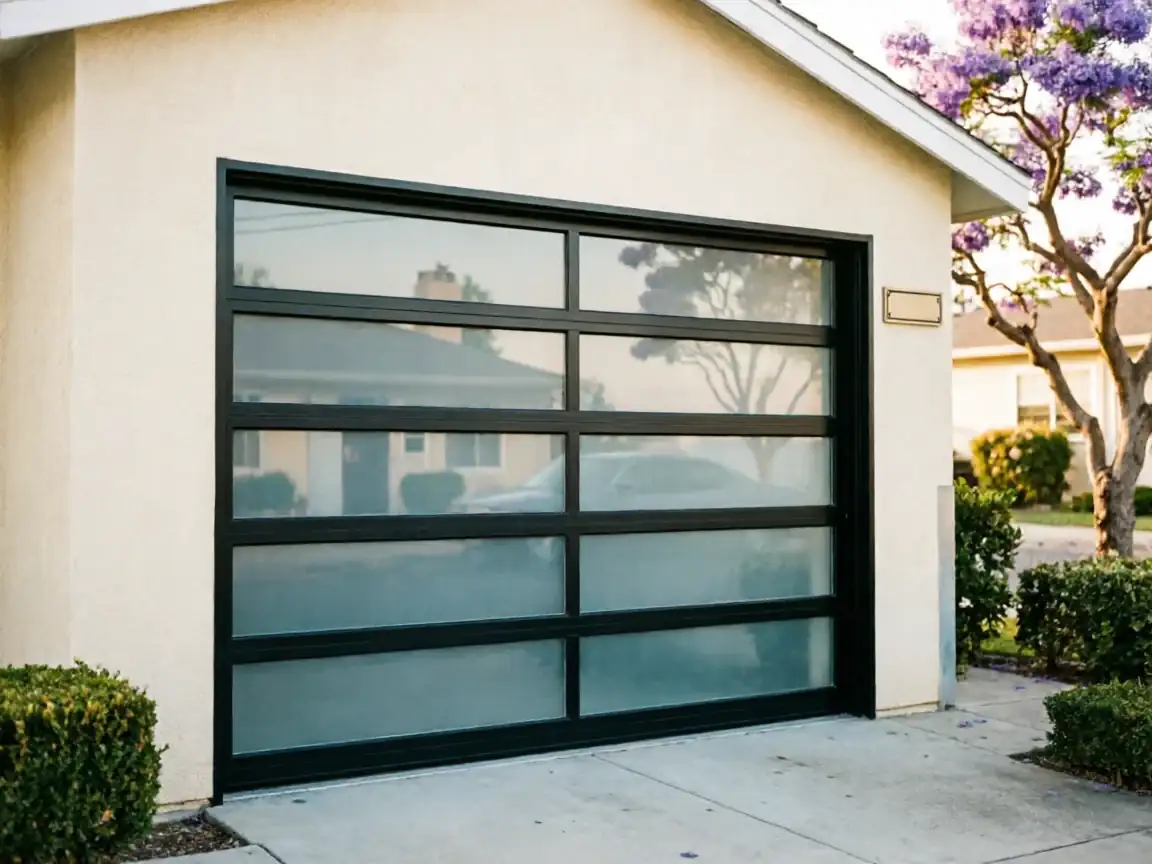
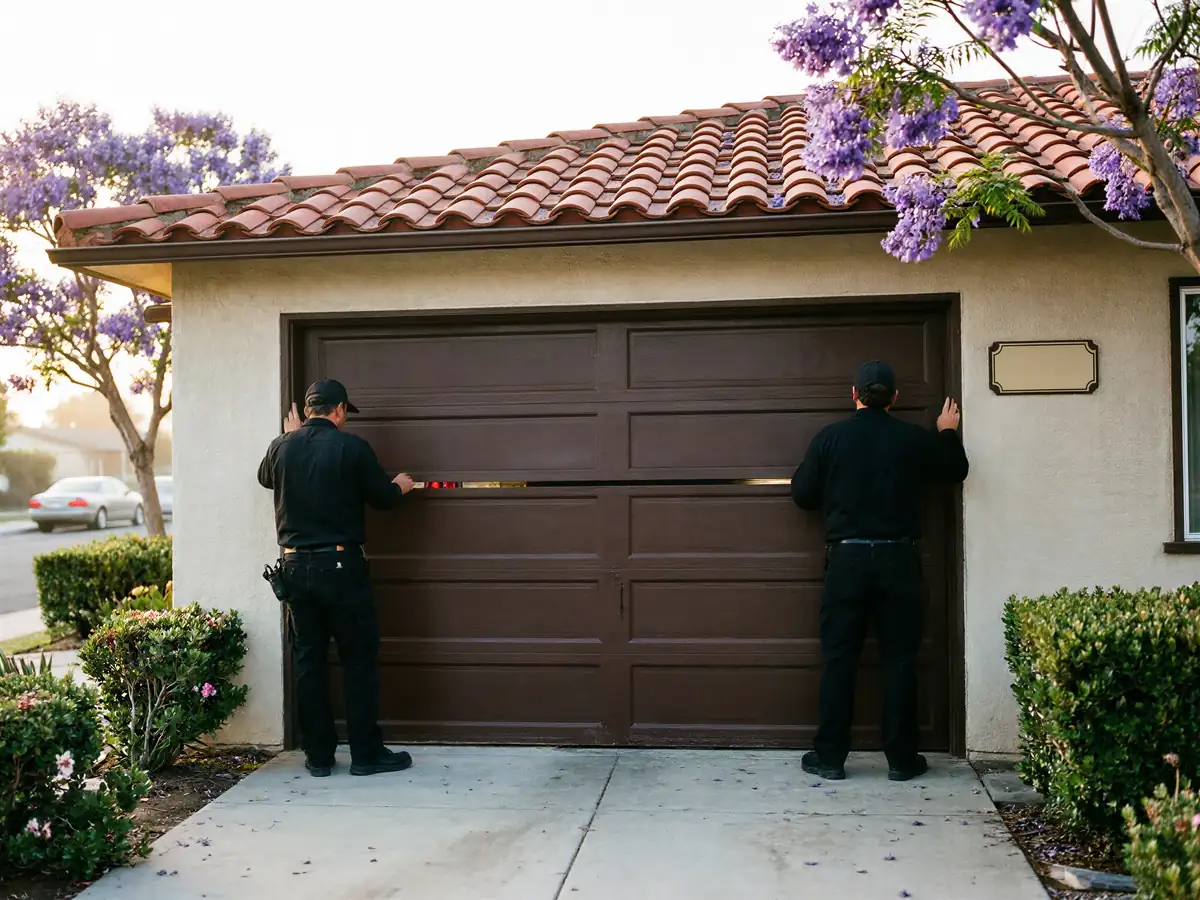
The dent that starts this job is almost always on a steel sectional panel, not a one-piece slab. Jurupa Valley's housing stock runs younger than a lot of the rest of our coverage area - the median home here went up around 1980, well past the 1951 start date for the broader service area and past the 1960s-70s wave that built out most of the other 45 communities we cover. That later build date means the garage doors on this side of things are almost all steel sectional, hung on roller tracks, not the heavy one-piece slabs you still find on older stock closer to Pomona.
What goes wrong tracks the hardware. A car backs into the bottom panel and bends the rail along with it. A basketball or a shopping cart dents the middle section. Sun and years of expansion and contraction loosen the hinge screws between panels, so one section starts to sag or bind against its neighbors before anything looks obviously broken. None of this is dramatic. It's wear on a door style that's had 40-plus years to accumulate it.
The Cost of This Job
We don't post a price here because panel cost swings on things we can't know until we're looking at the door - the brand, the panel profile, whether the color or texture is still made, and whether we're replacing one section or the whole run because the rest won't match. A single panel swap on a common builder-grade steel door is a different job than hunting down a matching panel for a door that's been discontinued.
The honest version: if your door is from that 1980-ish build wave and still has its original panels, there's a real chance the exact profile isn't made anymore. When that happens, your options are a close match that's visibly different, a full new door, or living with a panel that doesn't quite line up. We'll tell you which one you're looking at before we quote anything, not after.
Why It Happens Here
Jurupa Valley's 27,132 households skew toward homes built in that same 1980 window
Which means a lot of original steel doors are now old enough that their panels have gone through four decades of heat cycling. The service area overall sits in a moderate heat climate band, and steel panels expand and contract with that heat every season - not enough to crack them outright, but enough to work the hinge screws loose and open small gaps at the seams over years.
- 27,132 households
Median household income in Jurupa Valley runs around $96,190
A touch under the wider service area's $102,449. In practice we see that show up as more panel repairs and fewer full-door replacements - owners fixing the damaged section rather than swapping the whole door, as long as a matching panel is still out there to find.
What You Are Seeing
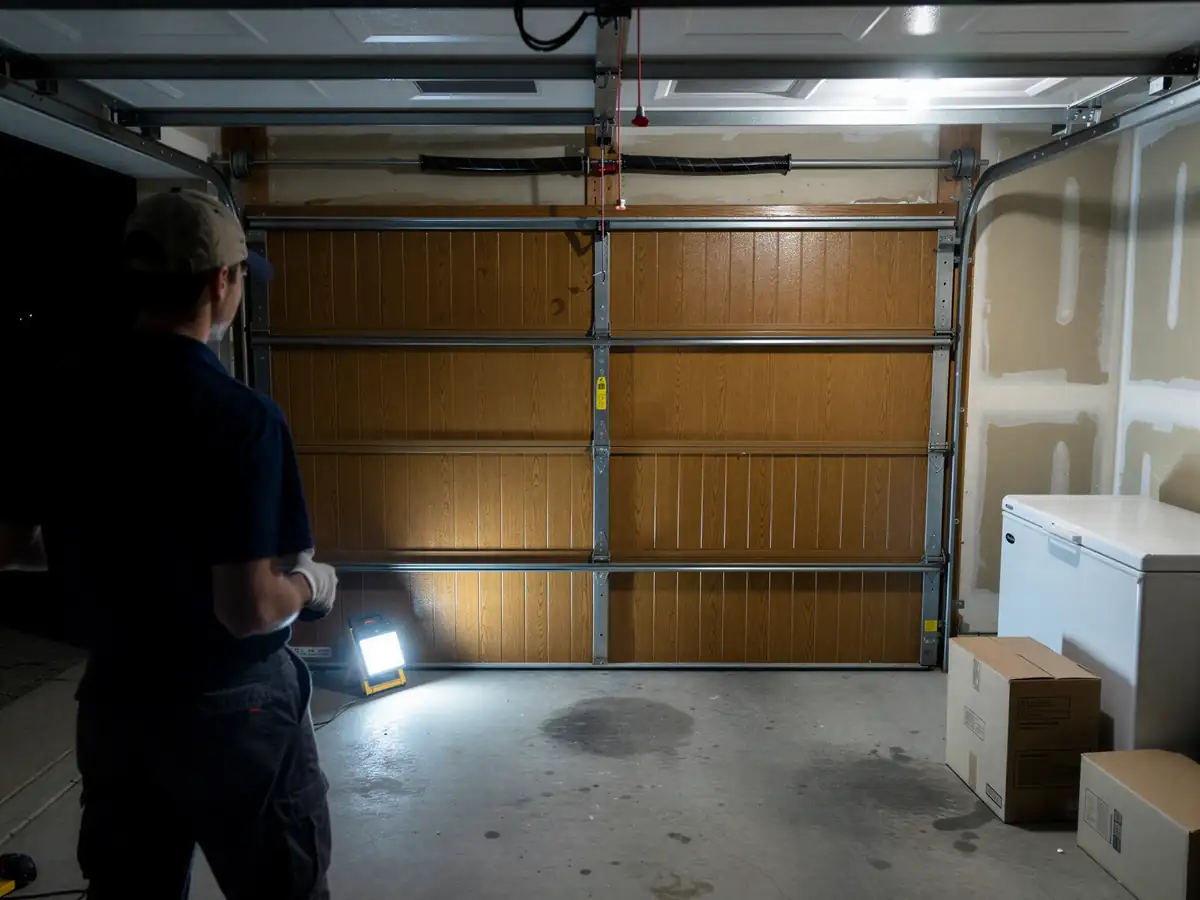
A bowed or visibly dented section, usually low on the door where cars and bikes make contact. A gap at one seam that wasn't there last year, from hinge hardware working loose. A door that shudders or catches partway through its cycle because one panel is binding against the track instead of rolling with it. Sometimes it's just a section that's faded or chalked to a different shade than the rest of the door - steel sectional doors from the 1980s weren't finished to hold color the way newer ones are.
If the opener strains, reverses, or stalls on a door with a visibly bent panel, that's the panel pulling the whole door out of alignment, not a motor problem.
What the Repair Takes
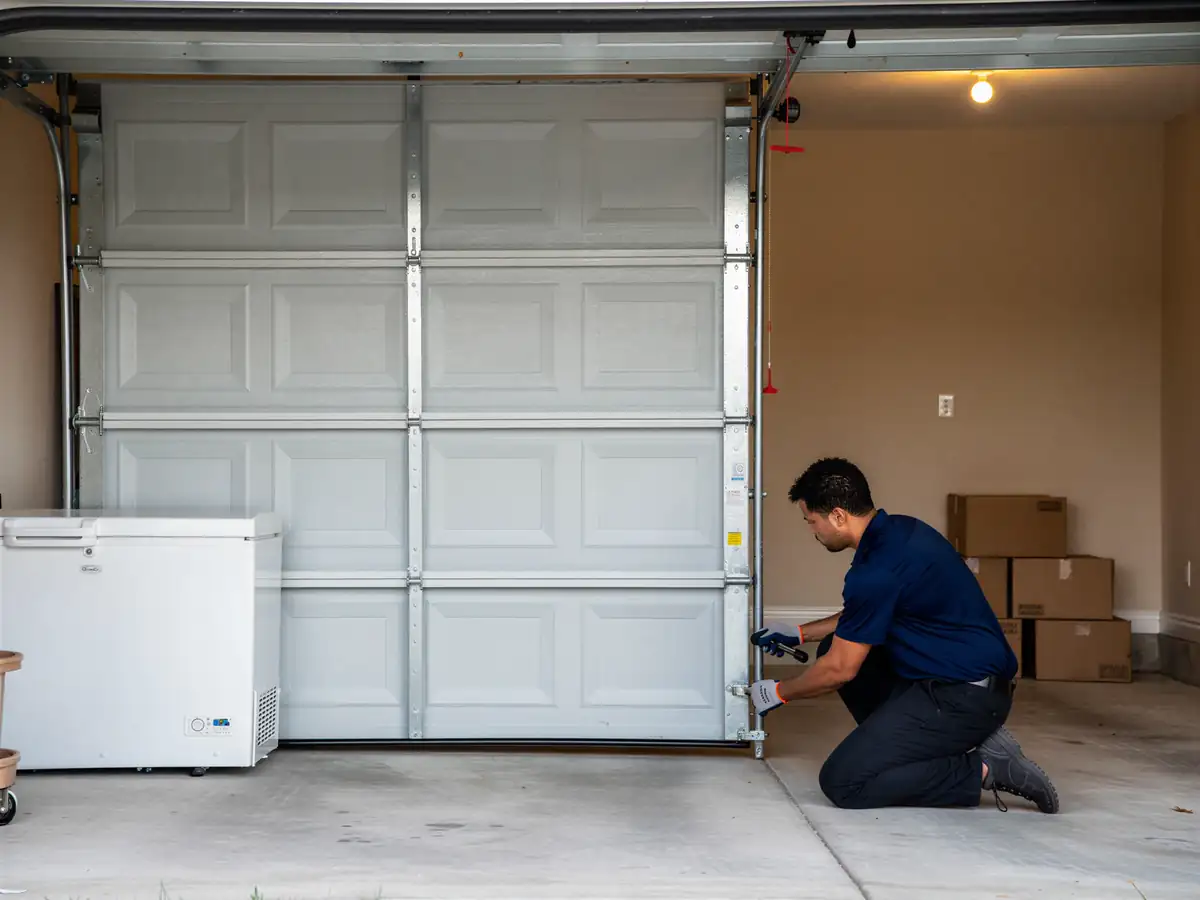
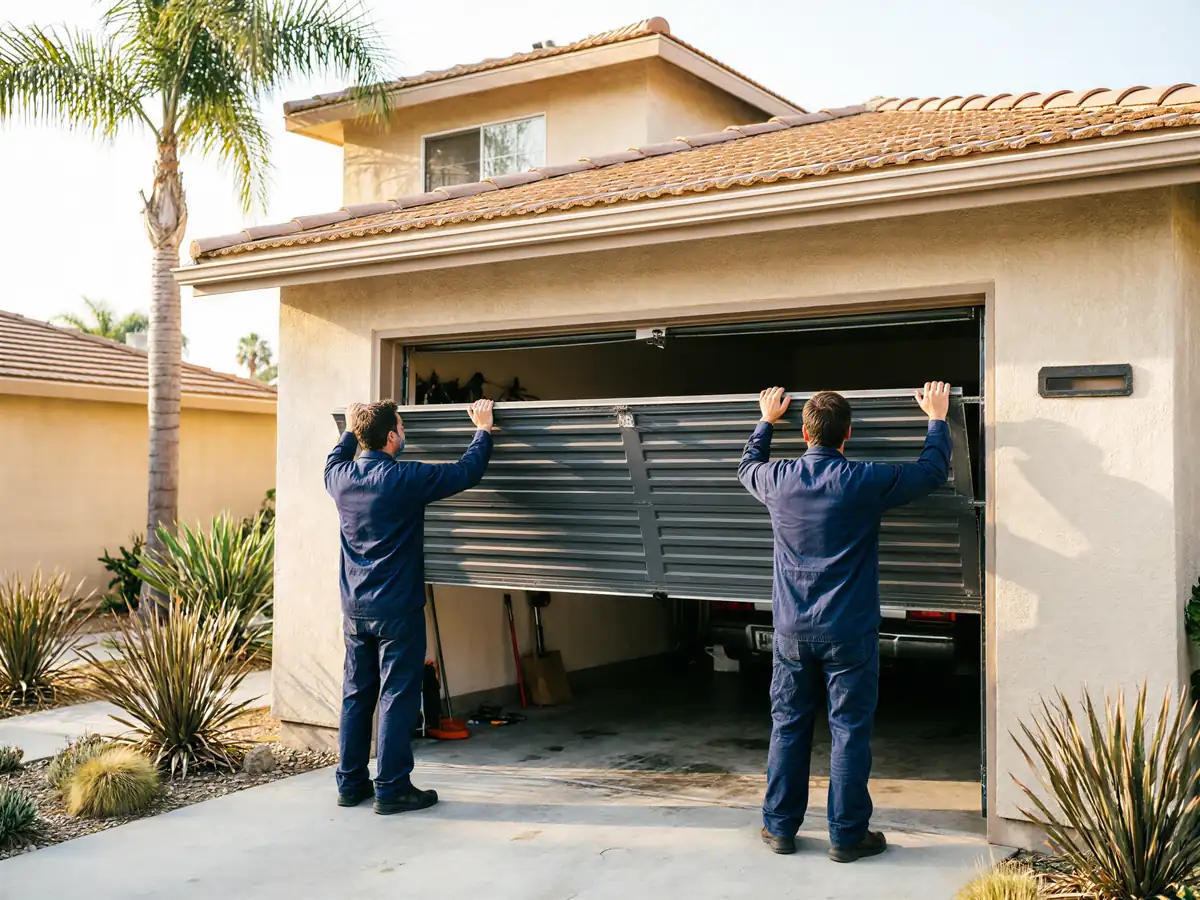
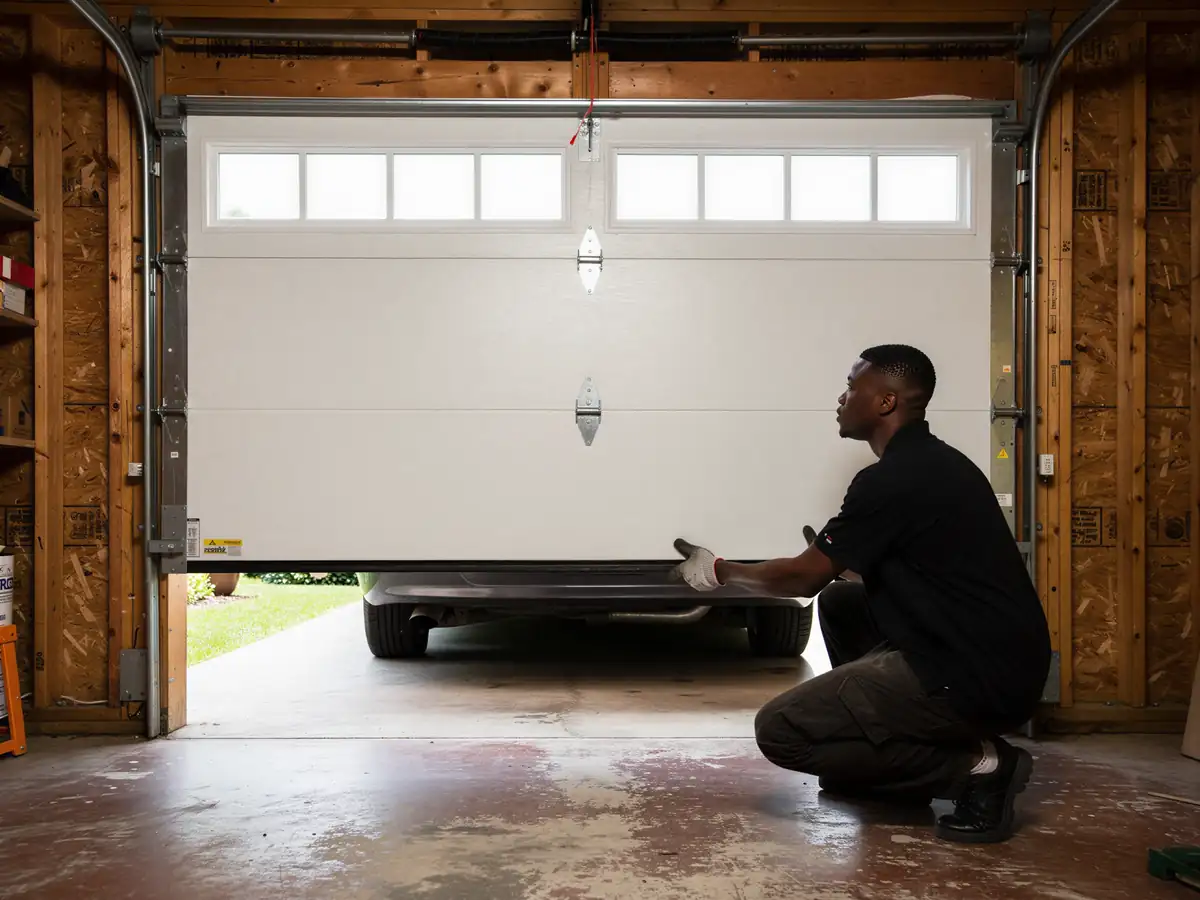
We pull the damaged panel's end hinges and rollers, slide the section out of the track, and set the replacement in using the existing hardware where it's still sound. Hinges, rollers, and end caps that are worn or bent get swapped at the same time - reusing tired hardware on a new panel just moves the next failure down the road. The track gets checked for the bow that caused the dent in the first place, since a straight panel on a bent track will dent again.
The part we can't shortcut is sourcing. If your panel profile is still made, this is usually a same-visit job. If it's been discontinued - common enough on doors from the early 1980s - we're ordering a close match or talking about a full door, and that adds time we can't promise away.
What Is on the Truck
We carry common steel sectional panels in standard widths and the usual hinge, roller, and track hardware that fits most doors built from the 1970s through today
What we don't carry is every discontinued color and embossed texture from a 40-year production run - that's a special order, not a truck item, and we'll say so on site rather than pretend otherwise.
Because we're running out from Pomona, about 17 miles from Jurupa Valley
We load the truck based on what the job looks like from the call, then adjust once we're looking at the actual door and panel.
- 17 miles