Serving Pomona, CA & nearby
(909) 247-3740
Pomona, CA

Garage Door Service for Jurupa Valley's 1980s Housing Stock

Jurupa Valley's garages mostly went up around 1980, a different era of hardware than the rest of our coverage area. We drive out from Pomona and know what that stock needs.

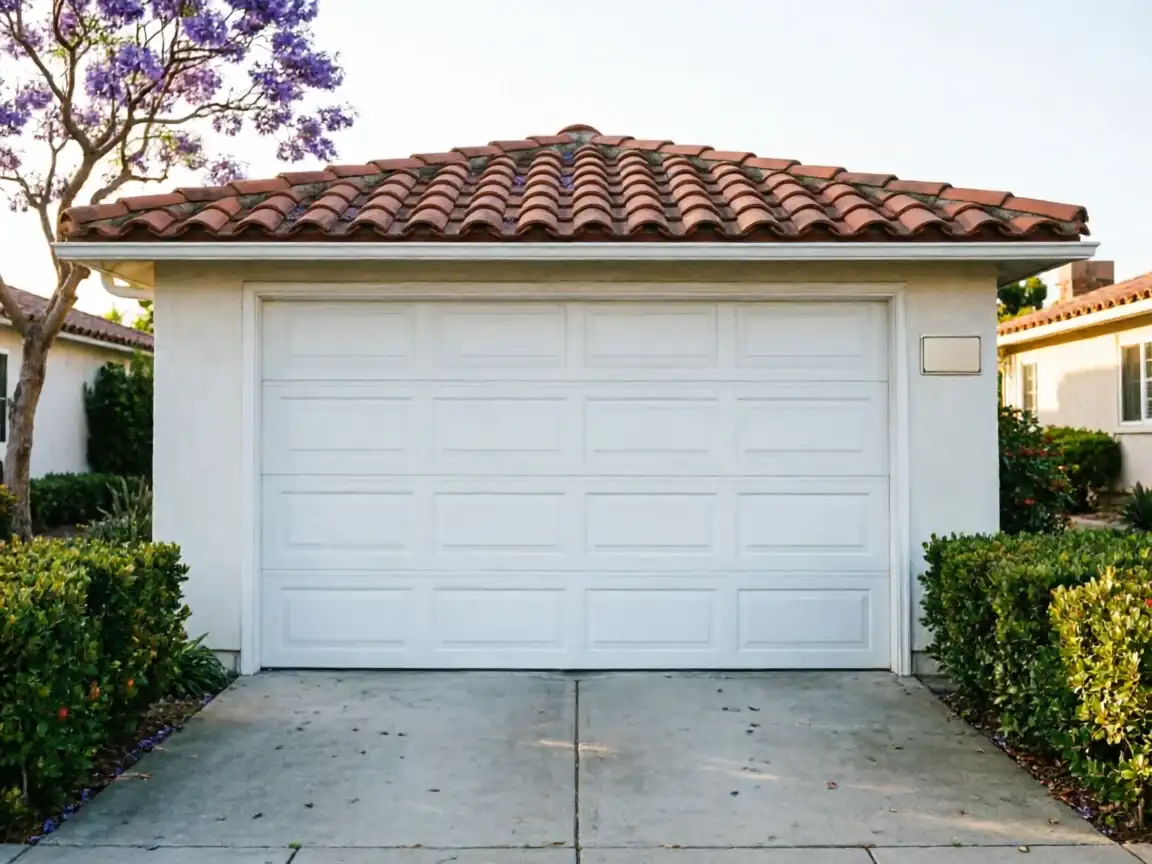
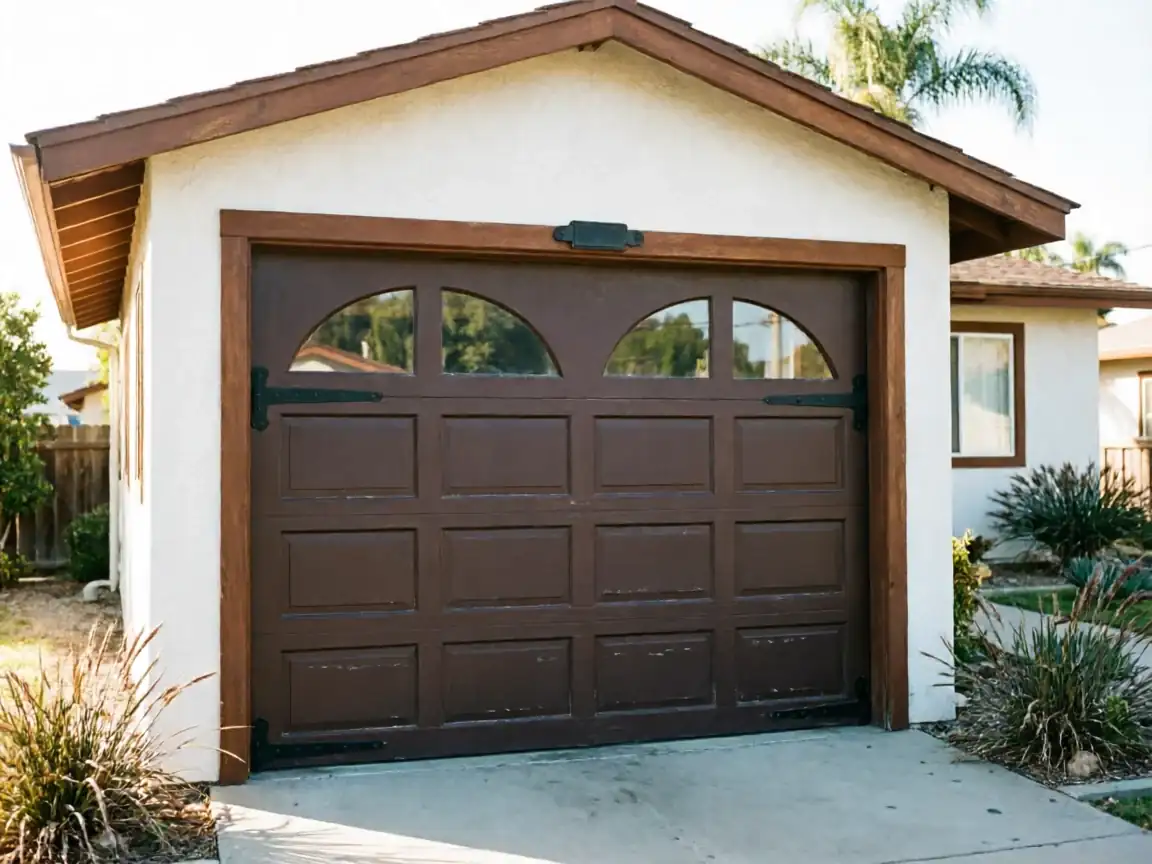
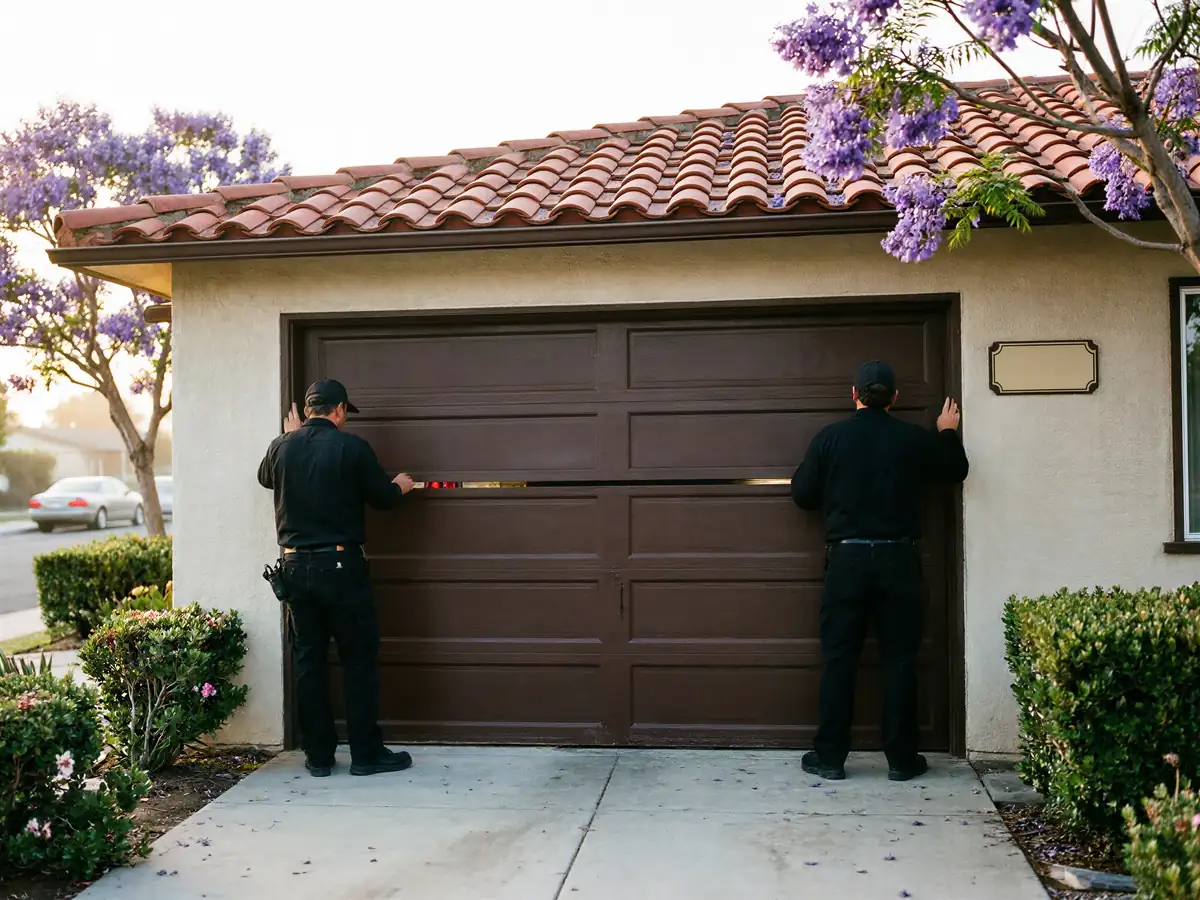
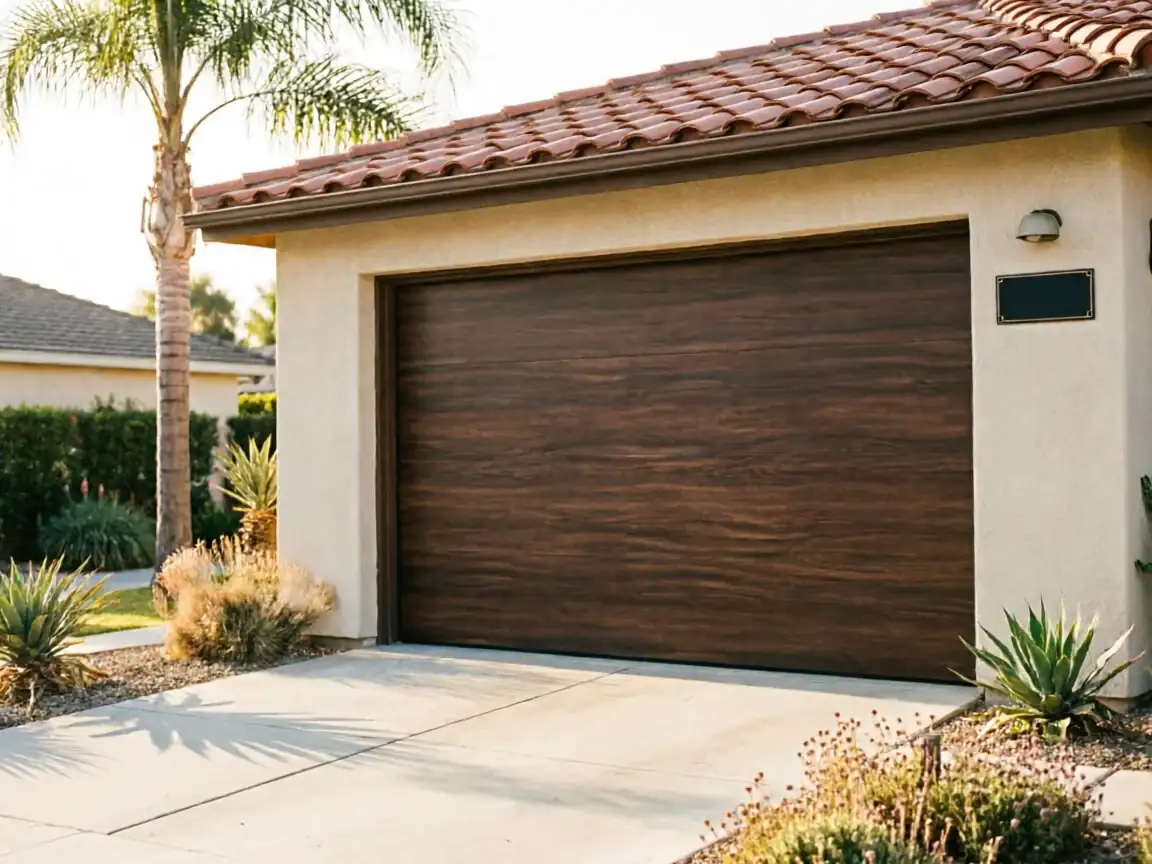
A brown wood-look garage door is on a stucco house with a red tile roof.
Pomona, CA
8 services
7 service areas
Diagnosis first, then the fix

What Can Go Wrong

Most houses in Jurupa Valley went up around 1980, a good fifteen years newer than the 1965 median that defines much of the rest of the Pomona service area. By 1980 steel sectional doors on torsion spring hardware were the standard install, which means you're less likely to be fighting an old one-piece slab, and more likely dealing with a torsion spring that's been through four decades of daily cycles and has probably already been swapped once by a previous owner. Panels from that era are usually plain steel, no foam core, so dents stay dented and the metal flexes more in direct sun than newer insulated doors would. Rollers and hinges are typically the original galvanized steel rather than nylon, which means more noise and more friction over time. The moderate heat band this area sits in doesn't produce the dramatic swings some climates see, but it does dry out weatherstripping and rubber seals faster than owners expect, and it lets track bolts work loose as the metal expands and contracts through the day. The most common failure we see on houses this age is a snapped torsion spring, followed by worn rollers dragging in a track that's drifted slightly out of alignment.

The Cost of This Job

We don't have a shop in Jurupa Valley. We run every job out of Pomona, about 17 miles away, and that drive is part of every quote we give here rather than something added on afterward. There's no flat published price for spring or opener repair because what a 1980-era door needs varies a lot depending on whether it's had any parts replaced already, and we'd rather look at the actual spring size and track condition than guess over the phone. Jurupa Valley's median household income, at $96,190, runs a bit below the $102,449 median across the wider service area, and in practice that means more owners here ask us to fix what's broken rather than replace the whole door, which is usually the right call anyway if the frame and track are sound. The honest limitation: if your door needs a panel that hasn't been made in years, a patch repair isn't realistic, and we'll tell you that instead of rigging something that fails again in six months.

Why It Happens Here

A door installed around 1980 has been raised and lowered through more than forty years of daily use, and torsion springs are rated in cycles, not years, so by now most original springs are long past their working life even if nobody's noticed yet. What makes it worse is that spring sizing common in 1980 was often matched to the door weight of that decade, not to the heavier insulated replacement panels some owners have since swapped in on the same hardware. That mismatch shows up as a door that feels heavy to lift by hand, or an opener that strains and eventually burns out trying to compensate for a spring that's doing less work than it should. Add in the moderate heat this area sits in, which doesn't baby metal the way a milder coastal climate does, and you get faster degradation of lubricant on rollers and hinges, along with more drying and cracking in rubber seals than owners in cooler parts of the service area deal with. None of this is dramatic on its own. It just adds up faster in a neighborhood built in one tight window of time, which is exactly what Jurupa Valley is.

What You Are Seeing

The classic sign on a 1980-era door is a loud bang from the garage followed by a door that won't budge, or budges only a few inches before the opener reverses it. That's a torsion spring letting go, usually without much warning beyond maybe a slightly heavier feel in the days before. Shorter of that, you might notice the door sagging a little on one side when it's halfway up, which usually means one spring is weaker than its pair, or a cable has started to fray on the drum. A grinding or squealing sound as the door travels is almost always original rollers that have gone dry and started wearing unevenly in a track that's drifted slightly out of plumb. If the opener motor runs but the door barely moves, that's the spring doing none of the lifting work it was built to do, and the motor straining to cover for it. None of these are emergencies that get worse by the hour, but none of them get better by waiting either.

What the Repair Takes

The first step is always checking the spring size against the actual door weight, not just replacing what's there, because a door that's had panels swapped over the years may no longer match its original spring rating. From there it's inspecting the torsion bar, drums, and cables for wear, since a worn cable under a new spring is still a cable that's going to fail. We check roller condition and track alignment at the same time, because a sticking door often isn't the spring's fault at all, it's a track that's walked out of alignment as the house has settled. Rollers and hinges get swapped when they're worn rather than left in place to save a trip. The honest limitation here: on a door old enough that the panel profile is no longer made, a correct repair sometimes isn't possible without a mismatched replacement panel, and in that case replacing the section or the whole door is the better call, even though it costs more up front.
What Is on the Truck

For doors from this era we carry torsion springs sized for the common 16-foot double and 9-foot single door spans that went up through Jurupa Valley in the early 1980s building boom, along with galvanized aircraft cable and standard track sections. We stock nylon rollers as a standard upgrade over the original steel ones, since they run quieter and don't need lubrication as often. Hinges, end bearing plates, and the fasteners that tend to work loose over decades of use are all standard stock. What isn't always on the truck is a replacement panel matched to an obscure or discontinued steel profile, since manufacturers have changed panel designs several times since 1980. Because we're driving in from Pomona rather than working out of a local branch, a part we don't have on hand means a second trip rather than a quick run back to the shop, so we'd rather confirm what a job needs before we're on site than guess and come back.

How it works

From “it’s stuck” to “it’s fixed”

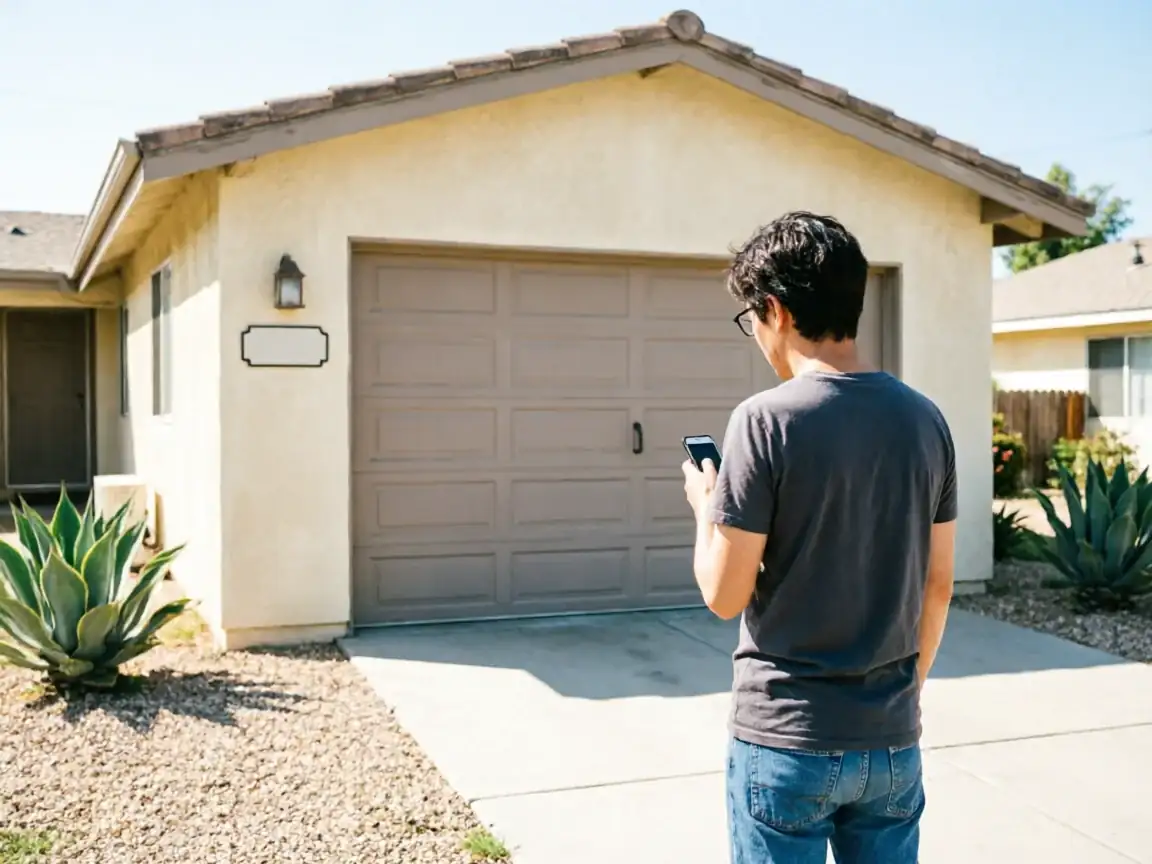
A person stands in front of a house with a closed brown garage door.

Tell us what’s wrong

Describe the symptom - won’t open, loud bang, opener runs but the door won’t move.

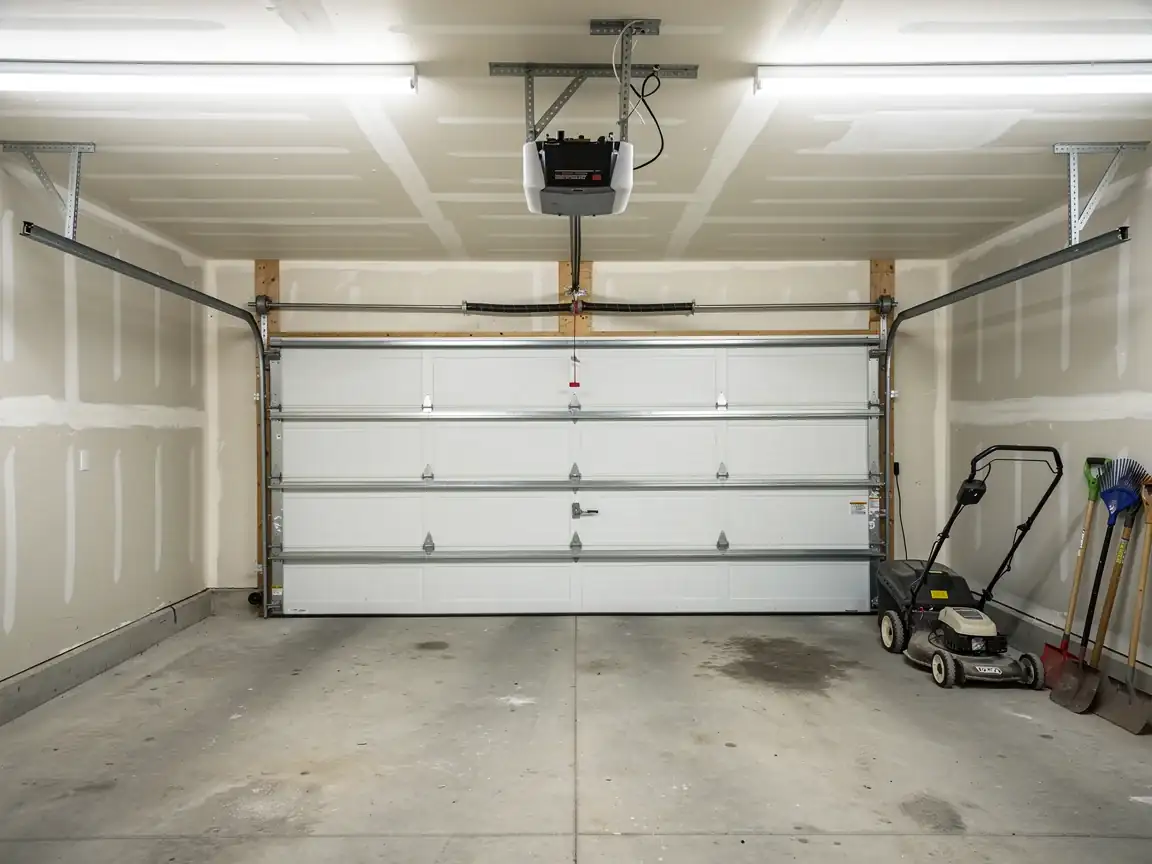
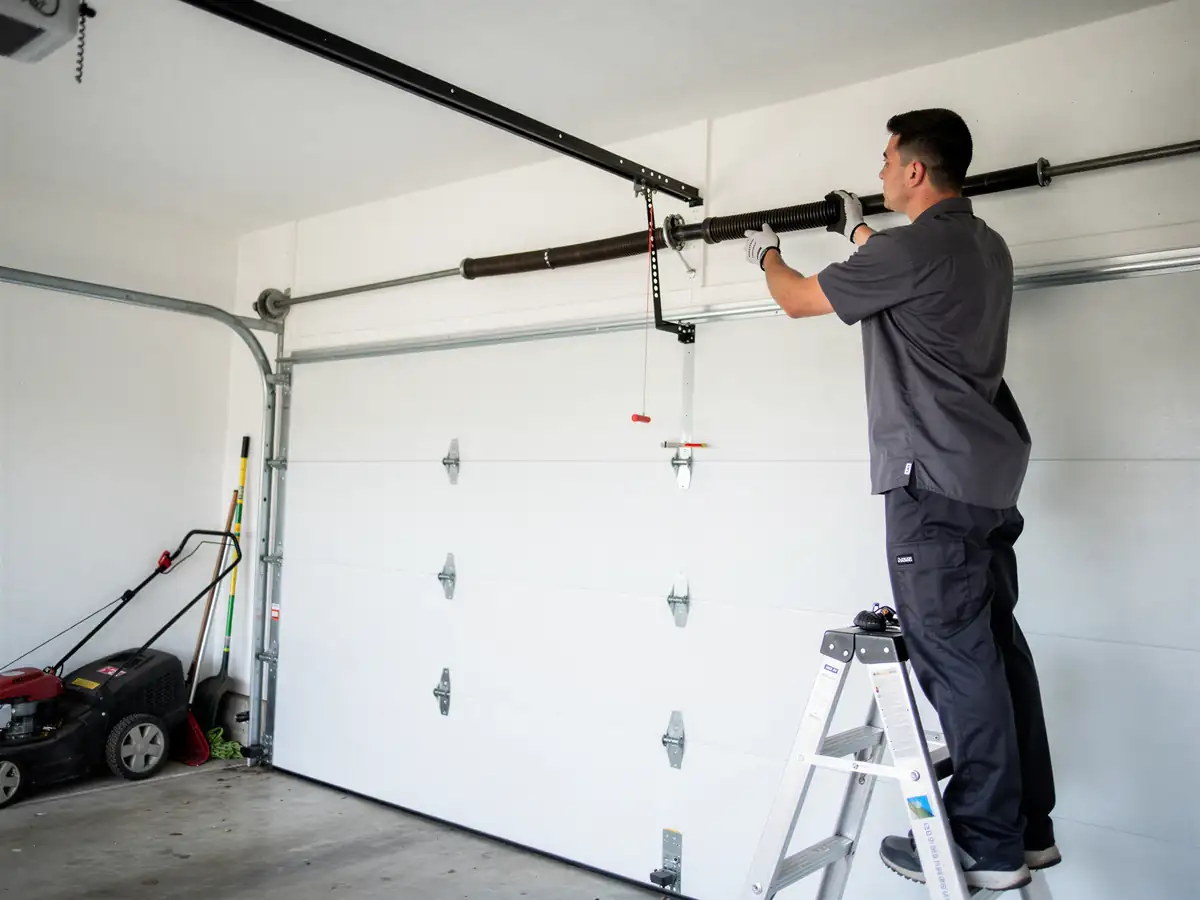
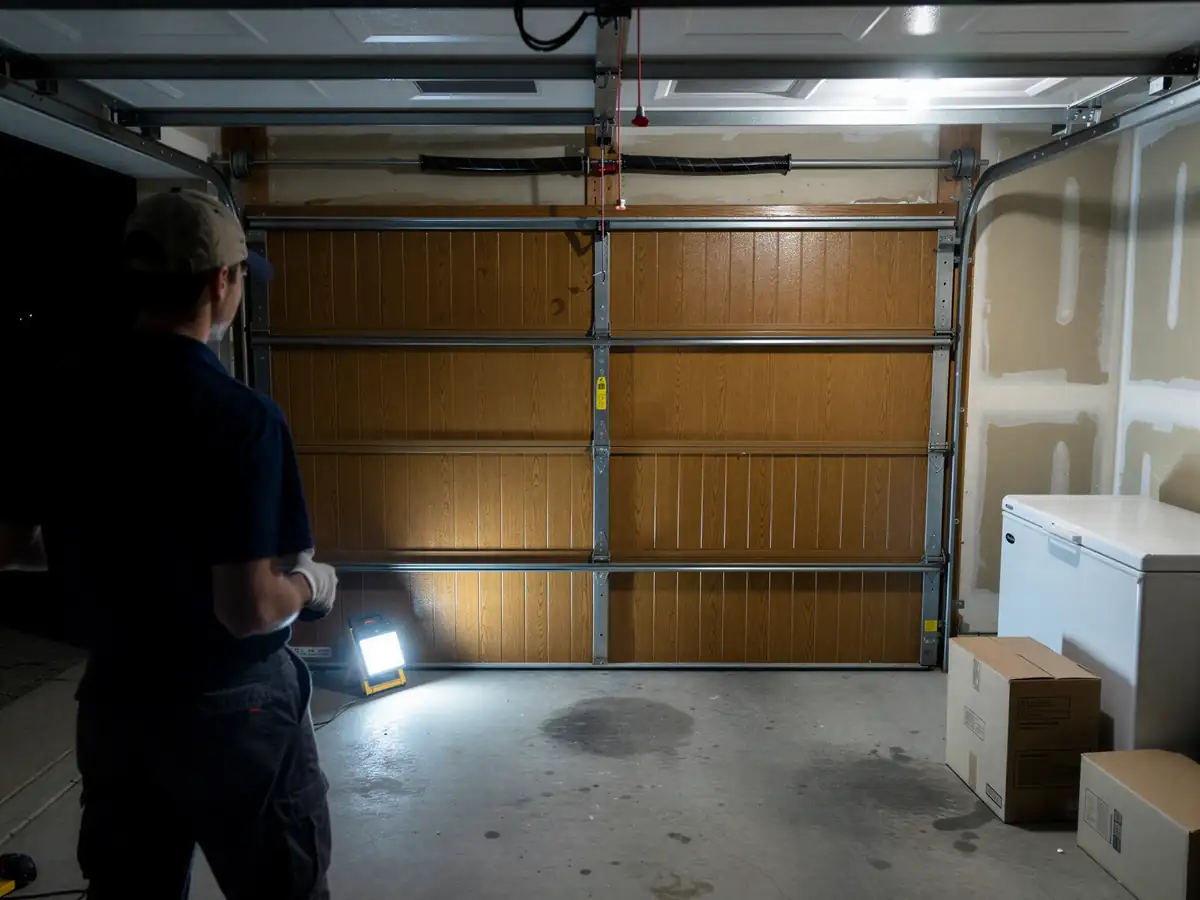
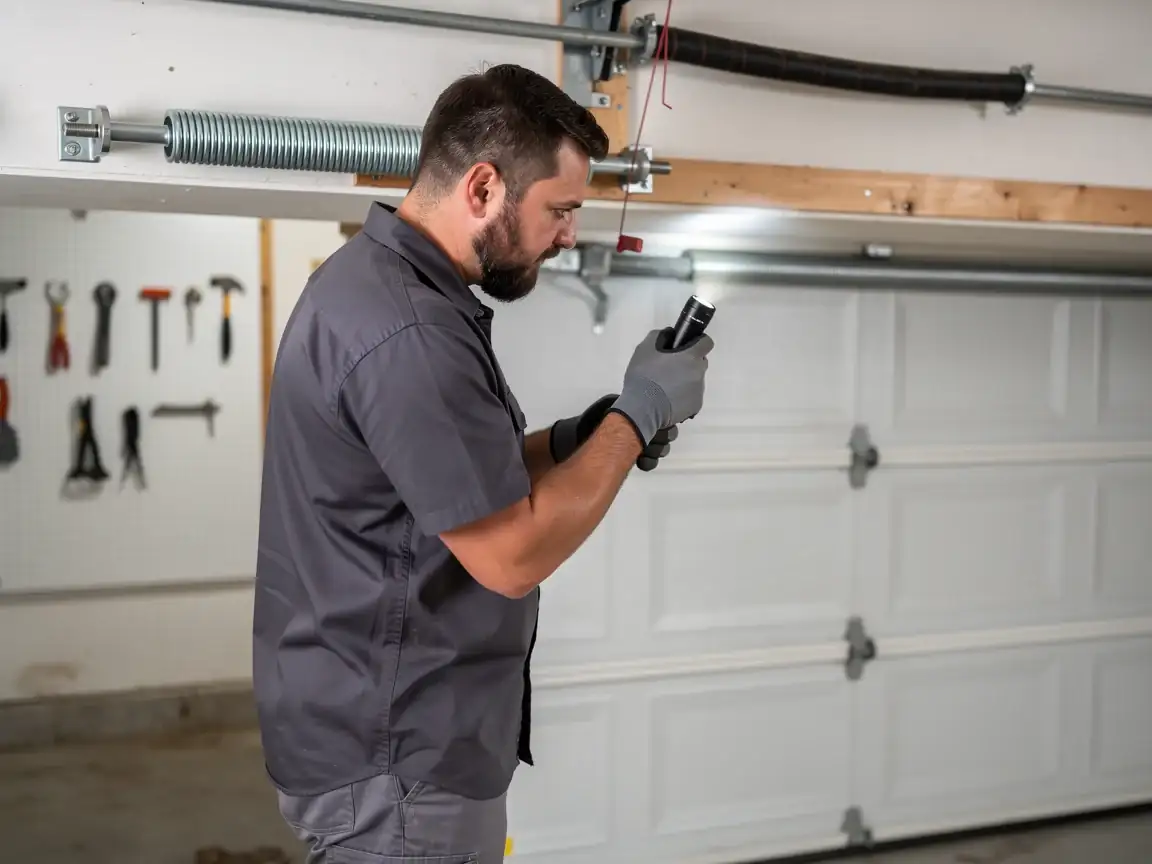
A technician shines a flashlight on a white garage door and springs.

On-site diagnosis

A technician tests the door under power and by hand and finds what actually failed.

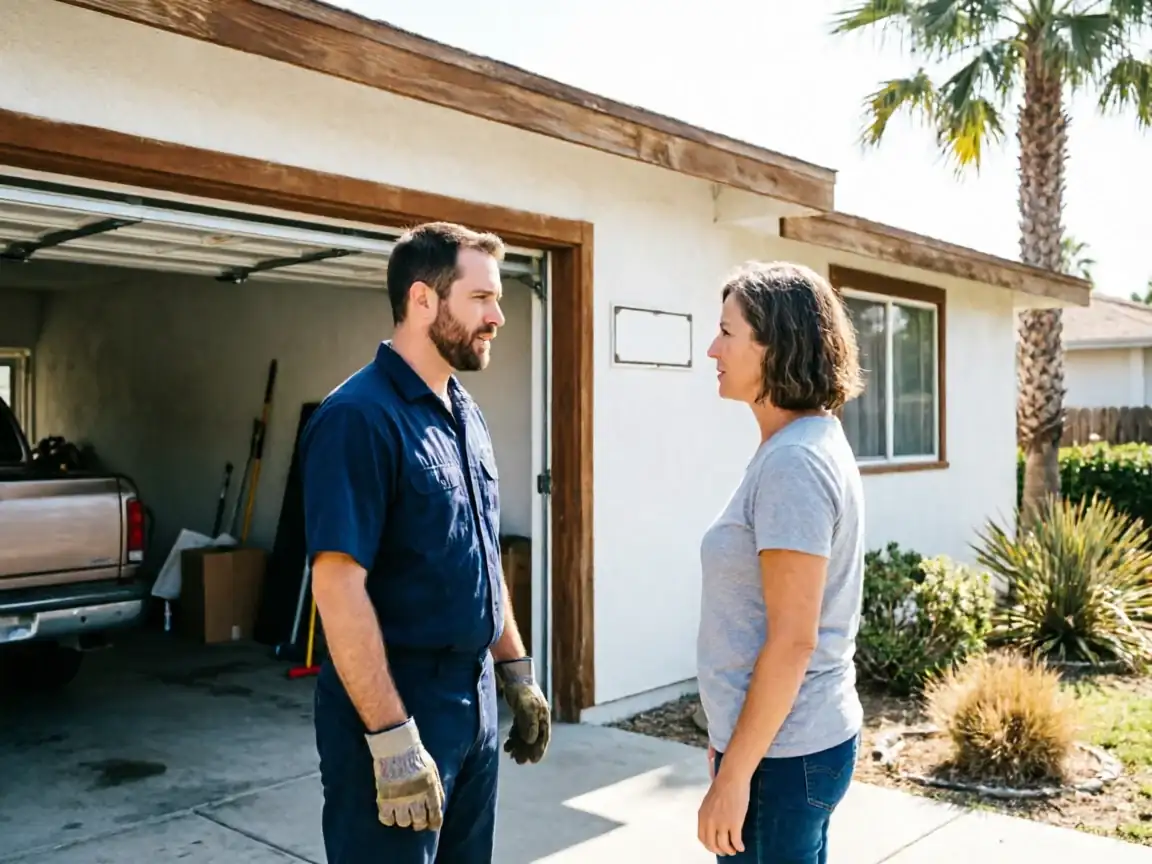
A technician in a blue uniform talks to a woman in front of a garage.

Clear, up-front plan

You get the fix that’s needed and what drives the cost - before any work starts.

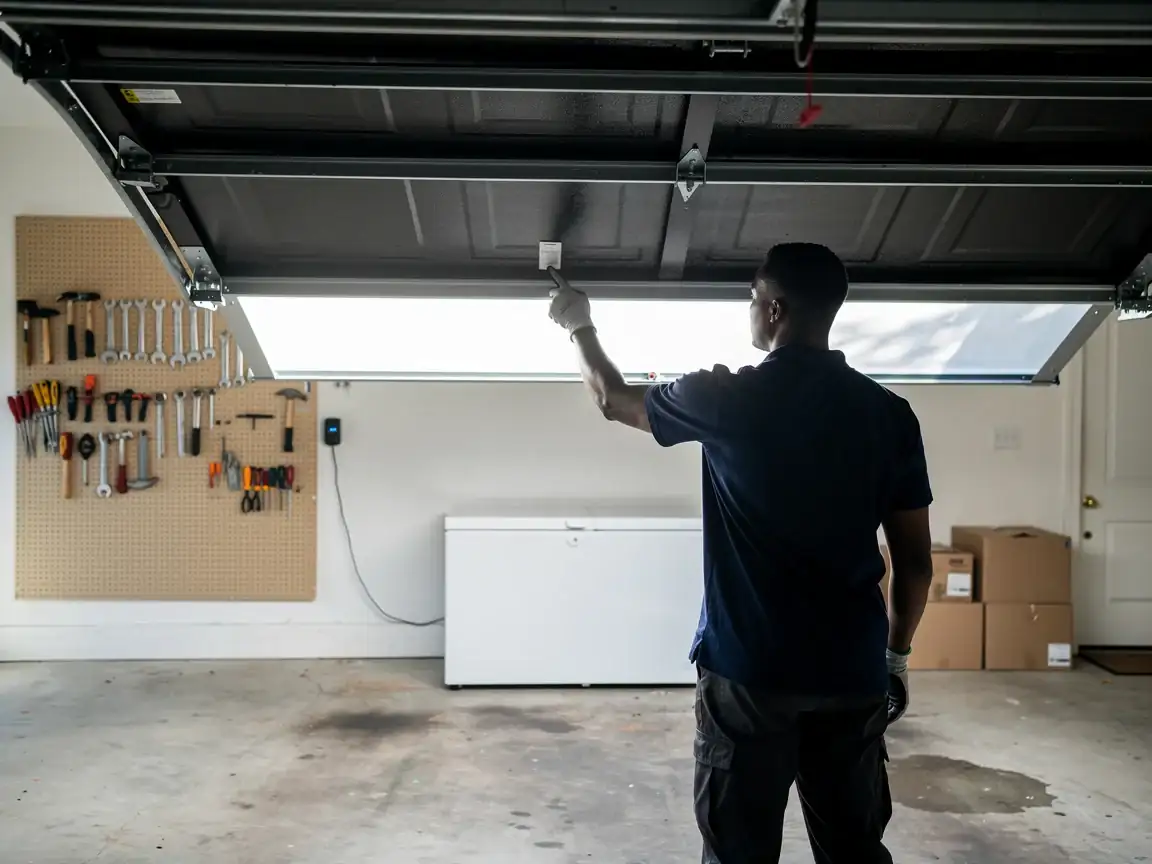
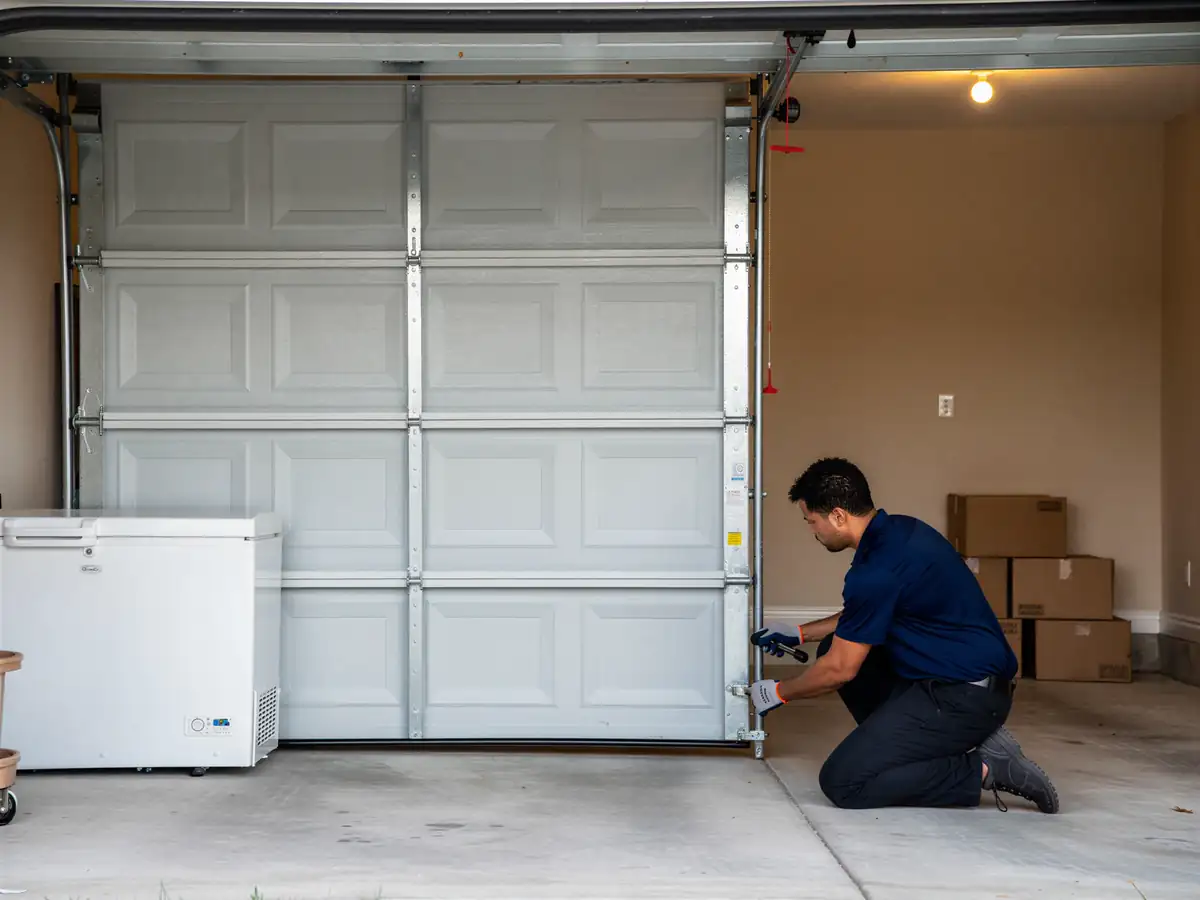
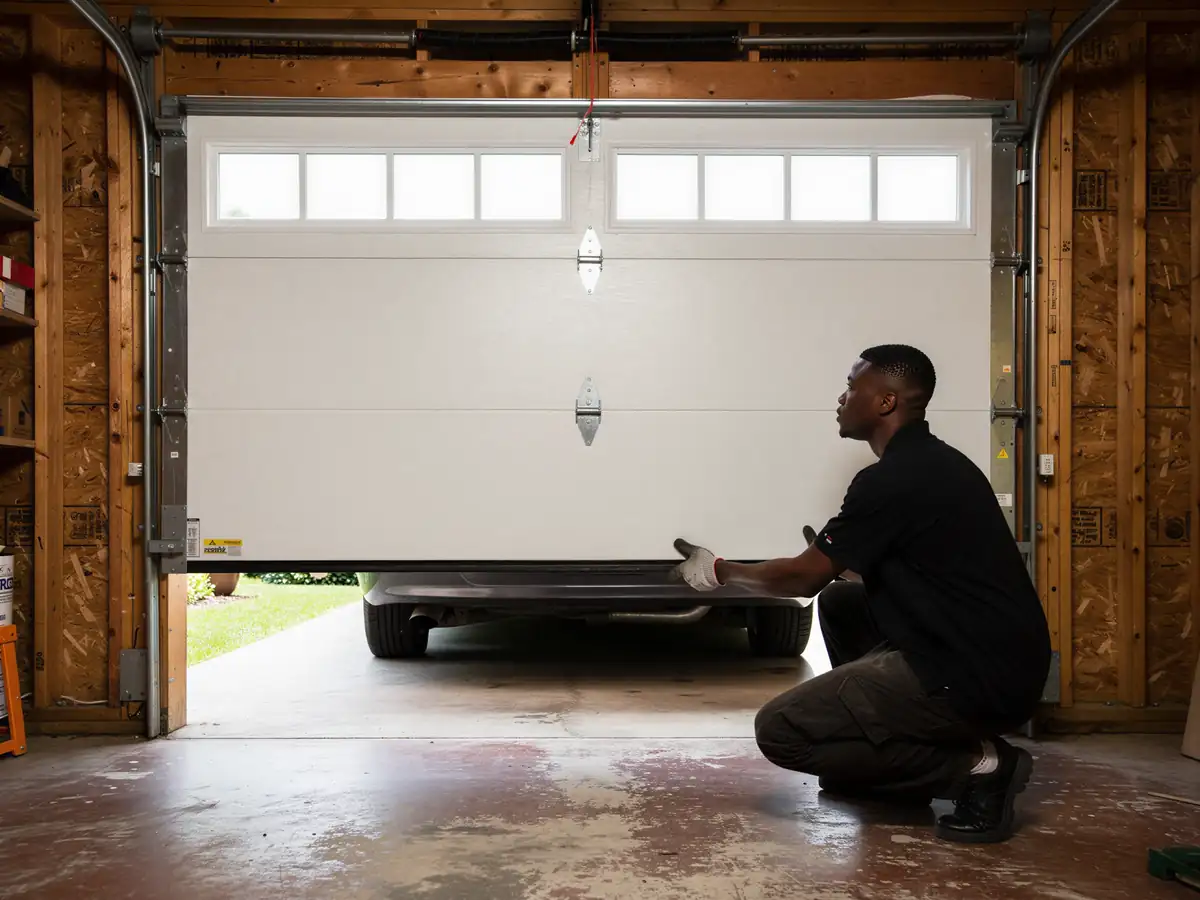
A technician in a blue shirt is inspecting the inside of an open garage door.

Repaired & tested

The repair is done, the door is set true and tested, and the work area left clean.

Not sure which repair your door needs in Pomona, CA? Describe what it’s doing - every job starts with a diagnosis.

How we work

What to expect

Diagnosis first

Every visit starts by finding what actually failed - not a pre-written parts list.

The right part for the door

Springs and openers matched to the door’s weight and age, so the fix holds up.

Straight answers

When a repair makes more sense than a replacement - or the reverse - you hear it plainly.

Clean, careful work

Tension released safely, hardware set true, the door tested under power before we leave.

153,266Residents in Pomona
8Garage door services
7Neighborhoods & suburbs
CAServing Pomona, CA
Questions

Frequently asked

Straight answers about garage door repair in Pomona. Still unsure? Ask us directly.

01Does Pomona Garage Door Pros have a shop in Jurupa Valley?

No. We work out of Pomona, about 17 miles away, and that drive is built into the quote we give you rather than tacked on later. There's no local branch here, so every visit is scheduled out from the Pomona shop.

02Why does my garage door feel heavy to lift even though nothing looks broken?

Most houses in Jurupa Valley date to around 1980, and torsion springs that old have usually gone through more lifting cycles than they were rated for. A spring that's weakened but hasn't snapped yet often just feels heavier, long before it fails outright.

03Does the local climate affect my garage door?

The moderate heat here dries out rubber weatherstripping and seals faster than a cooler climate would, and it lets metal track and bolts expand and contract through the day, which can nudge a track slightly out of alignment over time.

04What if the part my door needs isn't something you carry?

Some steel panel profiles from the early 1980s are no longer made. If that's what your door needs, we'll say so rather than force a mismatched fix, and we'll either special order the part or talk through replacing the section.

Ready to get your garage door sorted?

Tell us what it’s doing and where you are in Pomona - we’ll take it from there.

Request a QuoteCall