What Can Go Wrong
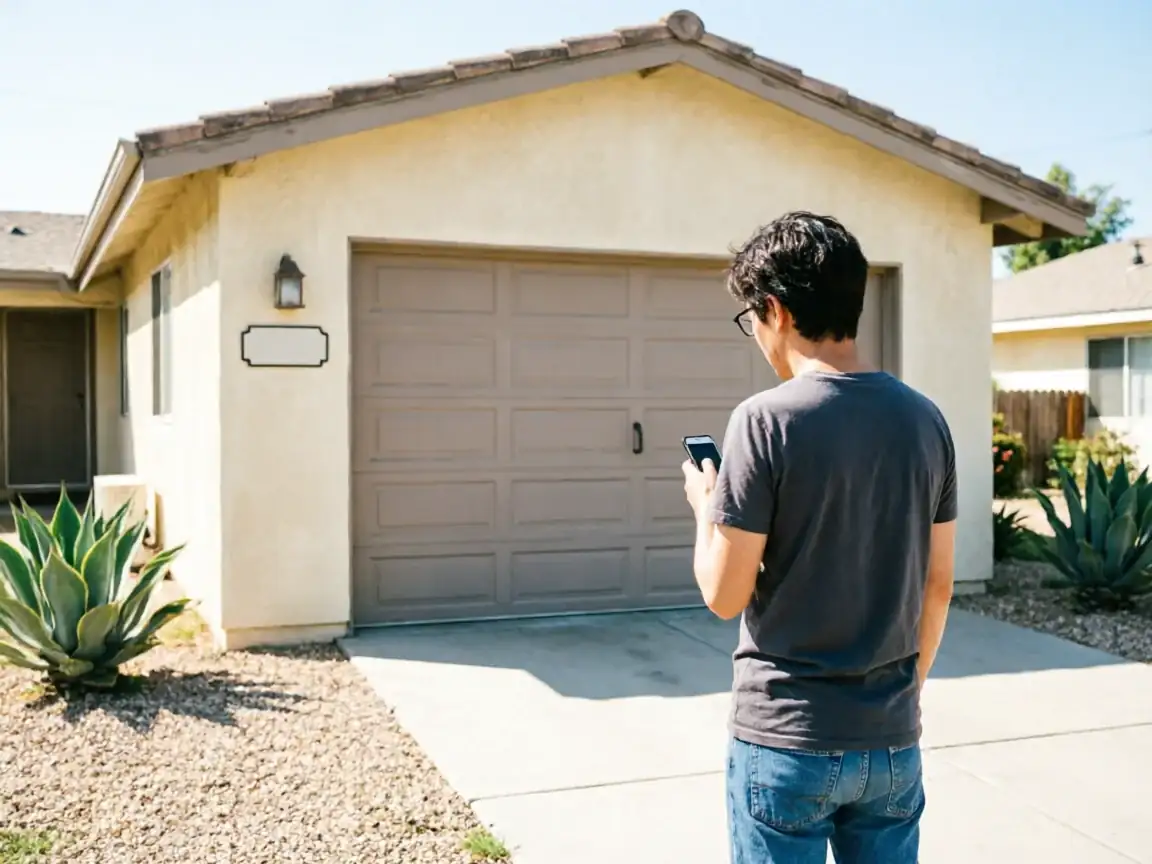
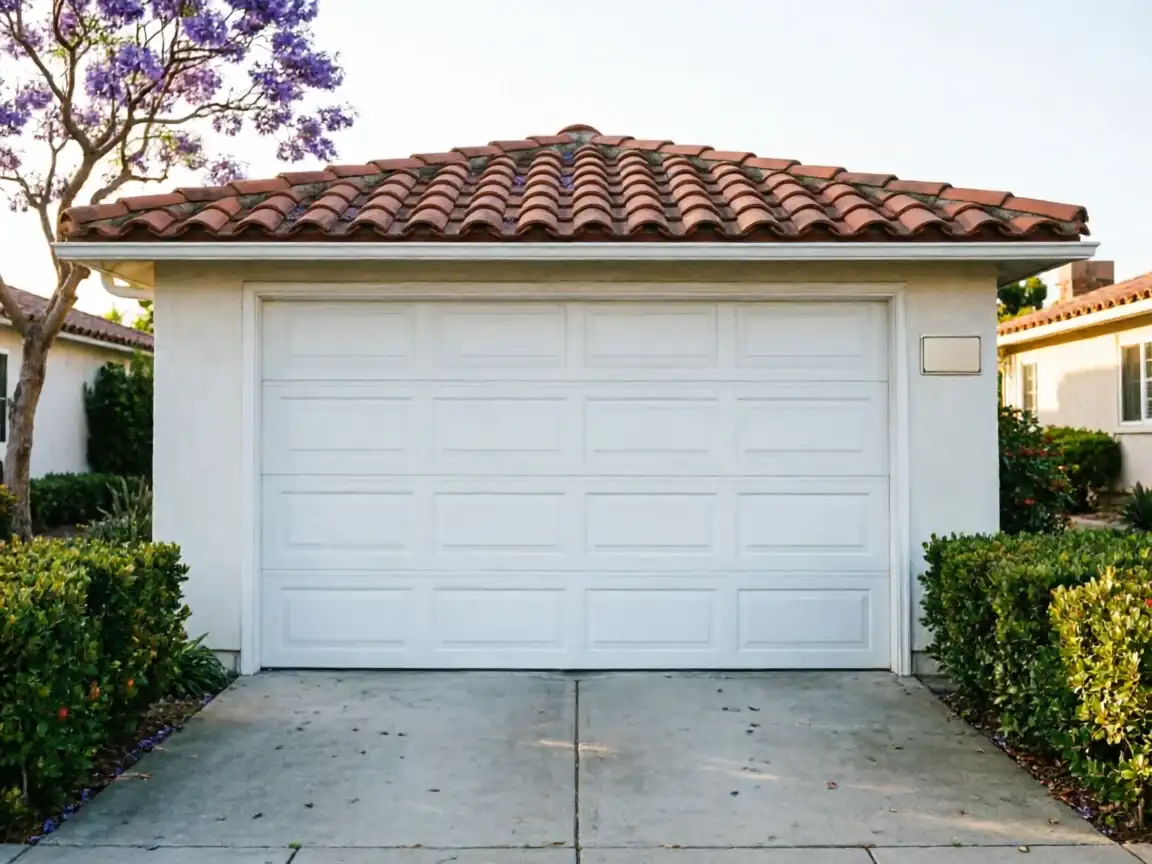
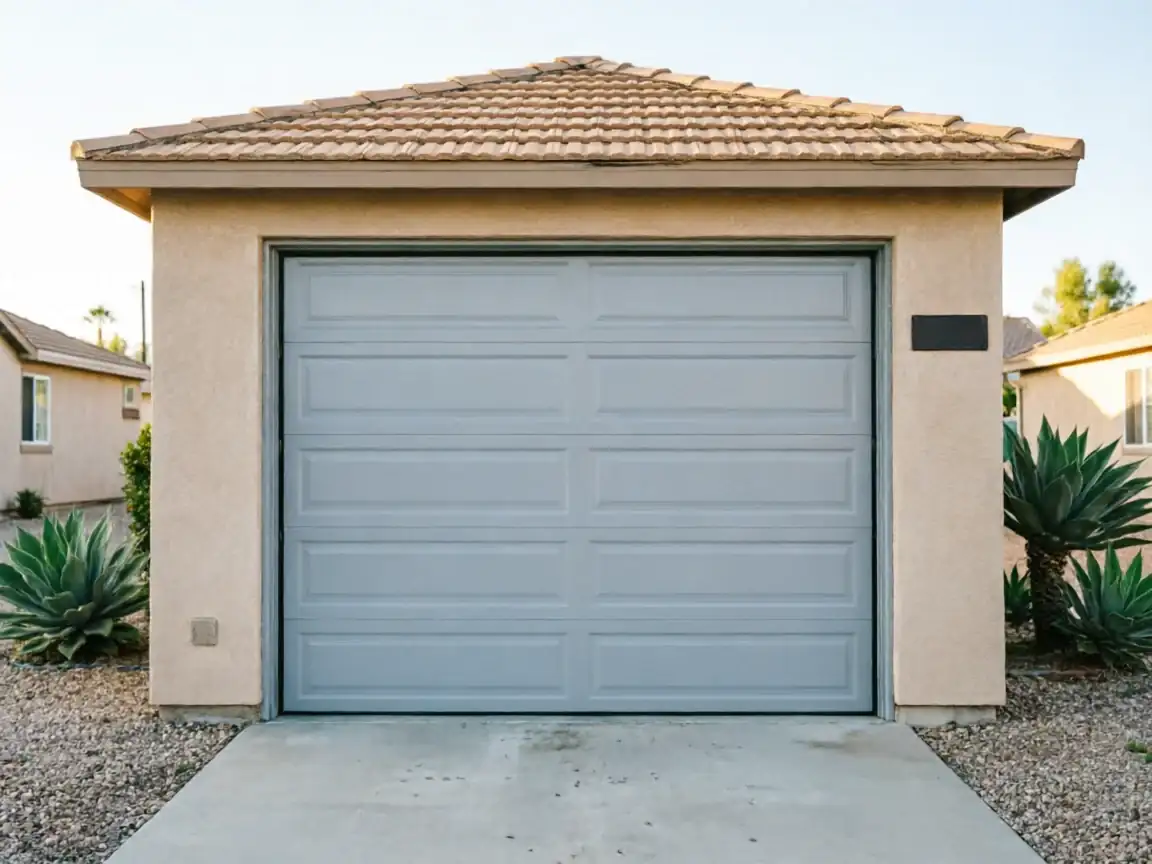
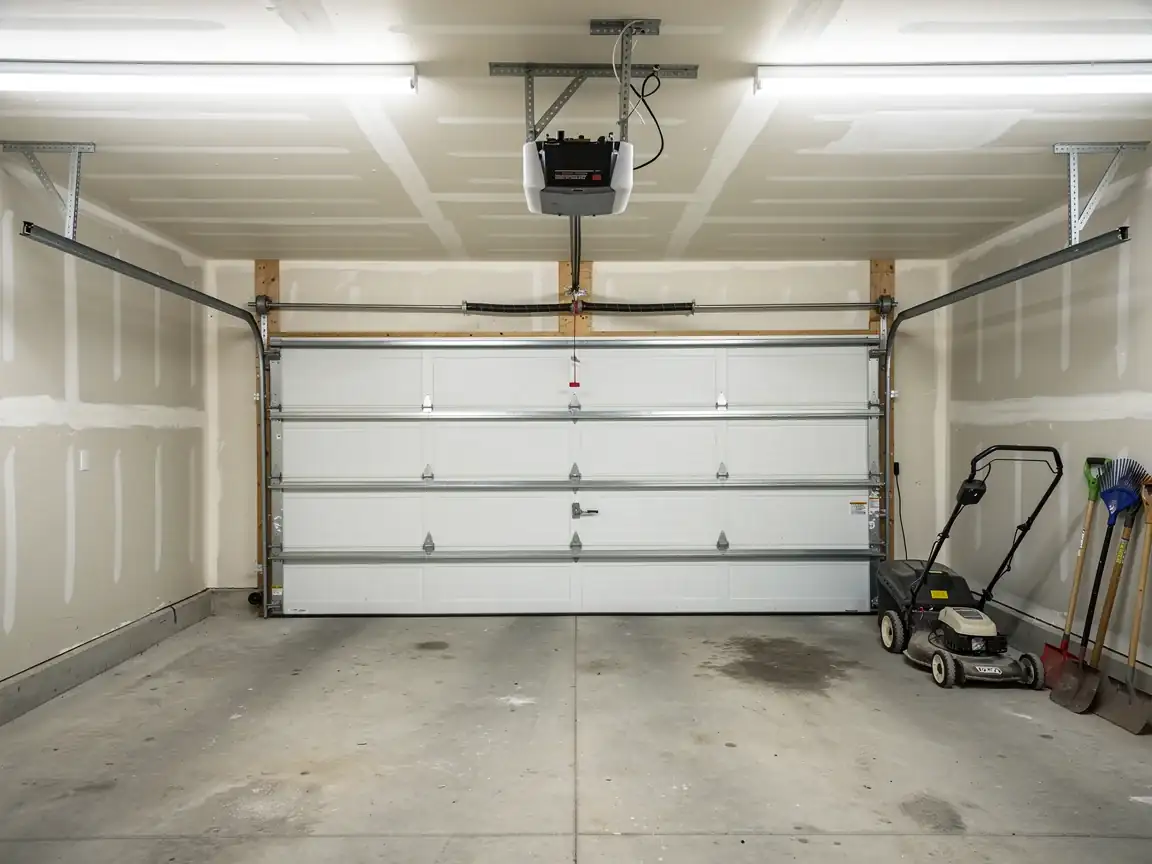
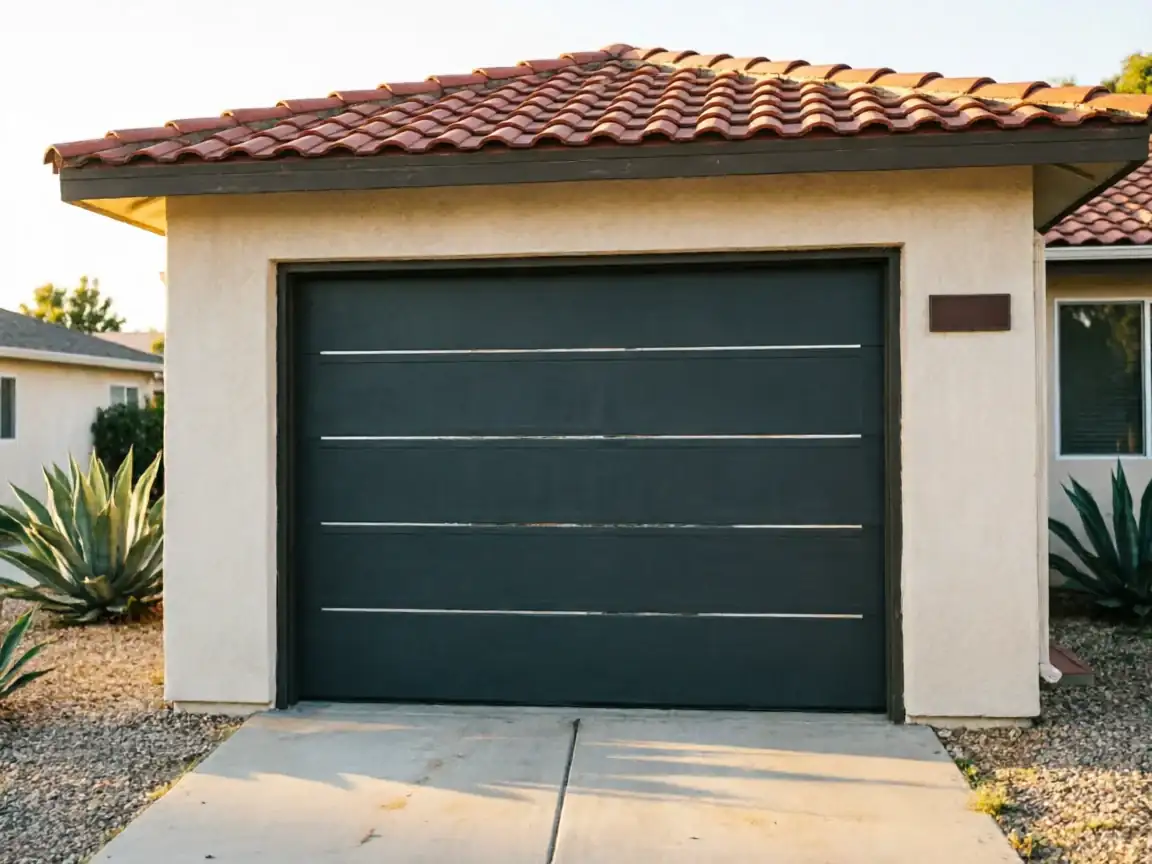
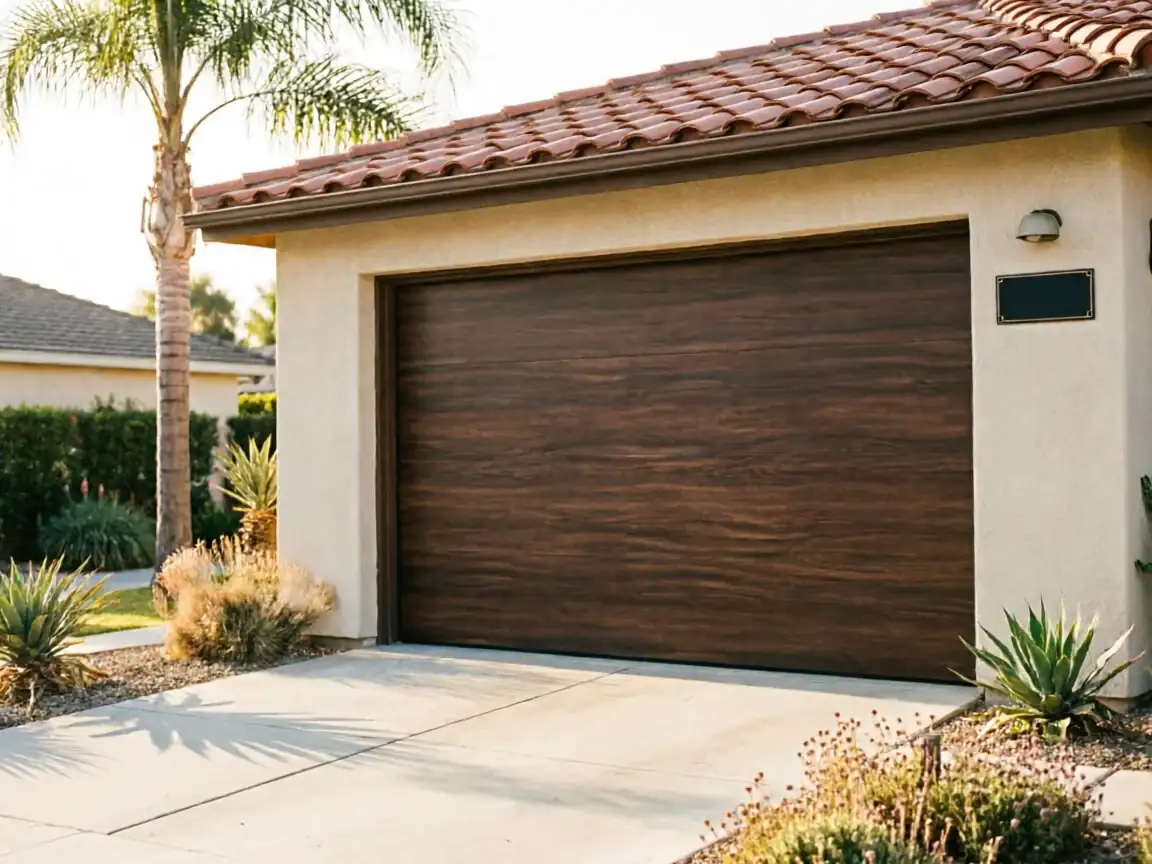
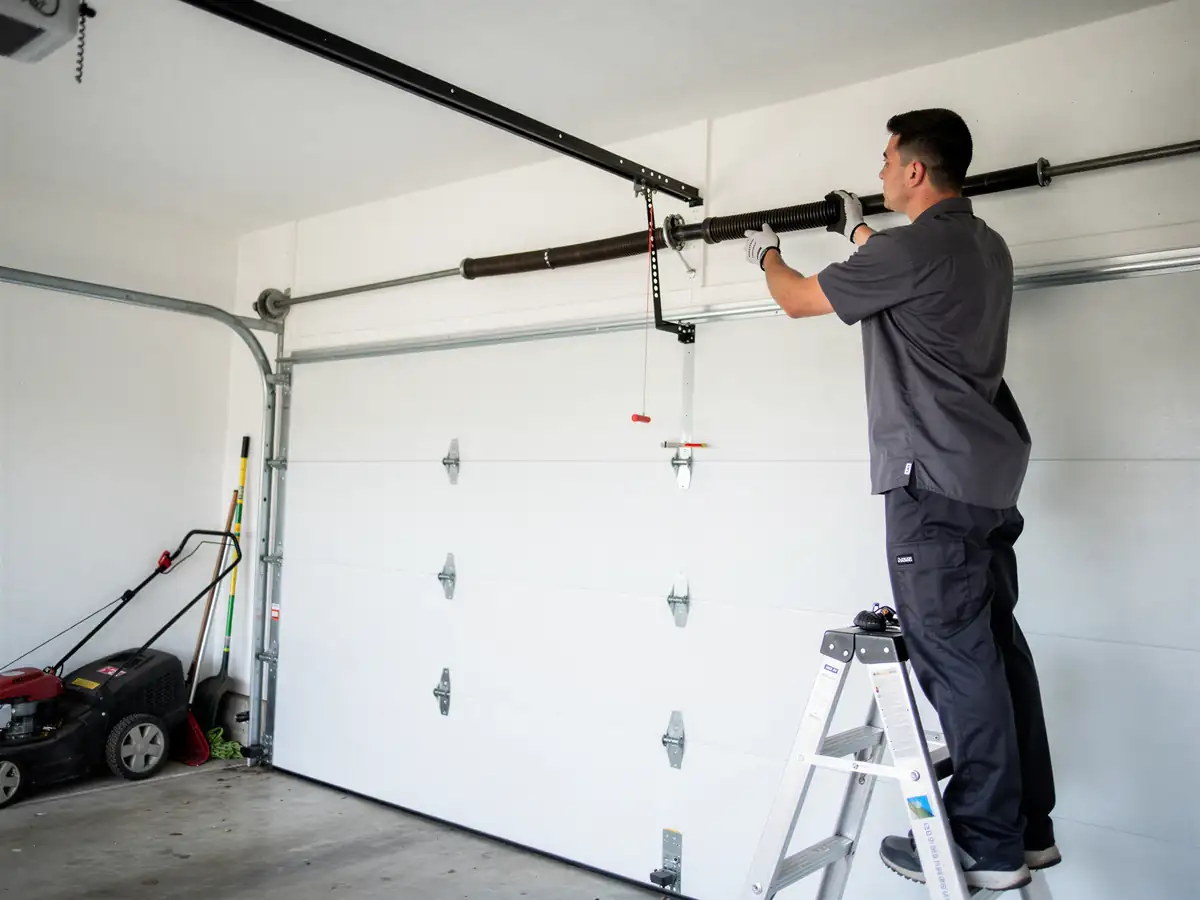
Start with what the door actually is. Jurupa Valley's housing stock centers on a median build year of 1980, a full generation newer than the older pockets of the broader Pomona service area, where homes date back as far as 1951 with a median closer to 1965. That later build era means most garages here got a steel sectional door from the factory, not the older wood or fiberglass panel style - hinged in sections, riding on roller tracks, hung on torsion springs mounted on a shaft above the opening. Many of these are 16-foot double doors rather than the narrower single bays common in older subdivisions.
On a door that age, the failures are mechanical wear, not design flaws. Torsion springs rated for a cycle count that's now decades old snap without warning, usually on the coldest or hottest morning of the stretch. Galvanized cables fray where they wrap the drum. Nylon rollers crack and bind in the track. Openers from this era, if original, are on borrowed time - gear sets wear out and circuit boards fail quietly before the motor does. None of this is unique to one house; it's what a steel sectional door does after forty-plus years of daily cycles.
The Cost of This Job
We don't post prices here because the job varies too much to post one number and mean it. A single broken torsion spring on a double door costs differently than a cable off its drum, and a failing opener costs differently than either. What we can say: median household income in Jurupa Valley runs $96,190, a step below the broader service area figure of $102,449, and that gap shows up in the calls we get - more requests to repair a spring or cable rather than replace the whole door, and more questions about whether a part is worth sourcing versus swapping the unit.
Size matters more than most homeowners expect. A 16-foot double door takes heavier springs and more cable than a single bay, and that hardware costs more to replace. If your opener is original to a 1980-era build, we'll tell you honestly when the motor is the cheaper fix and when the whole unit is - we don't pad a repair bill by replacing parts that don't need it, and we don't recommend a new opener just because the old one looks dated.
Why It Happens Here
The climate band for this service area sits in the moderate-heat category
Which matters more for a 1980-era door than people assume. Steel panels expand and contract through the day, and that daily cycle works on the weak points first - the nylon rollers, the spring coating, the weld points on the track brackets. A door built in 1980 has gone through roughly four decades of that cycle, which is long past the design life of its original torsion spring even with no other problems.
The other factor is simple mechanical fatigue
Torsion springs are rated in cycles, not years, and a door that opens and closes multiple times a day for forty years uses up that rating regardless of weather. Combine the two and you get the pattern we see on service calls here: springs failing in clusters by neighborhood and build year, because houses on the same street went up in the same year with the same hardware from the same supplier.
What You Are Seeing
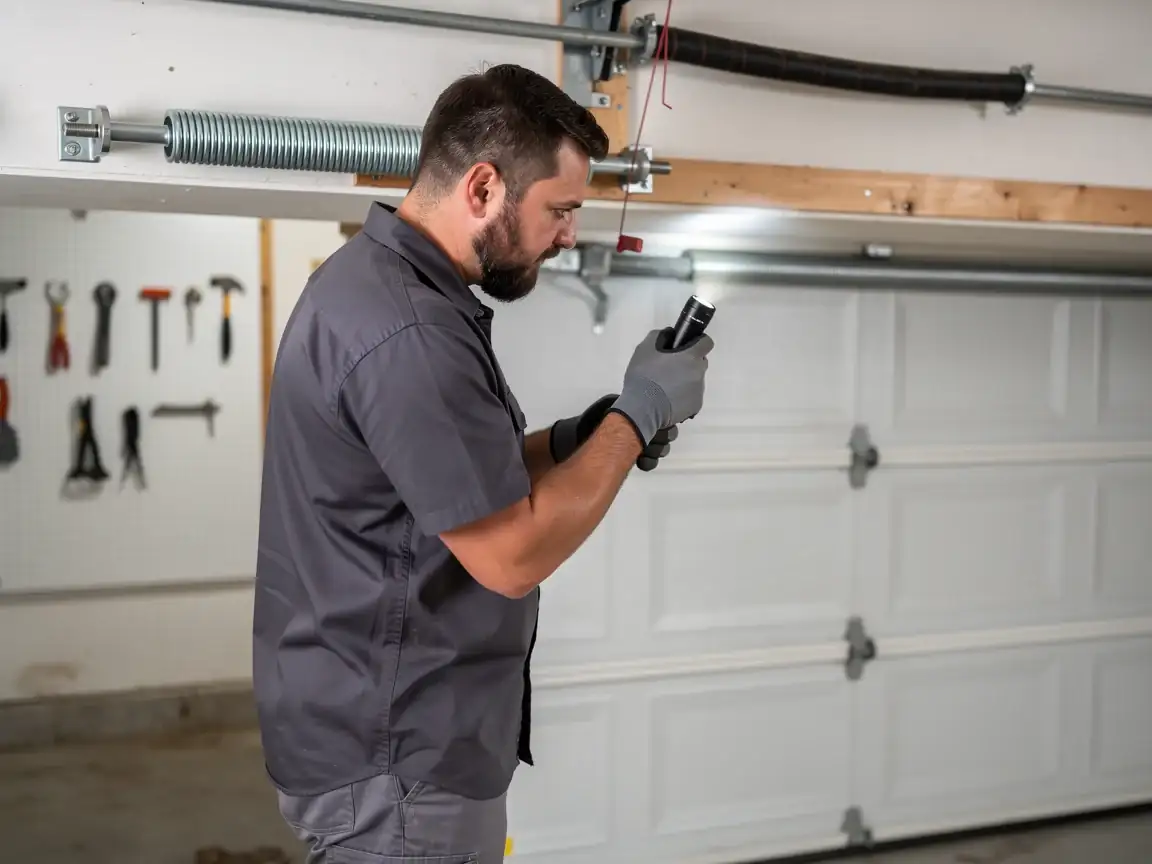
A door that won't lift, or lifts partway and stops, usually means a broken torsion spring - you'll often see a visible gap in the coil above the opening. A door that's suddenly heavy to lift by hand, loud on the way up, or that slams the last foot instead of settling, points the same direction.
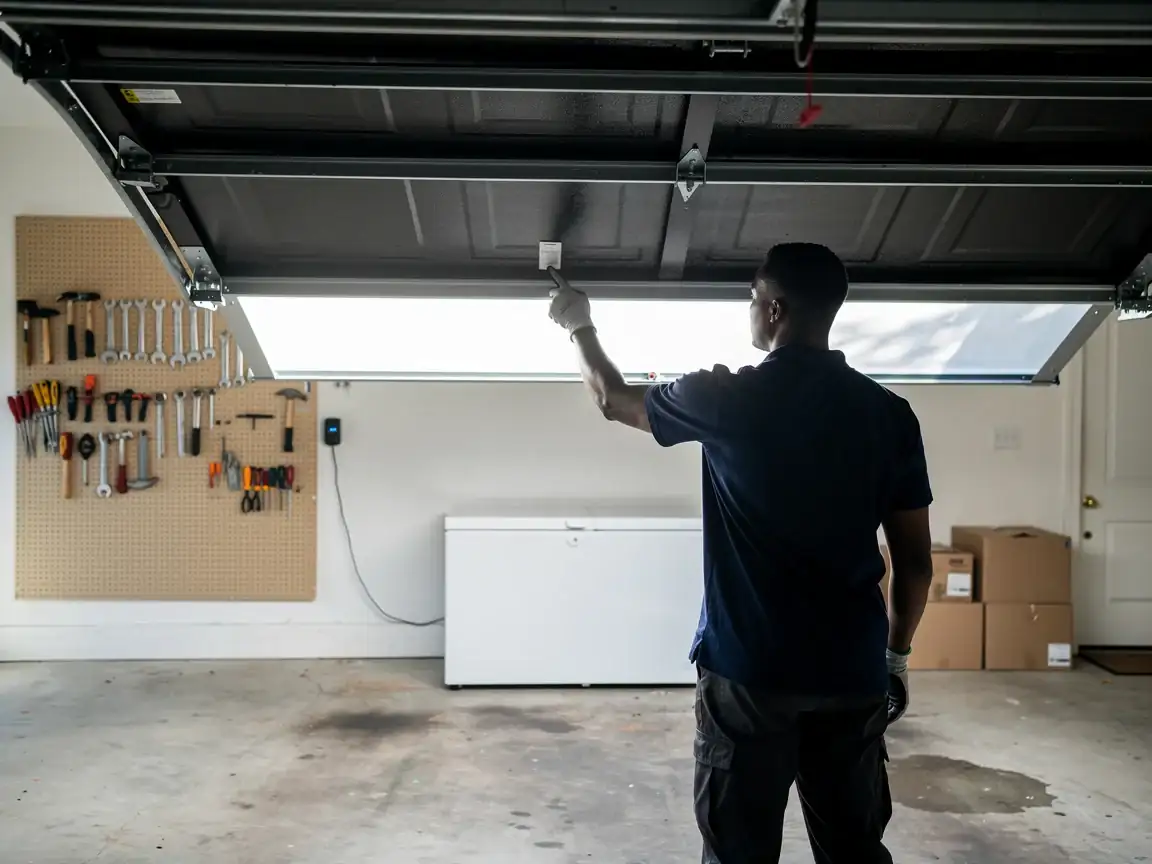
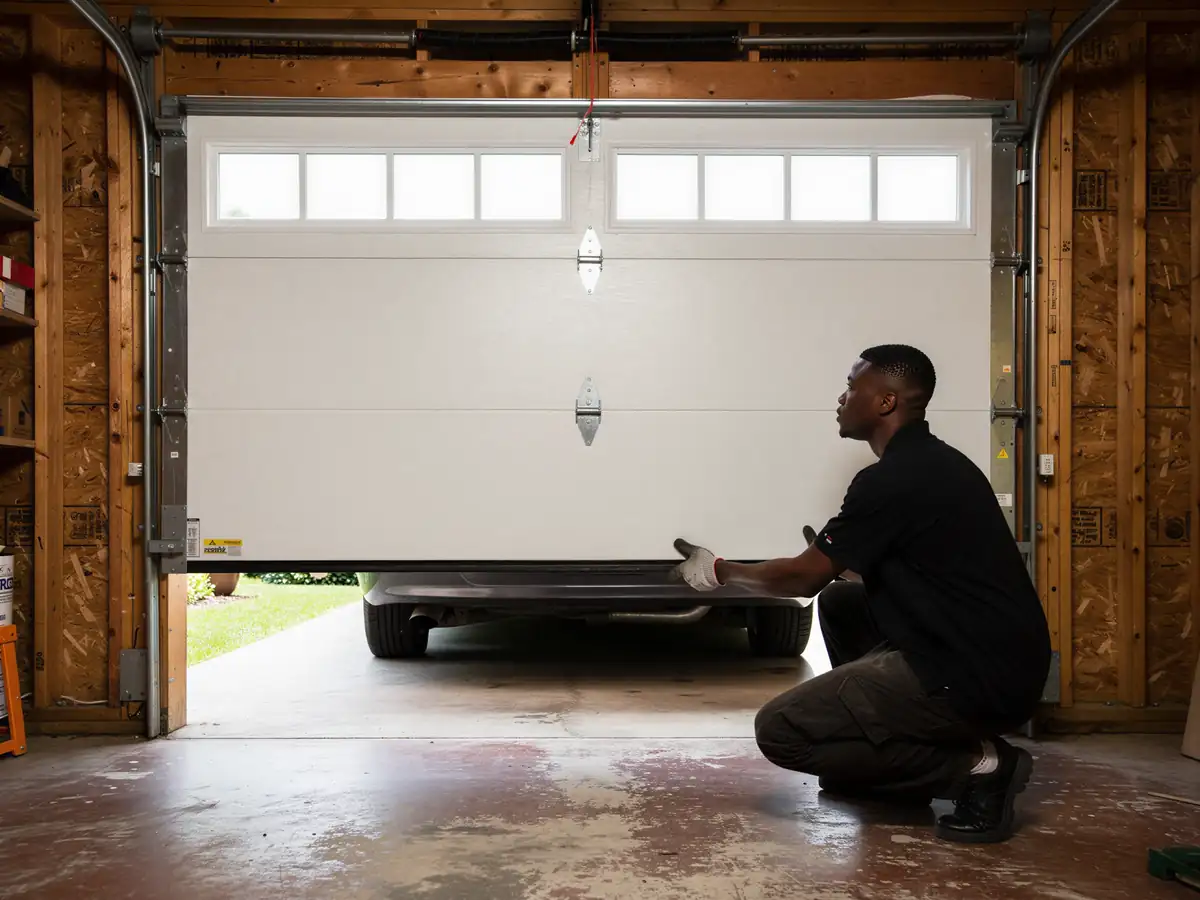
A loud bang from the garage followed by a door that won't move at all is almost always the spring letting go, not the opener. If the door moves but grinds, screeches, or jumps in the track, that's rollers - either cracked nylon or a bent track rail. A door that reverses right after it starts closing, with no obstruction in the way, is a sensor issue or a travel-limit setting on the opener, not a structural problem.
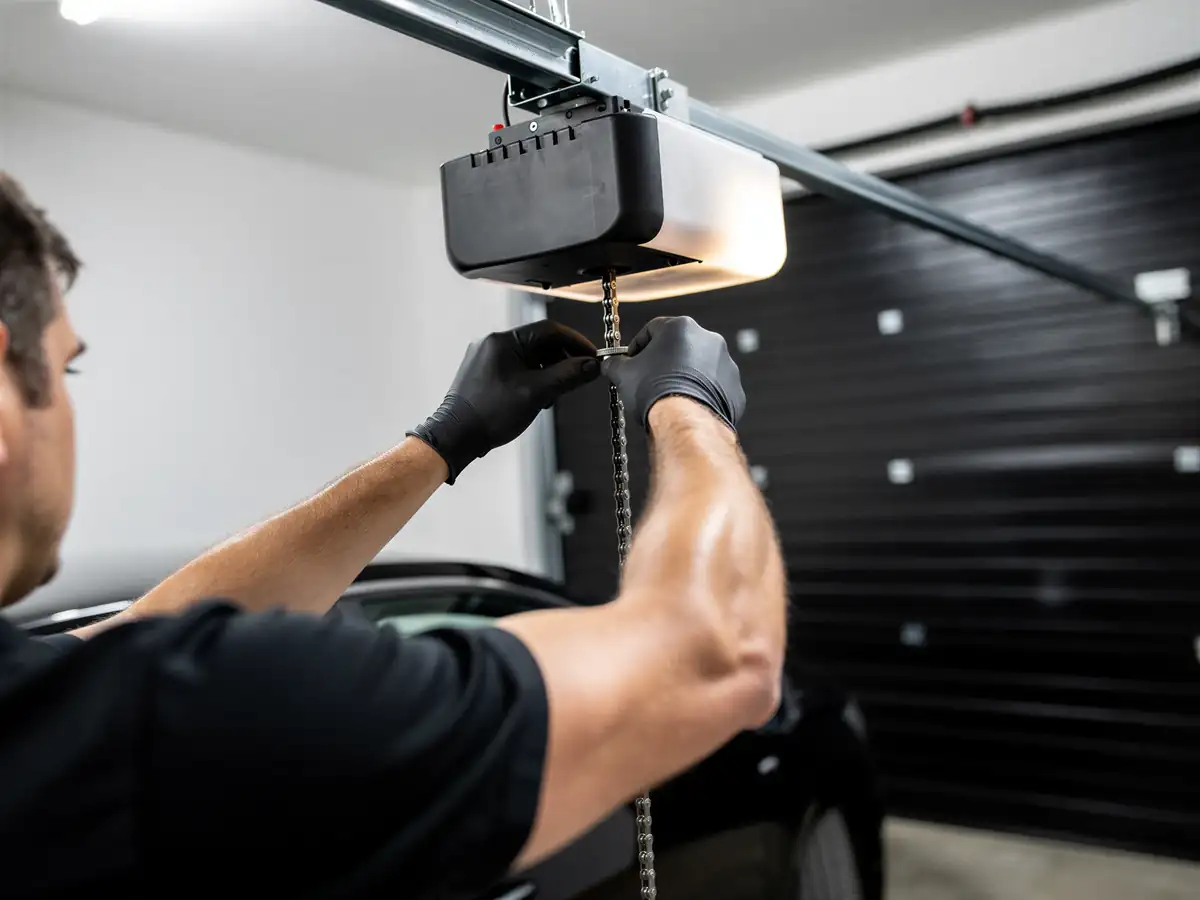
If the opener runs but the door doesn't move, check the emergency release cord first - it may have been pulled and not reset. If that's not it, you're likely looking at a stripped gear inside the opener unit, which is a part swap, not a full opener replacement in most cases.
What the Repair Takes
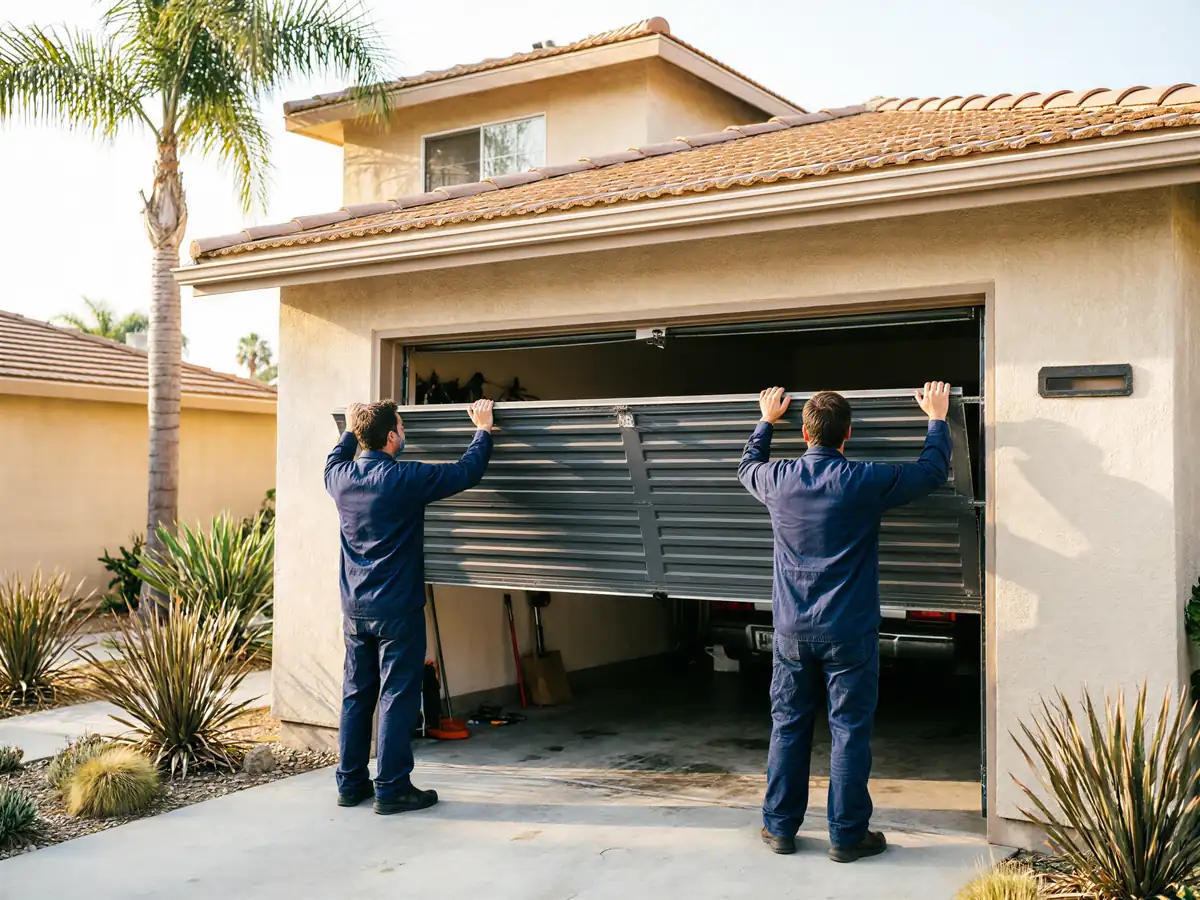
A straightforward torsion spring replacement on a double door is a same-visit job once we're on site - we match the spring to the door's weight and the shaft size, not a generic size off the shelf. Cable and roller work is similar. Opener gear and board repairs depend on whether the part is common for that model; most are, some older units need a part ordered in, and we'll tell you that up front rather than make a second trip look like a surprise.
Here's the honest limitation: we run out of Pomona, and Jurupa Valley sits about 17 miles out. We don't promise a same-day window on every call, and if your job needs a specific part we don't carry - an obsolete opener board, for instance - that part has to come in before we can finish, which means two visits instead of one. We'd rather tell you that before the truck leaves than discover it standing in your driveway.
What Is on the Truck
Because the distance from Pomona means a second trip costs real time
The truck carries a wider range of torsion springs and rollers than it would for a job five minutes from the shop - standard sizes for both single and double doors, since 16-foot doors are common on 1980-era lots here. We stock steel cables, standard-duty nylon rollers, and the sensor and limit-switch parts that cover most opener brands from the last couple of decades.
What we don't carry as standard stock
Springs for oversized or custom doors outside the usual range, and circuit boards for openers no longer in production. Those get special-ordered once we've confirmed the exact model on site. We'd rather diagnose it correctly and order the right part once than guess and have you wait twice.