What Can Go Wrong
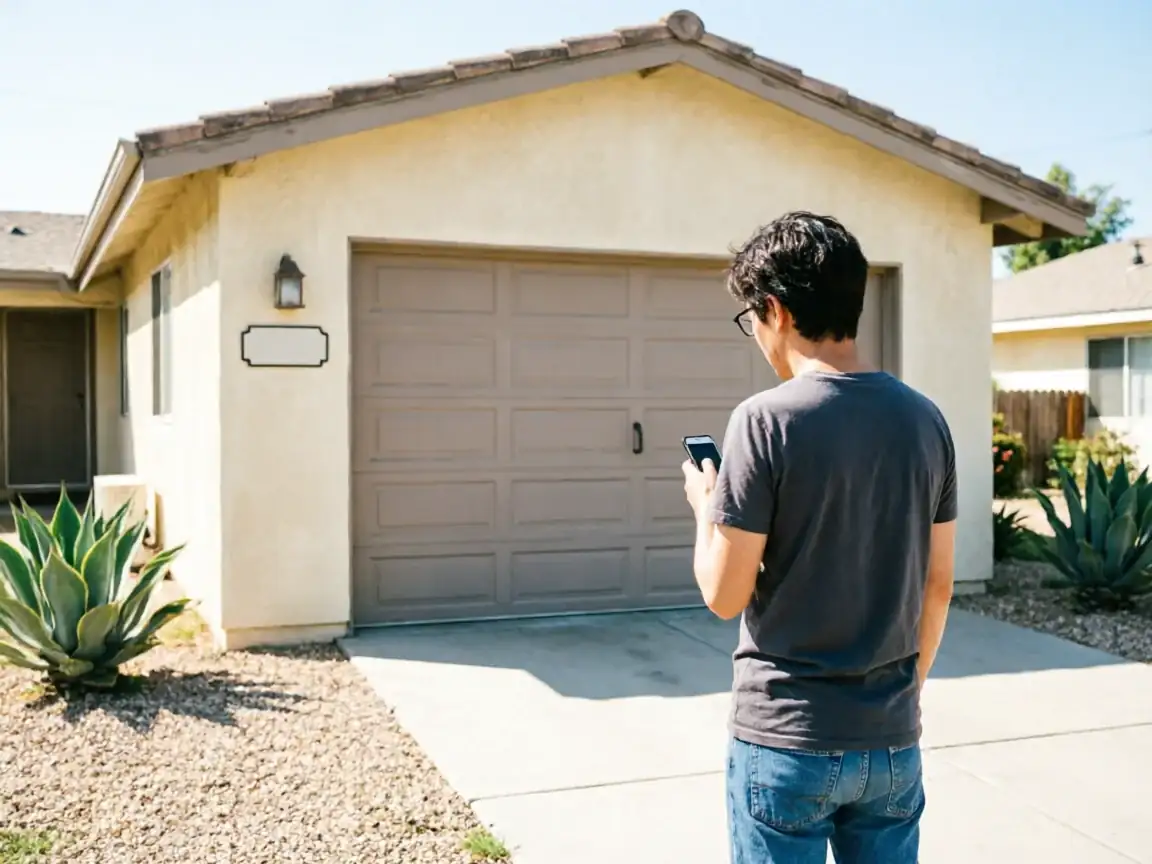
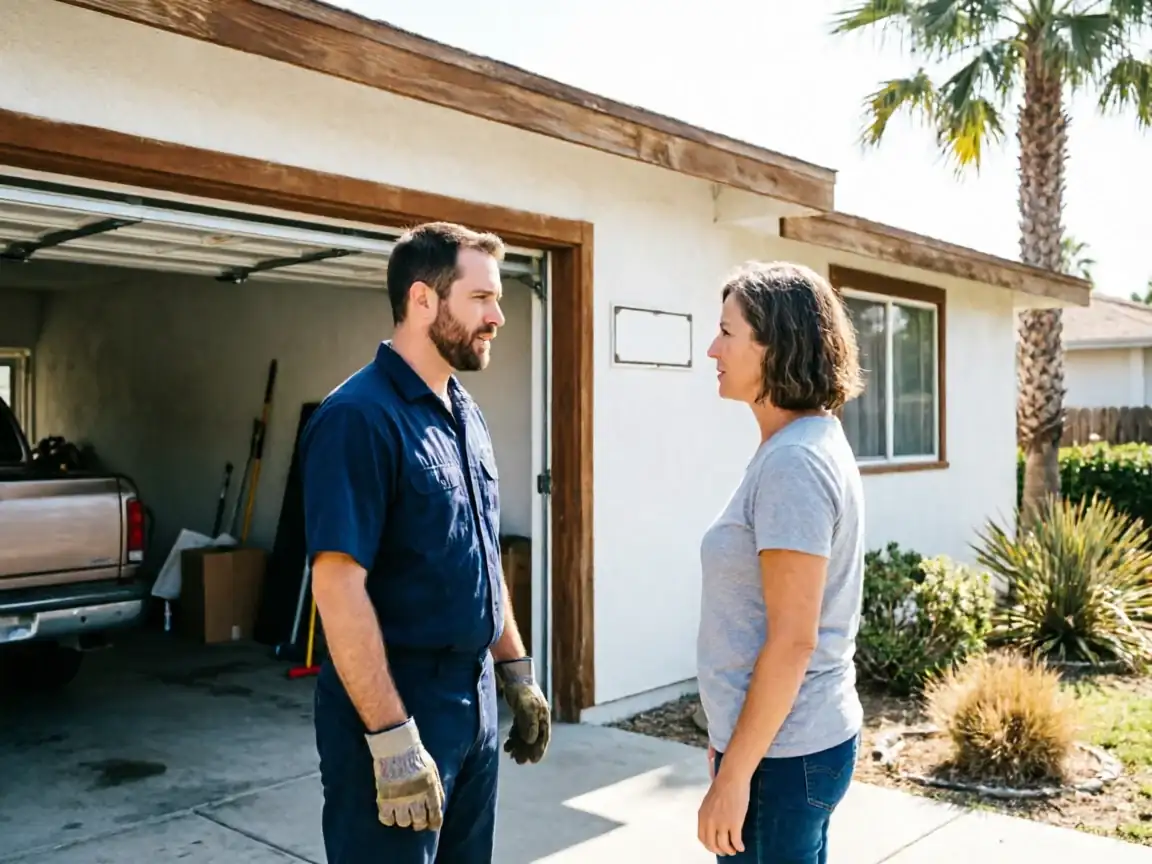
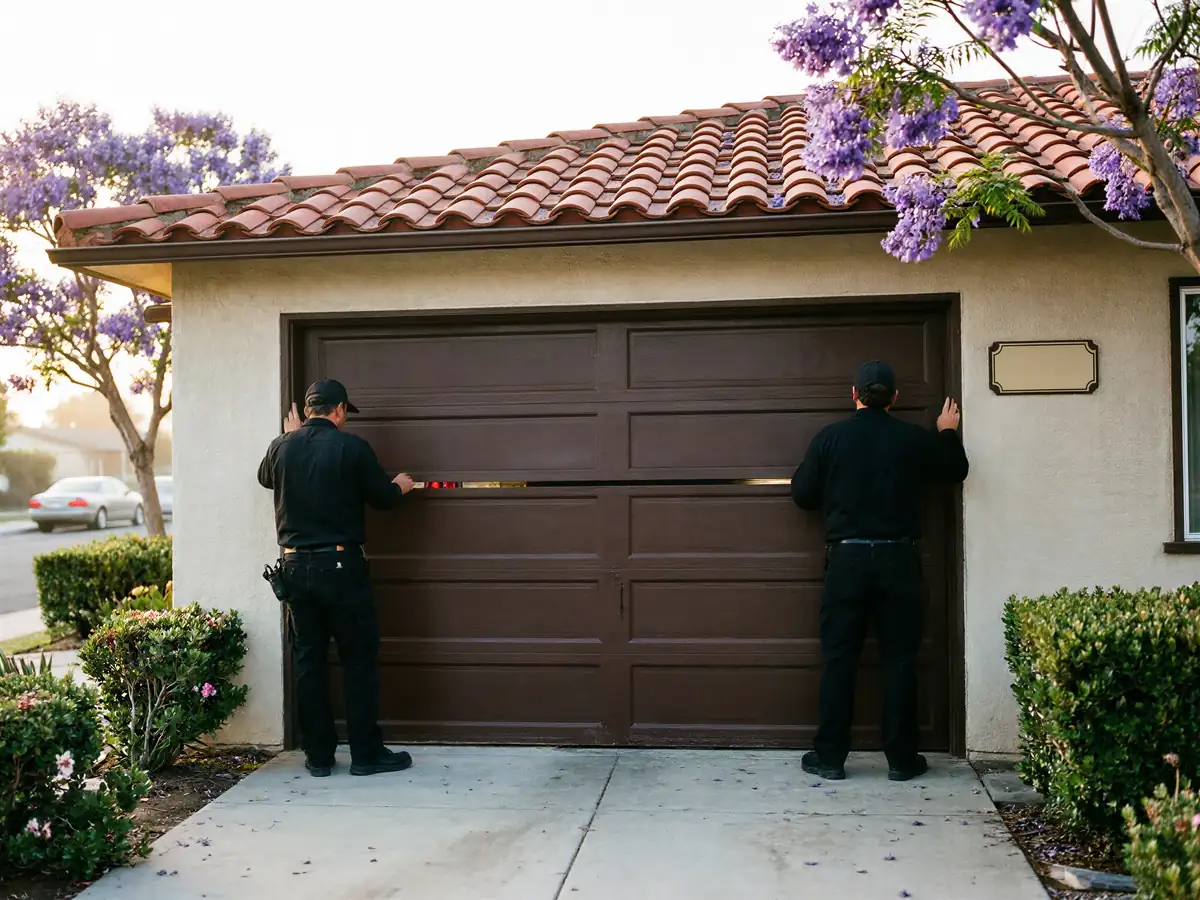
The crew drives 17 miles out from Pomona to get to Jurupa Valley, and that drive shapes how the job gets quoted. It's not a same-morning walk-up the way it might be for a shop based in town - a tech needs to see the opening, the slab, and the framing before a real number goes on paper, because most of what can go wrong on a new install here isn't the door itself, it's what's behind it.
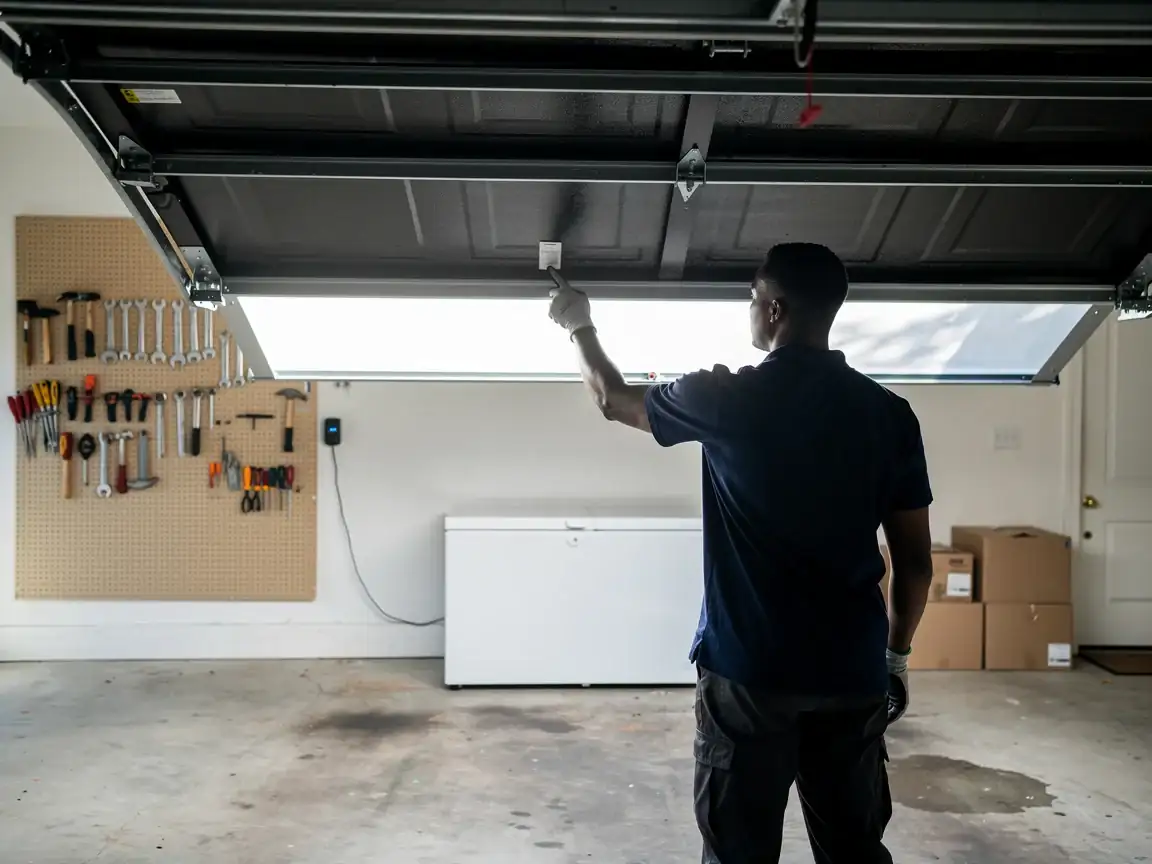
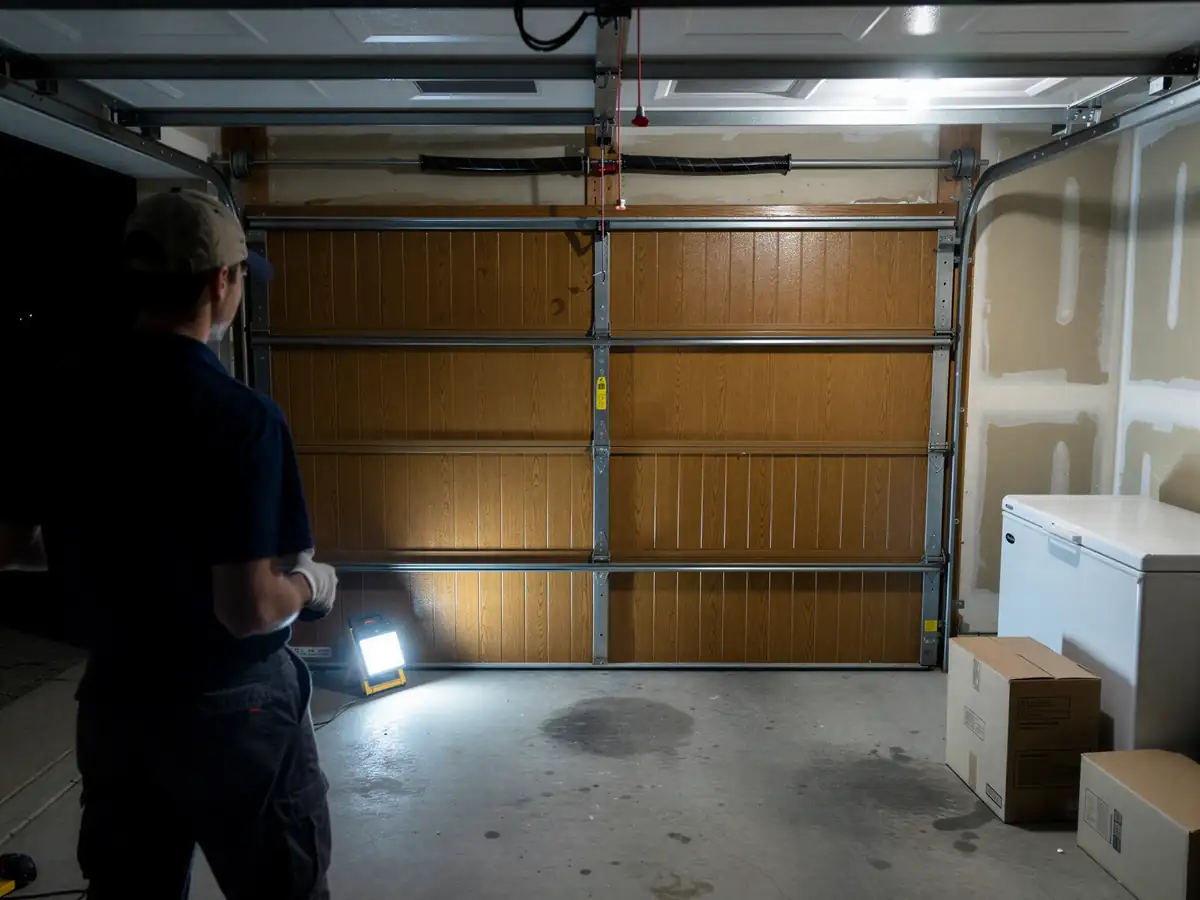
Houses in this part of the valley mostly went up around 1980, which means standard 16-foot double bays and 9-foot single bays rather than the odd, narrower openings you'd find in an older tract. That's good news for parts availability. What trips up a new install instead is usually the track mounting - 1980-era framing sometimes has the jamb set a half-inch off from modern door hardware specs, and if that gets missed on measure, the door binds on one side the first week. The other common miss is opener compatibility: a 40-year-old wall switch wiring run doesn't always match a new opener's safety sensor wiring without an added run.
The Cost of This Job
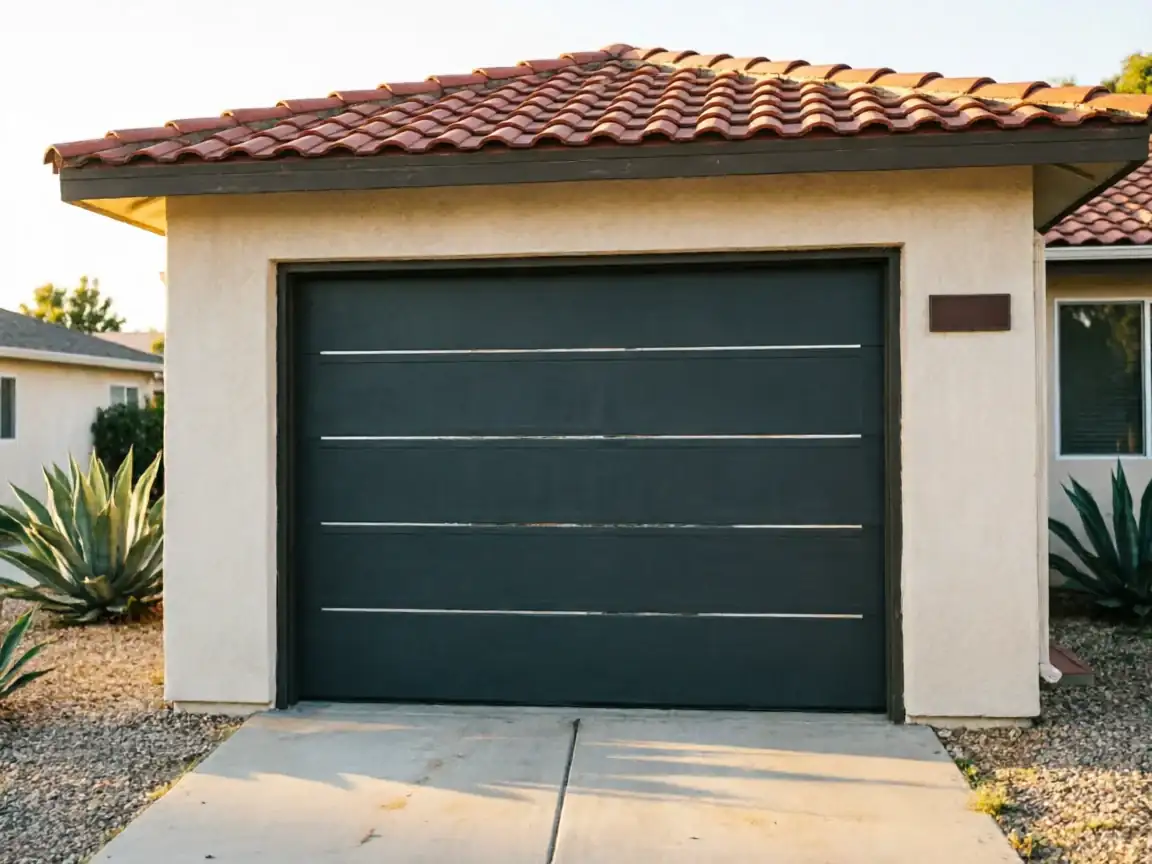
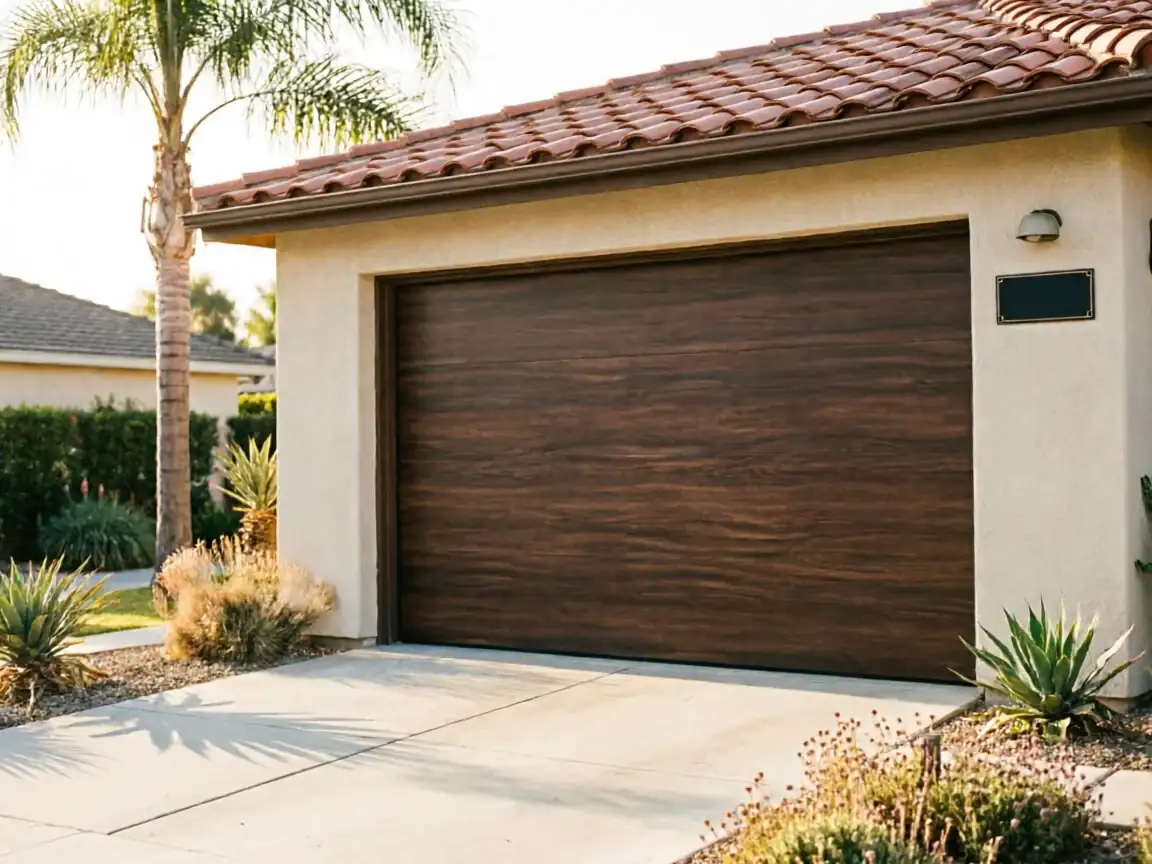
There's no price listed here because a fair number depends on the door you pick, the width of your opening, and whether the existing track and opener get reused or replaced - and nobody should quote that sight unseen. What does change the number, consistently, is insulation grade and panel material, and in Jurupa Valley most owners land on a mid-grade steel door rather than a full custom wood-look upgrade, which tracks with a median household income here of about $96,190 - a bit below the $102,449 median across the wider Pomona service area.
That's not a guess about what you can afford; it's just where the typical order lands. A bare steel door with basic hardware costs less than an insulated door with a matching opener and new track, and the gap between those two jobs is bigger than most people expect going in. If you want a hard number, the honest answer is a tech has to measure the opening and look at your current track condition first - anything quoted before that is a guess dressed up as a number.
Why It Happens Here
This stretch of the Pomona basin sits in a climate band classed as moderate heat, not extreme desert heat, and that actually changes what matters on a new install
In a true high-desert zone, insulation thickness is the first conversation. Here, it's a secondary one - the bigger factor is just how many hours of direct sun a given garage faces, since steel doors without a thermal break can still warp slightly on a west-facing wall over enough summer afternoons.
The other local factor is simply age of stock
A median build year of 1980 means most of these garages were framed for steel doors from the start - no retrofit from wood, no odd bracing left over from an older roll-up style. That keeps new installs fairly straightforward mechanically. Where it gets slower is permitting lead time if the opener circuit needs an electrician's sign-off, which happens more on homes that never had a garage door opener added after the original builder-grade door went in.
What You Are Seeing
If you're looking at a new install rather than a repair, it's usually because the original builder-grade door - likely original to a house built somewhere around 1980 - has outlived its hardware. Look for a panel that's visibly bowed at the bottom, rollers worn down to a narrow stub instead of a full wheel, or a door that drags and needs a shove partway up the track.
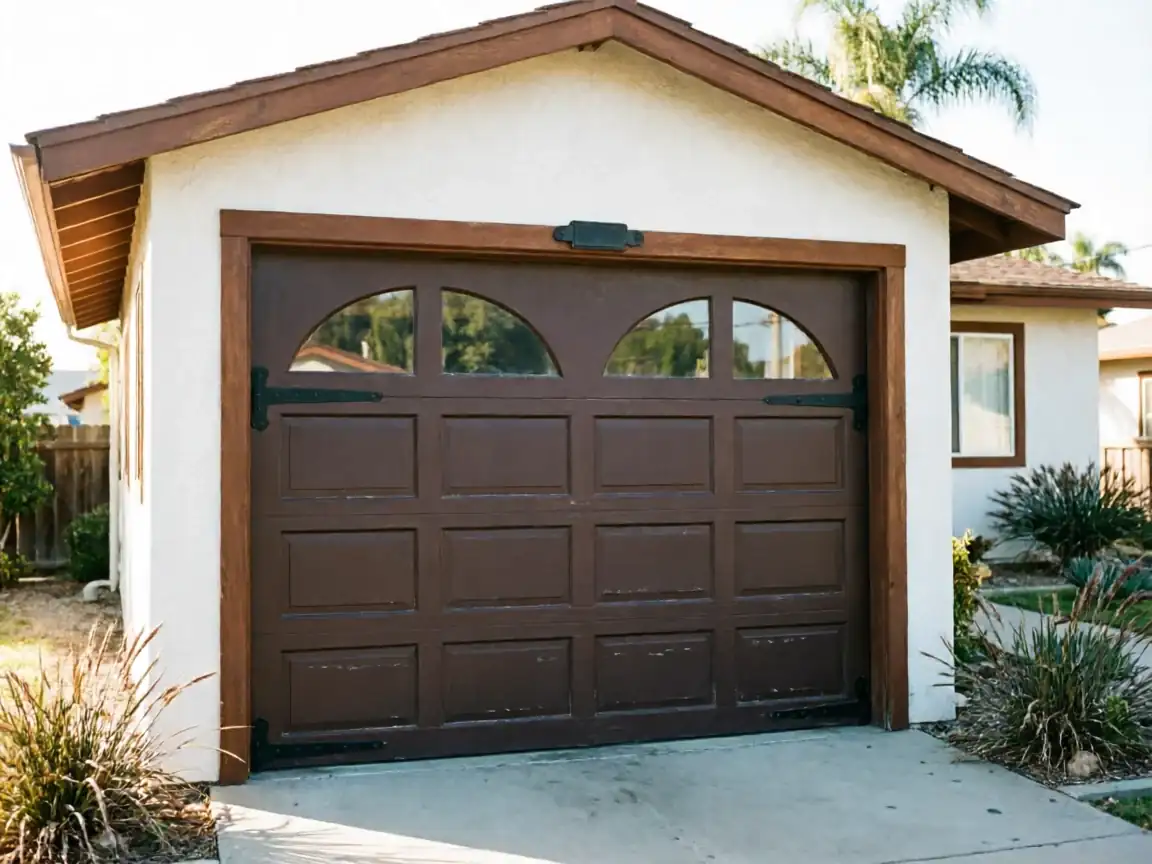
Some owners are replacing a working door just for insulation and noise - a thin, uninsulated steel panel from that era transmits a lot of outside temperature and street noise straight into an attached garage. Others are dealing with a spring that's already been replaced once or twice and decide a full new door and opener setup is cheaper over time than another round of patching: a 44-year-old door with a third replacement spring is usually closer to the end of its run than the middle. Either way, a new installation resets the clock on hardware, not just the panel.
What the Repair Takes
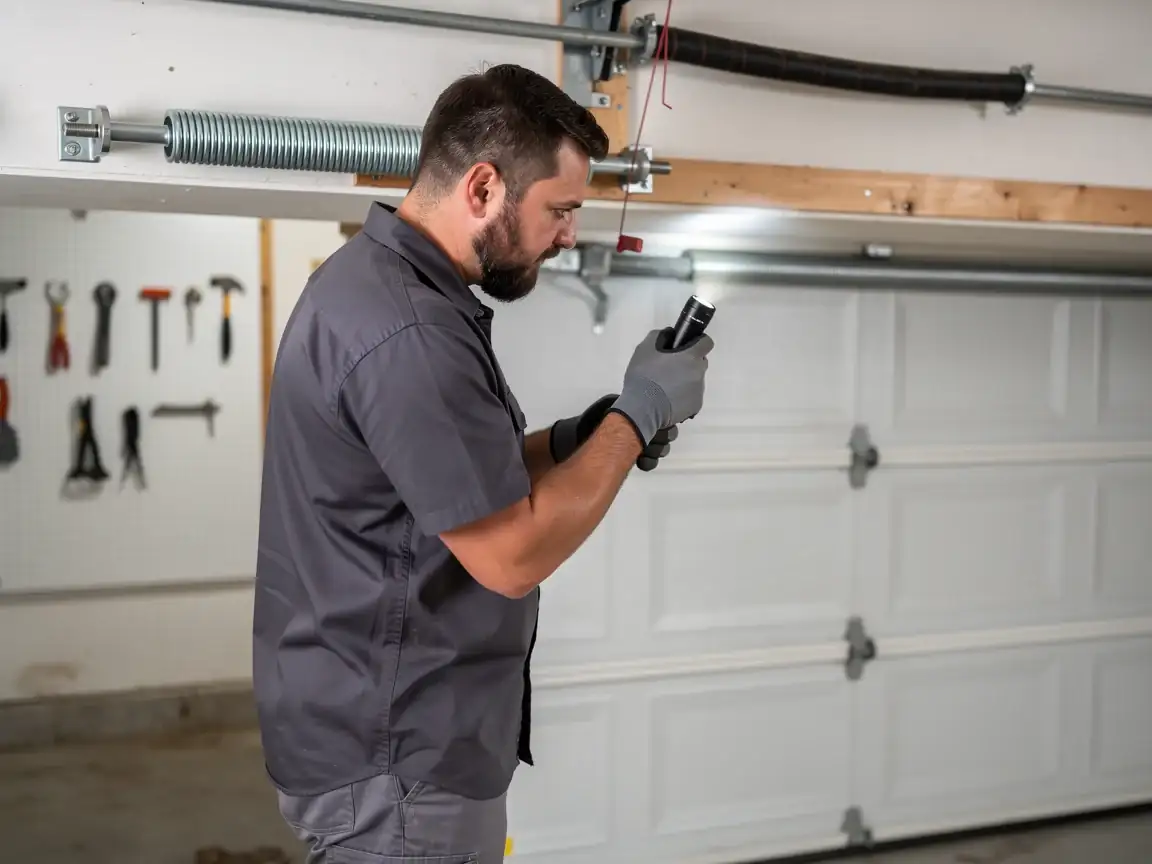
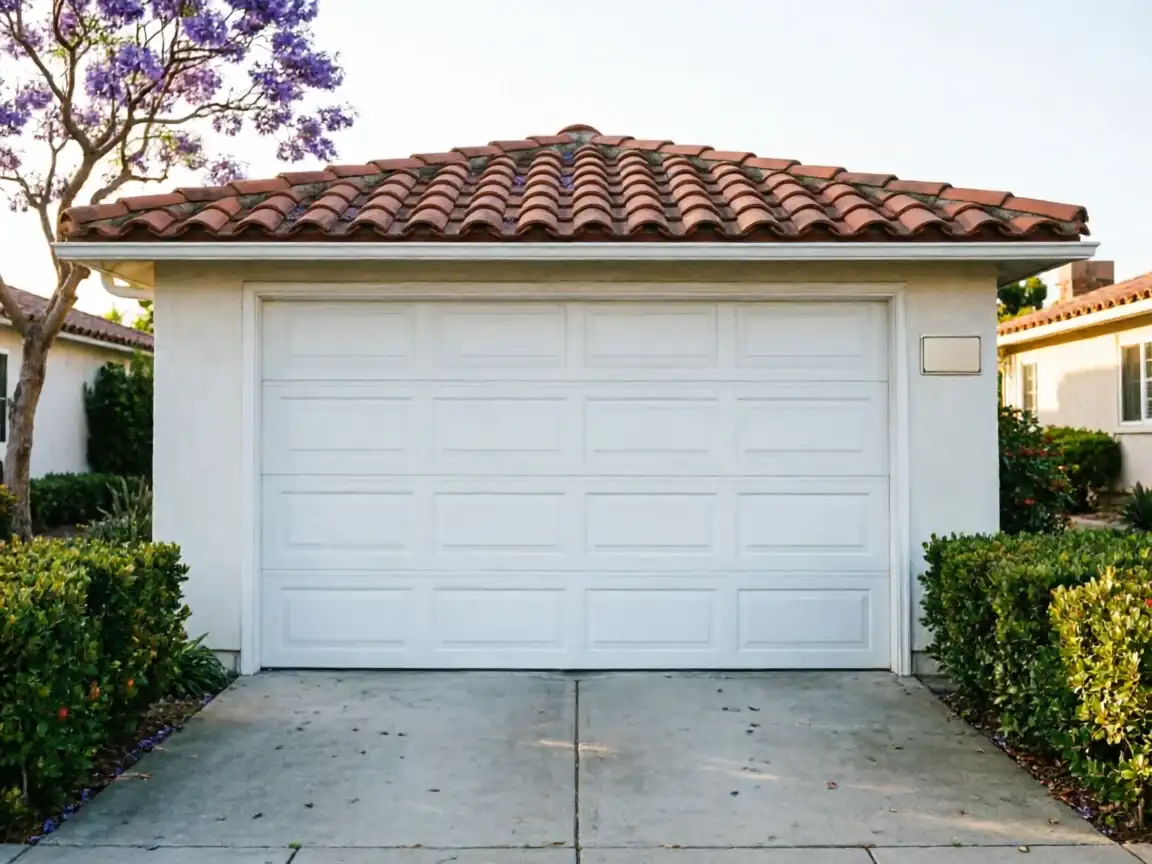
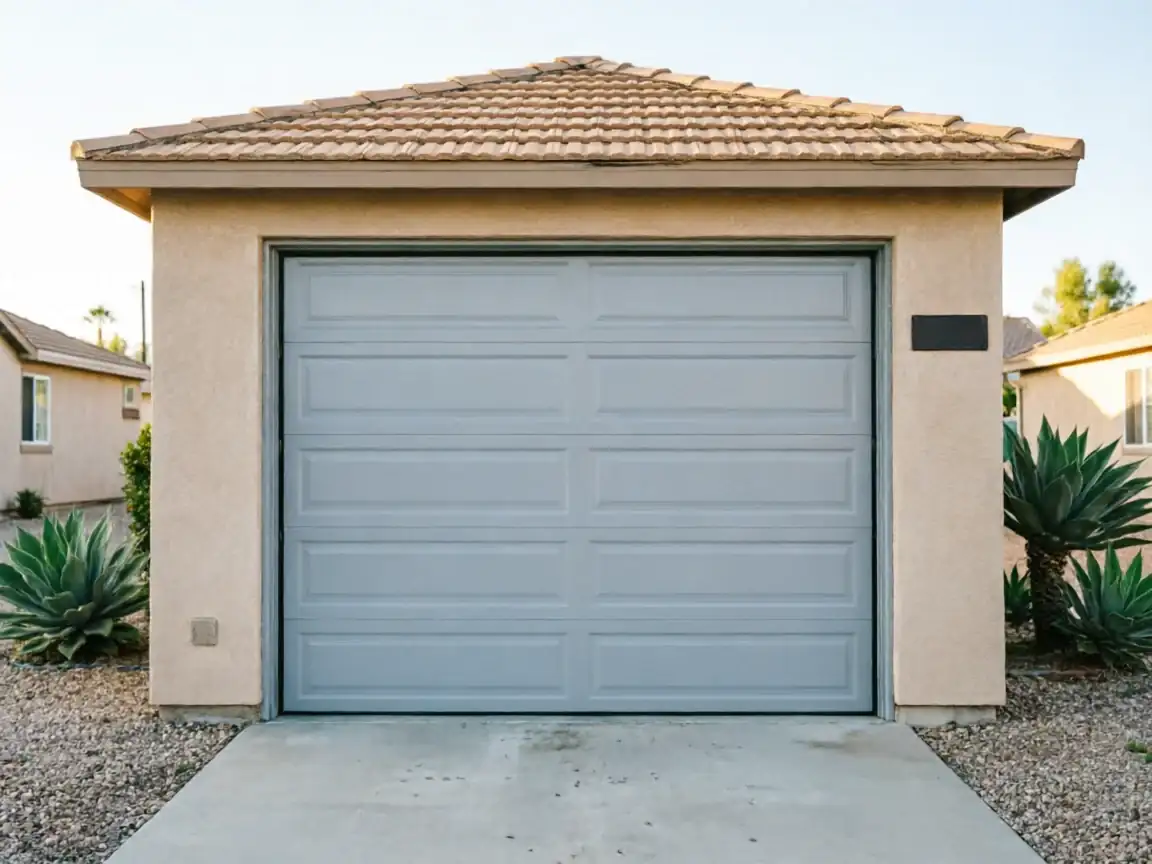
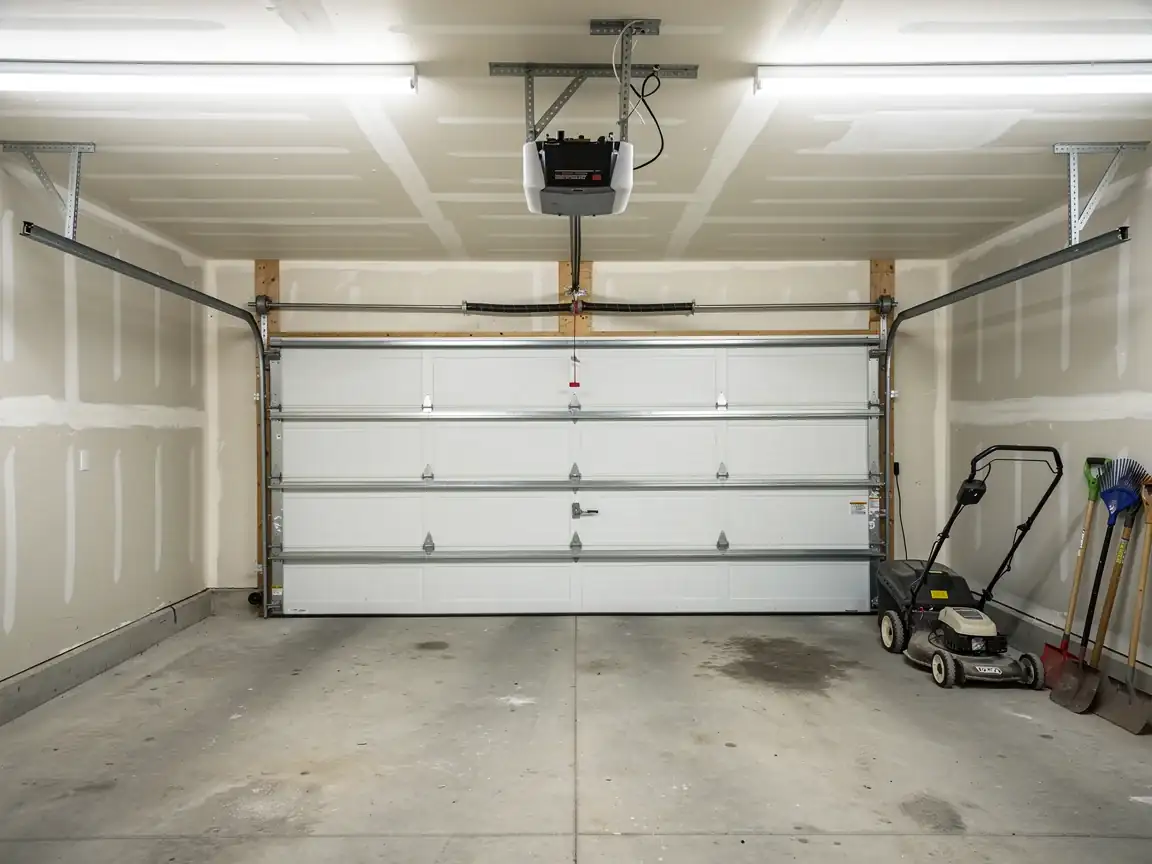
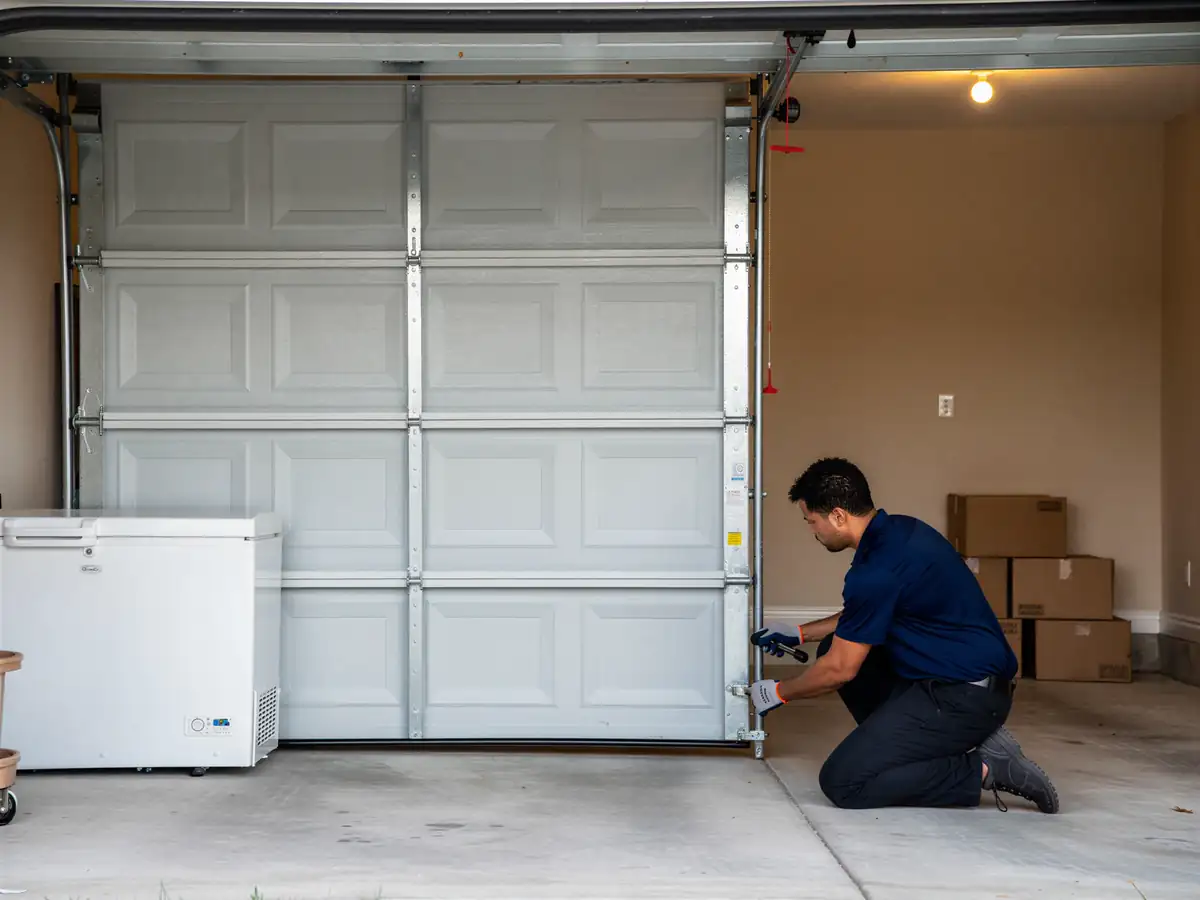
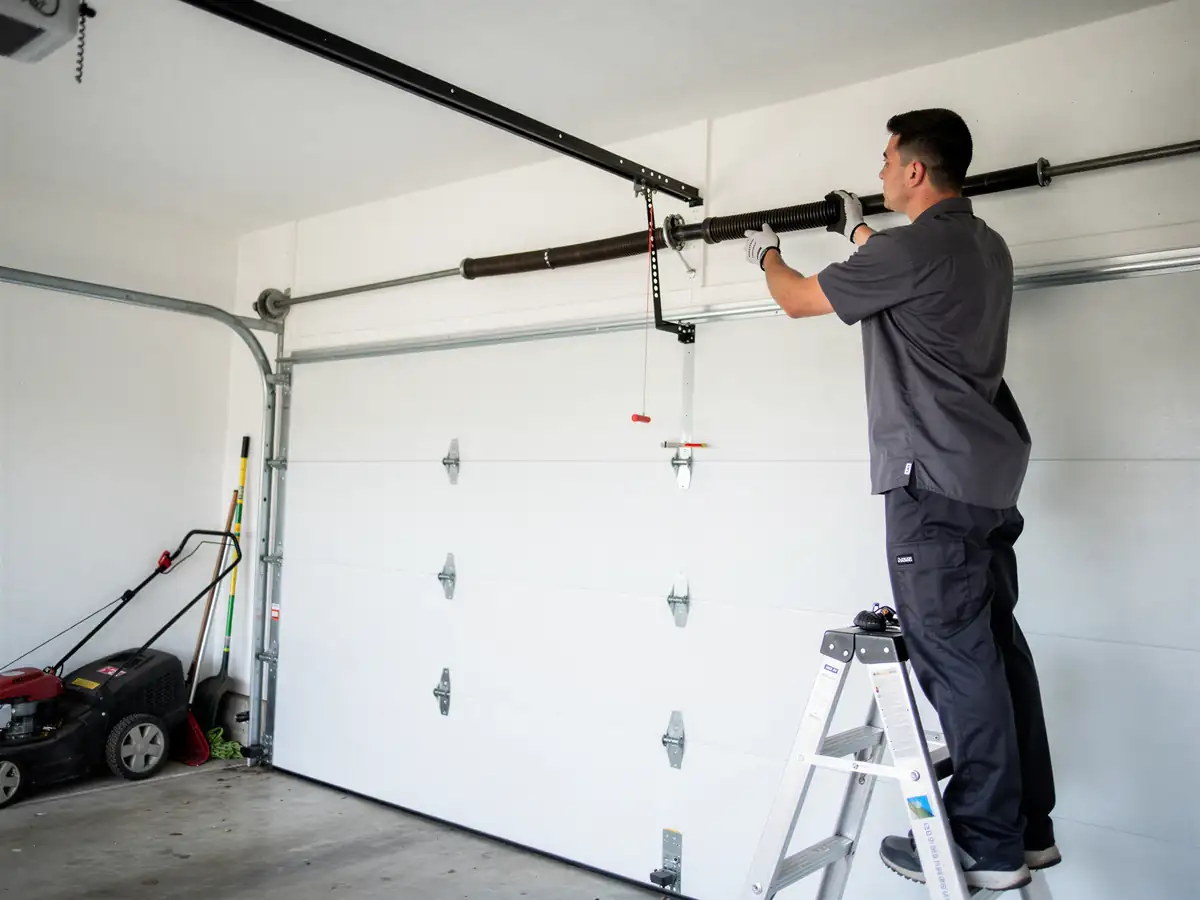
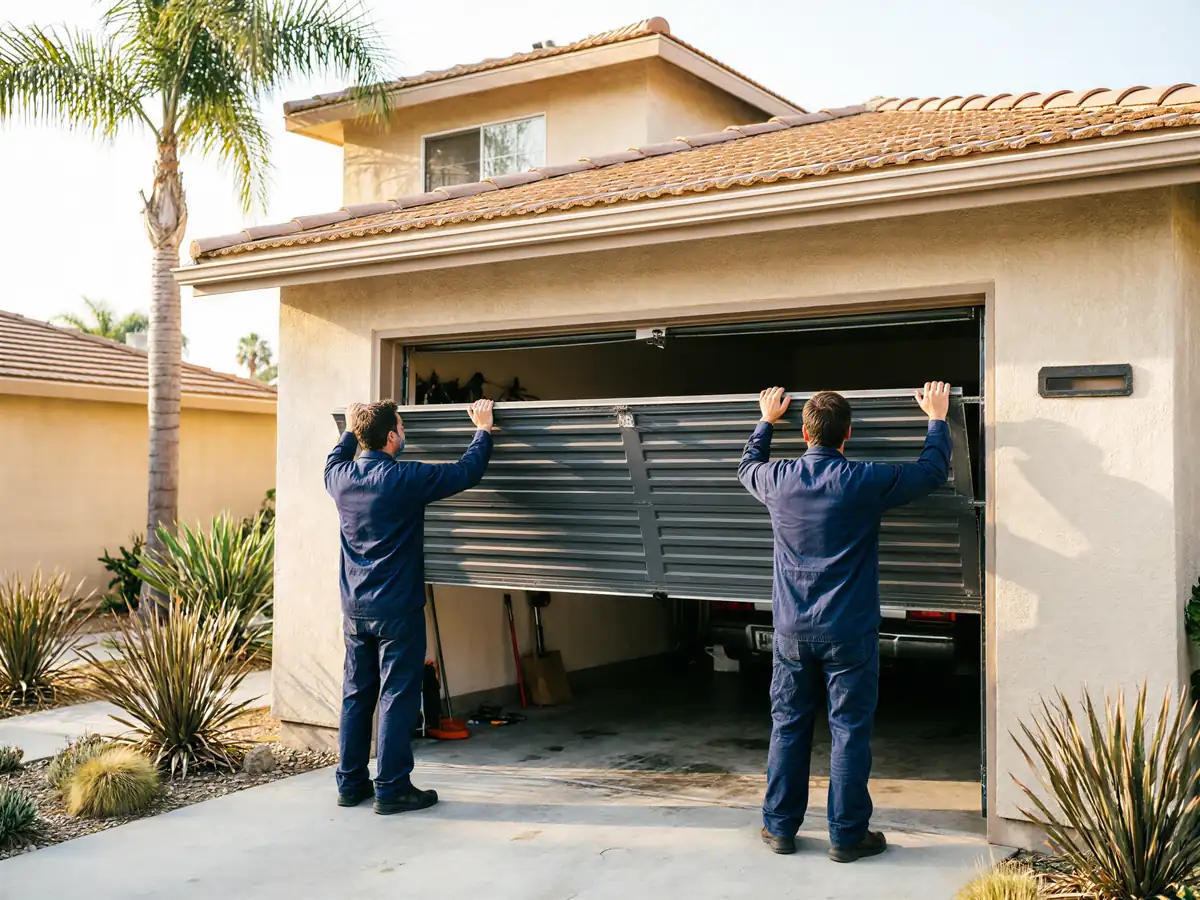
A new install starts with removing the old door and track, checking the jamb and header for square, and confirming the opening matches a standard width - which it usually does, given the 1980-era construction common across Jurupa Valley. From there it's new track, new springs sized to the door's actual weight, and the door itself, hung and balanced before the opener goes on.
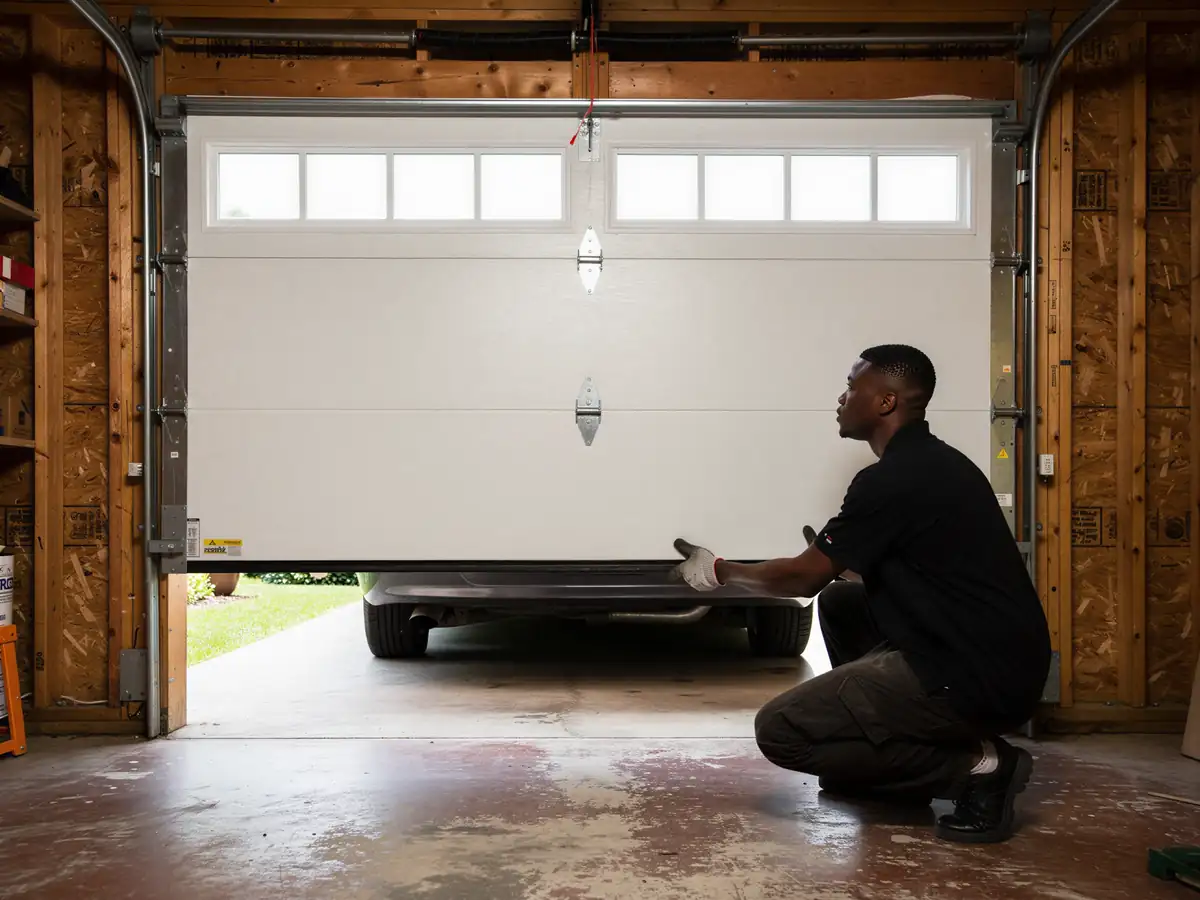
Balance is the step that gets rushed on a bad job and shouldn't be. A door that isn't balanced right will fight the opener motor from day one, burning out a gear set faster than it should. If the old opener's wiring doesn't match the new door's safety sensor requirements, that run gets redone too rather than jury-rigged - it's a small added cost up front against a bigger one if a sensor fails down the line. The whole job, door plus opener plus track, typically runs a half-day to a full day depending on whether any framing adjustment is needed.
What Is on the Truck
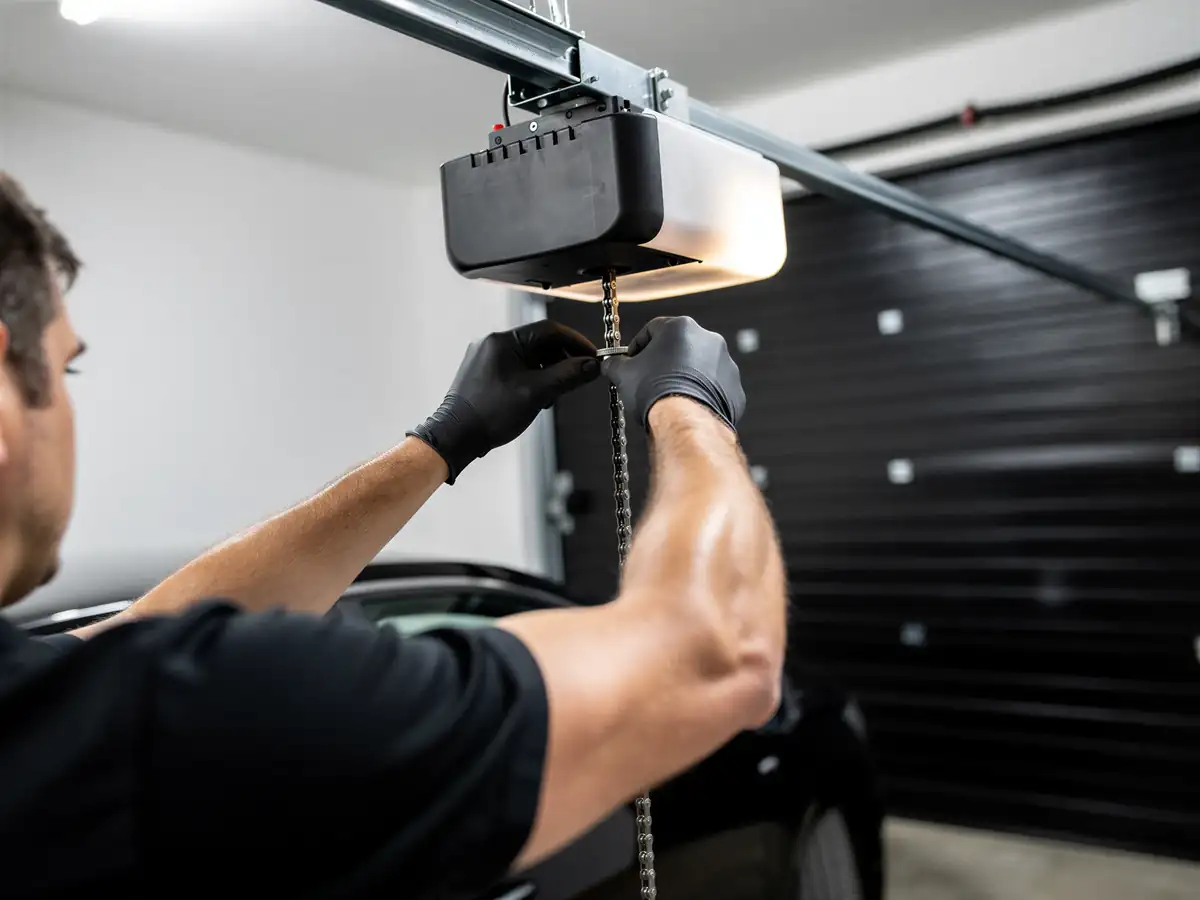
For a scheduled new install, the truck carries the door panels in the ordered size and finish, new track sections, properly sized torsion springs, cable, and a new opener if one was ordered with the job
What doesn't sit on the truck as standard stock is an oddball width - most Jurupa Valley openings are standard, but if a house has a non-standard custom opening, that door gets special-ordered and the lead time runs longer than a stock job.
That's the honest limitation worth saying up front
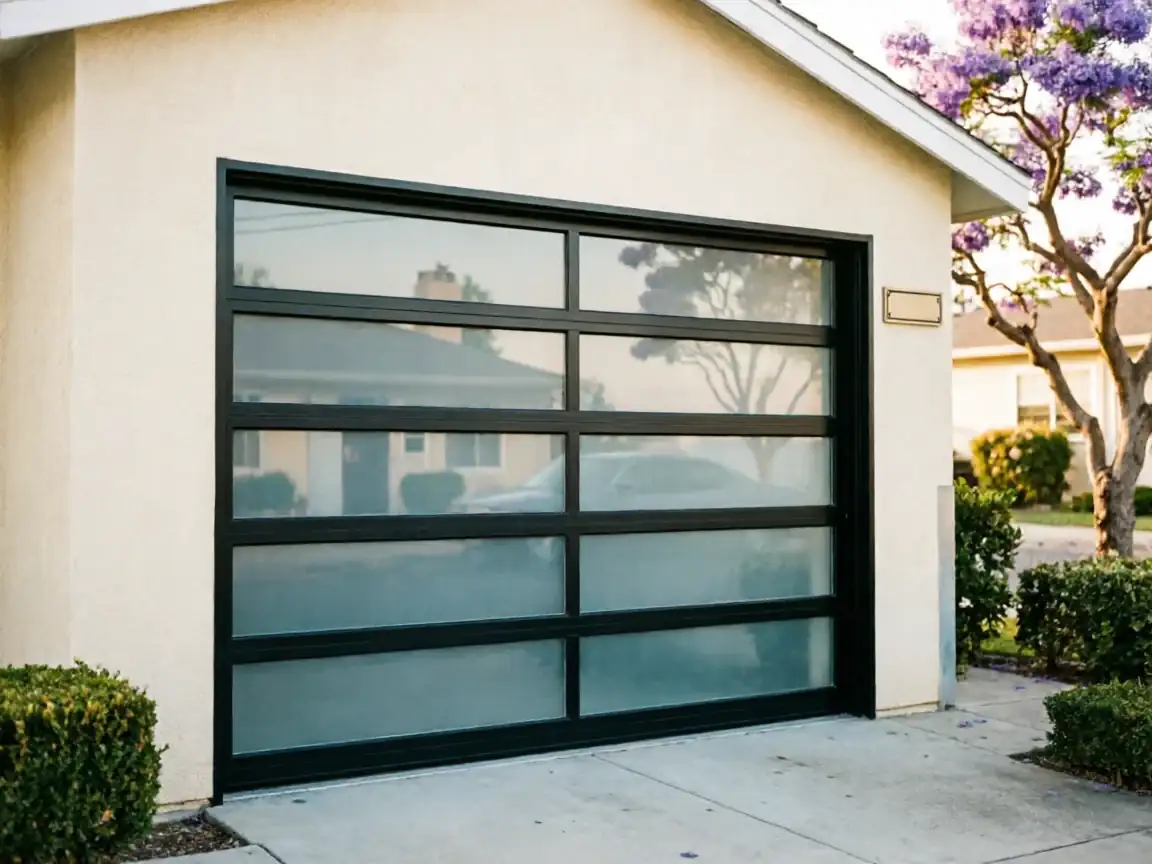
A standard 16-foot double or 9-foot single ships and installs fast. A custom width, a high-end insulated glass-panel door, or a specialty finish does not, and no amount of urgency on the phone changes a manufacturer's build time. Anyone promising a same-week install on a custom order from Pomona is quoting a number they can't back up.