The DIY Question
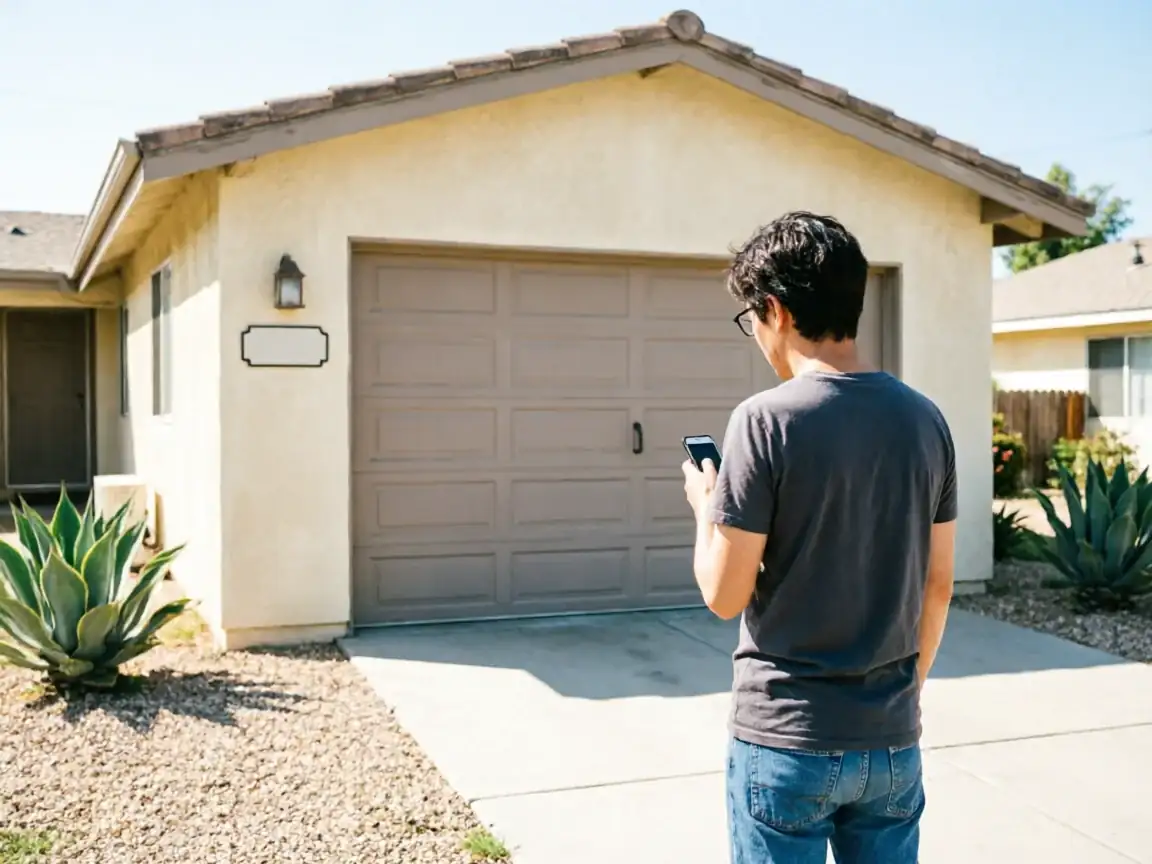
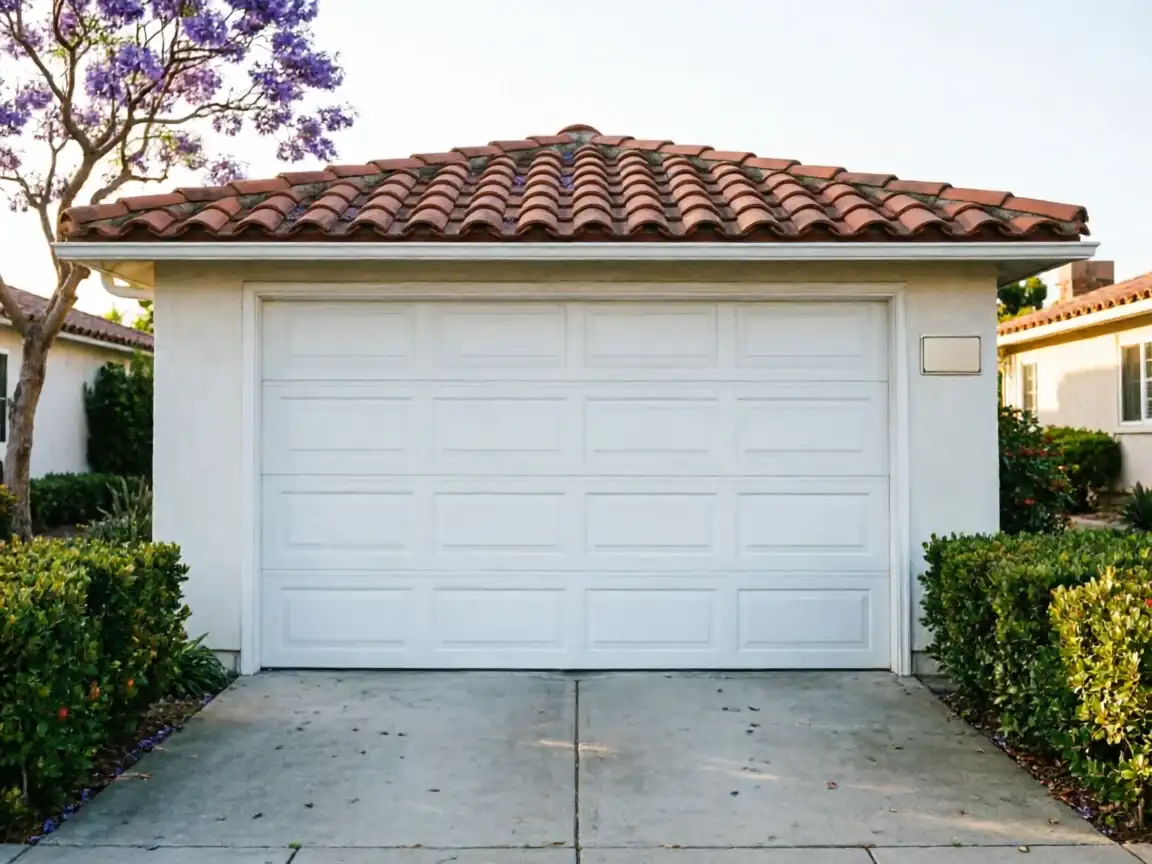
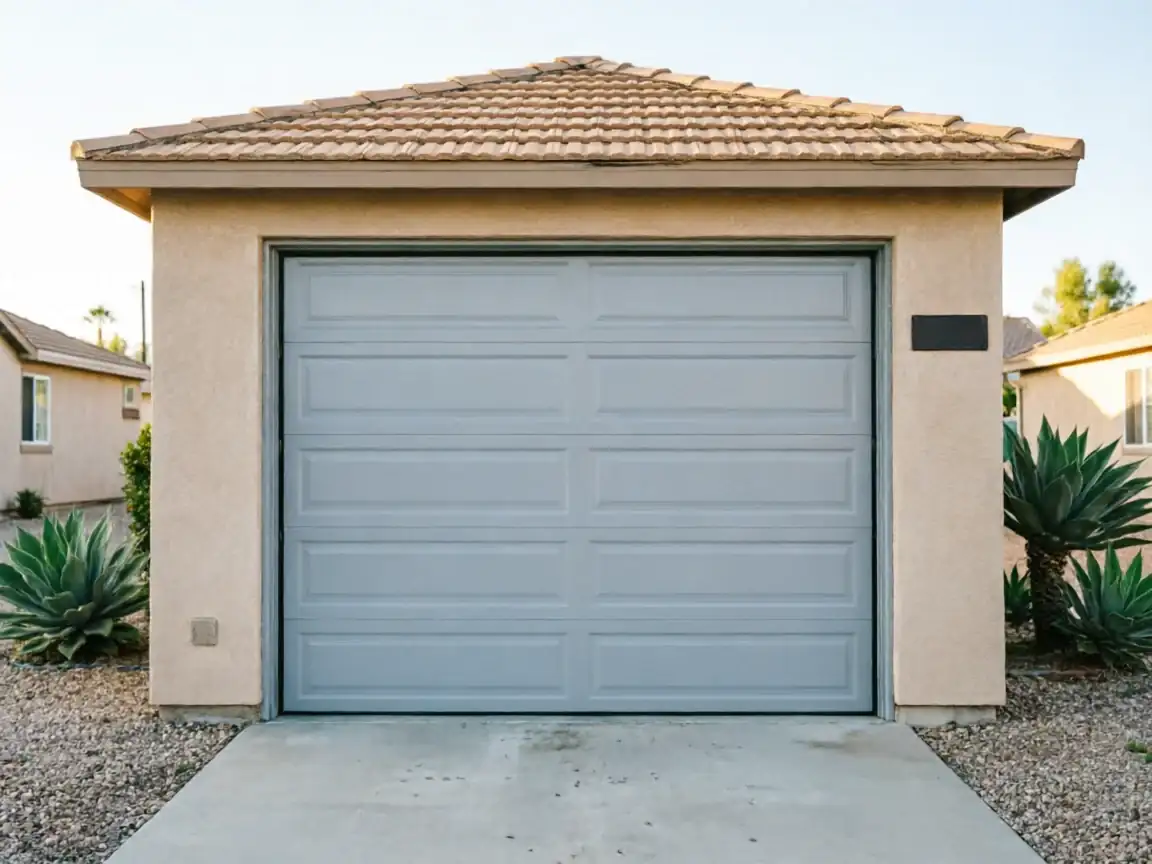
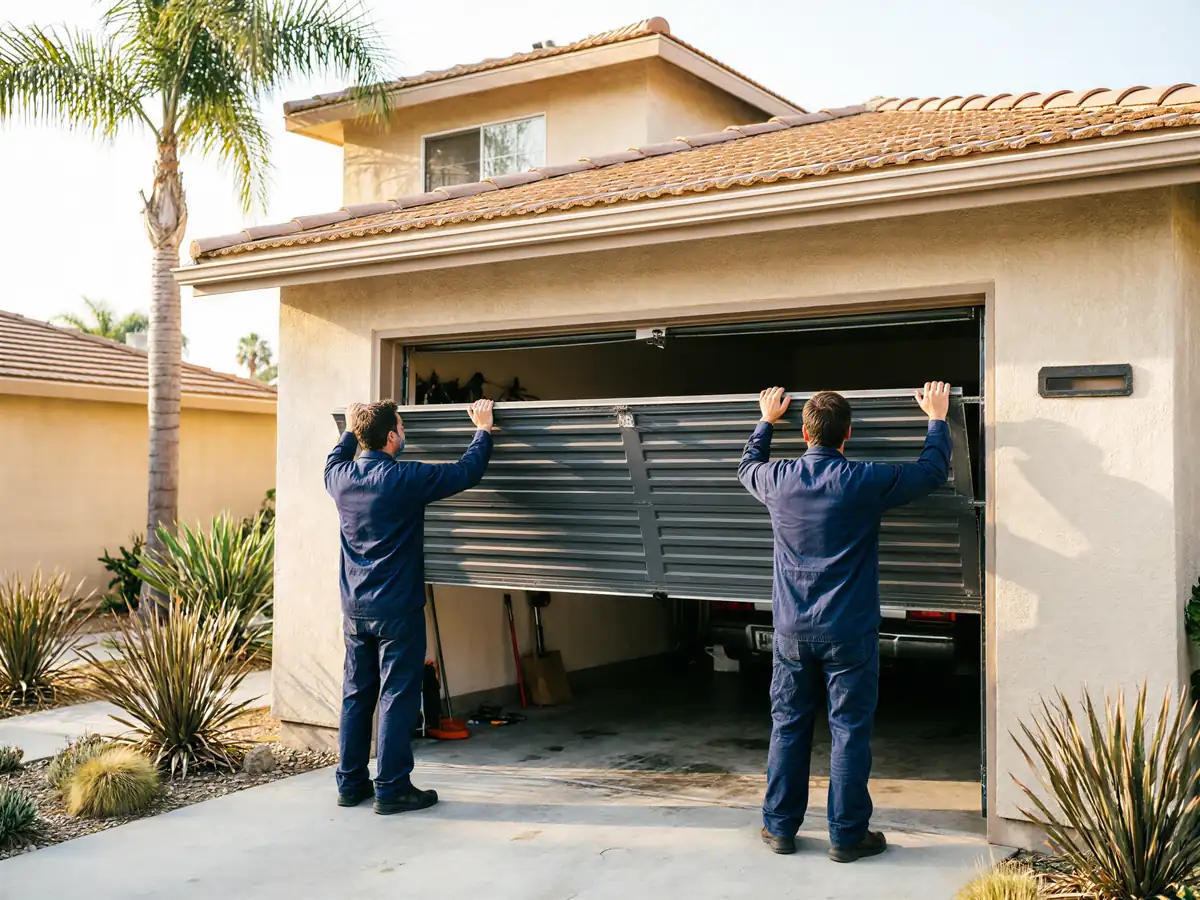
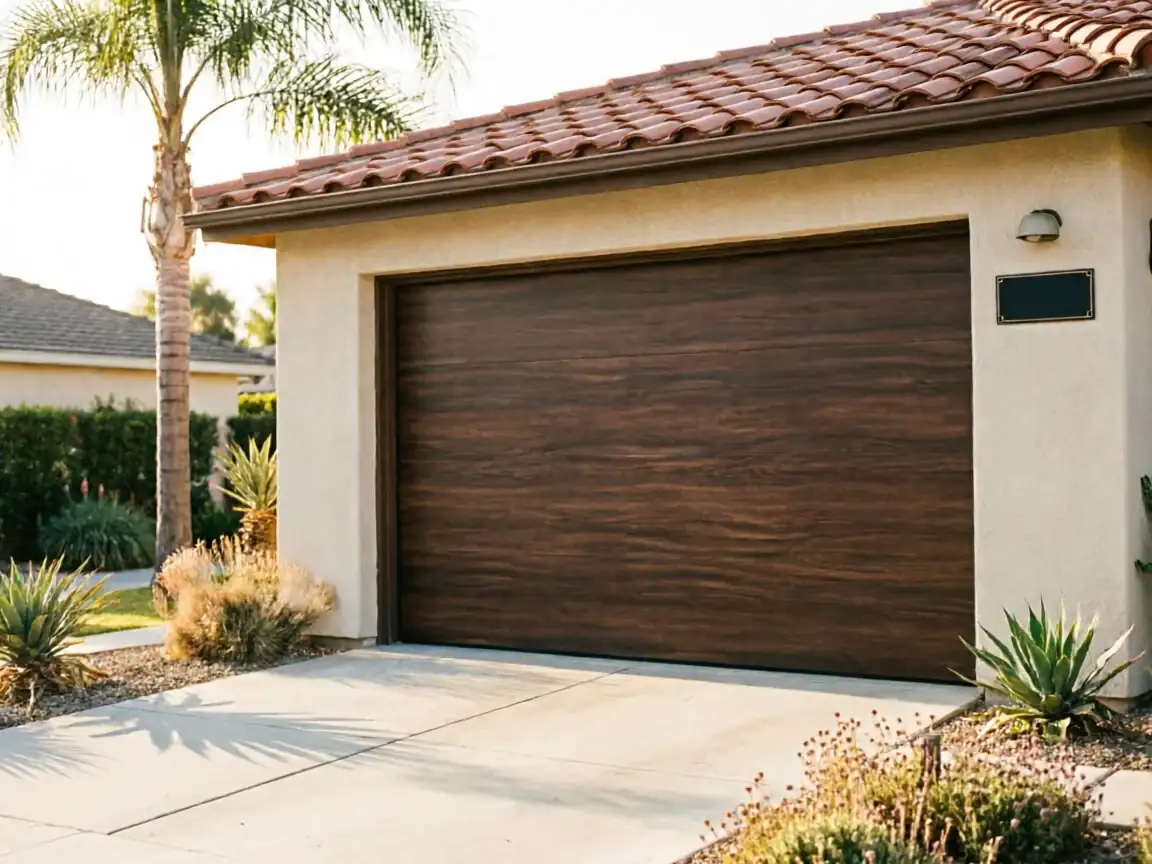
Eastvale's housing stock is young for this part of the valley - most of it went up around 2007, which means the garage doors out here are factory steel sectional doors, not the wood or flush-panel doors you'd find on an older block. That changes the DIY math. A cracked or dented steel panel on a 2000s door is usually one section in a multi-panel run, and matching the factory finish and rib profile matters more than it does on an older door where nobody expects a perfect match anyway. Pull the wrong panel off yourself and you can throw the door's balance off, especially on the wider two-car doors common in newer tract construction. If you're handy and the door is still under a builder warranty or close to it, call the manufacturer first - check for documentation before you touch a panel. If it's past that window, a panel swap is doable but it's not a weekend-warrior job if you've never pulled hinges and stiles off a galvanized steel section. One honest note: if more than two panels are bent or the door is an odd size, full replacement often costs about the same as a panel repair and solves more at once.
Why It Happens Here
With most of Eastvale built out around 2007, the panels in service are factory steel, usually insulated, and still relatively young by garage door standards. Damage here tends to come from impact - a car bumper, a backed-up trailer, a basketball - rather than age or warping, which is more the story in the older stock closer to Pomona. Median household income in the broader service area runs $102,449, but Eastvale itself runs well above that at $161,322, and in practice that shows up as owners who want an exact factory-finish match rather than a mismatched replacement panel, and who are more likely to ask about insulated steel options when one panel goes. It's also a newer-build area, so warranty paperwork sometimes exists where it wouldn't on a 1960s house - worth checking before any repair starts.
What the Repair Takes
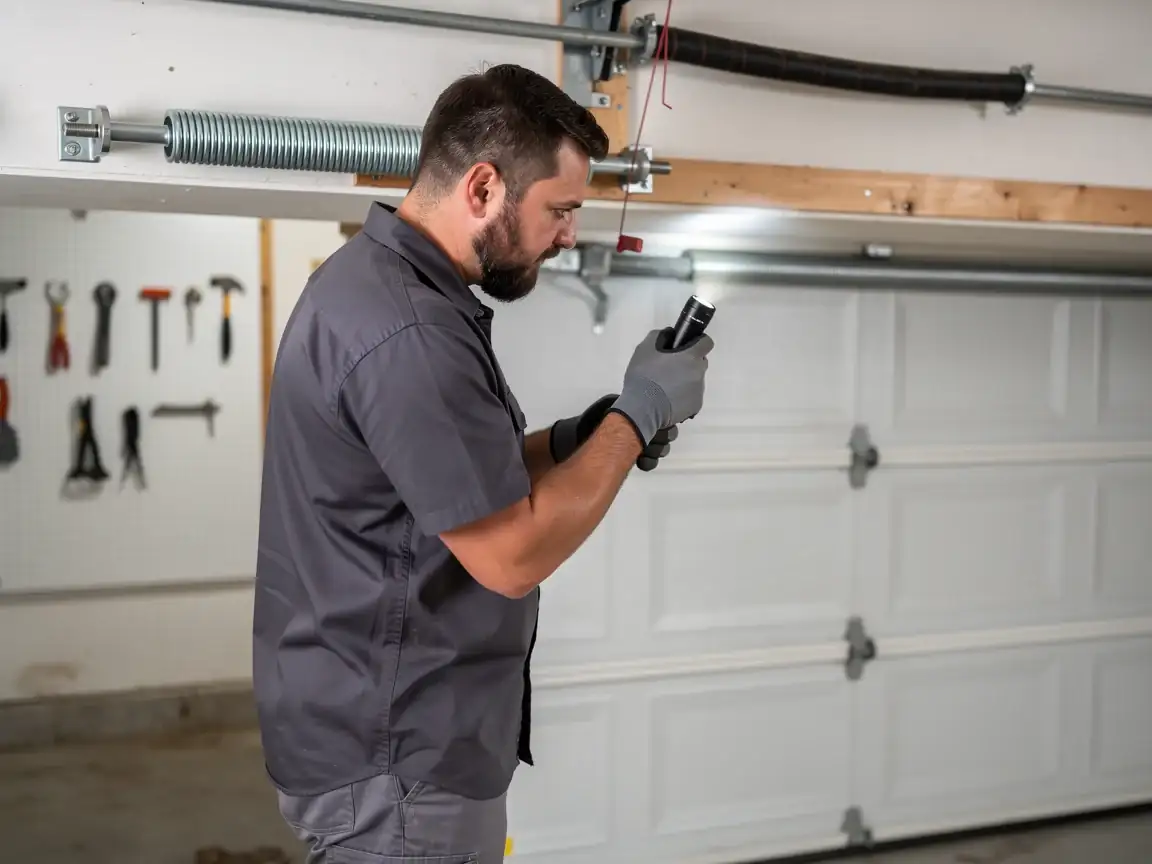
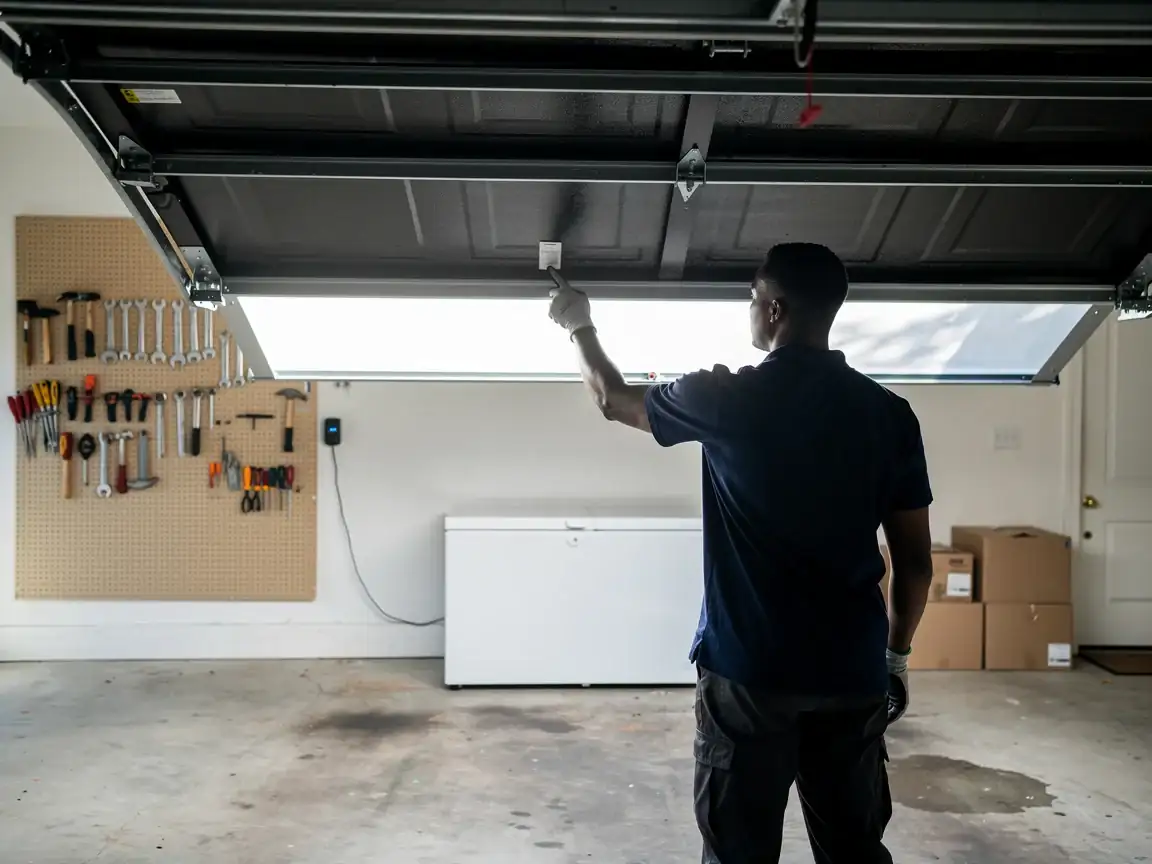
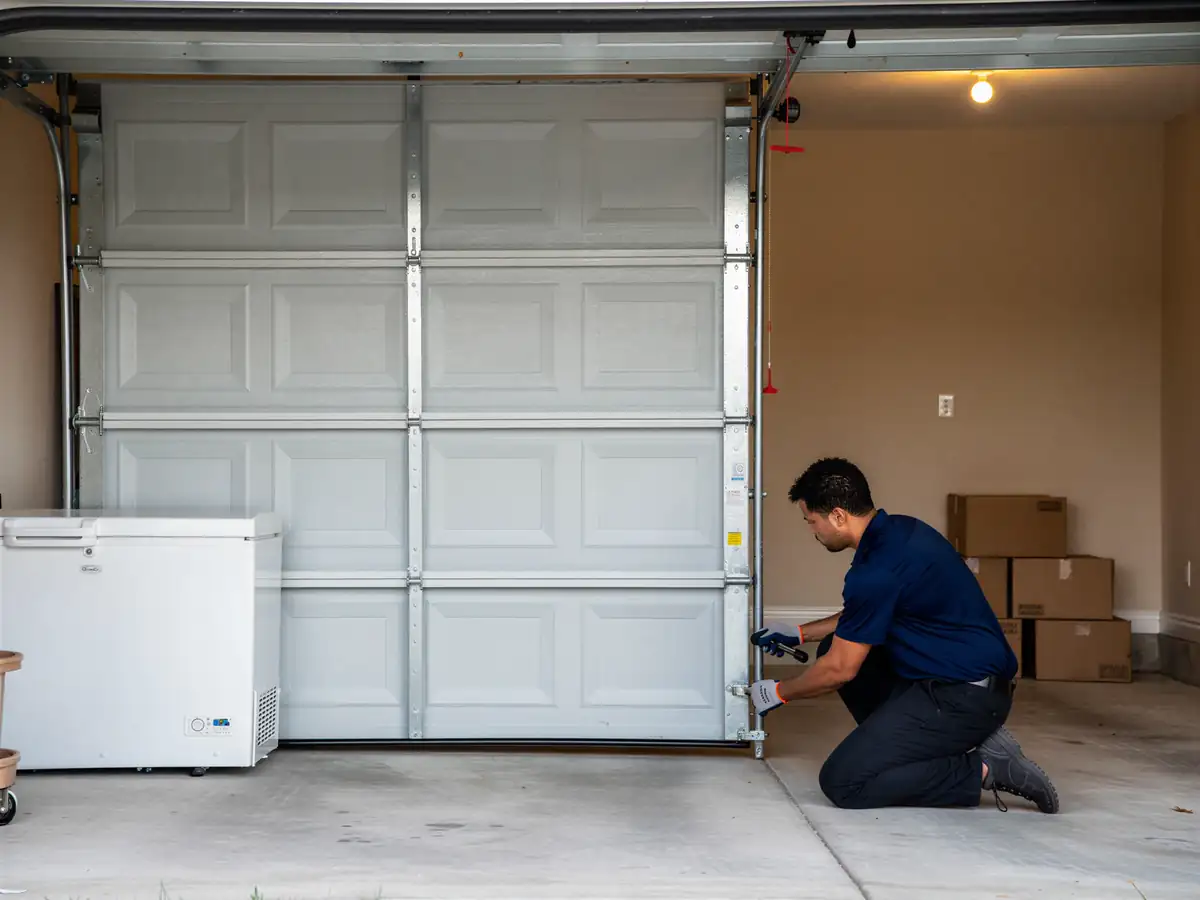
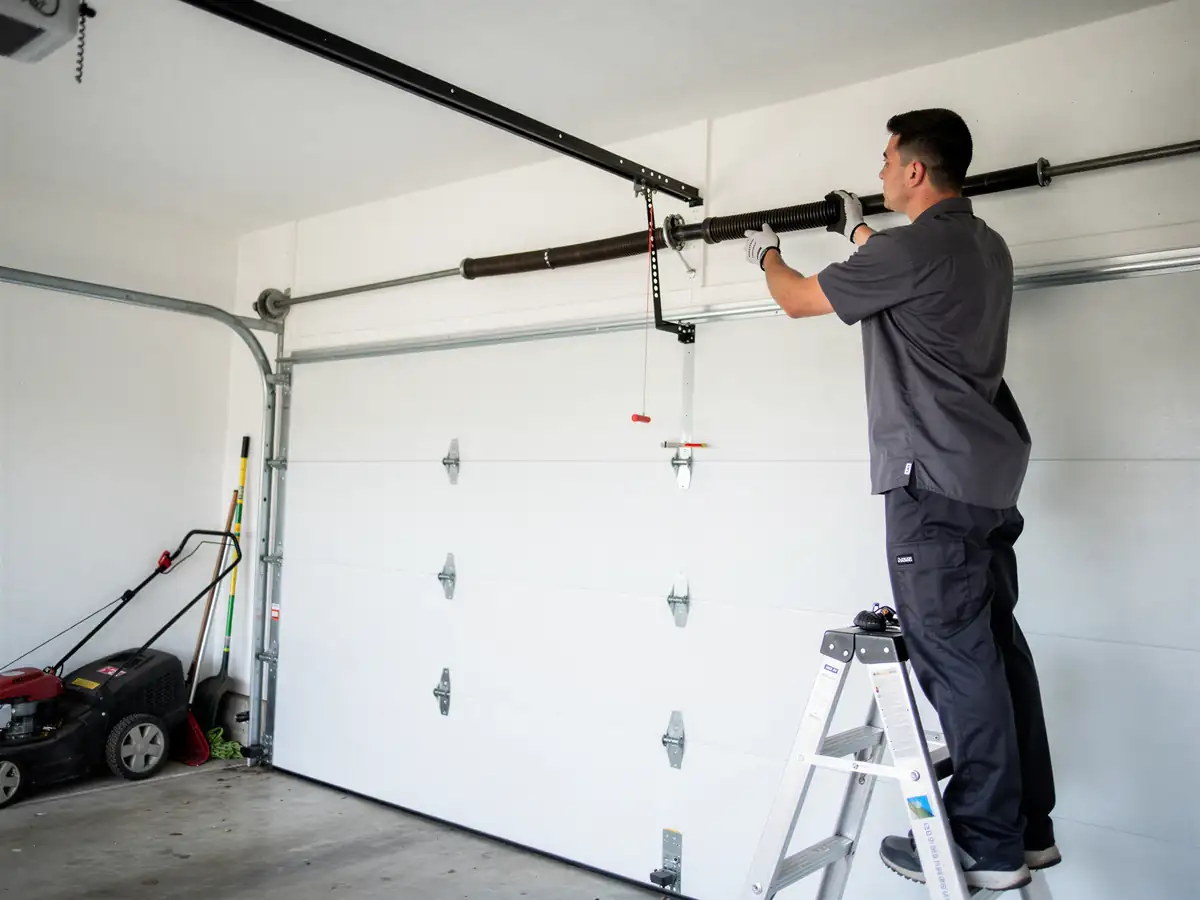
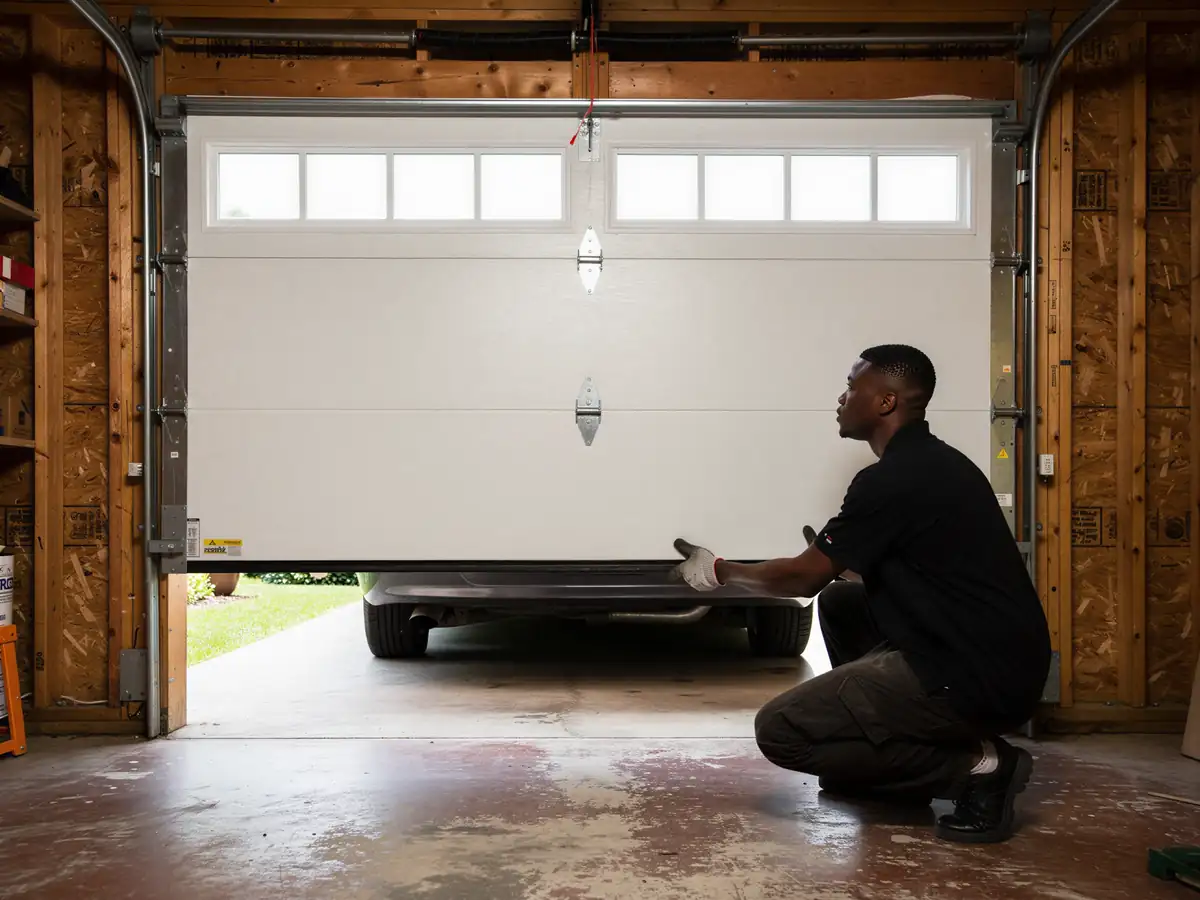
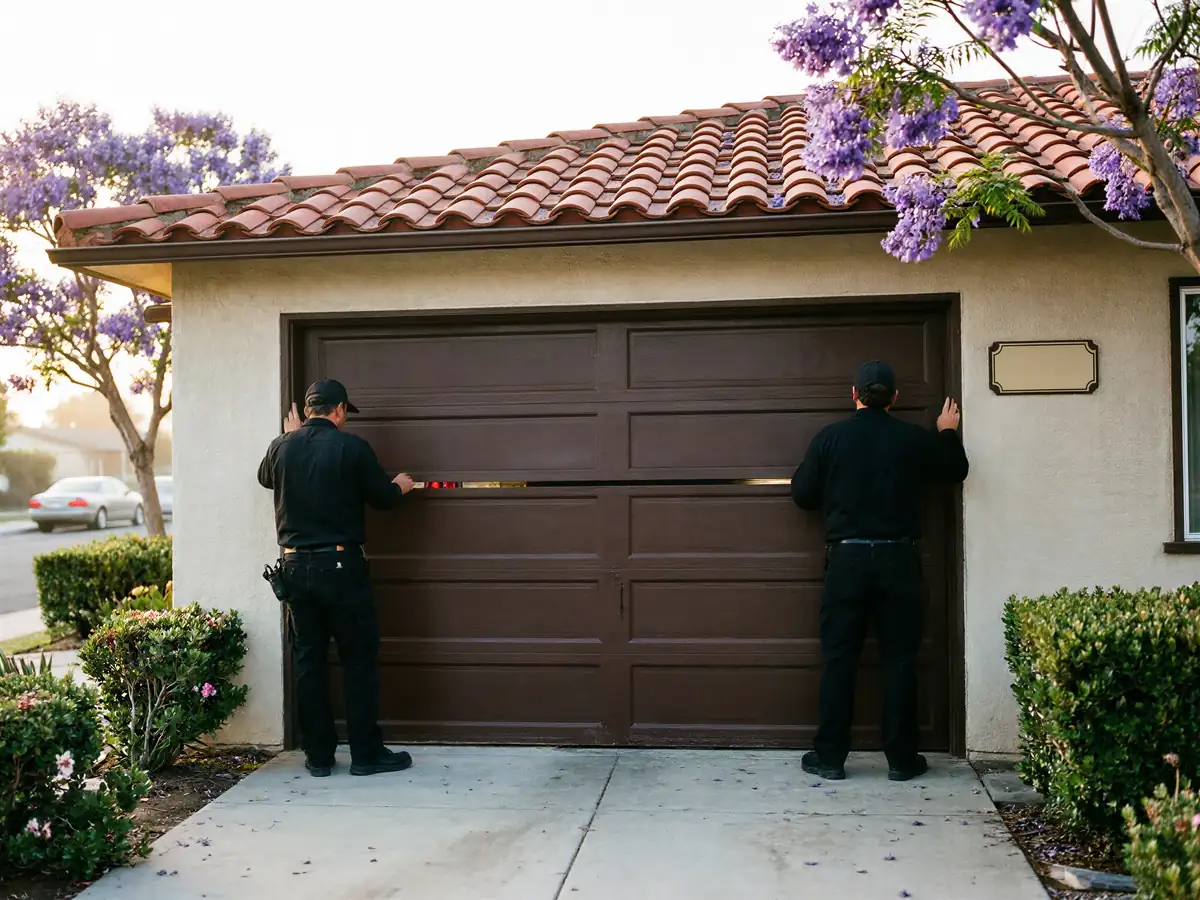
Matching the panel starts with the door's brand and model, which on a house built around 2007 should still be identifiable from a label inside the door or in builder paperwork. From there it's ordering the matching section, pulling the hinges and rollers off the damaged panel, and setting the new one in without disturbing the door's balance - torsion springs on these doors are sized for the full weight of the original panel set, so swapping a section changes nothing about spring tension as long as the new panel matches weight and size. The job travels from Pomona, about 12 miles out, so scheduling is set when you call rather than same-hour. One limitation worth saying plainly: if the exact panel profile is discontinued, which happens with some builder-grade doors after enough years, the options are a close match on an end panel where it's less visible, or full door replacement. We'll tell you straight which one makes sense once we see the door.