The DIY Question
Eastvale is a small piece of our coverage area - about 17,824 households, compared to the hundreds of thousands spread across the rest of the territory we run from Pomona. That matters for how often a given fault type shows up here. You don't get the full range of decades-old hardware failures you'd see in an older section of town; you get a narrower band of problems clustered around homes built in roughly the same stretch of years.
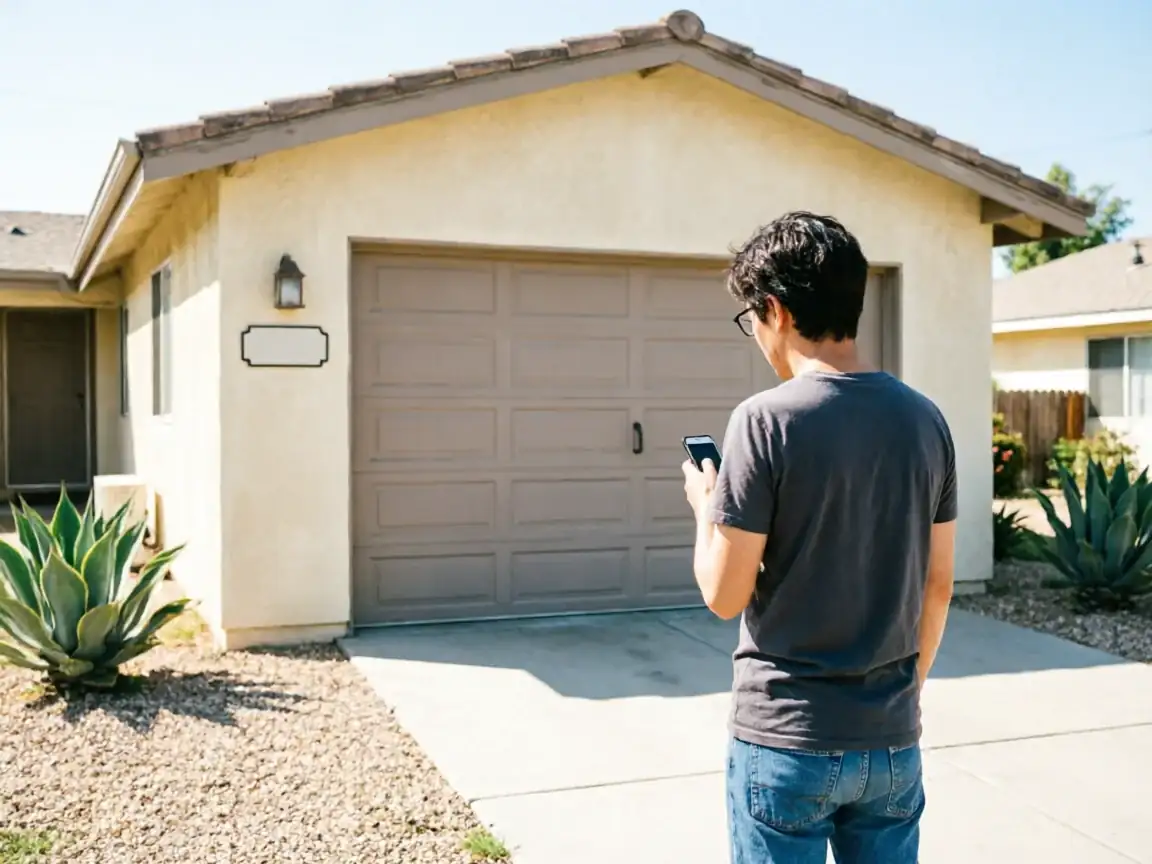
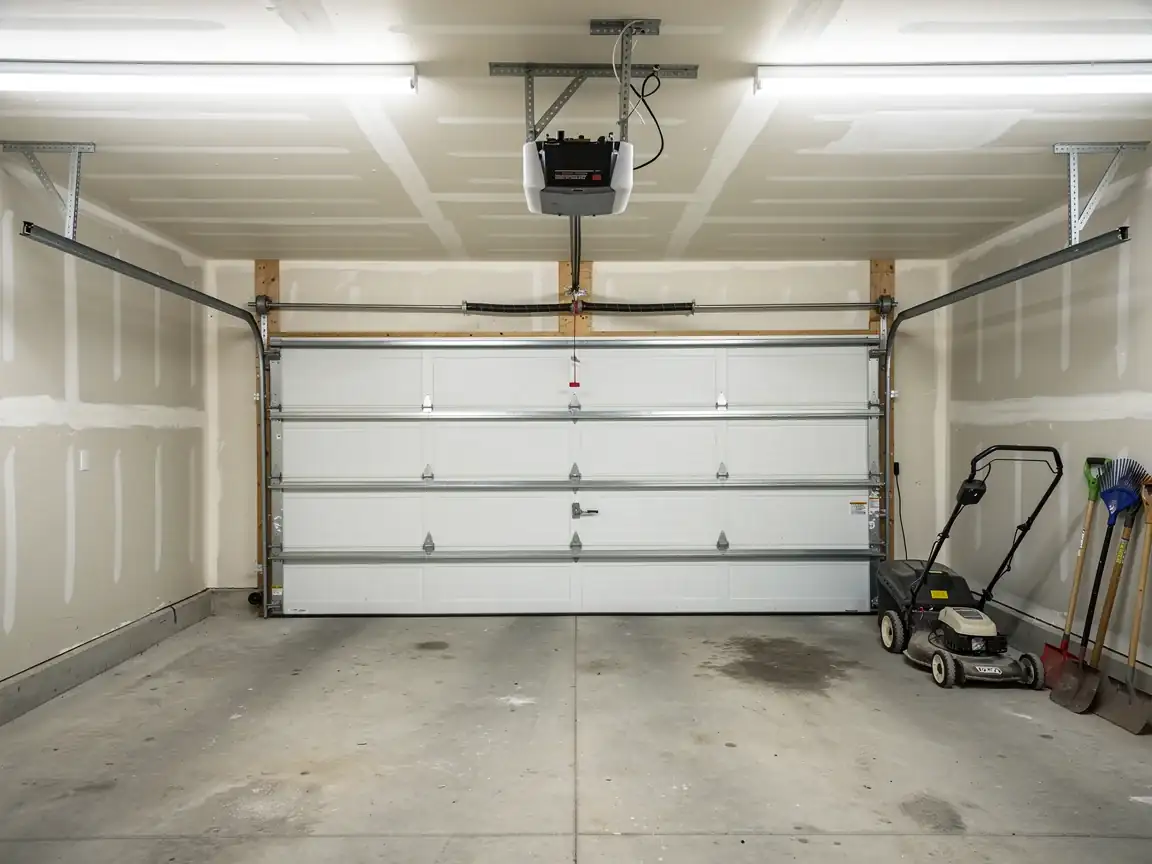
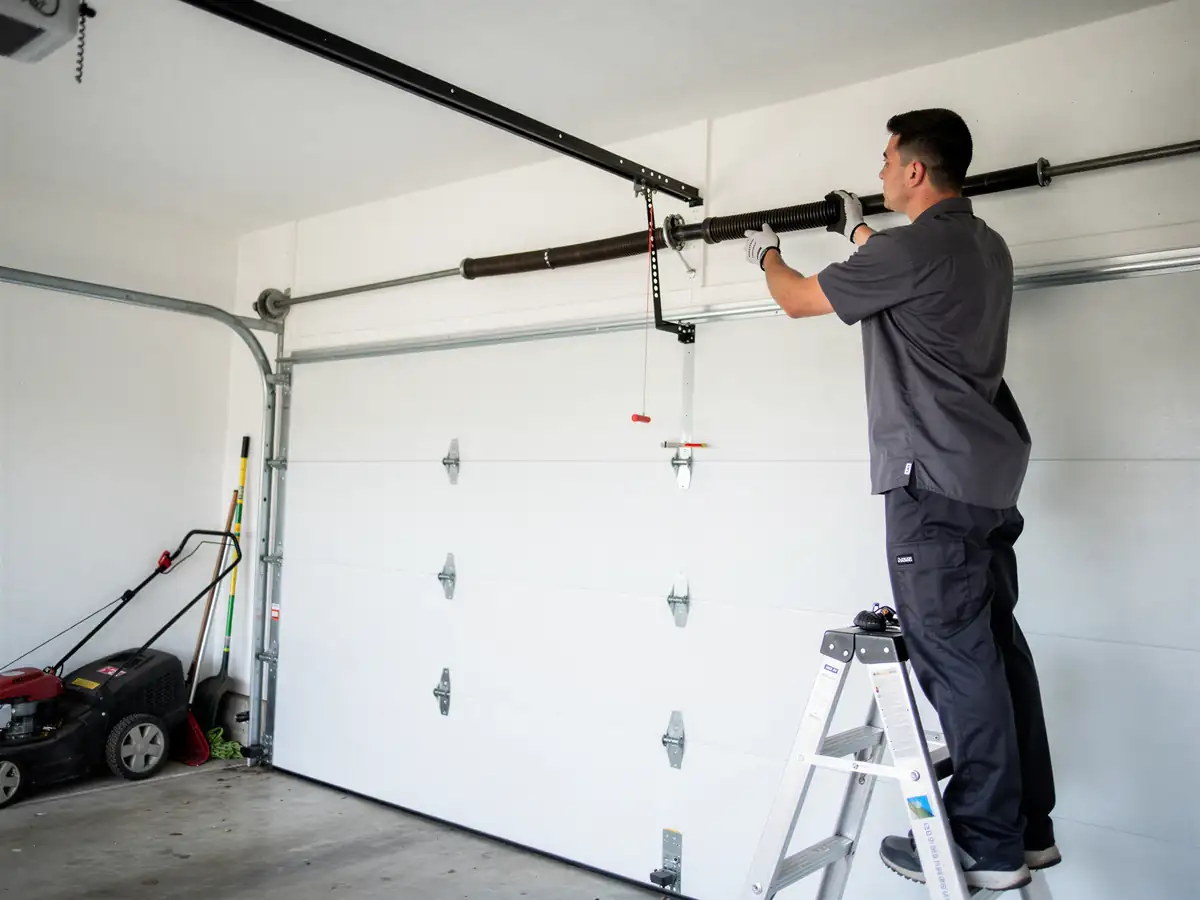
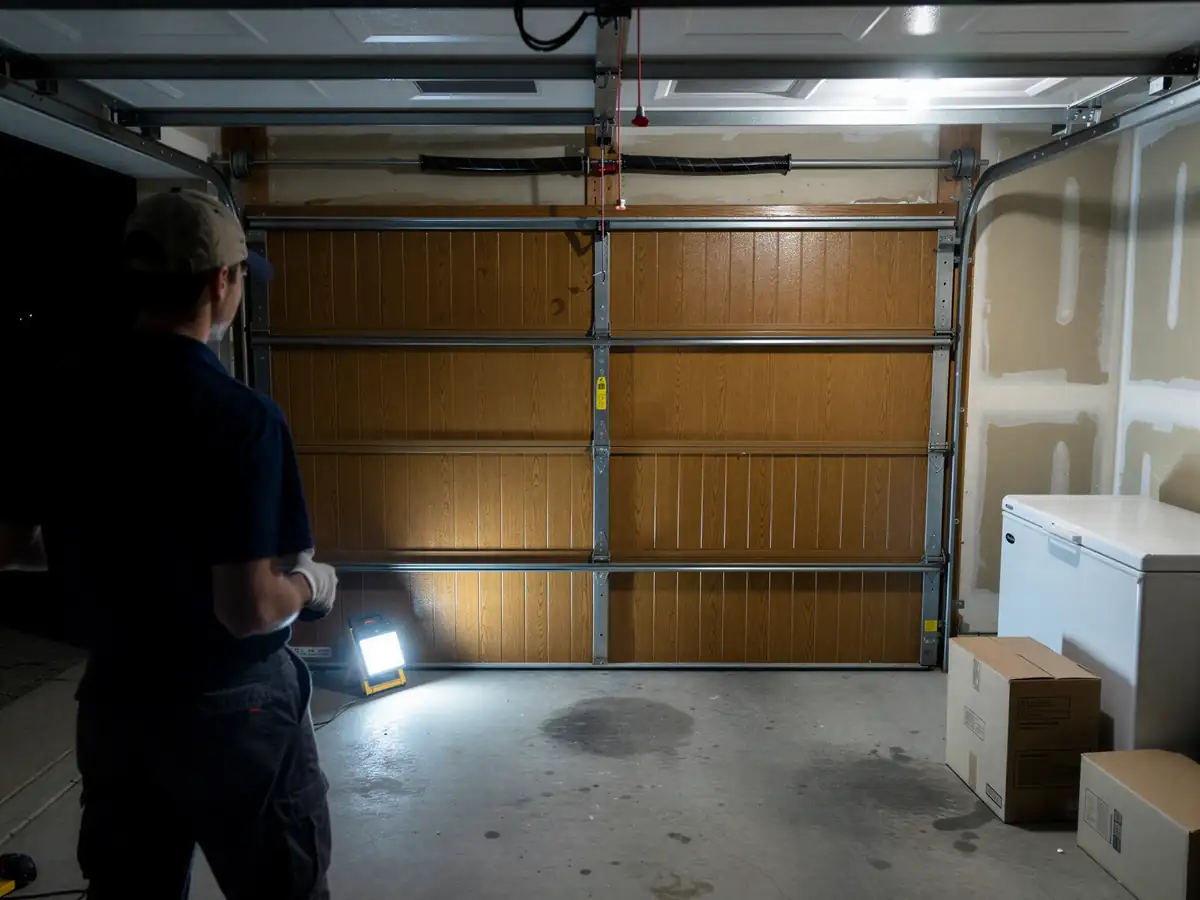
That narrower range is actually good news if you're trying to decide whether to fix something yourself. A torsion spring job on a newer double door, with a factory-installed opener still under its original wiring, is not the same project as freeing up a fifty-year-old track that's been painted over three times. The newer stuff is more standardized, which makes misdiagnosis less likely but doesn't make the repair itself safer. Torsion springs are still under lethal tension regardless of the home's age. Opener logic boards and photo-eye sensors are usually diagnosable without tools, but a spring, cable, or drum is not a weekend project no matter how new the house is. If you're unsure which kind of problem you're looking at, that's the one thing worth a call before you touch anything.
Why It Happens Here
The median year built across our wider service area lands around 1965. Eastvale's does not - its housing stock centers on 2007, which puts almost the entire town inside a single construction-code era rather than spanning five or six decades like older parts of the territory. That means the doors, tracks, and openers here were largely installed to the same generation of building and energy code, with similar spring sizing and similar opener models rolled out across many houses in a short span.
The failure pattern that follows is different from what you'd expect in an older neighborhood. You don't see as much rust-seized hardware or warped wood jambs. What you do see is a wave of components reaching the same age bracket at close to the same time - torsion springs rated for a given cycle count, installed in the same two or three years, starting to let go within a fairly tight window of each other. It's less about individual neglect and more about a fleet of doors aging in sync. We also haven't had to deal with decades of amateur modifications layered onto these systems the way you do on older stock - fewer surprises once we're actually looking at the unit.
What You Are Seeing
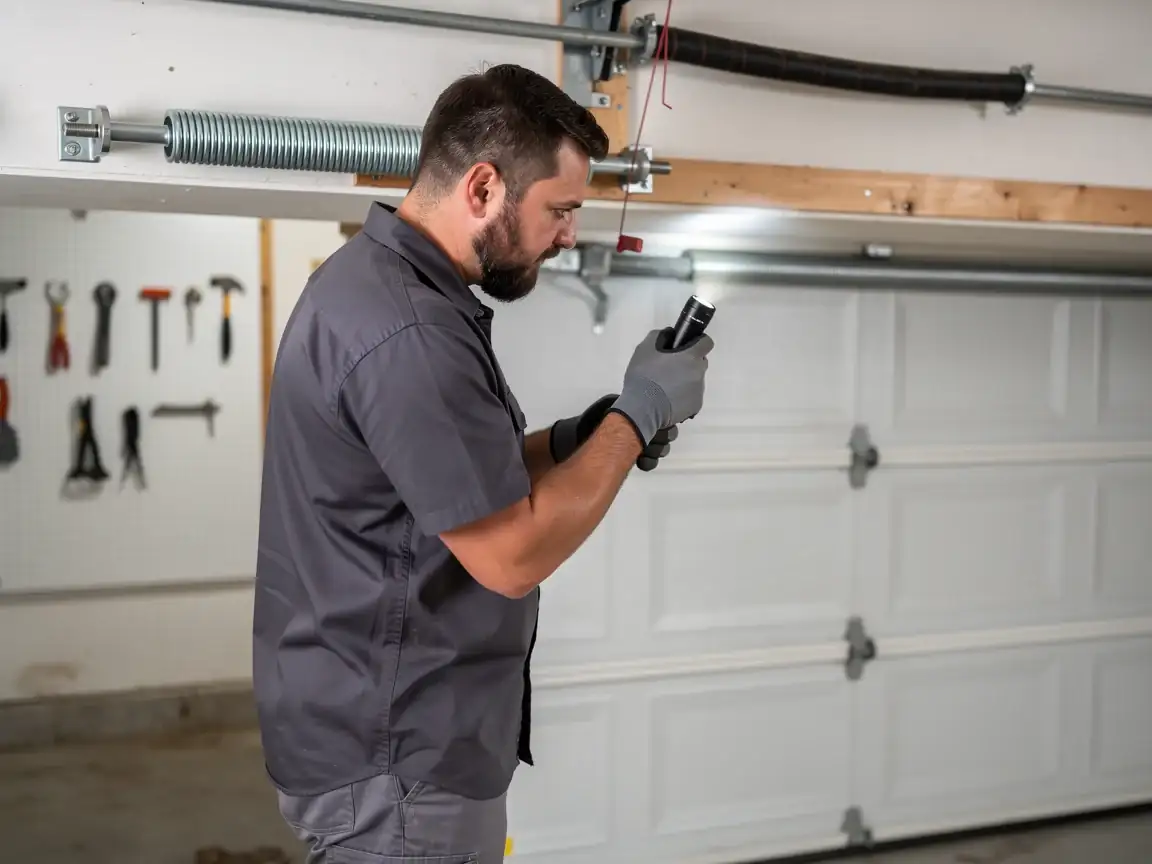
On a newer-build door, the most common call is a torsion spring that's simply reached the end of its rated cycle life
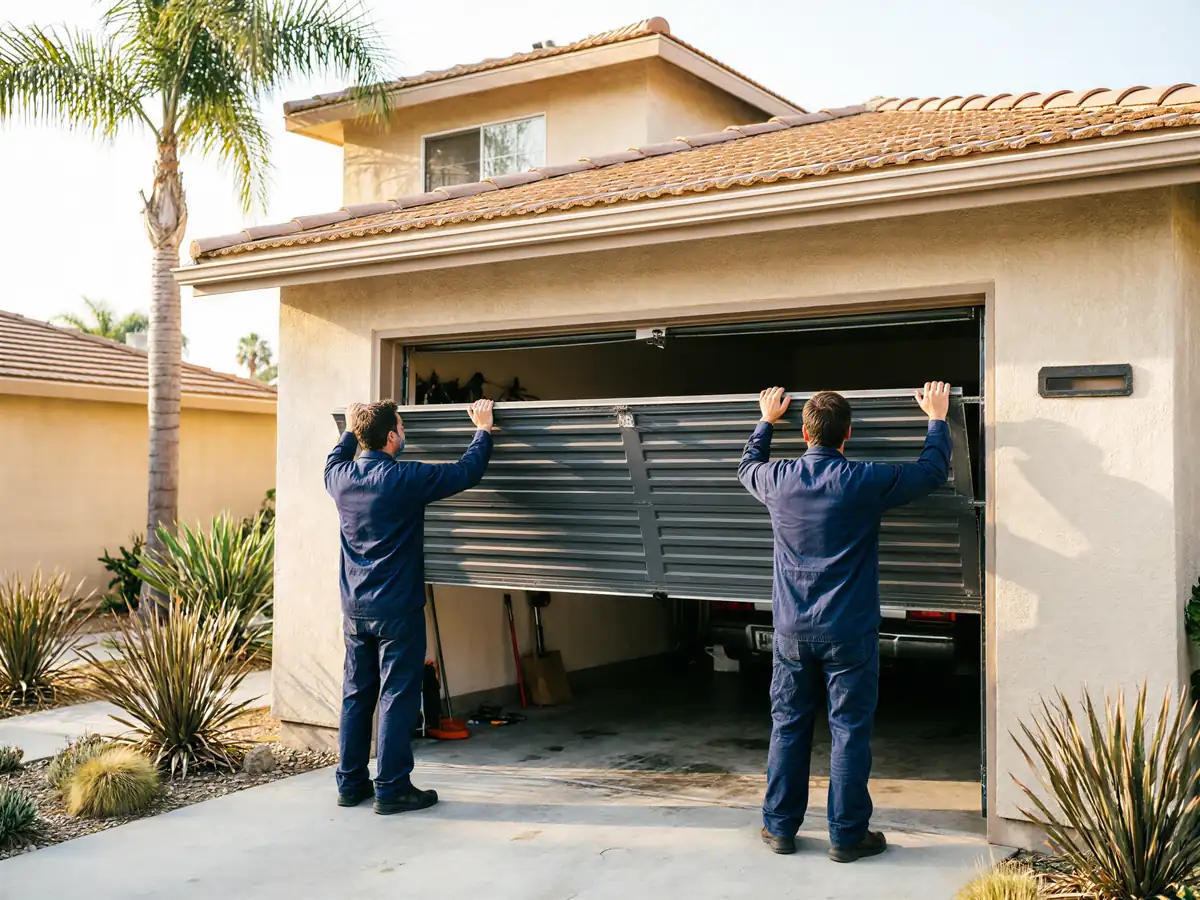
The door feels heavy, won't stay up on its own, or the opener strains and reverses partway through the lift. Because so much of Eastvale's housing dates to the same stretch of years, we see this symptom cluster rather than scatter.
The second most common issue is on the opener side, not the door itself
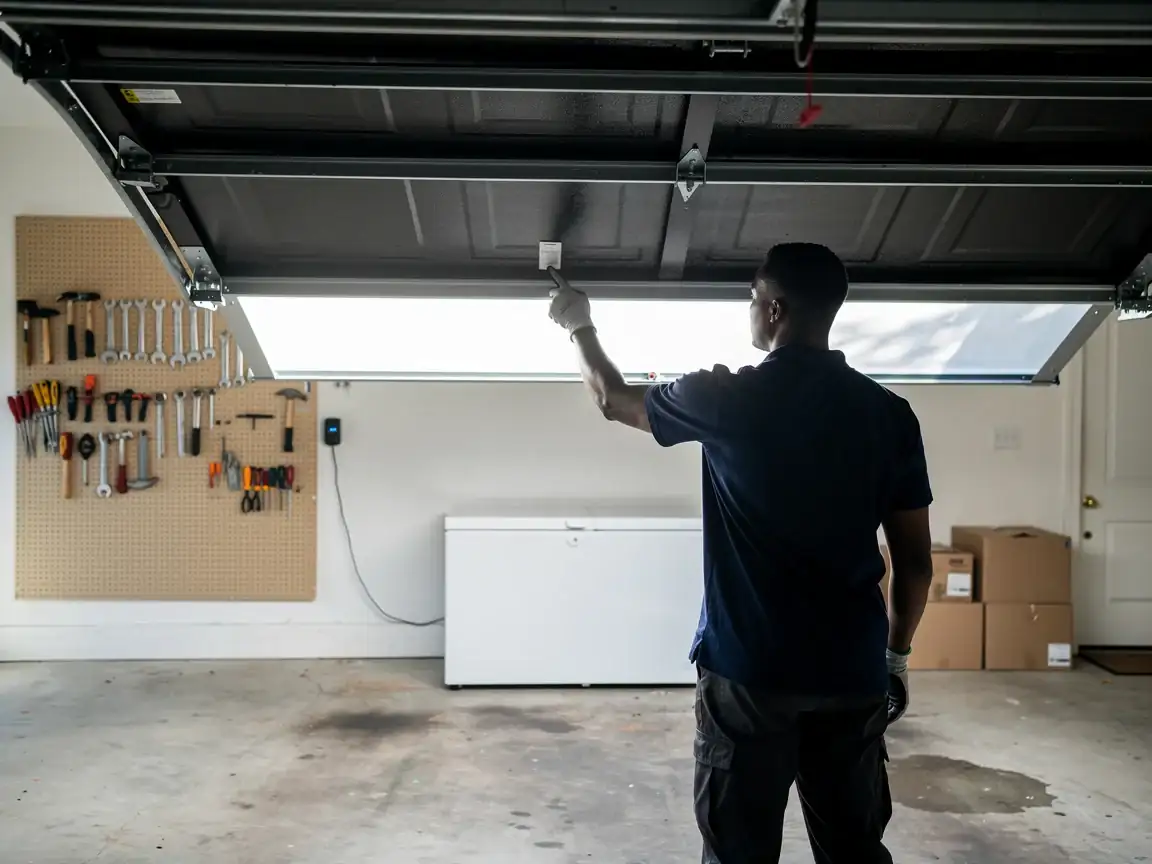
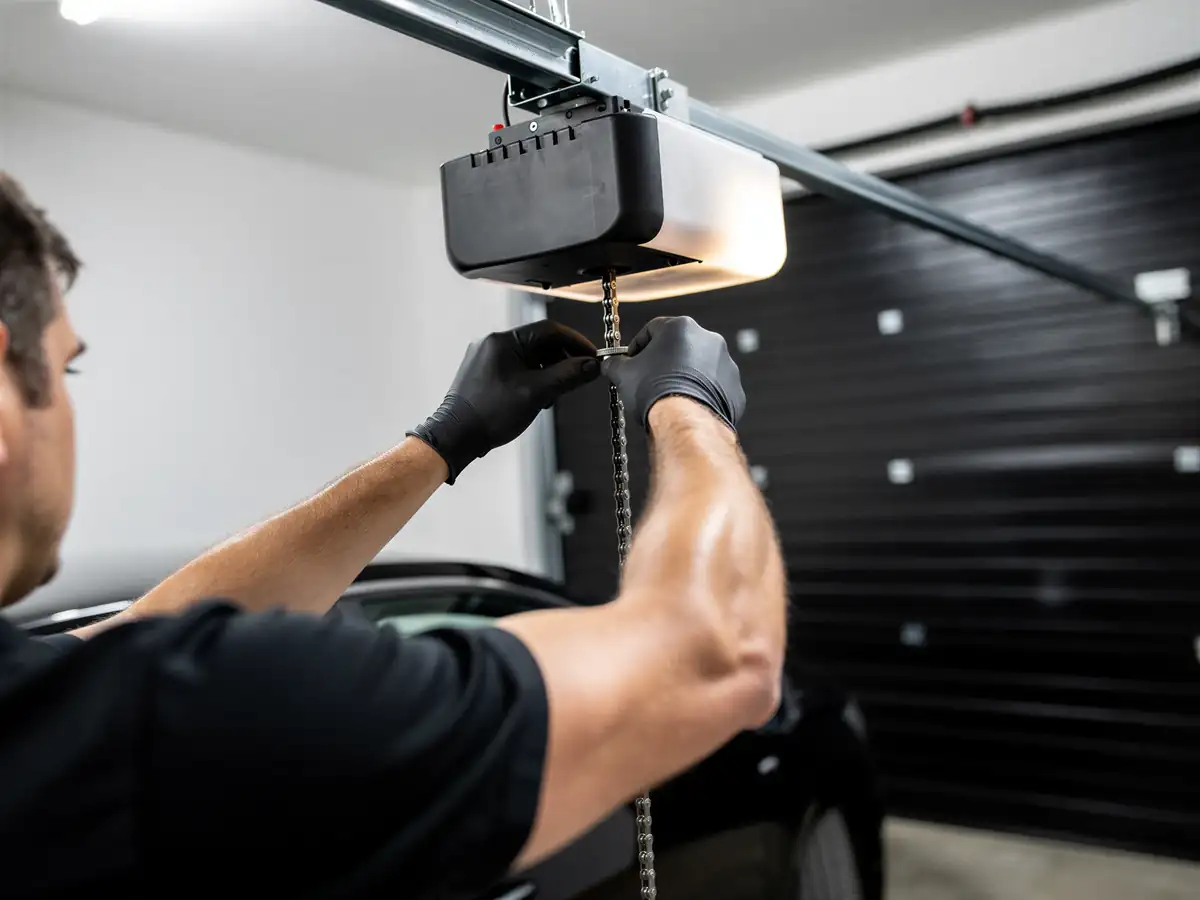
A logic board or sensor pair original to the home starting to act up as it reaches the far end of its service life. You'll notice intermittent reversal, a remote that stops being reliable, or a unit that runs louder than it used to.
What you're less likely to see here is the kind of structural wear common on much older doors
Warped panels, rusted-through tracks, or jambs that have shifted with decades of settling. The honest limitation: on a handful of opener models tied to specific builders from that era, replacement parts aren't something we keep on the truck, and sourcing the exact board can add a day or two to the job. We'll tell you upfront if that's the case rather than guess.
What the Repair Takes
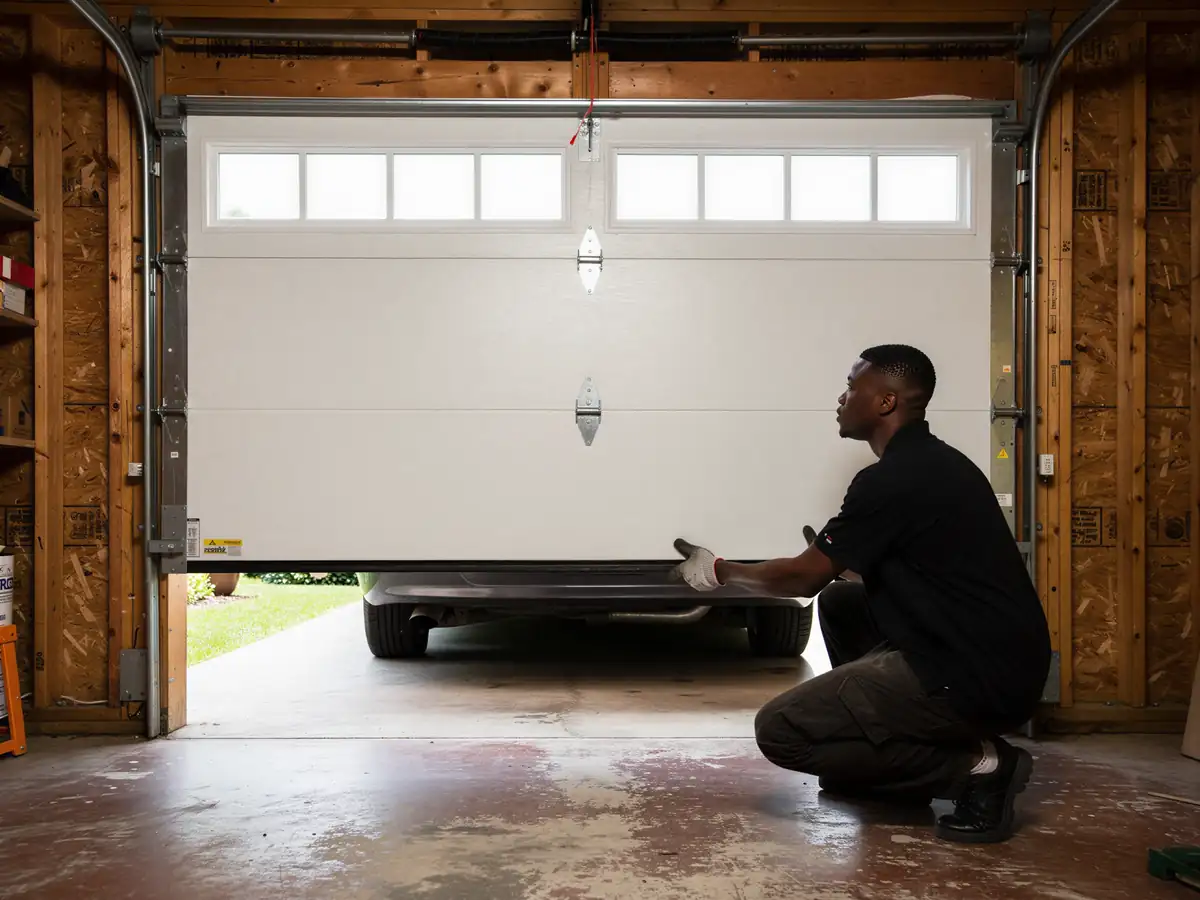
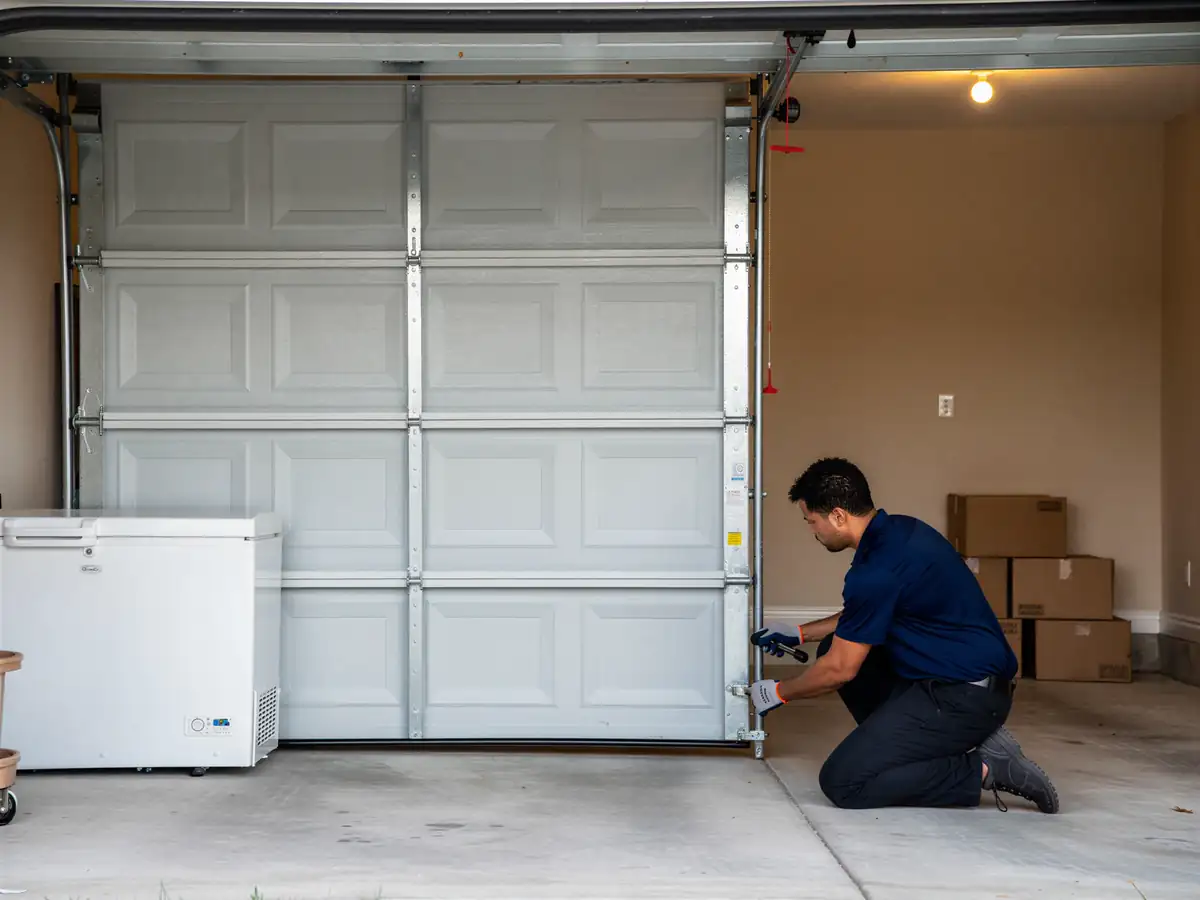
Most jobs here are a straightforward spring swap or an opener board/sensor replacement - nothing exotic, since the hardware across Eastvale skews toward a single generation rather than a mix of eras. We size the spring to the door's actual weight and cycle needs rather than assuming the original factory spec is still correct, since insulated doors from the 2000s builder wave often run heavier than the spring that originally shipped with them.
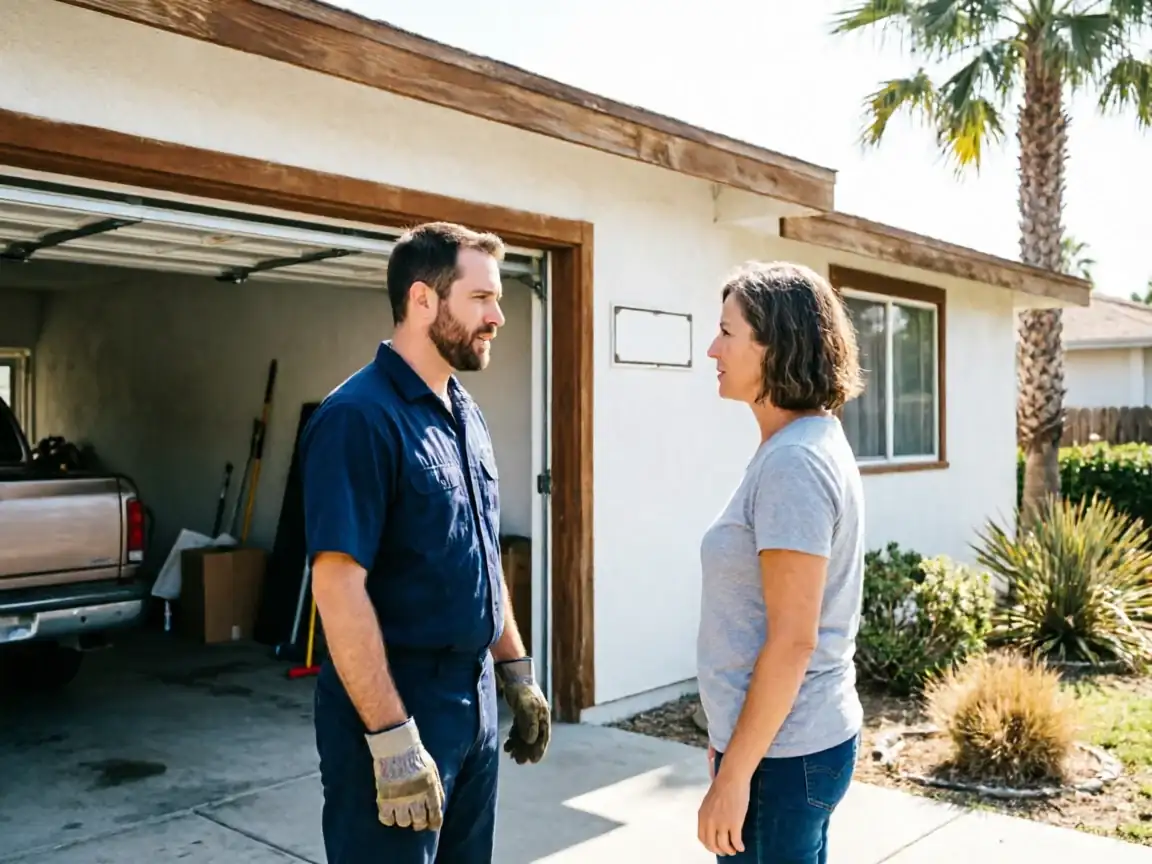
We're coming from Pomona, about 12 miles out, so this isn't a same-block dispatch - we don't carry a local inventory sitting in Eastvale, and we're not going to promise a response time we can't back up from that distance. What we can promise is that the parts we bring are matched to what we find on-site, not a generic kit.
Given the household income figures for the area, we also get more requests here to replace rather than patch - a quieter belt-drive opener instead of a repaired chain unit, for instance. That's a decision for the homeowner, not something we push, but it's a real option worth knowing about before you commit to a repair.